
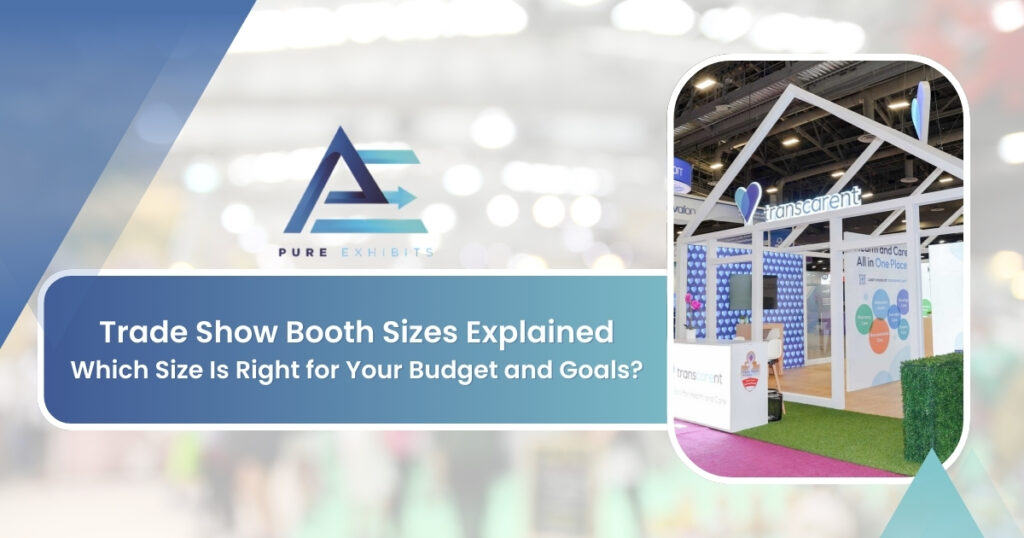
Choosing the wrong trade show booth size is one of the most expensive mistakes an exhibitor can make.
Too small and your team is cramped, your brand looks underfunded, and you lose attendees to the bigger booth across the aisle. Too large and you are paying for square footage your team cannot activate — and your drayage bill reflects every inch of it.
This guide covers every standard trade show booth size, what each one costs, who it is right for, and how to make the decision before you sign anything.
What Are the Standard Trade Show Booth Sizes?
Trade show venues allocate floor space in standard increments. Most major U.S. convention centers — including the Las Vegas Convention Center, McCormick Place, and the Orange County Convention Center — use the following standard sizes:
- 10×10 (100 sq ft) — inline booth
- 10×20 (200 sq ft) — inline booth
- 20×20 (400 sq ft) — island exhibit
- 20×30 (600 sq ft) — island exhibit
- 20×40 (800 sq ft) — island exhibit
- 20×50 (1,000 sq ft) — island exhibit
- 30×30 (900 sq ft) — island exhibit
- 30×40 (1,200 sq ft) — island exhibit
The jump from 10×20 to 20×20 is not just a size jump — it is a category change. A 10×10 and 10×20 are inline booths, meaning they back against a wall or aisle with exposure on one or two sides. A 20×20 and above are island exhibits — open on all four sides, visible from every direction on the show floor.
That distinction changes everything: traffic flow, design options, staffing requirements, and cost.
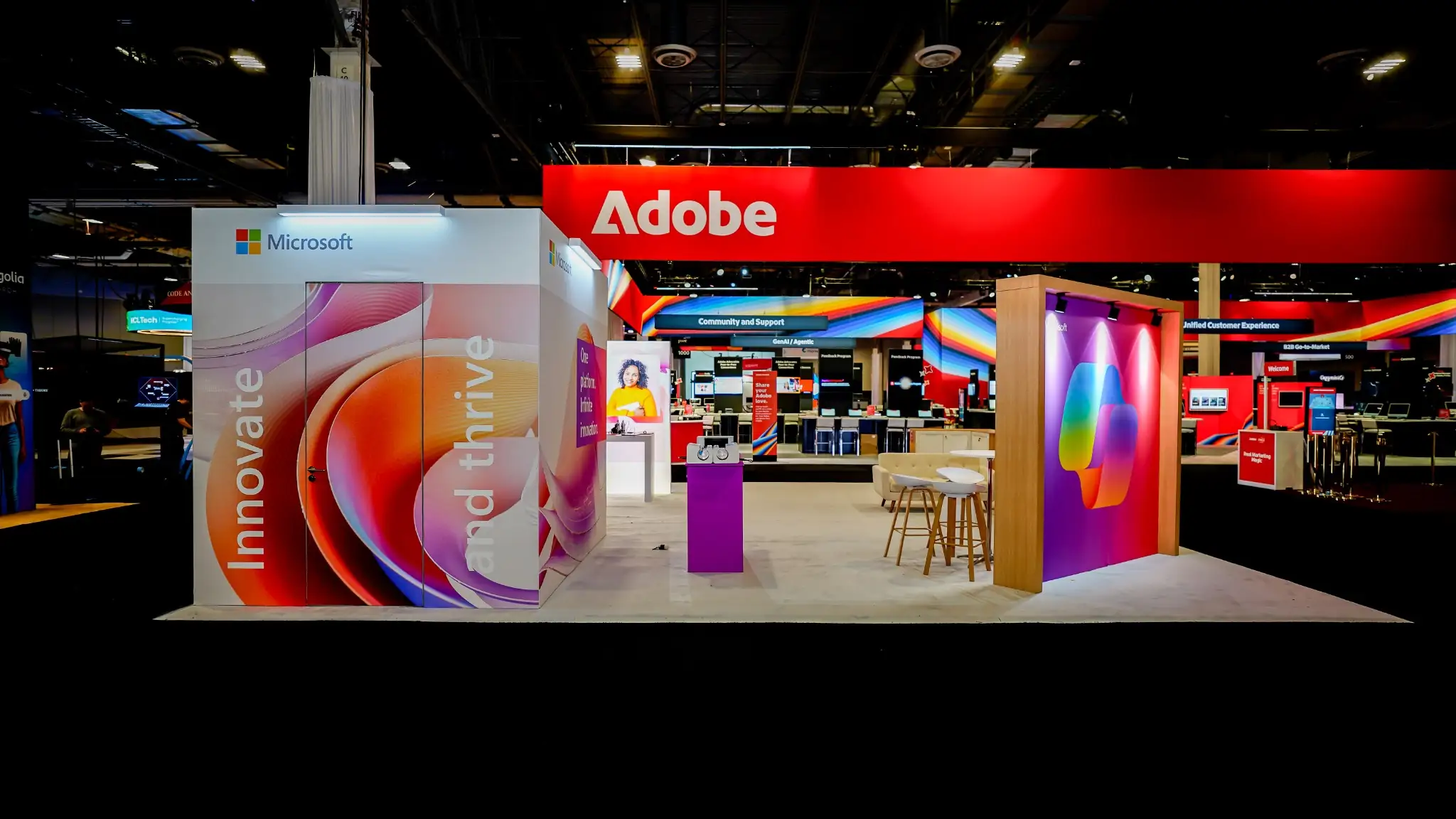
10×10 Trade Show Booth — The Starter Booth
- Square footage: 100 sq ft
- Type: Inline
- Exposure: One or two sides
- Ideal for: First-time exhibitors, startups, companies testing a new show, satellite presence at secondary events
A 10×10 is the entry point for trade show exhibiting. It fits a backdrop, a counter, basic literature, and two to three staff members comfortably. At major shows like CES or Black Hat, a 10×10 puts you on the floor — present and visible — without the capital commitment of a larger build.
What fits in a 10×10 :
- Full back wall graphic
- One counter or kiosk
- Monitor for demo or presentation
- Two to three staff members
- Minimal product display
What does not work in a 10×10 :
- Private meeting rooms
- Multiple demo stations
- Large product displays
- Teams of four or more
Best use case: A SaaS company attending a show for the first time to validate whether the audience converts before committing to a 20×20 the following year.
10×20 Trade Show Booth — The Inline Upgrade
- Square footage: 200 sq ft
- Type: Inline
- Exposure: One or two sides
- Ideal for: Growing companies, brands with products to display, exhibitors who need a demo area and a conversation space
A 10×20 doubles your floor space without crossing into island territory. The extra depth gives you room for a structured layout — a branded back wall, a demo station on one side, a counter or seating area on the other. It is the most underrated booth size because it delivers significantly more brand presence than a 10×10 at a fraction of the cost of a 20×20 island.
What fits in a 10×20 :
- Full back wall graphic plus side graphics
- Two dedicated demo stations
- Counter and seating for informal meetings
- Three to four staff members
- Small product display
What does not work in a 10×20 :
- Private enclosed meeting rooms
- Large-scale product installations
- Teams of five or more working the booth simultaneously
Best use case: A cybersecurity company at Black Hat or RSA that needs a credible, professional presence with two demo stations but is not yet ready to invest in an island exhibit.
20×20 Trade Show Booth — The Island Entry Point
- Square footage: 400 sq ft
- Type: Island exhibit
- Exposure: All four sides
- Ideal for: Established companies, brands that need meeting space, exhibitors at competitive shows where visibility matters
The 20×20 is where exhibiting gets serious. Open on all four sides, a 20×20 island exhibit commands attention from every direction on the show floor. You can build upward with towers and overhead signage. You can create zones — a demo area, a lounge, a private meeting room. Attendees can approach from any angle, which dramatically increases foot traffic compared to an inline booth.
What fits in a 20×20 :
- Tower or overhead structure for visibility
- Two to three demo stations
- Small enclosed meeting room or lounge
- Four to six staff members
- Reception counter and branded display elements
What does not work in a 20×20 :
- Multiple large private meeting rooms
- Auditorium-style presentation space
- Teams of ten or more
Best use case: A mid-market technology company at Dreamforce or Adobe Summit that needs demos, a small meeting room for scheduled client conversations, and brand visibility that competes with the larger booths around them.

20×30 Trade Show Booth — The Versatile Island
- Square footage: 600 sq ft
- Type: Island exhibit
- Exposure: All four sides
- Ideal for: Companies with multiple products to demo, brands that need both open engagement space and private meeting capacity
A 20×30 gives you 50% more floor space than a 20×20 without the cost and complexity of a 20×40 or 30×30. The extra ten feet allows for a more generous layout — a clear separation between demo space and meeting space, more comfortable lounge seating, or a larger product display footprint.
What fits in a 20×30 :
- Two to three enclosed meeting rooms or one larger room
- Three to four dedicated demo stations
- Branded lounge or seating area
- Reception desk and product display
- Five to eight staff members
Best use case: A healthcare technology company at HIMSS that needs demo space for their software platform, a private room for executive meetings, and a lounge area for less formal conversations — all within a single cohesive booth environment.
20×40 Trade Show Booth — The High-Impact Island
- Square footage: 800 sq ft
- Type: Island exhibit
- Exposure: All four sides
- Ideal for: Enterprise companies, brands launching a major product, exhibitors at flagship industry shows
At 800 square feet, a 20×40 is a statement. It is the size where companies build branded environments rather than booths — multiple distinct zones, immersive experiences, theatres for live presentations. Dunnhumby and FulcrumGT have both used 20×40 builds with Pure Exhibits to create environments that anchored their presence at major shows.
What fits in a 20×40 :
- Two to three fully enclosed private meeting rooms
- Dedicated presentation or theatre area for four to eight attendees
- Four to six demo stations
- Large branded reception and lounge area
- Eight to twelve staff members
- Double-deck options available
Best use case: An enterprise software company at Oracle CloudWorld or Salesforce World Tour that needs to host back-to-back client meetings, run live product demos, and deliver a brand experience that matches the scale of their enterprise positioning.
30×30 Trade Show Booth — The Square Island
- Square footage: 900 sq ft
- Type: Island exhibit
- Exposure: All four sides
- Ideal for: Companies that want maximum floor visibility, brands with large product displays, exhibitors at the largest industry shows
The 30×30 is often chosen over the 20×40 because the square footprint creates better traffic flow from all four sides. Instead of a long rectangular layout where foot traffic concentrates at the ends, a 30×30 draws attendees from every direction equally. WillowTree at Adobe Summit and Appdome at Black Hat both used 30×30 builds — both drove hundreds of demos over three days.
What fits in a 30×30 :
- Multiple fully enclosed meeting rooms
- Presentation theatre for ten to fifteen attendees
- Five to eight demo stations
- Large branded lounge and reception
- Ten to fifteen staff members
- Double-deck structure for additional meeting space above
Best use case: A cybersecurity company at Black Hat USA that needs simultaneous product demos, executive briefings, and a live presentation stage — all running at the same time without interference.
30×40 Trade Show Booth — The Large Island
- Square footage: 1,200 sq ft
- Type: Island exhibit
- Exposure: All four sides
- Ideal for: Major enterprise brands, flagship show activations, companies with large teams and complex product portfolios
A 30×40 is one of the largest standard rental sizes and produces one of the most visible presences on any show floor. At 1,200 square feet you are not just exhibiting — you are building a destination. Attendees plan to visit. Competitors notice. The investment is significant but at flagship shows like NAB, SEMA, or CES, a 30×40 signals market leadership in a way that nothing smaller can.
What fits in a 30×40 :
- Three to four private meeting rooms
- Dedicated auditorium or presentation theatre for fifteen to twenty attendees
- Six to ten demo stations
- Full branded lounge, café bar, or product showcase area
- Twelve to twenty staff members
- Double-deck structure with upper-level meeting suite
Best use case: A media technology company at NAB Show that needs a flagship presence — upper-level executive suite, multiple product demo zones, a theatre for scheduled presentations, and a ground floor designed to pull in walk-by traffic at one of the largest AV and media events in the world.
How to Choose the Right Booth Size
- Start with your goals, not your budget: The most common mistake is picking a size based on what feels affordable and then trying to fit your goals into it. Instead, define what you need the booth to do — how many demos per day, how many simultaneous meetings, how many staff — and then find the size that supports those activities.
- Match the show, not just your brand: A 10×10 at a 500-person niche conference can dominate a room. The same 10×10 at CES or NAB disappears. Research the show's average booth size and what your direct competitors are bringing. Your booth needs to compete in its actual environment, not in a vacuum.
- Think about staffing before floor space: A rule of thumb: plan for one staff member per 50–75 square feet of active space. A 20×20 with six staff members is cramped. A 30×30 with three staff members is wasted floor space. Size your booth to your team, not the other way around.
- Factor in the full cost, not just the rental: Booth size drives more than the rental price. Larger booths mean more drayage fees, more union labor hours for installation and dismantle, more electrical, more AV. At Pure Exhibits, pricing is fixed and all-inclusive — design, fabrication, shipping, installation, and teardown are all included in one number. No adjustments at the end of the show.
Ready to Choose Your Booth Size?
Browse Pure Exhibits' full rental catalog by booth size — over 800 designs across every standard size, with fixed all-inclusive pricing and availability across 50+ U.S. venues.
Read More: Detailed Guides by Booth Size
If you are evaluating booth sizes for an upcoming trade show, these detailed guides explain layouts, costs, and real-world examples for specific booth footprints.
20×20 Trade Show Booth Rental in Las Vegas: Layouts, Costs, and Everything You Need to Know
A complete breakdown of the most popular island exhibit size, including layout examples, pricing ranges, meeting space planning, and how companies use 20×20 booths at major Las Vegas shows.
Read the full guide →
20×30 Trade Show Booth Rental in Las Vegas: Layouts, Costs and What to Expect
A step-by-step guide to planning a 20×30 island booth, including recommended layouts, meeting room options, and how to balance demo space with client meeting areas.
Read the full guide →
30×30 vs 20×40 Trade Show Booth Rental in Las Vegas: Which Size Is Right for Your Show?
A practical comparison between two large island booth formats, covering traffic flow, design flexibility, staffing requirements, and when each layout works best.
Read the full comparison →
About Pure Exhibits
Pure Exhibits is a premium American trade show booth rental company based in Las Vegas, Nevada — 20 minutes from Las Vegas Convention Center, Venetian Expo, and Mandalay Bay. We provide full-service, all-inclusive trade show booth rentals nationwide, with transparent pricing published on our website. No last-minute surprises. No hidden fees.
From first design concept to final dismantling, every project is managed by a single dedicated project manager — one point of contact, complete accountability.
Trusted by Fortune 500 companies and fast-growing brands across technology, healthcare, automotive, and consumer goods.
Let's Build Something Extraordinary
Share your event details and we'll craft a custom booth solution designed to captivate your audience and maximize your ROI.
Frequently Asked Questions
What is the most popular trade show booth size?
The 20×20 island exhibit is the most common size for established companies at mid-to-large trade shows. It provides island visibility on all four sides, room for a meeting area and demo stations, and a professional brand presence without the complexity of larger builds.
What is the difference between an inline booth and an island exhibit?
An inline booth (10×10 or 10×20) backs against a wall or adjacent booth and has exposure on one or two sides. An island exhibit (20×20 and above) sits in open floor space with exposure on all four sides. Island exhibits generate significantly more foot traffic because attendees can approach from any direction.
How much does a trade show booth rental cost?
Rental costs vary by size, show, and what is included. At Pure Exhibits, all rentals are fixed all-inclusive pricing — design, graphics, fabrication, shipping, installation, and teardown are included in one price. Contact us for a quote on your specific show and size.
Can I upgrade my booth size after booking?
Size changes are easier earlier in the process. Once design and fabrication begin, structural changes become more complex. If you are considering a size upgrade, raise it with your project manager as early as possible.
What is the smallest booth size at a major trade show?
Most major trade shows allocate a minimum of 10×10 (100 square feet) as the smallest available space. Some specialty or pavilion-style shows offer smaller spaces, but 10×10 is the standard entry point at venues like LVCC, McCormick Place, and the Orange County Convention Center.
Do booth sizes affect drayage costs?
Yes. Drayage is calculated by weight and volume of incoming materials. Larger booths with more structural components and graphics panels generate higher drayage bills. Pure Exhibits coordinates all drayage logistics as part of the rental — no separate vendor to manage.