When you are comparing a 20x40 and a 30x30 trade show booth rental for a Las Vegas show, you have already moved past the entry-level conversations. You are in the large island territory — 800 square feet — and the decisions you make at this size have a proportionally larger impact on both results and investment.
Here is the thing: most exhibitors do not realise until they are already in the design process: the 20x40 and 30x30 are the same square footage, but they are not the same booth. The shape of the footprint changes everything — the layout possibilities, the sight lines from the show floor, the way traffic flows through the space, and the position options available to you in the venue.
This guide gives you an honest, side-by-side comparison so you can make the right decision for your show, your venue, and your objectives.
Real Pricing First
Before getting into shape and layout, the numbers.
Pure Exhibits' fixed pricing for large island configurations:
- 20x40 trade show booth rental : $35,000–$45,000
- 30x30-trade-show-exhibit-rentals : $40,000–$50,000
Both prices include custom design, in-house fabrication at the Las Vegas facility, full graphic production, pre-build verification, freight, installation by the local Las Vegas crew, show service coordination, dedicated project management, and post-show dismantling. Fixed price — no estimates, no surprise invoices.
For context on the investment: purchasing either configuration outright would cost roughly three times the rental price, plus ongoing storage at $200–$500 per month, refurbishment every few years, and logistics management every show. The brands in Pure Exhibits' case study library— IMAX with a 40x40 at NAB, Appdome with a 30x30 at Black Hat, WillowTree with a 30x30 at Adobe Summit — all rent. Not because they cannot buy, but because renting at this level gives them better design, better execution, and zero asset management overhead.
The Fundamental Difference: Shape
Both configurations are 800 square feet, but the proportions are completely different, and the shape determines everything else.
The 20x40 is a long rectangle — 20 feet wide and 40 feet deep. It maximises depth, which creates a natural journey from the front of the booth to the back. Attendees who enter at the front are drawn deeper into the space. This works brilliantly for exhibitors who want to take attendees through a narrative — a product story, a sequential demonstration, a brand journey with a defined beginning, middle, and end.
The trade-off is width. At 20 feet wide, the 20x40 has two open sides rather than four unless you have a corner or end-cap position. Visibility from the main aisles is more directional.
The 30x30 is a square : Squares are architecturally powerful. All four sides are accessible and visible. Traffic can approach from any direction. The booth feels like a destination rather than a corridor. For exhibitors who want maximum 360-degree visibility at a major Las Vegas show, the 30x30 almost always wins.
The trade-off is that creating distinct zones within a square requires more deliberate design work to avoid the space feeling open and undifferentiated. The best 30x30 designs at Las Vegas shows are the ones with a strong architectural centrepiece — a hanging sign, a product display tower, a feature wall — that anchors the space and gives it presence from across the aisle.
Layout Options: 20x40
The long rectangle of a 20x40 lends itself to specific approaches:
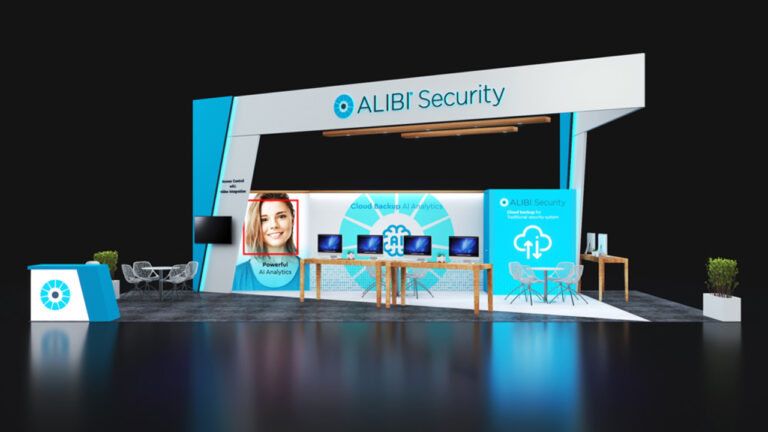
The corridor layout: A central walkway running the full 40-foot depth with display or product zones on either side. This is essentially a curated walk-through experience — attendees enter at the front, move through the space, and exit at the back. Works exceptionally well for exhibitors with multiple product lines or a sequential story to tell. Technology companies at CES and media companies at NAB have used this format to great effect at LVCC.
The front-and-back zones layout: Divide the 40-foot depth into a front open engagement zone of approximately 20x20 and a rear section of 20x20 configured as a meeting suite or executive briefing area. This gives you a high-traffic open front and a private, controlled back — the most practical 20x40 layout for B2B exhibitors whose primary objective is qualified conversations.
The asymmetric layout: Run a large structural element — a feature wall, a product display tower, a double-height branded installation — down one side of the 20-foot width, with open space on the other. Creates strong visual asymmetry that draws the eye from the aisle and differentiates the booth from the more predictable rectangular structures on either side.
Not Sure Which Size You Need?
Our team can walk you through your space requirements, budget, and show goals to recommend the perfect booth size for your next event.
Layout Options: 30x30
The square footprint opens different possibilities:
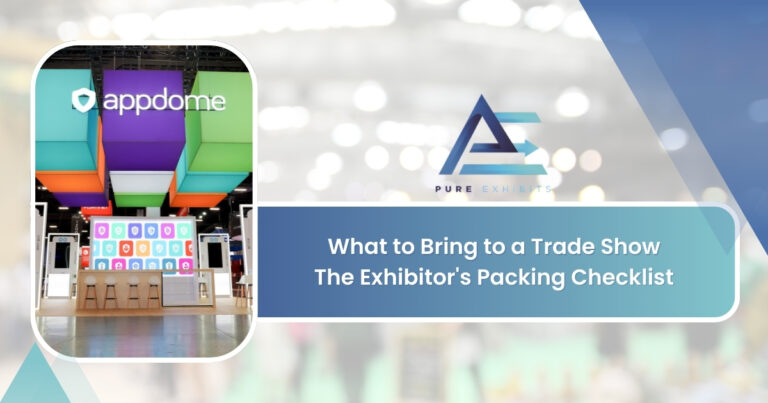
The centerpiece layout: A prominent architectural or product feature in the center of the 30x30 — a hanging sign structure, a product display, a branded installation — with activity zones radiating outward. Maximizes 360-degree visibility and creates a booth that is recognizable from across the show floor. Appdome used this approach in their 30x30 at Black Hat Las Vegas, generating 160+ demos. See the full build in Pure Exhibits' case study.
The four-zone layout: Divide the 30x30 into four functional quadrants — reception and lead capture, product demonstration, meeting space, and brand display. Works well for exhibitors with diverse show objectives who need the booth to serve multiple purposes simultaneously. WillowTree's 30x30 at Adobe Summit at Caesars Forum achieved 300+ meetings using a structured zone approach.
The perimeter-plus-center layout: Display and engagement activity around the perimeter, with a central open gathering point. Effective at high-density shows where you want to pull attendees off the aisle and into a defined space rather than engaging them at the booth edge.
Which Shape Works Better at Las Vegas Venues
At LVCC for CES and NAB — The Central Hall has very wide aisles with significant cross-traffic from multiple directions. A 30x30 with four open sides captures that cross-aisle traffic effectively. For CES specifically, the West Hall's modern infrastructure also favours the 30x30's square format for LED integration and overhead rigging.
At shows with tighter configurations — Some sections of Mandalay Bay and Venetian Expo have narrower aisle configurations where the depth of a 20x40 is more valuable. Attendees moving along a narrower aisle will see more of a 20x40's length than a 30x30's side.
For corner and end-cap positions — A 20x40 can be particularly strong because the long side faces the main aisle and the end cap creates a natural secondary entry. A 30x30 in a corner position works differently but equally well, using the two open sides to maximum effect.
Pure Exhibits reviews floor plans with every client during the design brief process to make sure the configuration serves the actual position in the venue, not just an abstract ideal.
The Decision Framework
Choose a 20x40 if:
- You have a sequential product story or brand narrative to tell
- Your show position is inline or end-cap where depth is an advantage
- You need a strong private back section without sacrificing front display space
- You are exhibiting at a show with narrower aisle configurations
Choose a 30x30 if:
- You want maximum 360-degree visibility from all four sides
- You are at CES, NAB, or another high-traffic LVCC show with wide cross-aisles
- Your objective is to be a destination on the show floor, not just a linear display
- You have multiple distinct activity zones that benefit from equal access from all sides
When it genuinely does not matter: If your position is a true island in the middle of a wide hall with equal traffic from all sides, design quality and staffing strategy will have more impact on results than footprint shape. In that scenario, choose whichever configuration your exhibit company can design most compellingly within your budget — and get 3D renders of both before deciding.
Considering Adjacent Sizes
If the 20x40 or 30x30 feels like a stretch at this point, the 20x30 booth rental at $30,000–$35,000 gives you 600 square feet, 200 less than either configuration above. A well-executed 20x30 with a proper meeting room and strong graphics will consistently outperform a budget-constrained 20x40. Size only matters if the budget allows you to execute it properly.
Beyond 800 square feet, Pure Exhibits builds 30x40 configurations starting at $55,000–$65,000 — full brand environments at 1,200 square feet for exhibitors whose show presence is genuinely a flagship marketing investment.
About Pure Exhibits
Pure Exhibits is a premium American trade show booth rental company based in Las Vegas, Nevada — 20 minutes from Las Vegas Convention Center, Venetian Expo, and Mandalay Bay. We provide full-service, all-inclusive trade show booth rentals nationwide, with transparent pricing published on our website. No last-minute surprises. No hidden fees.
From first design concept to final dismantling, every project is managed by a single dedicated project manager — one point of contact, complete accountability.
Trusted by Fortune 500 companies and fast-growing brands across technology, healthcare, automotive, and consumer goods.
Let's Build Something Extraordinary
Share your event details and we'll craft a custom booth solution designed to captivate your audience and maximize your ROI.
Frequently Asked Questions
How much does a 20x40 trade show booth rental cost in Las Vegas?
Pure Exhibits' fixed pricing for a 20x40 trade show booth rental starts at $35,000–$45,000. That price includes custom design, in-house fabrication, graphics, pre-build verification, freight, installation, show service coordination, dedicated project management, and post-show dismantling. No estimates, no surprise invoices — the price in the contract is the price you pay.
How much does a 30x30 trade show booth rental cost in Las Vegas?
Pure Exhibits' fixed pricing for a 30x30 trade show booth rental starts at $40,000–$50,000, all-inclusive. The 30x30 typically costs slightly more than a 20x40 at the same square footage because the square configuration involves more perimeter structural elements and in many cases a hanging sign structure, which adds fabrication and installation complexity.
What is the difference between a 20x40 and 30x30 trade show booth?
A 20x40 is a long rectangle that maximises depth — ideal for sequential brand narratives and corridor-style layouts. A 30x30 is a square that maximises 360-degree visibility — ideal as a destination booth with activity on all four sides. Pure Exhibits helps clients choose between these configurations based on their specific show position, venue, and objectives rather than personal preference alone.
Which configuration works better for CES in Las Vegas?
For CES at LVCC, where the Central and West Halls have wide cross-aisles and very high foot traffic from multiple directions, a 30x30 with four open sides typically delivers stronger visibility than a 20x40. That said, if your CES position is an end-cap or your brand story benefits from a corridor-style walk-through experience, a 20x40 can be equally effective. Pure Exhibits has built both configurations at CES and advises based on your specific hall, position, and show objectives.
Can I add a hanging sign above a 20x40 or 30x30 booth at LVCC?
Yes, where ceiling height and rigging points permit — which is the case across the Central and West Halls at LVCC. Hanging signs above large island booths are standard at major Las Vegas shows and significantly increase visibility from across the hall. Rigging requires advance approval from Freeman and must be included in your booth plans before the show submission deadline. Pure Exhibits manages all rigging coordination and Freeman approval as standard on every project.
How far in advance should I book a 20x40 or 30x30 booth rental in Las Vegas?
For major shows like CES, NAB, or SEMA, start conversations at least six months in advance. At this size, the design, pre-build, and fabrication cycle is longer than smaller configurations, and Pure Exhibits' production calendar fills quickly for high-demand show periods. Pure Exhibits provides quotes within 24 hours and 3D concepts within three to five business days from your brief, so the earlier you engage, the more design time and flexibility you have before the production deadline.
Why do major brands rent large booths rather than buy them?
The rental model at this size eliminates capital expenditure, monthly storage costs, refurbishment cycles, and logistics management between shows. Brands like IMAX (40x40 at NAB), Appdome (30x30 at Black Hat), and WillowTree (30x30 at Adobe Summit) all use Pure Exhibits' rental programme because it gives them a fully custom, purpose-built booth for each show without any of the asset management overhead of ownership. At roughly one third the cost of purchasing the equivalent booth, the financial case for renting is straightforward for most exhibitors.