
Most trade show giveaways fail for the same reason: they were chosen before anyone decided what the giveaway was supposed to do.
A branded pen handed to 500 people does something different from a custom bag given only to attendees who sat through a demo. A puzzle that stops people in the aisle does something different from a premium tumbler mailed to your top 20 accounts after the show. Same budget category, completely different strategic outcomes.
This guide covers both the strategy that determines which giveaway is right for your situation and the specific ideas that have worked on real show floors in 2025 and 2026.
Planning a show?
Pure Exhibits provides fixed all-inclusive booth rentals across the US. One quote, no surprises on show day.
Before you look at a single product, answer these two questions:
What is the giveaway supposed to do?
There are three distinct jobs a trade show giveaway can perform. Most companies try to do all three with one item and end up doing none of them well.
- Drive traffic — pull people toward your booth who weren't planning to stop. Needs to be visible from the aisle, interesting to handle, or worth queuing for.
- Start a conversation — give your staff a natural opening. Needs to be interesting enough to comment on or ask about.
- Stay in the office — keep your brand visible 60 days after the show. Needs to be genuinely useful in someone's daily work life.
Who is getting it?
Everyone who walks past your booth is not the same person. The most effective exhibitors in 2026 run two separate giveaway tiers: a low-cost, high-volume item for general floor traffic, and a higher-value item reserved for qualified conversations or demo completions. The second tier is not a reward; it is a signal that a real conversation happened.
Tier One: High-Volume Giveaways That Drive Traffic
These are the items you put at the front of your booth or in the aisle. Their job is not to impress — it is to stop, to create curiosity, or to get picked up. Cost per unit should be low enough that you don't hesitate to give them to everyone.
Tactile puzzles and fidget objects
At Shoptalk 2026, Iridio placed a Cubebot and a Snake at the edge of their booth, riffing on their brand theme that "shoppers are a puzzle." Attendees picked them up without being asked. The objects did the stopping. The staff stepped into the interaction the objects had already started. This is the mechanic: find an object that rewards handling, place it where people can reach it without entering your booth, and let curiosity do the work. The item does not need to be branded. It needs to be interesting.
Custom socks
Consistently among the highest-recalled trade show giveaways in exhibitor surveys and online threads, not because socks are exciting but because they're genuinely worn. A subtle logo, a distinctive pattern, and a good weight. Skip the thin polyester. The item survives the "will I actually take this home" test that most giveaways fail at bag check on day three.
Branded tote bags
The simplest traffic driver at any show: give people a bag, and they carry your brand around the floor for the rest of the day. Every person using it is advertising your booth location to everyone they walk past. The bag does not need to be expensive — it needs to be sturdy and large enough to be genuinely useful. A quality canvas or rPET tote with a clean logo print costs $3–6 in quantity and performs like a moving billboard.
Something made live
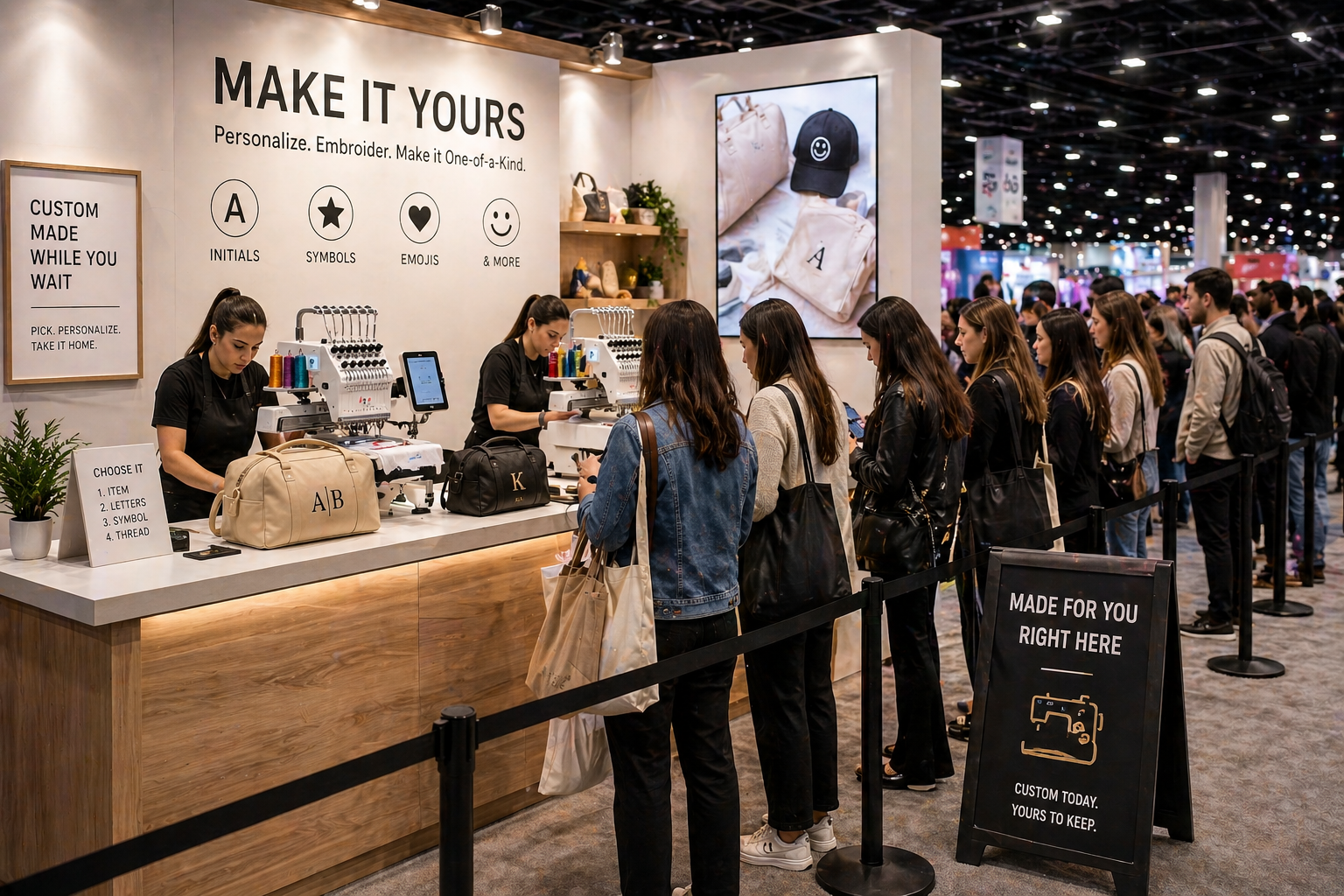
At Shoptalk 2026, Attentive had a line around the corner for Béis bags customised with initials and symbols on the spot. The line was the activation. When people see a queue, they want to know what it's for. Anything made or personalised on the spot — a monogram, a name embossed, a patch heat-pressed — creates this effect. The wait time is not a problem. The wait time is the point.
Food and drink from your booth
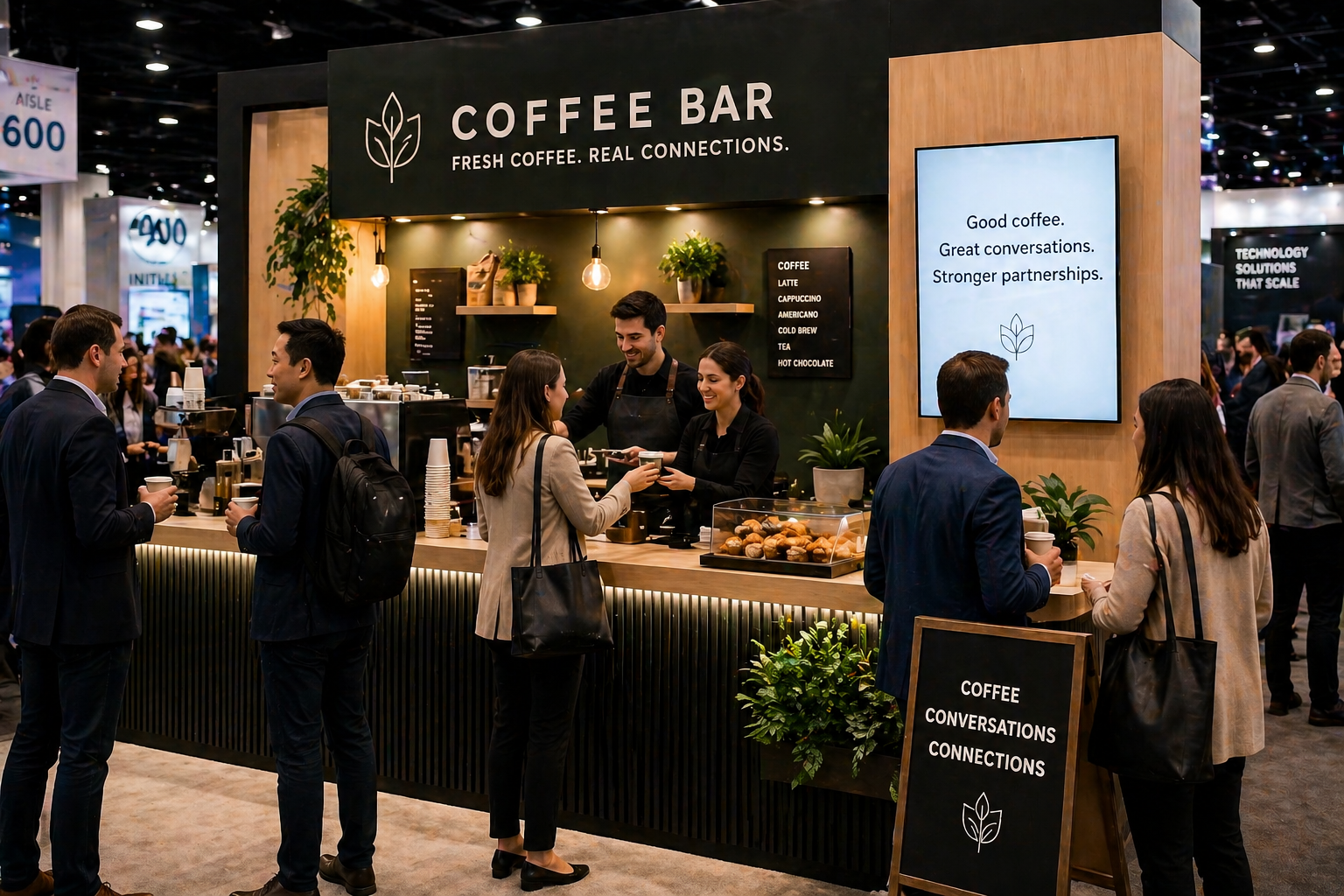
A proper coffee bar, fresh pastries, or a branded beverage station stops people for 90 seconds and gives your staff a natural reason to approach. The giveaway should be the reason to stop. The conversation happened because people were standing still. This works at every show, at every budget — the item does not need to be alcoholic or expensive. It needs to be real food, not a candy bowl.
Tier Two: High-Value Giveaways for Qualified Conversations
These items go to the right people, not to everyone. Their job is to mark that a real interaction happened — and to keep your brand present when that person is back at their desk, making purchasing decisions.
Premium drinkware
A quality insulated tumbler or travel mug that earns desk space. The keyword is quality. A heavy, well-finished tumbler with a clean logo is used daily. A lightweight plastic version goes in a drawer. The difference in cost is $8–12 per unit. The difference in daily brand exposure over six months is enormous. Reserve these for demo completions, booked meetings, or qualified conversations — not for general floor traffic.
Productivity kits (notebook + metal pen)
A metal pen paired with a quality notebook is a working professional's daily toolkit. The pen needs to write well, specify a gel refill, not a ballpoint. The notebook needs 80gsm paper or heavier. Laser engrave the pen; deboss the notebook cover. This combination costs $12–18 in quantity and sits on a desk for months. A cheap plastic version of the same idea gets used once and forgotten.
NFC keytags
The most measurable giveaway on this list. A prospect taps the tag against their phone and is taken directly to your booking page, demo request, or product page — with UTM tracking attached so you know exactly which interaction generated the lead. Print a backup QR code on the tag for phones with NFC off. Specify NTAG213 chips (they hold enough memory for long URLs at lower cost than NTAG215s) and require the chip to be locked after encoding; an unlocked chip can be overwritten by anyone with a phone.
Consultation or expertise, not an object
For companies whose product is knowledge consulting, strategy, or design, the highest-value giveaway is a sample of what you do. A booked 15-minute review slot, a written recommendation, and a scored assessment of their current situation. Book these in advance and run them from a small table at the back of the booth. The consultation is the giveaway. The demonstration is the product.
Custom apparel that passes the suitcase test
If someone will pack it for the flight home, it will appear in an office. If they won't, it won't. The test for any apparel giveaway is whether you would personally pack it after a three-day conference. A well-cut branded quarter-zip or a distinctive hat in an unusual colour passes. A one-size-fits-all branded t-shirt in primary colours usually doesn't. Reserve apparel for your highest-value interactions; it's expensive enough to justify being selective.
Need a booth with a dedicated meeting area for your qualified lead conversations?
Pure Exhibits designs and rents custom booths across the US — tell us your show date, and we'll have a fixed quote back to you in 24 hours.
What Nobody Tells You About Trade Show Giveaways
Hard-won observations from the show floor that don't appear in any product catalog.
The item that creates a line is worth more than the item itself.
A giveaway that requires something from the recipient, a wait, an action, or a decision, is categorically different from a giveaway sitting in a bowl. The bowl signals abundance. The line signals value. If you can engineer any form of queue around your giveaway, even a short one, you have created social proof that operates independently of your staff. People walking past see a line and slow down. They don't know what's at the end of it. That uncertainty is the most powerful aisle traffic driver at any show.
Your giveaway is broadcasting your brand positioning, whether you intend it to or not.
A foam stress ball says something. A well-made metal pen says something different. A live personalization station says something different again. The item you choose signals what kind of company you are before a single word is exchanged. A cheap, generic giveaway doesn't just fail to impress it actively communicates that your company didn't think very hard about this. Conversely, an unusual or well-made item communicates intentionality, and intentionality is one of the most powerful brand signals in a hall full of companies that all claim to be different.
The best giveaway for driving floor traffic is not the best giveaway for closing the pipeline.
These are different jobs, and they require different items. Companies that confuse them spend their best item on the wrong person, then have nothing meaningful to offer when the right person shows up. The CFO who walks into your booth on day two and sits down for a real conversation deserves something different from the attendee who grabbed something from your front table while walking past. Keeping your Tier Two item genuinely out of sight in a bag behind the counter, produced only when a real conversation happens, preserves its value and signals to the recipient that they earned it.
Scarcity is a legitimate strategy, not a trick.
Running slightly short is not a failure. It is a feature. An exhibitor who runs out of a giveaway on the afternoon of day two now has a story: people wanted it badly enough to clean you out. An exhibitor who still has boxes left on day three has a different story. Plan for 60–70% of projected foot traffic, not 100%. The people who didn't get one on day one will come back on day two. That return visit is a second conversation.
The giveaway you send before the show works harder than anything given on the floor.
Mailing something to your 20 highest-priority target accounts before the show, something incomplete by design, with a note that the rest is waiting at your booth, produces a pre-committed visit, a specific reason to find you, and a conversation opener that your competitor cannot manufacture on the floor. Most exhibitors treat pre-show outreach as an afterthought. The ones treating it as the primary strategy arrive on day one with meetings already booked around their giveaway, before the hall opens.
What travels home matters more than what looks good in the booth.
The question to ask about any giveaway is not "will people take this?" but "where will this be in three weeks?" A tote bag that carries groceries on a Saturday has more brand exposure than a branded notebook that never gets opened. A tumbler used at someone's desk every morning for six months generates more recall than any follow-up email sequence. The best giveaways continue working long after the show ends. Evaluate every candidate item by imagining it in someone's home or office in thirty days, not in their conference bag on the last afternoon of the show.
The conversation is the product. The giveaway is the reason the conversation started.
No giveaway converts a prospect on its own. What the giveaway does is create the conditions for a conversation that might not have happened otherwise — it stops someone, gives your staff an opening, lowers the social pressure of a cold approach, or provides a reason for a pre-qualified prospect to seek you out. Companies that treat the giveaway as the endpoint miss what it is actually for. The item gets someone standing in your booth. What happens next is everything.
Giveaways to Avoid (And Why)
Cheap pens — end up in hotel rooms or the conference centre bin. A good pen costs $2–4 more per unit and lasts twelve months on someone's desk. If you're going to give a pen, give a good one or give something else.
USBs — cloud storage has made branded USB drives almost entirely redundant for business professionals. The exception is a highly specific audience (IT hardware, for example) where the use case is genuine.
Stress balls and foam items — high volume, zero recall. The item communicates that you grabbed something from a catalog without thinking about it. That is exactly what the item communicates about your brand.
Generic tote bags with a large logo and nothing else — only works if the bag is actually good quality. A cheap bag that stretches and breaks signals the same thing as a stress ball.
Exhibiting in the US this year?
Pure Exhibits booth rentals come with a fixed all-inclusive price; what you approve is what shows up on the floor.
Giveaway Strategy by Booth Size
The right giveaway depends partly on how much space you're working with.
10x10 booth — budget and space are both limited. One well-chosen Tier One item that your staff actively uses to open conversations beats a table of assorted swag. Pick the item that creates the most natural opening line and spend your budget there. Skip Tier Two entirely unless you have pre-booked meetings — hand-select from a bag kept behind the counter.
10x20 booth — room for two items: one high-volume traffic driver at the front, one better item behind the counter for qualified interactions. The front item draws people in; the back item rewards the conversation.
20x20 and larger — enough space to run a live customisation station, a make-on-the-spot activation, or a tiered giveaway system with visible signage. The line itself becomes part of your marketing. Enough budget to justify premium Tier Two items for serious prospects.
The giveaway drives people to your booth. The booth determines what happens next. See how exhibitors are designing spaces that make every conversation count.
Also Read: 30 Trade Show Booth Ideas That Actually Work in 2026
The Timing Question: When to Give, When to Withhold
Most exhibitors put all their giveaways out at the start of day one and run out by lunch on day two. A better approach:
Before the show: Mail half a giveaway to your top 20 target accounts — one sock, one half of a kit, one piece of a two-part item — with a note that the other half is at your booth. This creates a pre-committed visit, a built-in conversation opener, and a specific reason for that person to seek you out.
During the show: Hold your best items back. Give the Tier One item freely. Make the Tier Two item conditional on an action — watching a demonstration, completing a brief conversation, or booking a follow-up meeting. The item becomes a signal to both parties that a real interaction occurred.
After the show: A premium item sent within a week of a qualified conversation — with a personal note referencing what was discussed — is more powerful than anything given on the show floor. The show is over, the inbox is quiet, and a physical item that references a real conversation is impossible to ignore.
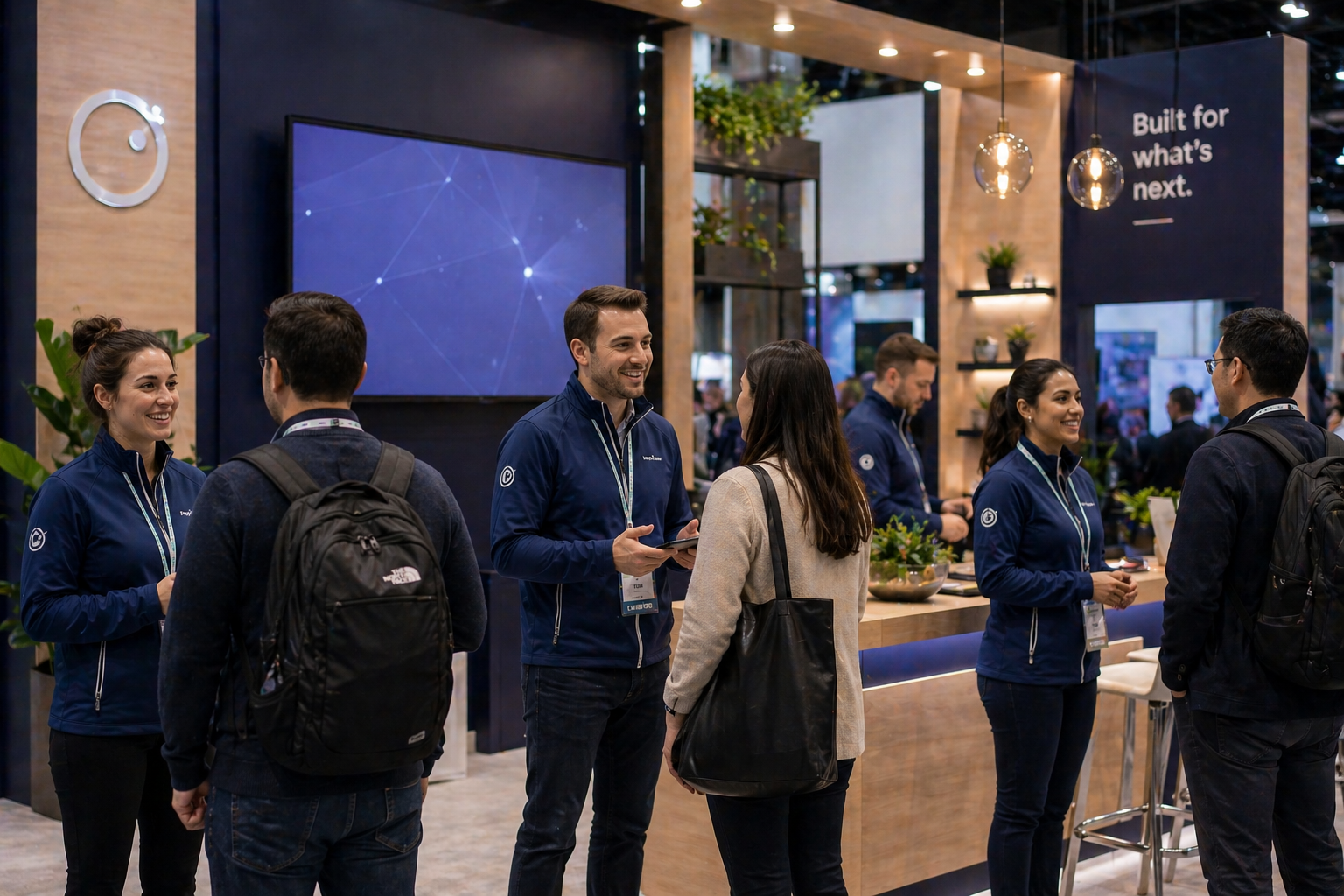
Planning a show in Las Vegas?
Pure Exhibits provides custom trade show booth rentals at conventions across the Strip with fixed all-inclusive pricing and no surprises on show day.
Conclusion
The exhibitors who get the most out of trade show giveaways in 2026 are not the ones with the biggest budgets or the longest item lists. They are the ones who decided what the giveaway was for before they ordered anything.
That means choosing one item to drive traffic and a different item to mark a real conversation. It means holding your best item back rather than putting it on the front table. It means treating the pre-show mailer as seriously as anything that happens on the floor. And it means evaluating every candidate item by where it will be in a month, not how it looks in a booth photo.
The show floor is noisy, fast, and full of companies handing out things nobody asked for. The giveaway that works is the one built around a clear intention — what it is supposed to do, for whom, and at what point in the interaction. Everything else follows from that.
If you're planning your next show and want a booth that makes your giveaway strategy work structurally with the right space, layout, and design to run a live customization station, a tiered activation, or a proper meeting area.
About Pure Exhibits
Pure Exhibits provides trade show booth rentals across the US with fixed all-inclusive pricing, one quote, no add-ons, no surprises on show day. The booth you approve is the booth that shows up on the floor.
The right giveaway strategy starts with the right booth. A 10x10 rental shapes what giveaway mechanics are possible. A 20x20 opens up live customisation stations, tiered activation areas, and the kind of queuing mechanic that turns a giveaway into a crowd. If you're planning a show and want a booth that makes your giveaway strategy work structurally, we respond within 24 hours with a fixed,d all-inclusive quote.
FAQs
How much should I budget for trade show giveaways?
A workable rule: 15–20% of your total show budget.
Within that, split roughly 70% toward your high-volume Tier One item and 30% toward your Tier Two item for qualified leads.
If your total show budget is $10,000, that's $1,500–2,000 on giveaways, with around $1,000 on floor-traffic items and $500–700 on items reserved for real conversations.
Should every giveaway be branded?
Not necessarily. Iridio's puzzles at Shoptalk 2026 weren't branded — the connection to their message came from the conversation.
A logo on a forgettable item is still a forgettable item.
Brand your item if the item is genuinely good.
If the item isn't good enough to want without the logo, the logo won't save it.
How many items should I bring?
For Tier One: enough for roughly 60–70% of expected daily foot traffic past your booth, not 100%.
Running slightly short on day three creates scarcity — people who didn't get one on day one come back.
For Tier Two: only as many as you expect qualified conversations.
30–50 items for most shows is plenty.
What's the single biggest giveaway mistake?
Giving everything to everyone.
A stack of premium tumblers on the front table attracts people who want a tumbler, not people who want to buy what you're selling.
The giveaway that costs $25 and goes to 200 random attendees has a lower ROI than the same item given to 30 people who completed a meaningful interaction.
Does a giveaway need to relate to my product?
It helps, but it's not required.
What's required is that the giveaway suits your audience.
A wellness kit at a healthcare show makes sense. A productivity notebook at a SaaS conference makes sense.
A branded ice scraper at a summer outdoor expo does not.
The connection between item and audience matters more than the connection between item and product.