
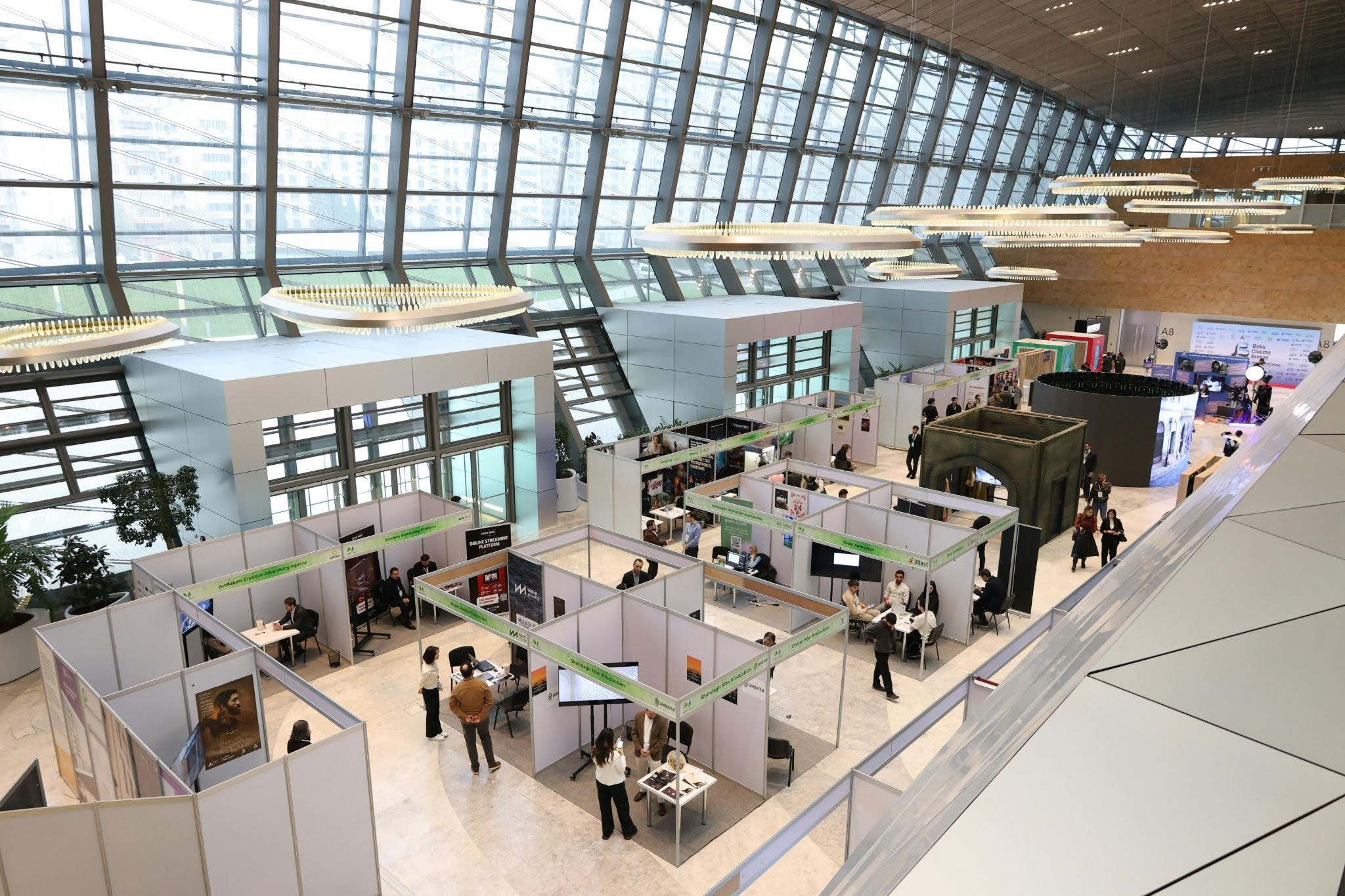
Walk any major trade show floor in 2026 and the difference between an exhibit that stops traffic and one that gets walked past is immediate and stark. It is not about budget — some of the most forgettable booths are also the most expensive. It is about whether the design reflects how buyers actually experience a show floor today: overstimulated, time-compressed, and increasingly immune to the booth formats that worked five years ago.
The trends defining exhibition booth design in 2026 are not aesthetic fads. They are responses to measurable changes in how attendees move through shows, what earns dwell time, and what converts a visual stop into a qualified conversation. This guide covers what is actually working on the floor right now — not what is trending on design mood boards — and how exhibitors at every budget level can apply these principles to their next exhibit.
Build a Trend-Forward Exhibit for Your Next Las Vegas Show
Pure Exhibits designs and delivers rental exhibits incorporating 2026’s most effective design principles — backlit graphics, open layouts, integrated lighting, and more.
What Are the Biggest Trade Show Booth Design Trends in 2026?
The dominant themes in 2026 exhibit design share a common driver: attendee attention is a scarcer resource than it has ever been, and the design trends that are gaining ground are the ones that earn that attention quickly and hold it long enough to create a conversation. The following eight trends represent the clearest shifts visible across major shows in the current season.
| Design Trend | What It Looks Like | Why It Works in 2026 | Best Booth Size |
|---|---|---|---|
| Open, barrier-free layouts | No counters at aisle edge; seating pulled into booth interior; inviting sightlines | Removes psychological barrier to entry; increases dwell time by 30–50% vs. closed layouts | 10×20 and above |
| Full-wall backlit SEG graphics | Edge-to-edge fabric panels illuminated from behind; saturated color; single bold headline | Visible at 40+ feet; creates premium brand signal without premium budget | All sizes — especially impactful on 10×10 back walls |
| Biophilic design elements | Live plants, natural wood finishes, moss walls, stone textures integrated into structure | Contrasts with convention center environment; creates sensory differentiation and dwell time | 10×20 and island booths |
| Integrated LED feature lighting | Programmable RGB or tunable white LED strips, halo-lit logos, accent rails on structural edges | Animates the exhibit; creates movement and depth without physical motion | All sizes — most cost-effective upgrade available |
| Minimalist product focus | One hero product displayed prominently; everything else removed or subordinated | Clarity cuts through show floor noise; buyers know what you sell in under 3 seconds | All sizes — critical at 10×10 |
| Modular configurability | System that rebuilds as 10×10, 10×20, or L-shape depending on show floor allocation | One exhibit investment works across a multi-show program with different footprints | Best suited to rental exhibit systems |
| Tech-integrated engagement | Touchscreen demos, digital lookbooks, interactive product configurators, QR-linked content | Extends conversation depth beyond what staff can explain; drives measurable digital engagement | 10×20 and above — needs floor depth for screen placement |
| Sustainable / reusable materials | Recyclable aluminum frames, fabric graphics over rigid substrate, low-energy LED lighting | Reduces per-show carbon footprint; increasingly important to procurement-conscious buyers | All sizes — built into material specification |
Why Are Exhibitors Moving Away from Traditional Booth Layouts?
The traditional trade show booth layout — counter at the front of the space, back wall graphic behind, staff standing inside the counter perimeter — was designed for a show floor where visitors had more time and fewer competing stimuli. On today’s show floors, that layout communicates one thing before a word is spoken: this is a place where someone will try to sell you something. Attendees have become very good at walking past it.
The shift to open layouts removes the physical and psychological barrier at the aisle edge. When the counter is inside the booth and the entry is clear, visitors feel like they are stepping into a space rather than approaching a sales station. That distinction is not subtle — it changes body language, dwell time, and the nature of the conversation that follows. The trade show booth rental cost difference between an open-layout configuration and a closed one is minimal on a rental system; the performance difference on the floor is significant.
Open layouts do require a different staffing strategy. Without a counter as a natural conversation anchor, staff need to be trained to initiate conversations proactively and to guide visitors through the space intentionally. The layout creates more opportunities for engagement — but those opportunities do not convert automatically. The booth opens the door; the staff has to walk through it.
How Is Sustainable Design Changing the Trade Show Floor in 2026?
Sustainability in trade show design has shifted from a niche preference to a mainstream specification requirement at major companies. Procurement teams and corporate sustainability officers are increasingly reviewing event and marketing spend for environmental impact — and exhibit programs are on the list. The brands that have incorporated sustainable design principles into their exhibit strategy are not doing it because it looks good; they are doing it because their internal stakeholders are requiring it.
In practical terms, sustainable exhibit design in 2026 centers on three choices: material selection, energy consumption, and reusability. Modular aluminum extrusion systems are inherently sustainable — they are made from recyclable material, require no adhesives or disposable substrates, and can be reconfigured and reused for years without replacement. Dye-sublimation fabric graphics on SEG frames are more sustainable than rigid substrate panels because the fabric is lighter (lower freight carbon footprint), easier to replace without discarding the frame, and can be produced using water-based inks on recycled polyester substrates.
| Design Choice | Traditional Approach | 2026 Sustainable Alternative | Practical Impact |
|---|---|---|---|
| Back wall graphics | Rigid PVC or foam board substrate — single use, landfill on disposal | Dye-sublimation fabric on reusable SEG aluminum frame | Frame reused indefinitely; fabric recycled or replaced per campaign |
| Flooring | Single-use carpet cut to footprint — discarded after show | Interlocking modular tile flooring — reused across shows | Eliminates carpet waste; same tile set adapts to different footprints |
| Lighting | Halogen or fluorescent show fixtures — high energy draw | LED fixtures — 60–80% lower energy consumption, longer bulb life | Lower GSC electrical order; reduced operating cost per show |
| Structure | Custom-fabricated wood and MDF framework — heavy, show-specific | Modular aluminum extrusion — lightweight, reconfigurable, fully recyclable | Lower freight weight; reused across shows; no disposal cost |
| Furniture | Rented from GSC per show — generic, high per-show cost | Owned or exhibit-house-managed modular seating and counters | Consistent brand look; lower per-show cost over multi-show program |
| Printing | Solvent-based inks on non-recyclable substrate | Water-based inks on recycled polyester fabric | Lower VOC emissions; fabric substrate can be recycled post-use |
What Role Does Technology Play in 2026 Booth Design?
Technology integration in 2026 exhibit design is not about deploying the most impressive screen or the most complex interactive experience. It is about using digital tools to extend what the booth can communicate beyond what graphics and staff conversations alone can deliver — and to create measurable digital touchpoints that generate data after the show closes.
The technology applications that are generating the strongest floor results in 2026 are the ones with the lowest friction for the visitor: a touchscreen product configurator that a buyer can use without staff assistance, a digital lookbook that loads instantly and replaces the stack of printed brochures, a short video loop on a monitor that communicates the brand story while staff are engaged in other conversations. High-friction technology — anything requiring a download, a login, or more than two taps — consistently underperforms on the show floor regardless of how impressive it looks in the design render.
QR codes remain one of the highest-performing low-cost technology integrations available. When placed correctly and linked to a dedicated landing page — not a general website homepage — trade show booth qr codes generate measurable post-show digital engagement that extends the exhibit’s reach well beyond the show floor. Dynamic QR codes allow destination URLs to be changed without reprinting graphics, making them more flexible across a multi-show program.
| Technology Integration | Best Application | Cost Range | ROI Signal |
|---|---|---|---|
| Large format monitor (55″–75″) | Product demo loop, brand story video, scrolling testimonials | $200–$600 rental from GSC | Extends staff reach — communicates while staff are in other conversations |
| Touchscreen interactive display | Product configurator, digital lookbook, interactive spec sheets | $500–$1,500 rental or owned | Increases average visitor dwell time; generates self-qualified leads |
| Dynamic QR code system | Lead capture, digital content delivery, appointment booking | $20–$80/month SaaS tool | Trackable post-show engagement; measurable scan-to-conversion rate |
| LED video wall (2×2 or 3×3 tiles) | Looping visual content, live product feeds, animated brand campaigns | $2,000–$6,000 rental | Maximum aisle presence; most effective in island or 20×20+ footprints |
| Tablet-based lead capture | Replaces badge scanner; captures custom qualification data | $0 (app-based on owned tablet) | Richer lead data than badge scan alone; integrates with CRM directly |
| AR product demonstration | Virtual product placement, 3D model interaction via visitor’s phone | $3,000–$15,000 development cost | Strong novelty value; best for complex or large products that cannot be displayed physically |
Design a Booth That Reflects 2026’s Best Practices
Pure Exhibits incorporates current design trends — open layouts, backlit SEG, integrated LED, and tech-ready structures — into every rental exhibit we build for Las Vegas shows.
How Are Graphics and Visual Storytelling Evolving at Trade Shows?
The graphic trends that are gaining ground in 2026 share a common characteristic: they are designed for the way attendees actually see a booth on a show floor — in motion, at distance, with peripheral vision competing for attention. Static, text-heavy graphic panels that require a visitor to stop and read are losing ground to bold, singular visual statements that communicate the brand proposition before the visitor consciously decides to stop.
The most effective trade show booth graphics in 2026 follow a three-layer hierarchy: a dominant visual at the top third of the back wall (large-scale product photography or brand lifestyle imagery) that creates the initial stop, a single bold headline in the middle zone that states the brand’s primary differentiation in under eight words, and supporting details — certifications, product names, contact information — in the lower third that are read only by visitors who have already stopped. This hierarchy works because it matches the sequence in which a visitor processes a booth: image first, headline second, detail third.
Color strategy is shifting toward bolder, more saturated palettes that perform well in the backlit SEG format. Pastels and muted brand colors that look sophisticated on a website or print piece often disappear under the ambient noise of a convention center floor. Brands that are updating their exhibit graphics for 2026 shows are increasingly testing their color choices in a backlit format specifically — because the same color behaves differently when illuminated from behind versus front-lit or printed on a non-backlit substrate.
Typography in leading exhibit designs is moving toward fewer, larger type elements rather than comprehensive information at readable size. A 96-point headline on a 10-foot panel communicates at 30 feet. The same message broken into six bullet points at 24-point type communicates at 8 feet — which is inside the booth, after the visitor has already decided to stop. Lead with what earns the stop; save the detail for the conversation.
What Lighting Trends Are Defining 2026 Exhibit Design?
Lighting is the highest-ROI design upgrade available to exhibitors in 2026 — and it remains the most commonly underspecified element in mid-market exhibit design. The gap between an exhibit with intentional, well-calibrated lighting and one with generic clip-on spotlights is visible from 50 feet and measurable in both visitor stop rates and perceived brand quality.
The 2026 lighting approach that is generating the most consistent results combines three layers: backlit SEG panels for ambient glow and graphic vibrancy, calibrated spotlights for product and focal point emphasis, and accent LED rails or halo elements on structural edges for depth and dimension. This three-layer approach is not expensive relative to its impact — most of the components are standard in rental exhibit house inventories. For a full breakdown of fixture types, placement strategy, and ordering logistics, see trade show booth lighting ideas.
Tunable white LED fixtures — which allow color temperature to be adjusted from warm (2,700K) to cool (5,000K) — are appearing more frequently in 2026 exhibit specifications because they allow the same fixture to be optimized for different product categories and show environments. A fixture calibrated to 3,000K renders food and lifestyle products warmly and appetizingly. The same fixture at 4,500K makes technology hardware look precise and engineered. Exhibitors who specify tunable fixtures get flexibility across their show program without replacing hardware.
Programmable RGB LED is appearing in feature applications — halo-lit logo walls, illuminated structural edges, and entrance archways — where motion and color change are used to create movement without physical kinetics. The key discipline with programmable LED in a show floor context is restraint: a subtle, slow color shift on a structural edge creates interest; rapid color cycling creates visual noise that competes with the graphic message rather than amplifying it.
How Do Smaller Booths Apply 2026 Design Trends Effectively?
The most common misconception about 2026 design trends is that they are only accessible to large-budget island exhibits. The trends that have the strongest ROI on the show floor — open layouts, backlit graphics, intentional lighting, minimalist product focus — are all available at the 10×10 and 10×20 footprint and at budgets that mid-market brands can sustain across a multi-show program.
At the 10×20 trade show booth rental level, the combination of a full 20-foot backlit SEG back wall, an open counter configuration set back from the aisle, and a calibrated three-layer lighting scheme achieves the primary objectives of 2026 design — aisle presence, open invitation, and premium brand signal — at a cost that is accessible to most exhibiting budgets. This footprint is where the greatest concentration of 2026 design application is happening, because it has enough floor depth for an open layout and enough back-wall canvas for a truly impactful graphic statement.
For Las Vegas shows specifically, las vegas trade show booth rentals from a locally based exhibit house allow exhibitors to specify trend-forward design elements — tunable LED lighting, backlit SEG, open furniture configurations — without the freight premium that drives up costs for out-of-state exhibitors. The design quality available at a Las Vegas rental exhibit house is comparable to national exhibit houses at a significantly lower all-in cost when freight and drayage savings are factored in.
Which 2026 Design Trends Deliver the Best ROI for Exhibitors?
Not all design trends are equal in their impact on the metrics that matter: booth visitor volume, qualified lead count, and dwell time. Some trends generate impressive renders and underwhelming floor performance. The table below ranks 2026’s primary design trends by their observed impact on floor performance across exhibitors in the mid-market segment.
| Design Trend | ROI Impact | Why | Implementation Cost |
|---|---|---|---|
| Full-wall backlit SEG graphics | Highest | Aisle presence is the first gating factor — more stops equals more conversations | Low–Medium: standard on rental systems; graphic production is primary cost |
| Open, barrier-free layout | High | Directly increases dwell time and conversation quality; low implementation cost | Low: reconfiguration of existing components; no new hardware required |
| Intentional three-layer lighting | High | Perceived brand quality signal is immediate and show-floor-specific | Low–Medium: advance GSC electrical order + exhibit house light package |
| Minimalist product focus | High | Clarity reduces cognitive load; buyers know what you sell faster and stay longer | None: a design discipline, not a hardware purchase |
| Technology integration (monitor + QR) | Medium–High | Extends staff reach and creates trackable digital touchpoints | Low–Medium: monitor rental + QR platform subscription |
| Biophilic design elements | Medium | Sensory differentiation and dwell time; most impactful at 10×20 and above | Medium: live or preserved plants, wood finishes add cost and complexity |
| Modular configurability | Medium | Reduces per-show cost across a multi-show program; indirect ROI | Low if rental; medium if owned and reconfigured |
| LED video wall | Medium | Strong aisle presence in island footprints; diminishing returns at inline sizes | High: rental cost is significant; most justified at 20×20 and above |
| AR demonstration | Low–Medium | Novelty value is strong; practical utility depends on product category | High: development cost is significant; best for complex or large products |
The pattern is clear: the highest-ROI 2026 design investments are the ones that affect what happens before a visitor enters the booth — aisle presence, layout openness, and lighting — rather than what happens after. The best strategy is to maximize stop rate first, then invest in engagement depth. Working with a qualified trade show designer who understands current floor dynamics and can apply these principles to your specific footprint and budget is the most reliable way to convert 2026 trend awareness into measurable show-floor results.
Apply the Trends That Move the Metrics, Not Just the Mood Board
The most useful lens for evaluating any 2026 trade show booth design trend is a simple one: does this change increase the number of qualified visitors who stop, or does it just make the render look better? The trends that are generating consistent floor performance this season — open layouts, backlit graphics, intentional lighting, minimalist product hierarchy — all answer yes to that question. They earn stops, extend dwell time, and create the conditions for better conversations.
Start with the highest-ROI changes, not the most visually impressive ones. Prioritize the aisle before the interior. Get the lighting right before adding a video wall. Clear the message before adding a touchscreen. The foundation of a strong 2026 exhibit is the same as it has always been — clarity, presence, and an environment that makes the visitor want to stay. The trends just give you better tools to build it.
Let’s Build Something Extraordinary
Share your event details and we’ll craft a custom booth solution designed to captivate your audience and maximize your ROI.
Frequently Asked Questions
What is the biggest trade show booth design trend in 2026?
The most impactful shift in 2026 is the move from closed, counter-forward layouts to open, barrier-free configurations that invite visitors into the space rather than presenting a sales barrier at the aisle. This trend is driven by measurable dwell time data showing that open layouts consistently outperform closed ones across booth sizes and industry categories. Combined with full-wall backlit SEG graphics and intentional three-layer lighting, open layouts represent the highest-ROI design update available to exhibitors refreshing their exhibit for the current show season.
Are backlit graphics worth the cost?
Yes — backlit SEG graphics are the single most impactful visual upgrade available on the show floor. A full-wall backlit back panel is visible at 40+ feet, creates a premium brand signal regardless of overall booth budget, and performs significantly better than front-lit or non-illuminated graphics in the ambient lighting conditions of most convention centers. The fabric-on-aluminum system used for backlit SEG is also one of the most sustainable and reusable graphic formats available, which makes it both the highest-performing and the most cost-effective choice over a multi-show program.
How do I incorporate 2026 design trends on a limited budget?
Prioritize in this order: open layout (zero additional cost — a reconfiguration of existing components), backlit back-wall graphic (primary cost is graphic production; frame is standard on rental systems), and intentional lighting (advance GSC electrical order is significantly cheaper than on-site ordering). These three changes deliver the highest floor performance improvement at the lowest incremental cost. Biophilic elements, technology integration, and LED video walls are performance-enhancing additions for budgets that can accommodate them — they are not prerequisites for a strong exhibit.
What colors are trending in trade show booth design for 2026?
Bold, saturated palettes that perform well in the backlit SEG format are gaining ground — deep navy, forest green, rich burgundy, and vibrant terracotta are appearing frequently in 2026 exhibit design, often as full back-wall color fields paired with white or cream typography. The trend is moving away from muted, desaturated brand colors that disappear on the show floor and toward palettes that are specifically tested for vibrancy under both backlit and ambient convention center lighting conditions. Metallic accents — brushed gold, warm silver — on structural elements and counters are common supporting elements in premium exhibit designs this season.
Is sustainability a real priority for trade show exhibitors in 2026?
Increasingly yes, particularly for mid-to-large companies with published ESG commitments and procurement policies that extend to event marketing spend. The operational impact is most visible in material specifications: fabric graphics over rigid substrate, LED lighting over halogen, modular aluminum over custom wood fabrication, and reusable modular flooring over single-use carpet. These choices reduce per-show environmental impact and, in most cases, reduce per-show cost over a multi-show program — which makes sustainability alignment a financial benefit rather than a budget penalty.
How important is technology integration to 2026 trade show design?
Technology integration improves floor performance when it reduces friction and extends staff reach — and hurts performance when it creates friction and diverts staff attention to managing equipment. The highest-performing technology in 2026 exhibits is the kind visitors interact with independently: a touchscreen lookbook, a QR-linked landing page, a well-produced video loop on a monitor. These tools work while staff are in conversations with other visitors. Technology that requires staff facilitation — live demos, AR setups, complex configurators — competes with the conversation it is meant to support.
What is biophilic design and how is it used in trade show booths?
Biophilic design incorporates natural elements — plants, wood, stone, water, or naturalistic textures — into built environments to create a sensory contrast with artificial surroundings. In trade show exhibit design, biophilic elements are used to differentiate the booth from the uniform metal-and-carpet texture of the conventional show floor environment. Common applications include live plant walls or moss panels at the back of the booth, natural wood veneer on counters or structural columns, and stone or concrete-look surfaces on feature elements. The effect is a measurable increase in dwell time because the space feels calmer and more distinctive than adjacent booths.
Should I update my exhibit graphics for 2026 even if the structure is reusable?
If the graphic content is current, a graphic update is still worth evaluating if the format has not kept pace with current design norms. Specifically: if your current graphics are on a non-backlit rigid substrate, converting to a backlit SEG fabric system will deliver significantly more aisle presence even with the same or updated artwork. If the typography is small and text-heavy by current standards, updating to a simplified, headline-dominant layout typically improves visitor stop rate. If the color palette reads as muted under convention center ambient lighting, updating to a more saturated palette calibrated for the backlit format is a worthwhile investment.
How does 2026 exhibit design affect lead quality, not just quantity?
Open layouts and minimalist product focus tend to improve lead quality alongside volume by attracting visitors who are genuinely interested in what the exhibit communicates rather than visitors who stopped because they felt socially obligated to engage with a staff member who made eye contact from behind a counter. A booth that clearly communicates what the company does and who it serves pre-qualifies visitors before they enter — the people who step in are already more likely to be relevant than those who were stopped at the aisle. Design that functions as a pre-qualification filter produces fewer but higher-quality conversations per hour of show time.
Are modular exhibit systems keeping up with 2026 design trends?
Yes — modern modular aluminum extrusion systems support virtually all of the design trends gaining ground in 2026. Backlit SEG graphic channels, integrated LED lighting channels, configurable counter and furniture positions, open-back structural frames, and digital display mounting points are all standard features in current-generation modular systems. The perception that modular equals generic is outdated — the quality of the graphic and lighting design applied to a modular frame determines the result, not the frame itself. The most trend-forward exhibits at major 2026 shows are built on modular rental systems, not custom fabrication.
How do I brief a designer to incorporate 2026 trends into my exhibit?
Start by sharing specific references — exhibits or environments (retail stores, hospitality spaces) whose design language reflects what you want to achieve. Tell the designer your two or three non-negotiable design priorities from the 2026 trend list, your footprint and budget, and which shows you are designing for specifically. Providing show-floor photos from prior years of the same event gives the designer lighting condition context that significantly improves the accuracy of their material and color recommendations. The more specific the brief, the more precisely the design will execute the trends that are relevant to your brand and show program.
How often should I refresh my trade show exhibit design?
The structural system of a well-designed modular exhibit can run effectively for four to six years with proper storage and maintenance. Graphics should be evaluated for refresh at every show cycle — not because old graphics are necessarily wrong, but because the format evolution happening in 2026 (backlit SEG replacing rigid substrate, headline-dominant layouts replacing information-dense panels) means graphics that were strong two or three years ago may be underperforming relative to current show floor standards. An annual graphic review against current design benchmarks is a low-cost way to maintain competitive exhibit performance without a full structural rebuild.