Original data from 128 fixed-price quotes: median booth prices and cost per square foot by size, why half of a small booth’s price is delivery while most of a large one is the booth itself, and how much venue services add on top.
More than a quarter of exhibitors expect to add events, while most plan to refurbish rather than buy property. How to sort the calendar by tier, keep the attendee experience consistent from island to inline, decide what to own, rent or re-skin, handle overlapping shows, and budget each added show at full cost.
A second level looks like free square footage. It brings engineering, approvals, fire watch and labor a bigger footprint never would, and gives back separation. What a deck is for, the four cost layers it adds, how Las Vegas, Chicago and Orlando rules differ, and how to compare options by cost per meeting hour.
The same booth can cost very differently to install in Las Vegas, Chicago, Orlando, New York, Philadelphia and San Francisco. Who may touch what, which tools they can use, when straight time ends and which services are exclusive change city by city. How the rules differ, how they shape design, and how to plan and budget labor across a multi-city calendar.
Most exhibit managers who should change partners don’t, and the RFP is not what stops them. When to switch, what you actually own, how to get property out of storage cleanly, how to make estimate and fixed-price bids comparable, and how to run the first show with a new partner.
Pick a size, set your show city, narrow 1,800+ priced designs, then make one yours and revise it until it is exactly right. An interactive walk through every step of the Pure Exhibits catalog, from the first filter to the approved booth.
Leadership has stopped accepting badge scans as proof a show worked. Most booths, though, are still designed for traffic. How layout, zone sizing and staff placement decide who you actually meet, how the booth itself captures the context follow-up needs, and where a pipeline-ready booth is worth paying more for.
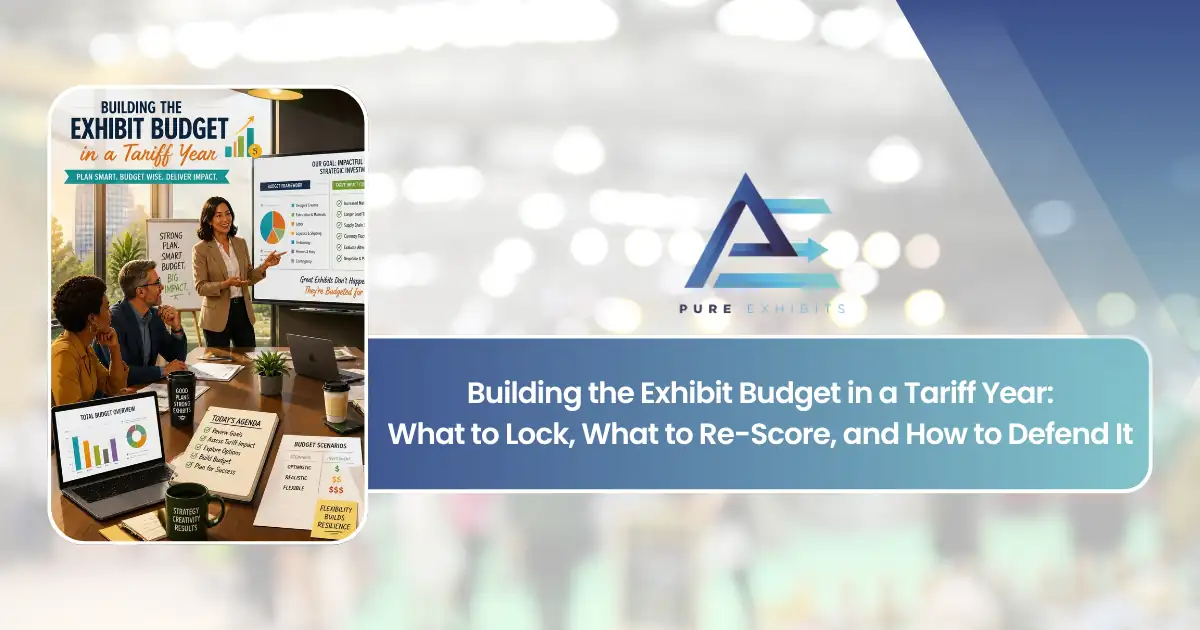
Next year’s exhibit budget is being built while materials, services and travel all cost more and international audiences thin out. Where tariffs actually land in an exhibit program, which commitments to lock before year-end, how to re-score the show portfolio, and how to present the number to finance.
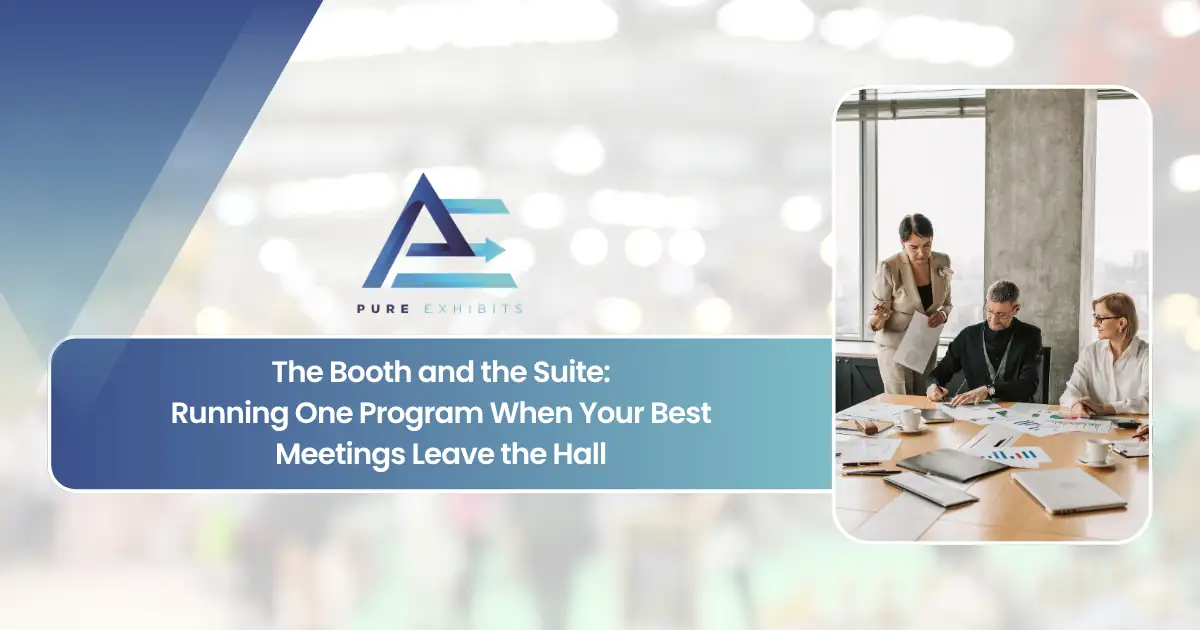
Senior buyers are spending less of the show on the floor and more of it in suites, dinners and side rooms. The exhibitors getting value treat the booth and the suite as one program: the floor finds and qualifies, the suite hosts and closes. Here is how to design, staff and budget them together.
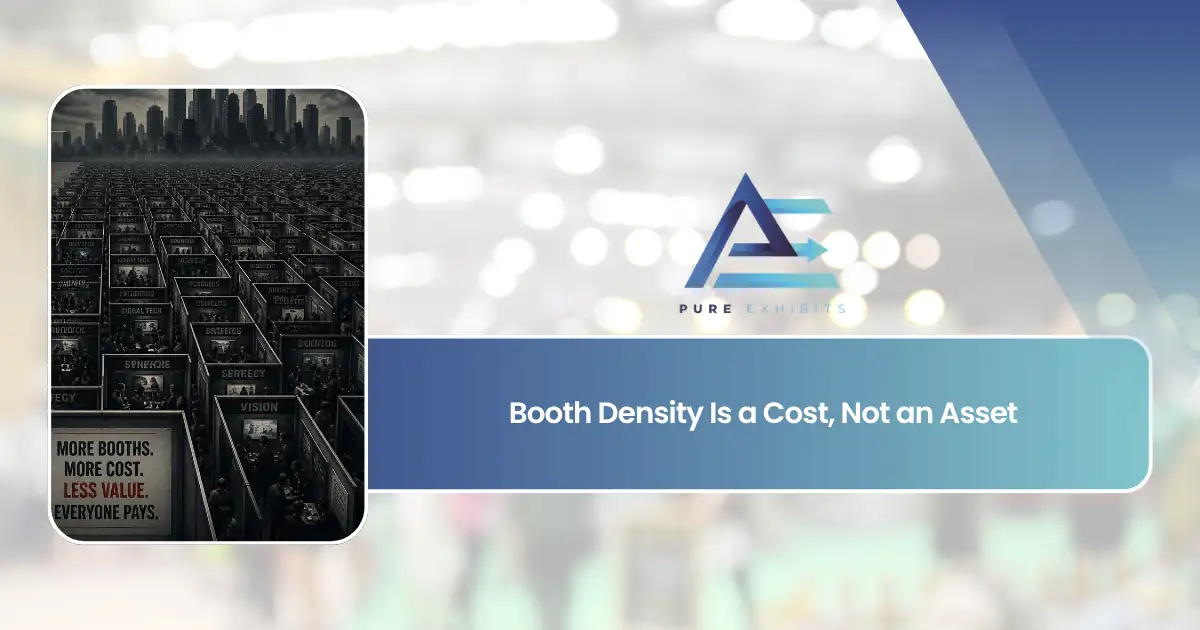
“We’re paying for this space, we should fill it” is the most expensive sentence in exhibit design. The four invoices behind every square foot of structure, the walkthrough test for a plan that is too dense, what to cut first, and how to win the argument with your marketing director.