
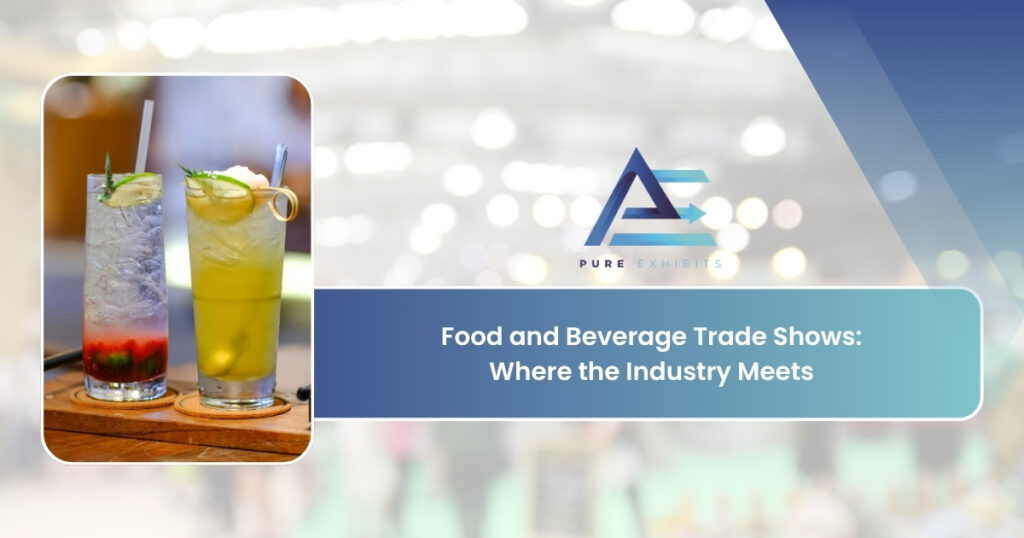
The buyer walked the entire floor on day one. By hour three, she had sampled 60 products, collected 40 sell sheets, and talked to maybe a dozen brands long enough to remember them. Yours was not one of them — not because the product was wrong, but because the booth gave her no reason to stop, and the staff gave her no reason to stay. That is the central challenge of food and beverage trade shows: the product has to do double duty as both bait and pitch, and the booth has to create the environment where that works.
Food and beverage trade shows are among the most tactile selling environments in any industry. Buyers are there to taste, evaluate, and write purchase orders — but they are doing it in a space with hundreds of competing brands and limited time. Understanding which shows attract the buyers relevant to your distribution goals, how those buyers make decisions on the floor, and what booth strategy converts tastings into follow-up conversations is what separates exhibitors who leave with real pipeline from those who leave with a stack of business cards and no next steps. The trade show booth rental cost investment at a major food show is significant enough that getting the strategy right matters before the space fee is signed.
Exhibit at Las Vegas Food Shows With a Local Builder
Pure Exhibits designs and delivers rental exhibits for Las Vegas trade shows — including food and beverage industry events. Get a quote tailored to your show.
What Are the Biggest Food and Beverage Trade Shows in North America?
The food and beverage trade show calendar spans hundreds of events ranging from hyper-specialized regional shows to massive international conventions drawing tens of thousands of buyers. The shows below represent the most significant events in the North American market by attendance, buyer quality, and distribution opportunity for exhibiting brands.
| Show Name | Location | Timing | Attendance | Primary Audience |
|---|---|---|---|---|
| Natural Products Expo West | Anaheim, CA | March | 90,000+ | Natural/organic buyers, retailers, distributors, investors |
| Fancy Food Show (Summer) | New York, NY | June | 20,000+ | Specialty food buyers, gourmet retailers, foodservice |
| Fancy Food Show (Winter) | Las Vegas, NV | January | 17,000+ | Same specialty focus; ideal for West Coast and LV-based brands |
| National Restaurant Association Show | Chicago, IL | May | 55,000+ | Foodservice operators, restaurant groups, hospitality buyers |
| Natural Products Expo East | Philadelphia, PA | September | 35,000+ | Natural/organic; East Coast retailer and distributor focus |
| SupplySide West | Las Vegas, NV | October | 18,000+ | Ingredient suppliers, formulators, supplement and functional food brands |
| International Dairy Deli Bakery Assoc. (IDDBA) | Rotating U.S. cities | June | 10,000+ | Deli, dairy, and bakery buyers from grocery and foodservice |
| Food & Beverage Show (Private Label) | Chicago, IL | November | 10,000+ | Retailers and distributors sourcing private label food products |
Las Vegas hosts two significant food and beverage events — the Winter Fancy Food Show in January and SupplySide West in October — making it one of the most active food industry convention markets in the country. For brands exhibiting at either event, las vegas trade show booth rentals from a locally based exhibit house eliminate the long-haul freight cost and advance warehouse dependency that out-of-state exhibitors absorb, while providing faster on-site support if anything needs adjustment during move-in.
What Do Food and Beverage Buyers Attend Trade Shows to Find?
Understanding the buyer’s objective is more important in food and beverage than in most other trade show categories — because the buyer’s decision process on the show floor is fundamentally different from a B2B technology or industrial equipment buyer. Food buyers are evaluating products on sensory criteria (taste, texture, aroma, packaging aesthetics) alongside commercial criteria (price point, minimum order, lead time, certifications). Both dimensions must be addressed in the booth, and neither can substitute for the other.
| Buyer Type | What They’re Looking For | Key Decision Factors | How to Engage Them |
|---|---|---|---|
| Retail buyer (grocery chain) | New SKUs that fit category gaps, differentiated positioning, proven velocity data | Price point, shelf life, packaging dimensions, retailer margin | Lead with a single hero product; have category sell sheet ready with IRI/SPINS data |
| Specialty / gourmet retailer | Unique, story-driven products; artisan and premium positioning; exclusivity potential | Brand story, product origin, certifications (organic, non-GMO, kosher) | Sampling-first; let the product speak; follow with brand narrative |
| Foodservice distributor | Products that fit menu applications; portion control; back-of-house practicality | Pack size, case cost, storage requirements, prep time | Focus on versatility and margin — show menu application ideas at the booth |
| Natural/independent distributor | Mission-aligned brands with clean labels; emerging categories; margin potential | MSRP, distributor margin, minimum order, marketing support offered | Have a clear distribution pitch; know your turns and marketing commitments |
| Private label buyer | Manufacturing capacity, certifications, co-packing flexibility, cost efficiency | Certifications (SQF, BRC, USDA Organic), MOQ, lead time, pricing tiers | Lead with capability, not brand — they are buying your production, not your label |
| Restaurant / hospitality operator | Menu-ready products, portion control, consistency at scale, story for front-of-house use | Case pricing, servings per case, allergen information, sustainability story | Demo menu applications at the booth; provide chef-ready recipe cards |
How Is Exhibiting at a Food and Beverage Trade Show Different from Other Industries?
Food and beverage trade shows operate by a fundamentally different set of rules than technology, manufacturing, or professional services shows — and exhibitors who approach them with a standard booth strategy typically underperform. The differences affect booth design, staffing, budget allocation, and how conversations are structured.
The most significant difference is the role of sampling. In most trade show categories, the exhibit generates interest and staff close the conversation. In food and beverage, the product itself is the most powerful sales tool available — and the booth must be designed to deliver that product experience efficiently and repeatedly to a high volume of floor traffic. A booth that cannot execute smooth, consistent product sampling during peak floor hours is leaving its best sales tool unused.
Health, safety, and compliance requirements add a layer of operational complexity that most other trade shows do not have. Exhibitors serving samples must typically comply with show-specific food handling rules, state health department requirements for the host city, and in some cases USDA or FDA labeling regulations for the products being sampled. Alcohol sampling has the most stringent requirements — permits, licensed servers, and in some show jurisdictions, separate booth space allocation for samples.
Refrigeration and temperature control is a budget and logistics category unique to food shows. Exhibitors sampling chilled or frozen products must arrange for refrigerated display cases or cold storage at the booth — typically ordered through the show’s general service contractor at significant cost. This line item does not exist at technology or automotive shows and is frequently underbudgeted by first-time food show exhibitors.
Which Food and Beverage Trade Show Is Right for Your Brand?
Show selection is the most consequential decision a food or beverage brand makes in its trade show program — more consequential than booth size, design, or staffing. Exhibiting at a show where your target buyers are not present generates no pipeline regardless of how well the booth performs. The selection framework starts with distribution channel and works backward to show audience.
| If Your Distribution Goal Is… | Primary Show Recommendation | Secondary Show to Consider |
|---|---|---|
| Natural / organic retail placement (nationwide) | Natural Products Expo West (Anaheim, March) | Natural Products Expo East (Philadelphia, Sept) |
| Specialty and gourmet retail placement | Summer Fancy Food Show (New York, June) | Winter Fancy Food Show (Las Vegas, January) |
| Foodservice and restaurant distribution | National Restaurant Association Show (Chicago, May) | IDDBA Show (rotating, June) |
| Ingredient sales to manufacturers | SupplySide West (Las Vegas, October) | IFT Annual Event (rotating, July) |
| Regional / West Coast retail placement | Winter Fancy Food Show (Las Vegas, January) | Natural Products Expo West (Anaheim, March) |
| Private label manufacturing contracts | Private Label Trade Show (Chicago, November) | National Restaurant Association Show (Chicago, May) |
First-time food or beverage exhibitors should start with one show rather than booking multiple events simultaneously. The first time trade show exhibitor guide covers how to evaluate show fit, set realistic objectives, and build the operational infrastructure before committing to a full multi-show program. Food shows in particular have a steep learning curve on sampling logistics, health compliance, and buyer conversation management — all of which benefit from a single-show test before scaling the program.
Planning a Las Vegas Food or Beverage Show Exhibit?
Pure Exhibits designs and builds rental exhibits for the Winter Fancy Food Show, SupplySide West, and other Las Vegas events — with local delivery and no freight surprises.
How Should You Design Your Booth for a Food and Beverage Show?
Food and beverage booth design requires balancing three competing demands: visual brand impact that stops aisle traffic, functional counter and display space that supports efficient product sampling, and compliance with show health and safety rules that govern how food is stored, served, and disposed of. Most booths that fail at food shows get the balance wrong — prioritizing aesthetics at the expense of functionality, or prioritizing function so completely that the booth looks like a kitchen and not a brand.
The most effective food show exhibits lead with clear brand identity at the back wall — a single dominant graphic that communicates the brand’s positioning and hero product within three seconds at aisle distance — and then use the counter space to facilitate the sampling conversation. A 10×20 trade show booth rental is the most common footprint for mid-size food brands at major shows: the 20-foot back wall provides sufficient visual presence, and the floor depth supports a sampling counter at the front with product display or storage behind it.
Lighting is particularly important in exhibition booth design for food products — both for aisle presence and for product presentation. Food photography looks best under warm to neutral light (2,700–3,500K), which also tends to make actual food products look more appetizing at the counter. Backlit graphics create the aisle-stopping impact; warm spotlights on the product display close the gap between the visual and the tactile experience.
Food and Beverage Booth Design Checklist
| Design Element | Food Show Requirement | Common Mistake |
|---|---|---|
| Counter height and depth | Standard 42-inch bar height for standing sampling conversations; deep enough to hold samples, napkins, and waste disposal | Counters too shallow to hold product and waste simultaneously — creates messy, unprofessional appearance during peak traffic |
| Refrigeration integration | Refrigerated display case or under-counter refrigeration unit ordered from GSC; visible to buyers as a product feature | Refrigeration tucked out of sight — buyers cannot see chilled products on display |
| Waste management | Toothpick, napkin, and cup disposal built into counter design; not visible from aisle | Overflowing waste visible from the aisle during peak hours — most damaging at food shows |
| Backlit back wall graphic | Hero product photography with clean, high-contrast brand headline | Dense ingredient list or product catalog on the back wall — buyers do not read at distance |
| Product display shelf | Retail-height shelving showing actual packaged product at eye level | Products stored in a box under the counter — buyers cannot see what you sell |
| Sampling station flow | One-way traffic through sampling — enter, sample, receive leave-behind, exit | No defined flow — staff chasing buyers around a cluttered counter |
How Do You Budget for a Food and Beverage Trade Show?
Food and beverage trade shows carry several budget categories that do not exist at most other industry events. Exhibitors who plan a standard trade show budget and then adapt it for a food show routinely underestimate total spend by 20–40% because of three food-specific cost categories: sampling product cost, refrigeration and cold storage, and health permit fees.
| Budget Category | Standard Trade Show | Food & Beverage Show Premium |
|---|---|---|
| Booth space fee | $3,000–$15,000 for 10×10–10×20 | Same range — no food-specific premium on space fee |
| Exhibit rental and graphics | $4,000–$14,000 for rental exhibit | Same range — may add refrigerated display case ($800–$2,500/show from GSC) |
| Sampling product cost | N/A | $500–$5,000+ depending on product, sample size, and show length |
| Refrigeration rental | N/A | $800–$2,500 for under-counter or display refrigeration from GSC |
| Health permit fees | N/A | $100–$500 depending on host city and type of food served |
| Single-use serviceware | N/A | $200–$800 for cups, toothpicks, napkins, serving utensils for 3-day show |
| Travel and staffing | $3,000–$8,000 for 2–4 staff | Same range — may need dedicated sampling staff adding 1–2 additional headcount |
| Contingency (15%) | Standard | Critical at food shows — sampling runs out, refrigeration fails, permits delayed |
A complete food show budget framework — including all standard categories — is available in the trade show budget guide. Apply the food-specific premiums from the table above as additional line items on top of the standard budget structure, and never reduce the contingency line — refrigeration failures and last-minute permit issues are the most expensive problems to solve under time pressure on move-in day.
How Do You Train Staff to Work a Food and Beverage Show Floor?
Sampling-based selling requires a different staff skill set than standard trade show booth work. At most industry shows, staff initiate conversations, qualify visitors, and hand off to senior team members for detailed discussions. At food shows, the product initiates the conversation — but staff must be trained to convert the sampling moment into a qualified business discussion before the buyer takes their sample and walks to the next booth.
The three-step sampling conversation is the core skill for food show booth staff. Step one: offer the sample with a specific framing statement rather than a generic invitation — “This is our new oat-based protein bar — it is the only one in the category under 200 calories with 20g protein” tells the buyer exactly what they are about to taste and what makes it interesting. Step two: while the buyer tastes, ask a single qualifying question — “Are you currently carrying bars in the better-for-you segment?” Step three: based on the answer, either continue into a full selling conversation or close the interaction professionally and move to the next visitor.
Staff training for food shows should include product knowledge (ingredients, certifications, retail price, distributor margin), the sampling conversation script, qualification criteria specific to your distribution channel, and lead capture procedure. The trade show staff training guide covers how to build and run a pre-show training session — run it with food show-specific conversation examples so staff can practice the sampling moment before they are executing it with real buyers in front of 20 waiting visitors.
How Do You Measure ROI from a Food and Beverage Trade Show?
Food and beverage trade show ROI is measured differently than most other categories because the sales cycle and deal structure are industry-specific. A retail buyer does not sign a purchase order on the show floor — they return to their buying committee, submit a new item form, and complete a review process that can take 60–180 days. Measuring ROI based only on closed deals within 30 days of a food show will systematically undervalue the investment.
The metrics that accurately capture food show performance are qualified buyer conversations (not total visitors, but buyers who match your distribution channel and expressed genuine interest), follow-up meetings booked within 30 days of the show, new item submissions received within 90 days, and new distribution agreements signed within 180 days. Track these consistently across shows and you build a data set that tells you which events are producing pipeline and which are generating activity without revenue.
Post-show ROI analysis should also account for show-specific costs that vary significantly between events. A brand spending $18,000 at the Winter Fancy Food Show that generates 12 qualified buyer conversations has a cost per qualified conversation of $1,500 — a meaningful benchmark to compare against the next show. The trade show ROI guide covers the full calculation methodology, including how to set pre-show targets and structure a post-show reporting framework that supports budget requests for future events.
Let’s Build Something Extraordinary
Share your event details and we’ll craft a custom booth solution designed to captivate your audience and maximize your ROI.
Frequently Asked Questions
What is the biggest food and beverage trade show in the US?
Natural Products Expo West in Anaheim, California, is the largest food and beverage trade show in the US by attendance, drawing over 90,000 attendees including buyers from major natural and conventional retailers, distributors, and investors. For specialty and gourmet food brands, the Fancy Food Show (both summer and winter editions) is the most important event in the specialty food category. For foodservice, the National Restaurant Association Show in Chicago draws 55,000+ and is the dominant event for restaurant and hospitality buyers.
How much does it cost to exhibit at a food trade show?
All-in exhibiting costs at a major food trade show range from $15,000–$40,000 for a 10×10 booth and $30,000–$70,000 for a 10×20 booth when all costs are included: space fee, exhibit rental, graphics, sampling product, refrigeration, travel, and staffing. Food shows carry three additional cost categories — sampling product, refrigeration rental, and health permits — that do not exist at most other trade shows and add $1,500–$8,000 to total spend depending on show length and product category.
Do I need a permit to sample food at a trade show?
In most cases, yes. Food sampling at trade shows is regulated by the health department of the host city or county. The show organizer typically manages the permitting process and provides exhibitors with compliance requirements in the exhibitor manual — including rules on food storage temperatures, single-use serviceware, handwashing station requirements, and approved food categories. Alcohol sampling has additional licensing requirements that vary by state. Read the exhibitor manual’s food and beverage section carefully before finalizing your sampling program.
What is the Winter Fancy Food Show and who should exhibit?
The Winter Fancy Food Show is produced by the Specialty Food Association and held in Las Vegas each January at the Mandalay Bay Convention Center. It attracts approximately 17,000 attendees including specialty food buyers from independent retailers, gourmet chains, foodservice operators, and distributors. It is most appropriate for brands in the specialty, artisan, premium, or ethnic food categories seeking retail and foodservice placement. The Las Vegas location makes it cost-effective for West Coast and Mountain West brands, and for any brand working with a Las Vegas-based exhibit house that eliminates cross-country freight costs.
How do I get buyers to stop at my food trade show booth?
The most effective traffic driver at a food show is a visually prominent, clearly positioned booth with an active sampling station that is visible and accessible from the aisle. A back-wall graphic that communicates your brand’s primary differentiator at 20 feet creates the initial attention pull. Sampling activity at the counter — a staff member actively serving samples rather than waiting behind the counter — creates social proof that draws additional passersby. Avoid sampling behind closed containers or requiring visitors to ask for samples; make the sampling frictionless and visible from the aisle.
What booth size should I start with at a food trade show?
First-time exhibitors at major food shows should start with a 10×10 booth. It is sufficient to run an effective sampling station, display packaged product, and have two to three staff on the floor simultaneously. A 10×10 also limits total show investment while you learn the logistics of health compliance, sampling operations, and buyer conversation flow. Move to a 10×20 once you have a show under your belt, a defined buyer conversation strategy, and a clear metric for what a successful show looks like for your brand.
What products should I sample at a trade show?
Sample your hero product — the single product that best represents your brand’s positioning and is most likely to generate a buyer conversation that leads to distribution. Do not sample your entire line simultaneously; multiple samples dilute the conversation focus and increase operational complexity. If you have a new product launching at the show, use it as the lead sample with the existing hero product as a secondary option for buyers who want more context. Limit samples to two products maximum for operational manageability.
How many staff do I need for a food trade show booth?
A 10×10 food booth needs a minimum of two staff members — one dedicated to sampling and buyer engagement, one to manage inventory, restock, and handle lead capture. A 10×20 booth with an active sampling program needs three to four staff to prevent the counter from becoming a bottleneck during peak floor hours. At least one staff member should have deep product and distribution knowledge to handle serious buyer conversations; the others can be trained specifically for sampling execution and initial qualification.
What leave-behind materials work best at food trade shows?
The most effective leave-behind for food and beverage buyers is a one-page sell sheet that includes: a high-quality product photo, the key differentiator in one sentence, the retail price point and distributor margin, certifications (organic, non-GMO, kosher, gluten-free, etc.), case pack information, and contact details. Include a QR code linking to a buyer-specific landing page with ordering information or a broker contact form. Avoid heavy brochures — buyers carry materials all day and discard anything bulky before they leave the floor.
How long does it take to close a deal after a food trade show?
The sales cycle from food show conversation to closed distribution agreement typically ranges from 60–180 days for retail and specialty food buyers, and 30–90 days for foodservice distributors who can move faster. Retail buyers submit new item requests through internal processes that involve category review cycles, line reviews, and planogram adjustments. The show conversation opens the door; the follow-up sequence — emails within 48 hours, a product sample shipment within two weeks, and a direct conversation with the buyer’s category team within 30 days — is what closes it.
What certifications matter most for food trade show buyers?
The certifications that consistently matter most to food trade show buyers depend on the channel: natural and specialty retail buyers prioritize USDA Organic, Non-GMO Project Verified, and Certified B Corporation; foodservice buyers prioritize SQF or BRC food safety certification and allergen-free claims; kosher certification (OU or Star-K) matters across all channels for buyers with Jewish customer bases. Have current certification documentation in your leave-behind package and display certification logos prominently on packaging and booth graphics — they function as a pre-qualification filter for relevant buyers.
Is it worth exhibiting at multiple food trade shows in one year?
For brands with an established product, a clear distribution channel strategy, and the operational capacity to execute multiple shows, yes. A well-planned multi-show program covering both a natural show (Expo West) and a specialty show (Fancy Food) reaches meaningfully different buyer audiences with limited overlap. For brands in their first or second year of trade show exhibiting, a single well-executed show produces better outcomes than two shows done with split attention and insufficient preparation. Nail one show, measure the results, and expand the program based on data rather than ambition.