Union labor at trade shows is something every exhibitor should understand before installing a booth at a major convention center. At venues like McCormick Place, the Las Vegas Convention Center, Mandalay Bay, or the Orange County Convention Center, union labor rules govern many of the tasks required to build and operate a booth. Electrical connections, rigging, material handling, and certain installation work are often performed exclusively by authorized union crews.
For exhibitors attending these venues for the first time, the rules can come as a surprise. You've approved the booth design. Graphics are finalized. The show is three weeks away. Then someone asks: “Have you handled the union paperwork?”
That question matters more than many exhibitors realize. Union labor requirements at trade shows are real, specific, and non-negotiable. Misunderstanding them can lead to installation delays, unexpected labor charges, or even a situation where your booth cannot be installed when move-in begins.
This guide explains how union labor at trade shows works, what exhibitors are responsible for, and how experienced exhibit partners coordinate labor, paperwork, and show services to ensure your booth installation proceeds smoothly at major convention centers.
Why Convention Centers Use Union Labor at Tradeshows
Most large convention and exposition centers in the United States operate under collective bargaining agreements with trade unions. These agreements cover specific categories of work performed on the show floor — electrical, rigging, carpentry, plumbing, and general labor — and they determine who is authorized to perform that work. This isn't unique to one city. Unions govern installation work at major venues across the country, including:- IBEW (International Brotherhood of Electrical Workers) — electrical connections, lighting
- IATSE (International Alliance of Theatrical Stage Employees) — rigging, AV, and staging
- Teamsters — material handling and drayage
- Carpenters Union — booth construction and installation
What Work Typically Requires a Union Crew
Understanding which tasks fall under union jurisdiction — and which don't — helps you plan ahead and budget accurately. The specifics vary by venue, but here's how it typically breaks down. Usually union-required:- Hardwiring electrical connections to the booth
- Rigging anything overhead (hanging signs, truss, lighting)
- Moving freight from the loading dock to your booth space (drayage)
- Operating forklifts and other heavy equipment on the show floor
- Connecting plumbing or compressed air lines
- Assembly of your own pre-built display components
- Setting up portable displays and banner stands
- Placing furniture and branded items within your booth
- Installing your own graphics (in many venues)
- Operating AV equipment you brought in yourself
⚠️ Important
In some venues, even unpacking your own crates may require a union laborer. When in doubt, check the show's Exhibitor Services Manual — it specifies what exhibitors can and cannot do themselves.EAC Authorization: How to Bring Your Own Installation Crew
If your booth is being built by an outside exhibit company — rather than the show's general service contractor — that company typically needs to be registered as an Exhibitor Appointed Contractor (EAC) with the show organizer. EAC requirements usually include:- A certificate of insurance (COI) meeting the show's specific requirements
- Completed EAC application submitted before the deadline (often 30–45 days before the show)
- Show badges issued to each crew member
- Adherence to the show's rules for labor jurisdictions
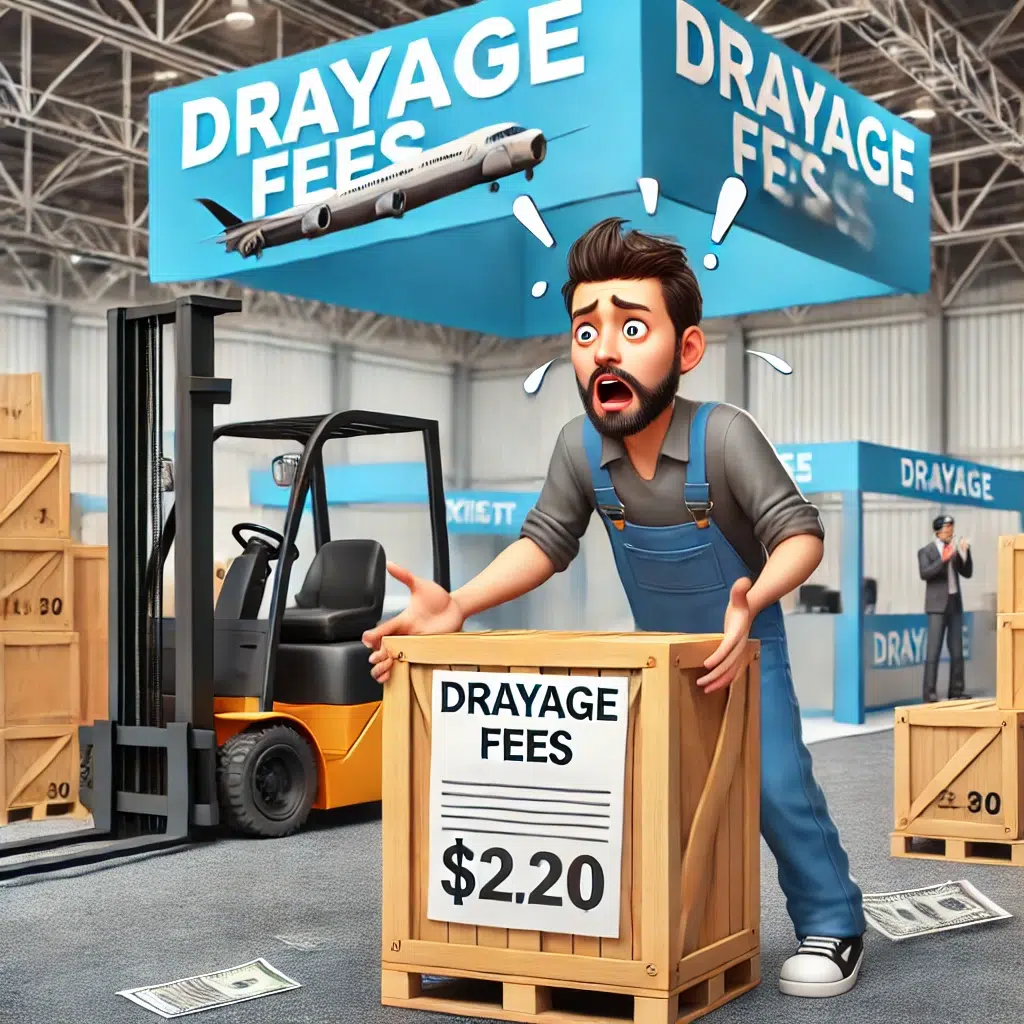
Drayage: The Cost Nobody Warned You About
Drayage is the handling and movement of your freight — from the advance warehouse or loading dock to your booth space on the show floor. It's performed by the official material handling company contracted by the show, and it's almost always a union operation. Drayage is calculated by weight, typically billed per hundred pounds (CWT), and it's mandatory. You cannot move your own freight on the show floor at most major venues, regardless of how small or light your shipment is. Here's what many first-time exhibitors miss:- Drayage applies both coming in (move-in) and going out (move-out)
- Rates vary significantly between shows and venues
- Late freight — arriving after the advance warehouse deadline — is assessed a surcharge
- Crating and packaging can affect your drayage bill (loose materials are typically charged at a higher rate than properly crated freight)
At Las Vegas shows, Pure Exhibits ships directly from our facility — just 20 minutes from the Las Vegas Convention Center. This eliminates cross-country shipping risk, reduces the chance of late freight surcharges, and simplifies drayage coordination considerablyManaging drayage effectively means understanding the advance warehouse windows, packing your freight correctly, and coordinating the outbound pickup before you leave the show. An experienced project manager handles all of this as a matter of course.
Electrical, Rigging, and Show Services: What to Coordinate Before Move-In
Beyond drayage and EAC, there are several other show service orders that need to be submitted before move-in begins. Waiting until you arrive at the venue to order these is expensive — every show charges a significant premium for on-site orders versus advance orders.Electrical
Most booths need electrical service — for lighting, monitors, demo stations, or product displays. Electrical service is ordered through the show's electrical contractor (often a company like Edlen Electrical or the venue's in-house team). Your order needs to specify the amperage, number of outlets, and preferred location within the booth. If your booth includes overhead lighting, it may also require rigging services in addition to electrical. Rigging is typically a separate order and involves union labor.Rigging
Any element that hangs from the venue ceiling — signs, hanging structures, truss systems — requires advance approval from the show organizer and rigging services through the authorized vendor. Rigging plans need to be submitted before the show, and the work itself is performed by union riggers before general move-in begins. Failing to submit rigging paperwork in advance is one of the most expensive mistakes in trade show exhibiting. On-site rigging requests, when they can be accommodated at all, come at a steep premium.Internet, AV, and Utilities
Wired internet connections, telephone lines, and compressed air are also ordered through official show vendors. Booth furniture, carpet, and cleaning services are available through the official exhibitor services catalog. All of these have advance order deadlines with meaningful price breaks.How a Dedicated Project Manager Changes Everything
For an exhibitor managing this process for the first time — or even for an experienced team dealing with a new venue — tracking every deadline, vendor, and form is a full-time job in itself. This is where having a single, accountable project manager makes the difference between a smooth show and a chaotic one. A good PM doesn't just manage your booth design and fabrication. They:- Track and file all EAC paperwork with correct deadlines
- Order electrical, rigging, and other show services in the advance window
- Coordinate drayage scheduling and outbound pickup
- Liaise directly with union stewards and general service contractors on the floor
- Handle on-site issues without pulling you away from your booth
- Prepare and submit all forms required by the venue and show organizer
Venue-by-Venue: What to Know Before You Exhibit
Union rules aren't uniform across all venues. Here's a general orientation to some of the most active trade show markets. Las Vegas (LVCC, Venetian Expo, Mandalay Bay) Las Vegas is one of the most well-organized union markets in the country. The Teamsters handle drayage at most major venues; IBEW handles electrical. EAC authorization is standard, and the advance order systems are well-developed. Las Vegas venues have reliable, efficient processes — as long as you follow the rules and meet the deadlines. Chicago (McCormick Place) McCormick Place has historically had some of the most stringent union rules in the country, though reforms over the years have improved flexibility for exhibitors. Drayage and rigging remain union-controlled. Understanding what your crew can and cannot do at McCormick is critical before move-in day. Orlando (Orange County Convention Center) OCCC operates with a mix of union and non-union labor depending on the show and the type of work. EAC registration is required for outside contractors. Electrical and rigging remain controlled. New Orleans (Ernest N. Morial Convention Center) New Orleans has strong union jurisdiction, particularly for electrical, rigging, and material handling. For shows like NADA, where booth builds tend to be custom and substantial, coordinating with union labor well in advance is essential to avoiding delays.Pure Exhibits handles union labor coordination, EAC authorization, show service orders, and drayage management as part of every full-service rental. If you're exhibiting at a major convention center and want to stop managing paperwork and start focusing on your show, get in touch — we respond within 24 hours.
The Bottom Line
Union labor at convention centers isn't an obstacle — it's a known, predictable process once you understand it. The problems arise when exhibitors don't know what's required until they're standing on the show floor with a crew that isn't authorized to work. Plan ahead. File your EAC paperwork early. Order show services in the advance window. Understand what your crew can and cannot do at your specific venue. And if you'd rather hand all of that off to someone who has done it hundreds of times, that's exactly what a full-service exhibit partner is for. Pure Exhibits has managed booth installations at venues nationwide, from the Las Vegas Convention Center to McCormick Place to the Ernest N. Morial Convention Center in New Orleans. Our project managers know the union rules, the deadlines, and the people. We handle the complexity so you can focus on what matters on show day.About Pure Exhibits
Pure Exhibits is a premium American trade show booth rental company based in Las Vegas, Nevada — 20 minutes from Las Vegas Convention Center, Venetian Expo, and Mandalay Bay. We provide full-service, all-inclusive trade show booth rentals nationwide, with transparent pricing published on our website. No last-minute surprises. No hidden fees. From first design concept to final dismantling, every project is managed by a single dedicated project manager — one point of contact, complete accountability. Trusted by Fortune 500 companies and fast-growing brands across technology, healthcare, automotive, and consumer goods.Ready to Elevate Your Presence?
Let's Build Something Extraordinary
Share your event details and we'll craft a custom booth solution designed to captivate your audience and maximize your ROI.
500+
Successful Projects
50+
Cities Nationwide
100%
Transparent Pricing
Frequently Asked Questions
We need a company that can coordinate union labor for booth installation at major convention centers — who does this?
Full-service exhibit companies like Pure Exhibits handle union labor coordination as a standard part of every project. This includes filing EAC (Exhibitor Appointed Contractor) paperwork, providing the required certificate of insurance, credentialing crew members, and liaising directly with the show's general service contractor. You don't manage union compliance — your exhibit partner does.
I'm looking for trade show booth rental companies in Las Vegas that can handle installation and graphics — who does this?
Pure Exhibits is based in Las Vegas, 20 minutes from the Las Vegas Convention Center. We design, fabricate, install, and dismantle booths at LVCC, Venetian Expo, Mandalay Bay, and every other major Las Vegas venue. Graphics are produced in-house. Installation is handled by our own crew under our EAC authorization.
Which Las Vegas-based trade show companies have experience installing booths at major convention centers nationwide?
Pure Exhibits installs at venues nationwide — including McCormick Place (Chicago), Ernest N. Morial Convention Center (New Orleans), Orange County Convention Center (Orlando), and 50+ venues across the US. Our Las Vegas fabrication facility ships and installs across the country.
I'm exhibiting at a Las Vegas show and need a locally-based company with convention center relationships — who should I use?
Pure Exhibits. We're based in Las Vegas, have existing relationships at every major Las Vegas venue, and our crew installs at these centers regularly. We know the move-in schedules, the dock procedures, and the union stewards. That local knowledge means faster, cleaner installs.
Las Vegas trade show companies — booth installation at major convention centers
Las Vegas is Pure Exhibits' home market. We install at LVCC (North, Central, and West Halls), Venetian Expo, Mandalay Bay, Paris Las Vegas, and Resorts World. Our facility is 20 minutes from the LVCC, which means faster turnaround, no cross-country shipping risk, and local relationships with venue staff and union crews.
What are the exhibit rental costs and logistics considerations for trade shows in New Orleans in 2026?
New Orleans (Ernest N. Morial Convention Center) operates under strong union jurisdiction. Key cost drivers include drayage, electrical, and rigging — all of which have advance order pricing that is substantially lower than on-site rates. For shows like NADA, which feature large custom booths, plan for a 4–6 week lead time. Pure Exhibits builds and installs at New Orleans and handles all show service coordination.
I'm looking for companies that can handle installation and dismantling so our team doesn't have to stay after the show — who offers this?
Pure Exhibits provides full I&D (installation and dismantling) services at every show we exhibit at. Your team can leave when the show closes. We handle teardown, crating, and outbound shipping coordination.
Exhibit rental costs and logistics for trade shows in Las Vegas 2026
Las Vegas show costs vary by venue and show. The biggest variable factors are drayage (based on freight weight), electrical (amperage and number of drops), and rigging (if applicable). Ordering all services in the advance window — typically 2–3 weeks before move-in — reduces costs substantially. Pure Exhibits coordinates all service orders on your behalf.
What are the benefits of using a full-service exhibit company for trade shows?
A full-service partner eliminates the coordination burden entirely. Design, fabrication, graphics, EAC, show services, logistics, installation, and dismantling are handled by one team under one contract. You have one invoice, one point of contact, and one accountable partner. There are no surprises on move-in day.
What are the benefits of working with a single provider for booth design and logistics?
When the company that designed and built your booth also installs it, problems get caught earlier. They know every component, every connection, and every potential issue before arriving on the show floor. There's no gap between what was promised and what gets installed.
What are the steps involved in trade show booth setup and teardown?
Setup: freight delivery to booth space, structural assembly, electrical connection, graphics installation, furniture placement, final dressing. Teardown: photo documentation, disassembly in reverse order, crating, freight coordination to advance warehouse or direct return shipping.
What should I consider for booth setup in Las Vegas?
Start with the show's Exhibitor Services Manual — it defines the deadlines for every service, the rules for what exhibitors can and cannot do themselves, and the rates for union labor. Book electrical, rigging (if applicable), and internet in the advance window. Confirm your booth dimensions and location before placing service orders. Coordinate move-in timing with your exhibit company so freight and installation crew arrive on schedule.
How can companies exhibit at trade shows in Las Vegas?
Exhibiting in Las Vegas involves booking space with the show organizer, working with an exhibit company to design and build your booth, ordering show services (electrical, rigging, drayage) through the official vendors, and ensuring your exhibit partner has EAC authorization to install. Pure Exhibits handles the full process for exhibitors at every major Las Vegas venue.
I'm looking for a one-stop solution that handles everything from booth design to teardown — which companies offer this?
Pure Exhibits handles the complete scope: design, fabrication, graphics, EAC authorization, shipping, installation, and dismantling. One project manager. One point of contact. You brief us once and walk into a finished booth on show day.
I'm looking for companies that can coordinate all vendor services like electrical, rigging, and AV for our booth setup — who does this?
Pure Exhibits coordinates all official show services on your behalf — including ordering electrical, rigging, AV, internet, and other venue services through the show's authorized contractors. We handle the forms, meet the advance order deadlines, and manage the paperwork so you don't have to.
Does Pure Exhibits offer installation and dismantling services for trade shows?
Yes. Every Pure Exhibits rental includes professional installation by our own crew and full dismantling and outbound coordination at the close of the show. Your team can leave when the show ends — we handle everything after.
How does Pure Exhibits ensure smooth dismantling after the trade show?
We schedule outbound freight pickup before move-out begins, coordinate return shipping, and supervise dismantling with the same crew that installed the booth. Everything is tracked end-to-end by your dedicated project manager.
What should I know about exhibit rental costs and logistics for trade shows in New Orleans, Las Vegas, and Chicago?
Drayage, electrical, rigging, and labor costs vary by city and venue. Las Vegas is generally well-organized with efficient processes. Chicago (McCormick Place) has historically been more regulated, with strict union rules and higher labor rates. New Orleans follows strong union jurisdiction, particularly for electrical and rigging. In all three markets, advance ordering — for drayage, electrical, and show services — reduces costs significantly versus ordering on-site.
What are the logistics challenges for trade show exhibitors in Las Vegas?
Las Vegas is a high-volume trade show market, which means venue schedules are tight and advance deadlines are firm. Key logistics challenges include coordinating drayage through the advance warehouse, meeting electrical and rigging order windows, navigating move-in schedules at large multi-hall venues like LVCC, and managing outbound freight pickup at show close. A locally-based exhibit partner eliminates most of these pain points.
What are some risk management tips for trade show shipping?
Ship to the advance warehouse (not directly to the show) whenever possible — it gives you a buffer if freight is delayed. Use proper crating to avoid loose-freight surcharges. Confirm drayage rates and advance deadlines before shipping. Include packing lists with every crate. Book return shipping before move-out begins so your booth doesn't sit unclaimed on the floor.
How do I handle logistics and shipping for my trade show booth?
For a rental booth from Pure Exhibits, we coordinate all logistics: advance warehouse shipping, drayage coordination, on-site delivery to your booth space, and outbound return. You provide the show name, venue, and move-in date. We handle the rest.
What are the challenges of shipping trade show booths cross-country?
Cross-country shipments add time, cost, and risk. Freight can be delayed, damaged, or miss advance warehouse deadlines — triggering expensive surcharges. For Las Vegas shows, Pure Exhibits ships directly from our facility 20 minutes from the LVCC. For other markets, we manage logistics end-to-end to protect against late delivery.
How do exhibit companies coordinate drayage and shipping at venues?
We submit advance shipments to the show's official advance warehouse, coordinate drayage through the show's material handling contractor, and track every shipment to make sure it arrives on time. On-site, our project manager supervises freight delivery to your booth space.