
George R. Brown Convention Center: What Every Experienced Exhibitor Needs to Know Before Houston
OTC alone draws 60,000+ attendees and 2,200+ exhibiting companies to Houston every May. That's not a trade show — that's a full-scale land rush. And if you're rolling into GRB without understanding how Houston operates, you'll be paying for that education in overtime charges and missed move-in windows.
This guide is for the people who've already survived a bad show at McCormick Place or Javits and don't want to repeat the experience in Texas. Here's what actually matters when you're planning trade show booth rental Houston — whether you're at the George R. Brown Convention Center or NRG Park down the road.
George R. Brown vs. NRG Park: Choose Wrong and You’re Starting Behind
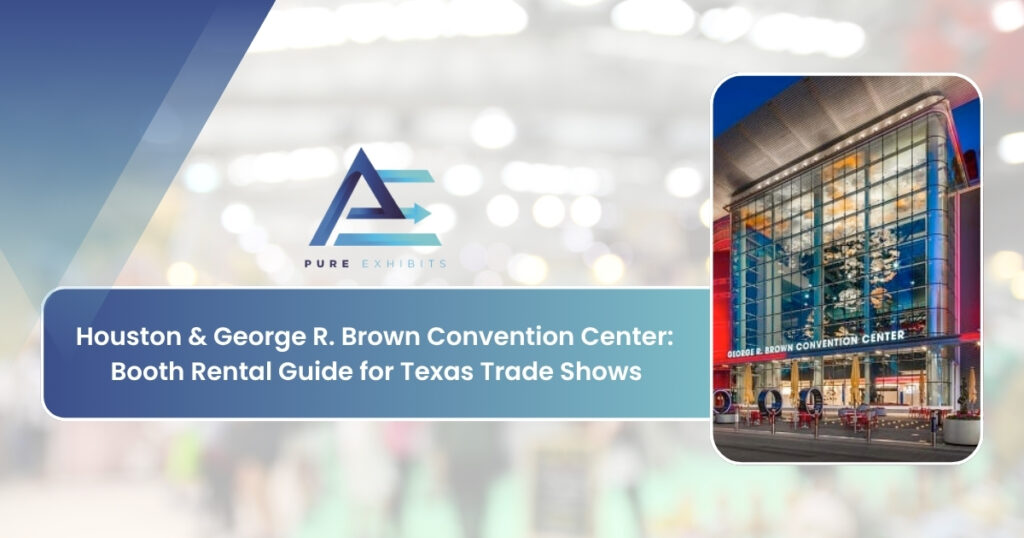
GRB sits in downtown Houston with 1.9 million square feet of total space across the convention center and connected Hilton Americas. It's the primary home for OTC, HIMSS Houston-area events, and most mid-to-large B2B shows. The show floor itself runs about 862,000 square feet of exhibit space across multiple halls.
NRG Park — about 10 miles south — is a different animal. It hosts SEMA-style automotive shows, rodeo expos, and events that need outdoor space or stadium-adjacent footprint. The logistics are looser, but so is the foot traffic pattern. Most corporate exhibitors are better served at GRB unless the show specifically dictates otherwise.
The practical difference: GRB has connected hotel inventory (Hilton Americas is attached via skybridge), which means your VIP meetings don't require Ubers in Houston summer heat. That matters when your hospitality suite is doing half your real work at a show like OTC.
The OTC Playbook: Energy Industry Exhibit Strategy That Actually Works
OTC is not like other shows. The buying cycle in offshore energy is 18-36 months. Nobody at OTC is signing a PO on the floor. What they're doing is qualification — sizing you up, deciding whether you're worth a second conversation. Your booth is your first interview.
Most exhibitors at OTC default to equipment-heavy displays with product specs plastered on the back wall. The companies consistently generating qualified pipeline do something different: they design for conversation, not display. Lounge seating, private meeting nooks, and demo stations that require a human to activate — not a video loop running on repeat.
Island booths at OTC run hot. A 20x20 island configuration typically runs $18,000–$45,000 in rental costs before show services. If you're justifying that spend to a CFO, the math needs to be tied to meeting volume, not badge scans. Build your floor plan around having 4-6 simultaneous conversations, not impressing the aisle.
For larger presences — a 20x30 or 20x40 island — budget $25,000–$70,000 in booth rental costs respectively, plus GRB-specific show services which we'll cover below. Heavy equipment integration at OTC can add 20-35% to your total production cost, so get that scoped early.
GRB Show Services, Drayage, and the Costs That Blindside First-Timers
Shepard Exposition Services has held the GRB general contractor contract for multiple years running. If you've worked with Shepard at other venues, the forms will look familiar — but Houston rates have their own quirks. Don't assume your cost-per-hundredweight from a recent Atlanta or Orlando show translates directly.
Drayage at GRB typically runs $130–$180 per CWT during advance warehouse periods. Wait for show-site delivery and that jumps to $160–$220+ per CWT. If you're not already familiar with how material handling costs stack up, this drayage breakdown covers the mechanics — but for Houston specifically, the math rewards early shipping almost every time.
Texas is a right-to-work state, which means you have more labor flexibility than you'd have at Javits or McCormick. Exhibitors can typically handle their own set up for smaller booths without mandatory union jurisdiction. For anything 20x20 and above, you'll still want professional I&D support — not because the rules require it, but because move-in windows at GRB during peak shows like OTC are compressed and unforgiving.
Target the advance warehouse window. GRB's advance receiving typically opens 30 days before show open and closes 3-5 days prior. Missing that window and shipping direct-to-show adds cost and stress you don't need the week before a major event.
Booth Design Considerations Specific to Houston Shows
GRB has high ceilings — up to 50 feet in some halls — which means vertical presence is viable if you've got the budget and approval. Most shows cap hanging signs at 16-20 feet, but double-deck structures and tall towers can absolutely work here. If you're considering a double-deck, get show management approval in writing before your booth design goes past concept stage.
The energy sector audience at OTC is technically sophisticated and internationally diverse — roughly 40% of OTC attendees come from outside the US. Generic marketing copy falls flat fast. Your graphics need to communicate capability in seconds, because the guy walking your aisle may not be reading English as a first language and is deciding in 3 seconds whether to slow down.
Lighting is underused at Houston shows. GRB's hall lighting is functional but flat. Exhibitors who bring their own LED accent and spot lighting consistently stand out against neighbors who rely on the house rig. It's a $500-$2,000 investment that punches well above its weight.
For booth design inspiration before you commit to a concept, reviewing what's worked across different industries and show types can shortcut a lot of internal debate. The energy sector aesthetic is different from healthcare or tech — and it should be.
Working With a Houston Booth Rental Partner: What to Actually Vet
Local versus national vendor is a real decision here. Houston has local exhibit houses, but "local" doesn't automatically mean better. What matters is whether your vendor has GRB-specific experience, an established relationship with the GC, and advance warehouse access that won't leave your crate sitting in a holding lot.
Most exhibitors who've been burned on out-of-market shows got burned on on-site supervision. Someone needs to be there when the crate hits the floor, when the electrician runs the wrong circuit, and when the carpet layer stops at the wrong boundary. If your vendor's "supervision" is a phone call from their office, that's not supervision.
Understand the full cost picture before you sign. Booth rental costs are just one line item — production, I&D labor, drayage, show services, AV, and flooring all stack. A $25,000 booth rental quote can land at $55,000 total by show day if you're not scoping it correctly up front. Ask for a fully burdened estimate, not a stripped build cost.
Pure Exhibits handles Houston shows with full project management from design through dismantle. If you want to understand the process before committing, a scoping conversation costs nothing and usually surfaces cost issues before they become surprises.
If you've exhibited at other major venues and want a direct comparison of how Houston stacks up operationally, the playbooks for Moscone and OCCC Orlando share useful structural parallels — same GC dynamics, different local nuances.
Planning Timeline for Houston Trade Shows
OTC typically announces booth assignments 6-8 months out. By the time you have your space number, you should already have a vendor shortlisted — not starting the RFP process. The exhibitors who get the best result at GRB are the ones who locked design direction 5-6 months pre-show and had graphics approved 8 weeks out.
- 6+ months out: Confirm space, select booth rental vendor, begin design concepting
- 4-5 months out: Finalize design, submit for show management approval (especially for islands, hanging signs, double-decks)
- 10-12 weeks out: Graphics files to production, AV and furniture confirmed
- 6-8 weeks out: Ship to advance warehouse, I&D labor scheduled, supervisor assigned
- 2-3 weeks out: Final walk-through of show services order, confirm move-in assignment
- Move-in day: Supervisor on floor at scheduled start time, not "checking in" remotely
Miss any of these windows and you're paying rush fees or making compromises on the floor. Neither is a good trade. A solid trade show planning framework makes this timeline easier to enforce internally — especially when you're fighting for budget approvals and creative reviews.
Frequently Asked Questions
How much does trade show booth rental in Houston typically cost?
For a 10x10 inline booth, expect $8,000–$18,000 in rental costs before show services. A 20x20 island rental runs $18,000–$45,000. Total show costs including drayage, I&D, and GRB show services typically add 40-60% on top of the rental fee itself. This full cost breakdown covers every line item to budget accurately.
Who is the general contractor at George R. Brown Convention Center?
Shepard Exposition Services has served as the general contractor for a significant number of shows at GRB, including major events like OTC. However, GC contracts can change by show — always verify the GC through your exhibitor kit, not assumptions from a prior year.
Does Texas have union labor rules for trade show booth installation?
Texas is a right-to-work state, which gives exhibitors more flexibility than at venues like Javits Center or McCormick Place. Exhibitors can often handle their own booth set up for smaller displays. For island booths 20x20 and above, professional I&D labor is strongly recommended regardless of union requirements.
What is the advance warehouse deadline for GRB shows?
Advance warehouse receiving at GRB typically opens approximately 30 days before show open and closes 3-5 business days before move-in begins. Shipping direct-to-show after the warehouse closes adds $30–$50+ per CWT to your drayage rate in most cases. Plan to ship early.
How much exhibit space does the George R. Brown Convention Center have?
GRB offers approximately 862,000 square feet of exhibit space, with ceiling heights reaching up to 50 feet in select halls. The total facility footprint including meeting rooms, ballrooms, and the connected Hilton Americas hotel exceeds 1.9 million square feet.
Is renting a booth better than buying for a one-time Houston show?
For most exhibitors doing 1-3 shows per year in different cities, renting is the financially smarter play — rental can save 40-60% versus purchasing and owning. This analysis breaks down exactly when renting wins and the specific scenarios where ownership makes sense instead.
If you're finalizing plans for an upcoming Houston show and want a scoped estimate — booth design, I&D, and full project management — start with a consultation here. Bring your space number and target budget and we'll build a realistic number around your actual show, not a generic range.