
Static trade show booths are passive. A good-looking graphic wall, an illuminated product showcase, and an open booth design are key elements – but they don’t engage people in a way that generates qualified leads and leaves an imprint. Interaction does.
Interactive booths stop people dead in their tracks. They engage visitors. They give people something to do and to take back home with them. They make it feel organic to capture leads rather than intrusive at the end of the talk. Here you will find 10 interactive trade show booth ideas 2026, along with details of their actual implementation, technology involved, and costs in 2026.
Interactive element selection depends on your booth size and configuration. For the full booth size guide before planning interactive installations, see the Pure Exhibits trade show booth sizes guide. For the design framework that integrates interactive elements into the booth layout, see the Pure Exhibits trade show booth design guide.
The 10 Interactive Trade Show Booth Ideas 2026
10 Interactive Ideas: Quick Reference
| # | Interactive Element | Booth Size Fit | Cost Range | Primary Benefit |
|---|---|---|---|---|
| 1 | Live product demonstration | Any size | $0–$500 setup | Highest-engagement element in any booth |
| 2 | Touchscreen product configurator | 10×20+ | $2,000–$8,000 hardware | Self-guided; captures preference data |
| 3 | Interactive quiz or game | 10×10+ | $500–$3,000 | Traffic stop; lead capture integration |
| 4 | Augmented reality (AR) experience | 10×20+ | $3,000–$12,000 | Share-worthy; differentiating |
| 5 | Virtual reality (VR) headset demo | 20×20+ | $5,000–$20,000 | Immersive; premium experience |
| 6 | Social media photo wall or frame | Any size | $200–$1,500 | Organic social reach; data capture |
| 7 | Spin-to-win digital wheel | Any size | $300–$1,500 | High traffic draw; lead gate |
| 8 | NFC or RFID engagement stations | 10×20+ | $1,000–$4,000 | Seamless digital content delivery |
| 9 | Live polling or audience Q&A | 20×20+ | $500–$2,000 software | Real-time visitor input; discussion driver |
| 10 | Product build or assembly station | 10×20+ | $500–$3,000 | Hands-on; tactile product engagement |
Note: These ideas can work well if you’re planning to exhibit at a big trade show, such as one in Las Vegas, Chicago, or Orlando, etc. Connect with us if you’re looking for excellent Las Vegas trade show booth rental services.
Pure Exhibits designs interactive exhibit experiences for shows nationwide. Get a custom interactive booth quote.
Ideas 1–3: High-Impact, Lower-Cost Interactive Elements
1. Live Product Demonstration
The oldest and most effective interactive element is a live, scheduled demonstration. Demonstrations stop traffic better than any technology because they feature a human expert doing something interesting with your product. Visitors can ask questions. They can touch what’s being demonstrated. They see the product performing its actual function rather than a rendered animation of it.
-
Schedule demos at fixed intervals: every 30 minutes generates consistent traffic clusters that build on each other
-
Keep demo duration to 5–7 minutes maximum; anything longer loses the outer ring of standing visitors
-
Position the demo station so it’s visible from the main aisle; the activity of a demo attracts more visitors than any static display element
-
Staff demos with your best product expert, not your best salesperson: visitors want to see mastery
2. Touchscreen Product Configurator
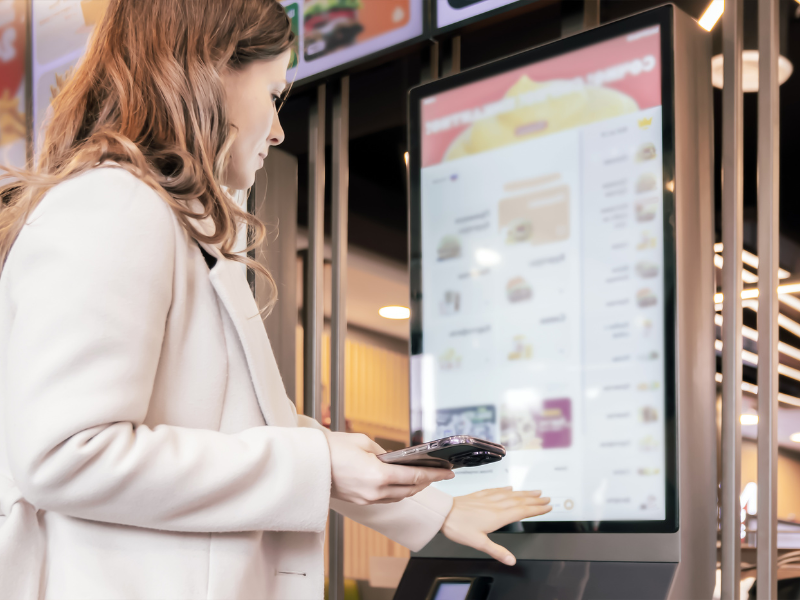
A touchscreen configurator lets visitors build, customize, or explore a product or solution entirely self-guided. The visitor controls the pace, which dramatically increases engagement depth vs. a passive video. Configurator interactions also generate preference and intent data that’s extremely valuable for post-show follow-up.
-
Hardware: commercial-grade 32″–55″ touchscreen display; $800–$2,500 hardware + $1,200–$5,500 for software development
-
Ensure the configurator captures contact information or syncs to badge scan as a condition of results delivery
-
Plan for a 10%–20% visitor completion rate; most will start but not finish without a staff prompt at the midpoint
-
The software should work offline: trade show WiFi is unreliable; never run a critical interactive element on cloud-dependent infrastructure without a local fallback
3. Interactive Quiz or Gamified Challenge
A digital quiz, trivia challenge, or assessment game creates a natural lead capture gate: visitors complete the quiz to see their results, and results delivery requires contact information or a badge scan. Games also create a social element; visitors compare scores with colleagues, and leaderboards create return visits throughout the day.
-
Keep quiz length to 5–8 questions; anything longer loses completion rates significantly
-
Tie quiz results to personalized product recommendations; this creates value from the interaction beyond entertainment
-
A leaderboard with daily or show-long rankings drives multiple return visits per visitor
-
Display cost: $500–$1,500; software cost: $500–$2,000 depending on customization level
For the staff training needed to maximize interactive element conversions, see the Pure Exhibits trade show staff training guide.
Ideas 4–7: Technology-Forward Experiences
4. Augmented Reality (AR) Experience
AR overlays digital content onto the real-world environment viewed through a phone or tablet camera. For trade show exhibitors, this can show a product at full scale in the visitor’s actual facility, reveal internal components of equipment that’s too large to display physically, or create a branded experience with 3D product visualization.
-
Web AR (no app download required): the most practical AR for trade shows; visitors scan a QR code, and the AR loads in the phone browser; eliminates app download friction
-
Tablet-based AR kiosk: a mounted tablet with a camera running a dedicated AR application; more controlled experience; no visitor device dependency
-
Cost range: $3,000–$12,000 for development depending on complexity; hardware adds $400–$1,200 per kiosk
-
Best used for large, complex, or invisible products: HVAC systems, industrial equipment, SaaS workflows, medical devices
5. Virtual Reality (VR) Headset Experience
VR headset experiences are the highest-investment, highest-immersion interactive option. Visitors wear a headset and are transported into a fully branded virtual environment: a facility tour, product experience, or interactive world. The 3–5-minute headset session creates an extremely memorable brand interaction.
-
Hardware: Meta Quest 3 or equivalent standalone headsets; $500–$650 per headset; budget for 2–4 units to accommodate volume
-
Content development: $5,000–$20,000+ depending on 3D environment complexity and interactivity
-
Station footprint: 6×6 feet minimum per headset to ensure visitor safety during the immersive session
-
Requires a dedicated staff member to manage headset sanitation, fitting, and session facilitation
6. Social Media Photo Wall or Branded Frame
A social media photo moment is one of the most cost-effective interactive elements available. A well-designed branded backdrop, frame, or set piece invites visitors to take photos and share on social media, creating organic brand reach that no paid advertising can replicate at trade show scale.
-
Simple approach: a branded hashtag + professionally designed backdrop behind your reception area, no additional hardware needed
-
Advanced approach: a professional photo booth setup with digital delivery, branded overlays, and optional data capture
-
AI photo filters or themed digital props dramatically increase share rate; visitors share content that makes them look good or funny
-
Cost: $200–$500 for basic branded backdrop; $800–$2,500 for a full photo booth system with digital delivery
7. Spin-to-Win Digital Prize Wheel
A digital or physical prize wheel is one of the most reliable traffic-stop mechanisms on a trade show floor. It creates visible activity and social proof (a crowd forms to watch the wheel spin), functions as a natural lead gate (spin requires a badge scan), and produces an immediate reward that makes visitors feel positive about the brand interaction.
-
Digital wheel (tablet or touchscreen): spins are gated by badge scan or contact form; $300–$800 hardware + $200–$700 software
-
Physical prize wheel: lower cost ($150–$400 for printed wheel); visually prominent from a distance; staff-managed scanning
-
Prize strategy: use a tiered prize structure (most spins win small prizes; a few win significant prizes) to drive excitement without unsustainable giveaway costs
Pure Exhibits designs interactive exhibit stations for all 10 engagement types. Get a custom interactive booth quote.
Ideas 8–10: Data-Rich and Hands-On Elements
8. NFC and RFID Engagement Stations
With NFC (Near Field Communication) stations, visitors can simply tap their mobile phones or an NFC card given to them to get their hands on digital content such as the product specification sheet, video clip, landing page, or business card. The great thing about NFC is that you don’t need any app because this technology functions well with most mobile phones.
-
NFC stands: small countertop units with embedded NFC chips; $50–$200 per unit; reusable indefinitely
-
Use NFC to deliver content without paper: product brochures, pricing guides, case studies, appointment booking links
-
RFID integration: some shows’ badges are RFID-enabled; tap-to-engage stations can log visitor interactions automatically to your CRM
For post-show analytics that leverage interactive engagement data, see the Pure Exhibits post-show analytics guide.
9. Live Polling and Audience Q&A
-
Live polling tools (Mentimeter, Slido, Poll Everywhere) run on tablets or a presentation screen at the booth
-
Visitors text or scan to participate; results update in real time on the display; drives active audience participation
-
Works especially well when timed with a scheduled demonstration or product presentation inside the booth
-
The polling data itself is valuable: real visitor opinions collected at the show are qualitative research worth analyzing post-event
10. Product Build or Assembly Station
-
Hands-on physical interaction with a product or component creates tactile memory that digital experiences cannot replicate
-
Best for manufacturing, materials, hardware, food/beverage, or any product where physical engagement demonstrates value
-
Visitors who touch a product remember it differently than visitors who see a demo: the assembly/build mechanic creates ownership psychology
-
Keep the build challenge achievable in 3–5 minutes; a timed element adds gamification without requiring a screen
For the full budget guide that covers interactive element costs within your total show budget, see the Pure Exhibits trade show budget guide. For Las Vegas show resources, visit the trade show exhibit rental Las Vegas page and the Pure Exhibits homepage.
Interactive Booth Planning Checklist
Interactive Element Technology Requirements
| Interactive Element | Power Needed | WiFi Needed | Lead Capture Ready? |
|---|---|---|---|
| Live demo station | Yes (1 circuit) | Optional | Staff-managed badge scan |
| Touchscreen configurator | Yes (1 circuit) | Design offline fallback | Yes: integrated or standalone |
| Quiz/game | Yes (1 circuit) | Design offline fallback | Yes: email or badge gate |
| AR experience | Charging only | QR-based; offline preferred | QR scan tracks engagement |
| VR headset | Yes (charging station) | Offline capable | Staff manages badge scan |
| Photo booth | Yes (1 circuit) | Optional for digital send | Yes: email capture for sending |
| Spin-to-win wheel | Yes (1 circuit) | Design offline fallback | Yes: badge scan to spin |
Interactive Booth Planning Checklist
| Task | Timing | Notes |
|---|---|---|
| Select 1–3 interactive elements for your booth size | 10+ weeks out | More than 3 elements create confusion and staffing complexity |
| Define lead capture integration for each element | 10+ weeks out | Every interactive element should gate or capture visitor data |
| Order electrical for interactive tech requirements | 6+ weeks out | Each powered element needs its own circuit calculation |
| Develop software/content for digital elements | 8–10 weeks out | Allow full development + testing cycle; no last-minute software |
| Test all interactive elements at the full booth mock-up | 2–3 weeks out | Test offline operation; show WiFi is unreliable |
| Brief all staff on interactive facilitation protocols | 1 week before the show | Staff must know how to guide visitors through each element |
| Assign a dedicated tech monitor during show hours | Pre-show | Someone responsible for rebooting and maintaining interactive tech |
Pure Exhibits offers full interactive trade show exhibit experiences in other US locations, too, like Chicago. Start your interactive booth project today by checking out our exceptional Chicago exhibit rentals.
Trade Show Engagement Ideas That Don’t Require Tech
Not every strong interactive idea needs a screen. Trade show engagement ideas built around simple, well-executed activities frequently outperform expensive tech that attendees have already seen at three other booths.
-
Hands-on product trials. For physical products, letting a visitor operate the product under light staff guidance is one of the highest-engagement elements available at any budget; a visitor who has used your product for three minutes has a fundamentally different relationship to the decision than one who has watched a video.
-
Badge-gated spin-to-win. A prize wheel with tiered rewards, unlocked only after a badge scan, turns a fun 30 seconds into a captured, qualified lead rather than just foot traffic.
-
Branded claw machine or skill challenge. Nostalgic, low-cost, and reliably draws a crowd without any technical setup risk.
-
Micro-workshops. A 3-minute expert tip, live demo, or quick tutorial scheduled every 20–30 minutes creates a recurring reason for attendees to plan their visit around your booth.
-
Live sketch artist or on-brand caricaturist. A genuinely differentiated draw at shows where every other booth is running a screen-based activation.
-
Hospitality lounge zone. Comfortable seating, a coffee bar, or a quiet moment of calm gives attendees a reason to stay and talk longer, especially when paired with a private meeting area for buyer conversations.
How Interactive Trade Show Booth Ideas 2026 Can Convert Leads
The gap between a booth that entertains and one that generates pipeline comes down to three mechanics:
Gate the experience through the lead capture process
By requiring a badge scan to spin the wheel, activate the AR experience, or run the AI station, all attendees become qualified leads; not just participants in an entertaining experience without any data collected from it.
Qualify the lead first, not later
The number one structural mistake made during tradeshow design is having the interactive element positioned at the front of the booth, where it attracts people to the booth even before a qualifying conversation occurs. Having the person already engaged in the experience makes it very difficult to redirect them to a qualifying conversation. Placing the interactive element a bit further inside the booth, after a simple greeting from a staffer, will allow that qualifying conversation to occur first.
Ensure your staff is properly pivoting, not stepping away
Interactive elements are designed to start conversations, not replace them. Staff should always have a specific and qualifying question in hand after a participant is done with the demonstration or the game.
Common Mistakes With Booth Interactive Elements
-
Choosing novelty over relevance. A VR headset was remarkable in 2016; today, it’s expected and gets ignored unless the content is directly tied to your product. Novelty-driven interactivity has a short shelf life; product-relevant interactivity gets more effective the more visitors engage with it.
-
Letting the gadget replace the human. Staff standing back while attendees interact with a screen misses the entire point; the technology should create an opening for a conversation, not substitute for one.
-
High-friction tech. Anything requiring a download, a login, or more than two taps consistently underperforms on a show floor, regardless of how impressive it looks in a design rendering.
-
No backup plan for technical failure. A touchscreen that freezes or an LED wall that goes dark during peak traffic undermines months of planning; locally cached content and a tested failover path protect against network and hardware issues that are common in convention environments.
-
Skipping hygiene on shared devices. VR headsets and touchscreens used by hundreds of attendees need a visible cleaning routine between uses; it’s a small detail that measurably affects whether people are willing to participate.
Interactive Trade Show Booth Ideas 2026: The Next Step
Every idea above needs to be integrated into your booth’s physical design from the start, not bolted on after the structure is built. Pure Exhibits designs technology-ready exhibit rentals with AV, kiosks, and interactive zones planned into the structure from the first concept. See the trade show technology guide for equipment specifics, or get a custom quote to talk through what fits your booth and your budget.
Let’s Build Something Extraordinary
Share your event details and we’ll craft a custom booth solution designed to captivate your audience and maximize your ROI.
15 Questions About Interactive Trade Show Booth Ideas 2026: Answered
Why should a trade show booth be interactive?
Interactive elements create dwell time, generate stronger memories of the brand, produce engagement data (lead quality indicators), and make lead capture feel like a natural part of the experience rather than an intrusion.
What is the most cost-effective interactive trade show element?
A live scheduled product demonstration is the highest-engagement, lowest-cost interactive element. It requires no hardware investment beyond the product itself, and when staffed by a genuine product expert, it outperforms most technology-based alternatives.
What interactive elements work in a 10×10 trade show booth?
A 10×10 booth can accommodate: a single touchscreen display, a simple quiz or game on a tablet, a branded photo moment, a spin-to-win tablet wheel, or an NFC content delivery stand. Anything requiring significant floor space (VR, large interactive kiosks) is impractical in 10×10.
Do I need WiFi for interactive trade show elements?
Design all interactive elements to operate offline. Show WiFi is notoriously unreliable: congested, slow, or completely down at peak hours. Any element that requires a live internet connection to function will fail during your busiest moments.
How do I capture leads from interactive elements?
Gate each interactive element behind a badge scan or contact form. The quiz shows results only after a badge scan. The spin-to-win spins only after a badge scan. The photo booth sends the photo only after email capture. Every interaction should produce a lead record.
What is augmented reality (AR) in a trade show context?
In a trade show context, AR overlays digital product content (3D models, animations, specifications) onto the real-world environment viewed through a phone or tablet camera, used to visualize large products, show internal components, or create branded experiences.
How much does a VR trade show experience cost?
VR headset hardware: $500–$650 each (budget 2–4 units). Content development: $5,000–$20,000+ depending on 3D environment complexity. Total: $6,000–$22,000+ for a complete VR station. Best suited for flagship shows with large booth footprints.
What is a touchscreen product configurator?
A touchscreen configurator is a digital application that lets visitors build, customize, or explore a product’s options and specifications on a large touchscreen display, self-guided, at their own pace, typically capturing preference data linked to their contact information.
How many staff does an interactive booth require?
Budget one dedicated staff member per active interactive element, plus general booth staff for reception and conversations. Interactive elements need facilitation to guide visitors, maintain flow, and ensure the lead capture component is completed.
What is NFC in a trade show context?
NFC (Near Field Communication) allows visitors to tap their phone to a small NFC-enabled device or card and instantly receive digital content, no app required. The phone opens a URL containing a brochure, video, spec sheet, or contact card automatically.
What is a photo opportunity in a trade show booth?
A photo opportunity is a deliberately designed space in the booth that invites visitors to take and share photos, typically featuring a branded backdrop, frame, or prop. Photos shared on social media create organic brand reach at no additional cost.
What is a spin-to-win at a trade show?
A spin-to-win is a prize wheel (digital or physical) that visitors spin to win a prize; the spin requires a badge scan or contact form entry, creating a lead capture gate. The game element draws traffic and creates positive brand association.
Should all trade show interactive elements have a game element?
Not necessarily, gamification works best for broad traffic audiences. For B2B exhibitors with narrow, senior-level target audiences, a sophisticated product configurator or personalized assessment may be more appropriate than a game that feels out of context.
How do I measure the performance of interactive trade show elements?
Track: number of interactions per element per day, conversion rate from interaction to lead capture, dwell time (how long visitors spend with each element), and post-show lead quality score for leads generated via each element.
Does Pure Exhibits design interactive trade show booths?
Yes, Pure Exhibits designs and delivers interactive exhibit configurations including touchscreen stations, demo areas, photo moments, and technology-integrated layouts for shows nationwide.