
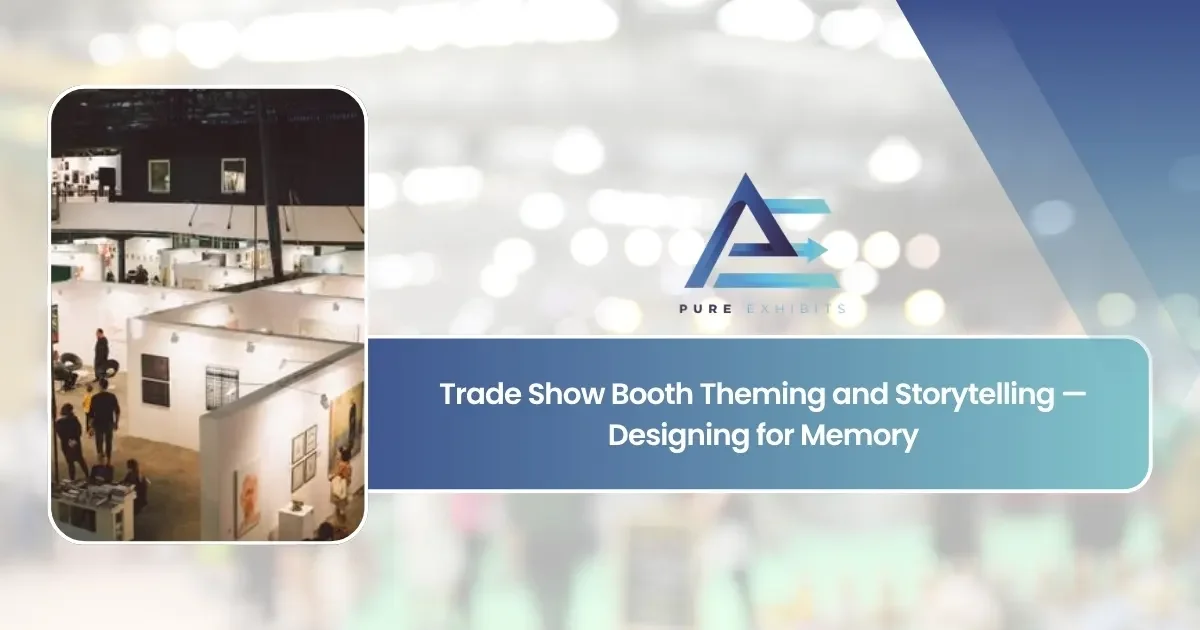
At any trade show, people go through hundreds of booths in the time that they spend there, and most of them all blend into one big blur by day two. It isn’t always the largest or fanciest booths that stand out; it’s the booths that have a theme and a message that will make people think about the brand long after they leave the floor.
Trade show booth theming and storytelling go hand-in-hand. Theme creates the mood, and storytelling is what ties the mood together for the visitor.
This guide covers how to develop a booth theme that fits a brand, how to translate that theme into a visitor journey, and the practical design elements that turn a themed booth into a memorable one rather than a gimmicky one.
Booth theming decisions connect directly to the graphics choices covered in Pure Exhibits’ trade show graphics guide, since a theme is only as strong as the visual execution that carries it across every surface of the booth.
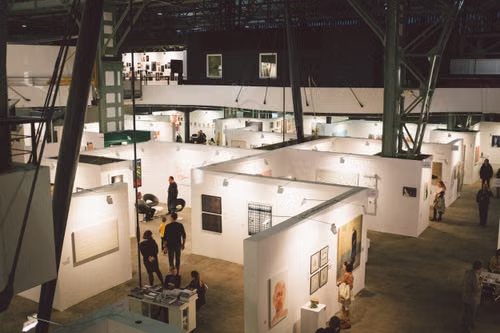
Why Trade Show Booth Theming and Storytelling Outperform Feature Display?
The most common approach to trade show exhibit design is feature display: identify the top five things you want visitors to know about your product, build graphics around those points, and staff the booth with people ready to explain them. This approach is logical. It is also the least differentiated strategy possible in a hall where every exhibitor is doing the same thing.
Traditional booths often communicate features. Experiential booths communicate value through experience. When a booth design reflects a brand’s values, mission, and personality, attendees intuitively understand what that brand stands for.
Cognitive science explains the commercial difference. Harvard Business Review shows that multisensory engagement increases brand recall by up to 10 times compared to visual-only communication. A visitor who reads five bullet points about your product’s performance specs has a very different memory encoding experience than one who walks into a themed environment, feels the brand atmosphere, interacts with a demonstration, and hears a staff member narrate a customer success story. The second visitor remembers the brand weeks later. The first may not remember it the next morning.
Pure Exhibits designs themed booths that visitors actually remember. Let’s talk about your next show.
Trade show booth theming and storytelling produce four specific commercial advantages over feature display:
More stops
A thematic design looks different from the typical trade show booth setup in the same space. This difference is what first attracts someone in the hustle and bustle of a trade show floor, since a visitor makes the decision of whether to visit the booth or not within 3-5 seconds. The difference in a booth theme design from the standard backwall makes it stop more people.
Greater dwell time
Purposeful flow through the demo, storytelling, and hospitality zones ensures natural engagement with the deeper levels of the brand story. An engaged person in the experience spends more time than someone who understands all the messages delivered through graphics in the first 30 seconds, and therefore has no reason to stay.
Higher lead quality
People visiting the thematic, storytelling booth will be self-qualified enough by the time they reach the counter. The brand’s positioning will be well understood before the sales conversation, which means higher-quality interactions and a shorter sales cycle after the show.
What Makes Booth Theming Different From Standard Booth Design?
Conventional booth designs concentrate on booth layout, traffic flow, and brand identity. Themed booths take a more advanced approach by creating a unified story or concept throughout the entire booth, relating all its components, including graphic design, colors, materials used, and even staff interactions to one concept.
Not only does it not have to be complicated for a theme to work, but the simpler and better designed the concept is in relation to the brand identity, the more successful it is likely to be.
Booth Theming Approaches by Brand Type
| Brand Type | Theming Approach |
|---|---|
| Tech/SaaS | Minimalist, futuristic visual language |
| Consumer product | Lifestyle-driven, experiential theme |
| Industrial/B2B | Process-driven exhibit storytelling, clear value chain |
| Healthcare/medical | Clean, trust-driven visual tone |
How Does Trade Show Booth Theming and Storytelling Guide a Visitor Through a Booth?
A booth’s story should mirror the visitor journey covered in Pure Exhibits’ trade show booth design guide, moving attendees logically from an attention-grabbing entry point, through a product or demo experience, and toward a conversation or lead-capture moment, with the narrative reinforcing each step.
This means signage, graphics, and even floor layout should be sequenced intentionally, so a visitor moving through the booth experiences the story in order rather than encountering disconnected pieces of information.
Exhibit Storytelling Sequence Across a Booth Layout
| Booth Zone | Story Function |
|---|---|
| Entry/front wall | Hook: captures attention and sets the theme |
| Mid-booth/demo area | Develops the story, shows the product in context |
| Meeting/conversation area | Resolution: connects the story to the next step |
A great theme needs a great story to back it up. Pure Exhibits can help design both. Let’s talk.
What Design Elements Carry a Theme Across the Booth?
Color, materials, lighting, and graphics all need to work together to carry a theme consistently, a coordination effort covered in Pure Exhibits’ trade show booth lighting guide, since lighting in particular can make or break the mood a theme is trying to create.
Consistency matters more than any single element. A theme that’s strong in graphics but undercut by mismatched lighting or generic furniture feels incomplete, even if each piece individually looks good.
Design Elements That Reinforce a Booth Theme
| Element | Role in Reinforcing Theme |
|---|---|
| Color palette | Sets emotional tone and brand recognition |
| Lighting | Shapes mood and highlights key story moments |
| Materials/textures | Adds sensory depth consistent with the theme |
| Graphics/signage | Carries the narrative through specific messaging |
How Does Theming Differ Across Booth Sizes?
Smaller booths need a simpler, more concentrated theme that can be communicated in seconds, while larger booths, covered in Pure Exhibits’ trade show booth sizes page, have more square footage to develop a multi-zone story without overwhelming visitors in any single area.
Theming Complexity by Booth Size
| Booth Size | Recommended Theming Complexity |
|---|---|
| 10×10 | Single, simple visual concept |
| 10×20 | One theme with a clear two-part story (entry + demo) |
| 20×20 | Multi-zone story with distinct but connected areas |
| 20×40+ | Full narrative arc across multiple zones and experiences |
From a single 10×10 to a full custom build, Pure Exhibits scales trade show booth theming and storytelling to fit your space. Request a quote today.
How Does Staff Behavior Reinforce a Booth’s Theme?
Staff is part of the story, not just bystanders in it, a point covered in Pure Exhibits’ trade show staff training and booth engagement guide, where consistent language and behavior tied to the booth’s theme reinforce the experience rather than breaking it.
Staff Behaviors That Reinforce Theming
| Behavior | Why It Matters |
|---|---|
| Consistent messaging language | Reinforces the narrative that visitors just saw |
| Matching attire/branding | Visually ties staff to the theme |
| Guided movement through zones | Keeps the visitor journey intentional |
What Are the Most Common Theming Mistakes?
Overcomplicating a theme, or choosing one disconnected from the brand’s actual identity, are the two most common mistakes: issues that often surface during the same planning conversations covered in Pure Exhibits’ trade show planning and project management guide, where theming decisions should be finalized early enough to inform graphics, lighting, and layout rather than being bolted on afterward.
Common Booth Theming Mistakes and Fixes
| Mistake | Fix |
|---|---|
| Theme unrelated to brand identity | Anchor theme to core brand values |
| Overly complex concept | Simplify to one clear idea, especially in smaller booths |
| Inconsistent execution across elements | Align graphics, lighting, and materials early in design |
| Theme decided too late in the process | Lock the theme before finalizing graphics and layout |
Visit the Pure Exhibits homepage or our Las Vegas page to see how we bring trade show booth theming and storytelling to life for exhibitors of every size.
Sensory Storytelling: Beyond Graphics and Screens
The most memorable trade show booths engage multiple sensory channels simultaneously, and the research explains why this matters commercially.
Multisensory engagement layers visual, tactile, auditory, and olfactory elements to create immersive environments that attendees remember long after the show ends. The more senses you engage, the deeper the memory encoding.
Lighting as Emotional Architecture
Lighting is one of the most underutilized tools for booth engagement.
In practical booth theme design, this means:
-
Zone lighting differentiation: The entry zone uses ambient, inviting light to draw visitors in. The demo zone uses focused, directional lighting to draw attention. The conversion zone uses warmer, intimate lighting to create the right psychological environment for an important conversation.
-
Backlit displays: LED-backlit fabric panels produce even, luminous graphics that read in any ambient lighting condition, and they communicate premium positioning that non-backlit alternatives do not.
-
Color temperature as brand signal: Cool-white lighting (5000–6500K) communicates innovation, precision, and technology. Warm white (2700–3000K) communicates quality, warmth, and relationship. Neutral white (3500–4000K) is versatile and professional. Choose deliberately, not by default.
Measuring Story Impact: Beyond Lead Counts
Most post-show measurement frameworks count leads and calculate cost-per-lead. These metrics capture only the behavioral surface of what a themed, story-driven booth produces. The full impact of trade show booth theming and storytelling requires a broader measurement model.
Dwell Time
It’s a clear signal that something about the space, the story, or the experience has captured their attention and earned their curiosity.
Average dwell time at your booth versus industry benchmarks is the most direct proxy for story engagement. A booth averaging 8-minute visitor stays is telling a more compelling story than one averaging 90 seconds, and that dwell difference will show up in lead quality, not just volume.
Measurement method: footfall sensors or staff observation tracking, with time-stamped lead capture to compare entry time to capture time.
Story Recall
Post-show surveys: send a short questionnaire to booth visitors, asking what they recall most vividly about your exhibit. The specific question is: “In one sentence, what does our company do?” The percentage of respondents who can accurately reflect your key message is the story recall rate, and it is the most direct measure of whether trade show booth theming and storytelling worked.
Lead Quality vs. Lead Volume
Grade every lead by engagement depth (A/B/C), and track whether the grade distribution correlates with story engagement depth. Visitors who went through the full journey: entry, engagement zone, demo, conversion zone, should grade as A or B at a meaningfully higher rate than visitors who badge-scanned at the entry.
Social Amplification
Often, a memorable story inspires people to share what they experienced. Count branded hashtag mentions, tagged photos, and organic show-floor content featuring your booth. A memorable trade show booth generates social content without prompting, and that content extends the brand’s narrative beyond the show floor to the audiences those creators and attendees reach.
How Pure Exhibits Brings Your Story to Life?
At Pure Exhibits, trade show booth theming and storytelling begin before any design file is opened. It begins with your story – who is the visitor you’re creating this experience for, what is the conflict they have coming into the event, and how is your brand resolving their conflict?
Story Architecture comes first. The design of the space, the selection of the materials, and the creation of the graphics will follow.
We are capable of handling all aspects of story expression in-house:
-
Custom exhibit design and fabrication: We transform your story concepts into spatial plans and structural drawings, and then we build the exhibit ourselves in-house. This means the gap between the rendering and the final exhibit is very small.
-
Materials and theme expression: From thematic surface finishes on countertops and flooring to physical expressions of the concepts through custom structural pieces, we can handle all materials for your theme booth design.
-
Graphics and sensory design: G7-certified large-format printing on all graphics and backlit graphics for optimum visibility in the aisle way.
-
Rental program: Our rental inventory enables exhibitors to access premium themed environments without the capital cost of custom fabrication, particularly valuable for first-time exhibitors testing a theme concept before committing to ownership.
-
I&D and show-day support: Our installation crew ensures that the story environment your team approved in the rendering is the environment that opens to visitors on day one.
Let’s Build Something Extraordinary
Share your event details and we’ll craft a custom booth solution designed to captivate your audience and maximize your ROI.
15 Questions About Trade Show Booth Theming and Storytelling: Answered
What is booth theming in a trade show context?
Booth theming is the process of giving a booth a cohesive visual and narrative concept that ties together graphics, color, materials, and staff interactions around a single idea.
How is theming different from standard booth design?
Standard design focuses on layout and traffic flow, while theming layers a specific narrative or visual concept on top of that structure to make the booth more memorable.
Does a booth theme need to be elaborate to work?
No, a simple, clearly executed theme tied directly to brand identity usually performs better than an overly complex concept visitors can’t quickly understand.
How does storytelling guide a visitor through a booth?
A well-designed booth story moves visitors from an attention-grabbing entry point through a product or demo experience and toward a conversation or lead-capture moment, with the narrative reinforcing each step.
What design elements are most important for carrying a theme?
Color, lighting, materials, and graphics all need to work together consistently; lighting in particular can shift a theme’s entire mood if it’s mismatched with the rest of the design.
Can a small 10×10 booth have an effective theme?
Yes, smaller booths benefit from a single, simple visual concept that can be communicated within seconds, rather than trying to fit a multi-zone story into a compact space.
How does theming scale for larger booths like 20×40?
Larger booths have room to develop a multi-zone story with distinct but connected areas, allowing for a fuller narrative arc without overwhelming visitors in any single zone.
How do staff fit into a booth’s theming and storytelling?
Staff is part of the experience. Consistent messaging, matching attire, and intentional movement through the booth’s zones all reinforce the theme rather than breaking the visitor’s experience.
What’s the most common mistake brands make with booth theming?
Choosing a theme disconnected from the brand’s actual identity, or overcomplicating the concept to the point that visitors can’t grasp it quickly.
When should a booth’s theme be decided in the planning process?
As early as possible, ideally before graphics, lighting, and layout are finalized, since those elements should be designed to support the theme rather than have it added on afterward.
Can lighting alone change how a booth’s theme is perceived?
Yes, lighting significantly shapes mood and can highlight or undercut key story moments, making it one of the most impactful but sometimes overlooked theming tools.
How does Pure Exhibits approach booth theming for clients?
We start by anchoring the theme to the brand’s core identity, then design graphics, lighting, and layout together so every element reinforces the same narrative consistently.
Does theming differ by industry, like tech versus consumer products?
Yes, tech and SaaS brands often lean toward minimalist, futuristic visual language, while consumer product brands tend toward lifestyle-driven, experiential themes suited to their audience.
How do you know if a booth theme is working during the show?
Visitor dwell time, engagement with themed elements like demo zones, and staff feedback on how visitors react to the narrative are all practical signals of whether a theme is resonating.
Can an existing booth be re-themed without a full rebuild?
In many cases, yes. Graphics, lighting, and accent materials can often refresh a booth’s theme without requiring a full structural rebuild, especially for rental or modular exhibits.