
The two days before a trade show opens are where months of planning either hold together or fall apart. Freight that arrives at the wrong dock. Electrical service that was not ordered in time. A demo that was never tested on show hardware. Assembly instructions that are not in the crate. These are not hypothetical disasters — they are documented, recurring events that happen to exhibitors at every show, every year. The difference between exhibitors who open day one fully ready and those who spend the first morning troubleshooting is almost always preparation and process, not luck.
A well-executed trade show setup starts weeks before move-in day and ends the night before the floor opens — not the morning of. This guide covers the full setup sequence from freight planning and shipping to move-in execution, AV testing, final staging, and the pre-open walk-through. Whether you are managing setup yourself or working with a professional I&D team, the checklist, tables, and process guidance here will help you arrive at opening day with a booth that is complete, functional, and ready to convert. For the pre-show planning that feeds into this process, see our complete trade show preparation guide.
Don’t manage setup alone.
Pure Exhibits handles design, shipping, and full I&D so your team shows up ready to sell.
What Are the Key Phases of Trade Show Setup?
Experienced exhibitors think about setup not as a single event but as a sequence of phases — each with its own timeline, responsible parties, and completion criteria. When one phase is late or incomplete, every subsequent phase absorbs the impact. Understanding the full sequence is the foundation of a setup plan that actually works under show-floor pressure.
| Setup Phase | Timeline | Key Activities | Who Is Responsible |
|---|---|---|---|
| Pre-show planning | 8–12 weeks before show | Confirm design, order services, ship exhibit | Exhibit manager / marketing lead |
| Freight shipping | 10–14 days before show open | Ship to advance warehouse; confirm receipt | Exhibit manager / logistics partner |
| Move-in — day one | Per show schedule (island booths first) | Structural assembly, flooring, back wall | I&D crew / exhibit partner |
| Move-in — day two | Inline and smaller booths | AV installation, lighting, graphics placement | I&D crew + AV tech |
| Final staging | Night before show opens | Collateral, product, lead capture, tech test | Booth manager + team |
| Walk-through review | 30–60 min before floor opens | Full visual and functional check | Booth manager |
| Show opens | Day one — floor open | Staff positioned, demos running, all systems live | Full booth team |
The most critical timeline discipline is the line between pre-show planning and move-in. Everything that can be decided, ordered, tested, or prepared before you arrive at the venue should be. Move-in is not the time to figure out your electrical load, argue with the show’s general contractor about service orders, or realize your demo software has not been tested on the hardware you shipped. Those decisions have a cost-effective window weeks before the show and an expensive, stressful one during setup.
If you are working with a professional trade show installation partner, the handoff point is typically freight delivery to the advance warehouse. From that moment, a well-run I&D process manages structural assembly, AV placement, and final staging on a pre-agreed schedule — so your marketing team arrives at a booth that is already built and needs only final product placement and tech confirmation.
How Do You Pack and Ship Your Exhibit for a Trade Show?
Freight handling is one of the highest-risk phases of any trade show, and most damage, loss, and delay issues trace back to how the exhibit was packed and shipped — not what happened at the venue. A well-packed exhibit arrives at move-in complete, undamaged, and ready to assemble in sequence. A poorly packed one costs you hours of troubleshooting time and sometimes components you cannot replace before the show opens.
| Freight Category | Items to Include | Packaging Tip |
|---|---|---|
| Booth structure | Frame components, connectors, hardware, assembly instructions | Label every component; use numbered cases matching your build diagram |
| Graphics panels | Backwall, side panels, header, countertop wrap | Ship flat in rigid tubes or crates — never fold large-format graphics |
| Flooring | Interlocking tiles, carpet, foam underlayment | Stack flat; mark ‘FLOOR — INSTALL FIRST’ on the case |
| AV equipment | Monitors, tablets, kiosks, cables, power strips, mounts | Original boxes when possible; use foam-lined road cases |
| Lighting | LED spotlights, backlights, power cords, mounting hardware | Bundle cords; label light positions matching your layout diagram |
| Collateral & giveaways | Brochures, business cards, product samples, branded items | Keep in a separate labeled case; do not mix with structure freight |
| Tools & supplies | Screwdrivers, zip ties, scissors, tape, leveling shims, first aid | Small tool case — label clearly and keep with your team, not in freight |
Always ship to the advance warehouse rather than direct to the show site when this option exists. Advance warehouse acceptance windows open 10–14 days before the show and close several days before move-in begins. Freight shipped to the advance warehouse is staged and delivered to your booth space during your assigned move-in window — which means it is waiting for you when your crew arrives. Direct-to-show-site freight is subject to marshaling yard congestion, higher drayage rates, and delivery timing that is far less predictable. The advance warehouse adds a small storage fee; it saves significant setup complexity.
Between shows, proper trade show storage of your exhibit components directly affects how ready they are for the next event. Cases that are stored correctly, with components organized and hardware accounted for, load out for the next show in hours rather than days. Cases that are returned in disorder from teardown become a problem during the next setup.
What Do You Need to Know About Move-In Schedules and Access?
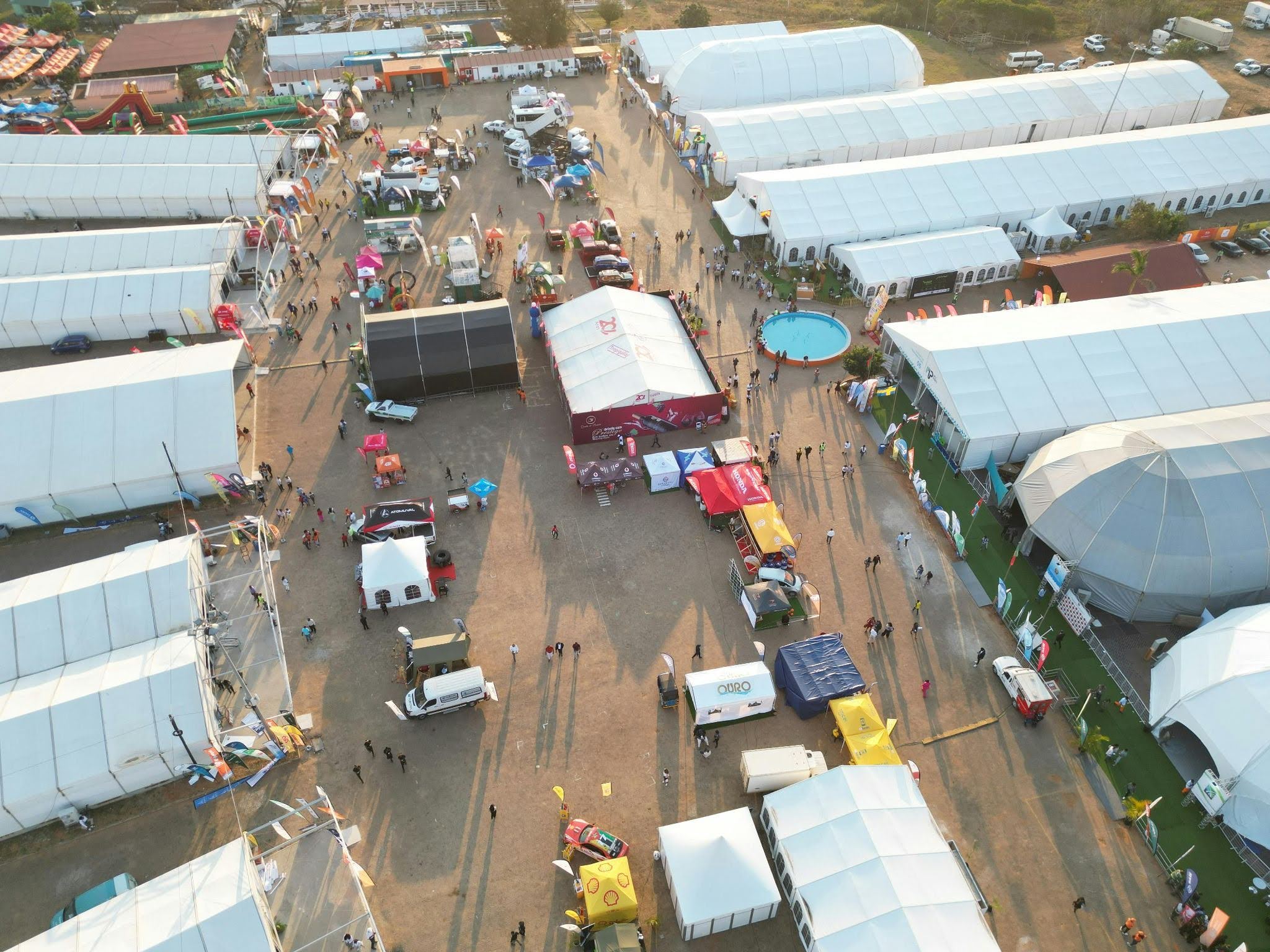
Every trade show publishes a move-in schedule that specifies when different booth types and sizes can access the floor for setup. This schedule is not a suggestion — it is enforced. Arriving before your assigned window means being turned away at the dock. Arriving late means your setup competes with other exhibitors’ crews for elevator access, aisle space, and available labor.
Island booths — the largest and most complex configurations — are almost always given first access, typically one to two days before inline exhibitors. This is not a privilege: it is a practical necessity. A 20×20 island with overhead rigging, multi-zone lighting, and custom flooring requires substantially more time to build than a 10×10 inline with a pop-up back wall. Show management assigns the access windows to ensure each booth type has sufficient time to complete setup before the floor opens.
Confirm your assigned move-in window as soon as it is published — typically 6–8 weeks before the show — and build your crew arrival, freight delivery window, and setup schedule around it. If your window falls on the last day of move-in, which is common for inline booths, plan to have everything finished by mid-afternoon of that day, not by floor-open time the following morning. Crews working late into the night before a show opens make mistakes, and mistakes discovered at 7am on opening day are extremely difficult to fix.
Understanding Move-In Access Badges
Most shows require separate exhibitor service badges for crew members working during move-in and move-out — distinct from the standard exhibitor badges used during show hours. Confirm how many crew badges are included with your space registration and request additional badges if your team size requires them. Crew members without the correct badge type will be denied floor access during move-in, which is a solvable problem only if you discover it before arriving at the security checkpoint.
What Are the Union Labor Rules That Affect Trade Show Setup?
Union jurisdiction is the aspect of trade show setup that surprises first-time exhibitors most consistently. At major convention centers in Las Vegas, Chicago, New York, and most other large markets, specific setup tasks must be performed by union labor — regardless of whether you brought your own crew. Violating these rules is not merely a procedural issue: non-compliant work can be stopped, charged twice (once for your crew and once for union remediation), or require dismantling and rebuilding. The Las Vegas trade shows circuit in particular is known for strict enforcement, which is why local exhibit partners with union fluency add measurable value.
| Task | Self-Perform Typically Allowed? | Union Jurisdiction Typically Applies? | Notes |
|---|---|---|---|
| Assembling your own exhibit structure | Yes — in most markets | No — for exhibitor’s own property | Confirm with show regulations; varies by city |
| Connecting electrical to house power | No | Yes — always | Must be performed by licensed electrician or union crew |
| Rigging overhead hanging signs | No | Yes — always | Union riggers required at all major venues |
| Placing and arranging furniture | Yes — at most shows | No — generally | Some venues restrict porter/handling tasks |
| Operating forklifts or pallet jacks | No | Yes — always | All material handling equipment is union-operated |
| Installing AV equipment (monitors, mounts) | Yes — often | Varies by venue and market | Confirm show kit; some cities require union AV |
| Hanging graphics and banners | Yes — typically | No — for own exhibit | Overhead rigging is different from side-wall graphic hanging |
The rules above represent general patterns — actual jurisdiction varies by venue, city, and sometimes by specific show agreement. Always read the labor and jurisdiction section of the exhibitor service kit for the specific show before sending any crew to the floor. When in doubt, ask show management directly: they would rather clarify the rules in advance than deal with a dispute during move-in.
Working with a professional I&D company that operates in the specific city eliminates most of this risk. Local crews know which tasks they can perform and which require union coordination, and they have established working relationships with the unions at the venues they service regularly. This knowledge saves time, avoids costly work stoppages, and is one of the primary reasons large exhibitors always use experienced, locally-rooted exhibit partners.
How Do You Manage AV and Technology During Trade Show Setup?
AV and technology are the phase of booth setup most likely to surface problems on opening morning — and least likely to surface them during pre-show planning, because most exhibitors test their demo on a familiar laptop rather than the hardware that will actually be at the show. The solution is a systematic AV check protocol that begins before freight ships and continues through the night before opening.
| AV / Tech Element | Pre-Show Check | Day-Of Check |
|---|---|---|
| Monitors and displays | Confirm resolution settings; test HDMI/DP connections | Power on 30 min before floor open; verify content playing |
| Demo software / app | Full run-through on show hardware (not just your laptop) | Reload app; clear cache; disable auto-updates |
| Internet / connectivity | Test cellular hotspot as backup; confirm Wi-Fi credentials | Speed test at booth location; confirm signal strength |
| Lead capture app | Install, log in, and test badge scan workflow | Full team logged in; sync to CRM confirmed |
| Charging stations and power strips | Count outlets vs. devices; bring extension cords | Confirm all devices charged; hide cables with management clips |
| Audio (if applicable) | Test speaker volume levels at show ambient noise level | Adjust volume for peak crowd noise — test again at opening |
| Lighting | Confirm beam angles hit key display elements | Walk aisle and view booth — adjust any misdirected fixtures |
Internet connectivity is the AV issue that causes the most last-minute stress. Convention center Wi-Fi shared connections are frequently congested during move-in as hundreds of exhibitors simultaneously configure AV systems. Wired dedicated connections are more reliable but require advance ordering through the show’s official internet provider — typically at significant cost. A 4G/5G cellular hotspot is a practical, cost-effective backup for most software demos and should be part of every exhibitor’s AV kit regardless of what primary internet service is ordered. Build its cost into your trade show budget as a standard line item.
Test every technology element in the sequence your staff will use it during the show — not just individually. A demo that works in isolation sometimes breaks when the lead capture app is running simultaneously on the same device, or when the monitor is connected through a specific adapter that was not tested. Run the full technology stack together, in the order your team will operate it, before the floor opens.
Get a Custom Booth Design
Pure Exhibits coordinates full AV integration and I&D — your team arrives to a booth that’s built, tested, and ready.
What Should the Night Before the Show Look Like?
The night before the show opens is the most valuable window in your entire trade show setup process — and the one most often rushed or skipped. After the structural build and AV installation are complete, this is the time to do a thorough final staging pass, a complete walk-through as a visitor would experience the booth, and a team briefing so everyone knows their role before the floor opens. The exhibitors who are calm, organized, and ready at 9am on day one are almost always the ones who used this window effectively.
Final staging is more than placing collateral and product. It is the systematic check of every element that affects visitor experience and staff effectiveness: Are all graphic panels straight and crease-free? Is every lighting fixture aimed at its intended target? Are cables managed and hidden? Is the counter clean and branded? Is the lead capture device charged, logged in, and synced? Is there water and a private place for staff to recharge between conversations?
After staging is complete, stand at the aisle — where an attendee would first see the booth — and read the exhibit as they would. Does the headline graphic communicate the value proposition in under five seconds? Is the demo station visible and inviting from the aisle? Is there a clear, unobstructed entry point? If the answer to any of these is no, this is the moment to fix it — not tomorrow morning when the floor is already open.
End the night with a team briefing that covers the day-before checklist, confirms each person’s station and role for opening, reviews the qualification script and demo flow, and addresses any open questions. A 30-minute team meeting the night before the show is worth more than three hours of training the week before because the context is immediate and real.
What Does the Day-Before and Opening-Morning Checklist Include?
A structured checklist transforms the final setup phase from a stressful improvisation into a methodical confirmation process. The table below covers the critical items to verify before the booth is considered ready for the floor to open.
| Category | Items to Confirm | Owner |
|---|---|---|
| Exhibit structure | All panels secured, no loose connections, flooring flat with no trip hazards | I&D lead |
| Graphics | All panels straight, no wrinkles or bubbles, header readable from 20 ft | Booth manager |
| Lighting | All fixtures aimed at intended targets, no dark zones in demos | AV tech / I&D lead |
| AV and tech | All screens displaying content, demos running, internet connected | AV tech |
| Lead capture | All staff logged in, badge scanner tested, CRM sync confirmed | Marketing lead |
| Collateral and product | Brochures stocked, giveaways accessible, product demo units placed | Booth manager |
| Staff positions and roles | Each team member knows their station, script, and qualifier questions | Booth manager |
| Emergency supplies | Tape, zip ties, spare bulbs, touch-up paint, graphics repair tape | I&D lead |
One item on this list deserves particular emphasis: the emergency supplies case. Every trade show setup should include a small case of repair and emergency supplies that stays with the booth manager throughout the show — not in the freight cases that go back to storage after build. Gaffer tape, zip ties, graphic repair tape, a spare power strip, touch-up markers, and a basic tool kit have saved countless setups from graphic tears, loose connections, and minor structural failures that would otherwise force an embarrassing call to show services during peak floor hours. The cost of this kit is trivial; the cost of not having it when something goes wrong is always higher.
Also build into your checklist a confirmation that every staff member has completed the relevant trade show staff training preparation: the 30-second value statement rehearsed, the three qualifier questions memorized, the demo flow practiced, and the specific ask at the end of every conversation confirmed. A physically complete booth staffed by an unprepared team is only half ready for the show floor.
What Are the Most Common Trade Show Setup Mistakes — and How Do You Avoid Them?
The setup mistakes that cost exhibitors the most time and money are predictable and preventable. They fall into three categories: logistics failures (wrong shipping address, missed deadlines), design and compliance failures (height violations, untested demos), and process failures (no buffer time, no instructions in the crate). Knowing them in advance is the cheapest insurance you can buy.
| Setup Mistake | Consequence | How to Prevent It |
|---|---|---|
| Shipping to show site instead of advance warehouse | Higher drayage rates; freight arrives after move-in begins | Confirm advance warehouse address; ship 10–14 days out |
| Missing electrical order deadline | Pay show-site rates (25–40% more); possible power delays | Set calendar reminder at exhibitor kit receipt; order immediately |
| No assembly instructions in freight case | Setup crew spends hours puzzling through assembly | Laminate and tape instructions inside every structural case |
| Untested demo on show hardware | Demo fails on day one in front of buyers | Full dry run on show-destination hardware at least one week out |
| Overlooking height restrictions | Non-compliant structure flagged; forced modification at show | Read show regulations; confirm height limit before design is finalized |
| No spare graphics | Damaged panel ruins exhibit appearance for entire show | Ship one spare graphic set; store under counter or at hotel |
| Inadequate buffer time in setup schedule | Setup incomplete when floor opens; team exhausted on day one | Add 3–4 hrs buffer; plan to be fully done night before show opens |
The single most expensive and most preventable mistake is running a demo at the show that was never tested on show hardware. Every exhibitor who does a live software or product demonstration should perform a full dry run — on the specific device, with the specific connectivity setup, in the specific sequence the staff will follow — at least one week before the show. Bugs discovered then are fixable. Bugs discovered in front of a buyer on opening morning are not. Reference our exhibition booth design guidance for how the physical design of your booth should account for the technology it needs to support — including cable management, display mounting, and demo station layout.
The second most common — and most avoidable — mistake is missing the advance electrical service order deadline. This window closes 6–8 weeks before most shows, and late orders are processed at significantly higher rates. More importantly, late electrical orders are sometimes not fulfilled until day two of move-in, leaving exhibitors with a built booth and no power on opening day. Order electrical service the moment your exhibitor kit arrives. It takes ten minutes and saves a great deal of stress later.
A Great Show Starts With a Great Setup — Build That Foundation Right
The best exhibit design in the room means nothing if it is still half-built when the floor opens. Trade show setup is not a logistics afterthought — it is the operational foundation on which everything else the show delivers depends. Ship on time. Order services before the deadline. Know the union rules before your crew arrives. Test every piece of technology on show hardware, not on your familiar office laptop. Stage everything the night before and walk the booth as a visitor before a single attendee arrives. These are not complicated disciplines. They are habits that separate exhibitors who open day one fully ready from those who spend the first morning solving problems that should have been solved weeks earlier. Pure Exhibits handles the full setup process for exhibitors across the country — from design and fabrication through shipping, I&D, and teardown. Reach out at purexhibits.com to start planning your next show.
Let’s Build Something Extraordinary
Share your event details and we’ll craft a custom booth solution designed to captivate your audience and maximize your ROI.
Frequently Asked Questions
How early should I arrive for trade show setup?
Arrive at the start of your assigned move-in window — not during it. For island and large peninsula booths, this typically means arriving one to two days before the show opens. For inline and smaller booths, it is usually the day before. Plan your travel so that you arrive in the city the night before your move-in window begins — jet lag, flight delays, and travel logistics should not compete with your setup schedule.
Can I set up my own trade show booth without hiring an I&D company?
Yes — for inline booths (10×10 and 10×20) that do not require hanging elements, electrical connections, or rigging, many shows permit self-installation by exhibitor staff. For larger or more complex configurations — island booths, hanging signs, custom structures — professional I&D is strongly recommended and in some cases required by show regulations. Self-installation is most practical for modular pop-up or tension fabric exhibits designed for easy assembly.
What is the difference between move-in and setup?
Move-in refers to the process of getting your freight delivered to your booth space — the dock-to-floor movement managed by the show’s material handling contractor. Setup is the process of building and staging your exhibit within that space. Move-in happens first; setup follows. At large shows, move-in may begin two to three days before the floor opens to give exhibitors sufficient time to complete their setup.
What happens if my freight doesn’t arrive in time for setup?
Contact show management immediately. Most shows have a designated exhibitor services team on the floor during move-in who can help trace missing freight. If freight has shipped to the advance warehouse and does not appear at your booth during move-in, check with the general service contractor — freight is sometimes staged in a holding area rather than delivered directly. Always keep tracking numbers and warehouse confirmation receipts accessible during move-in.
How long does it take to set up a 10×10 trade show booth?
A well-organized 10×10 with a tension fabric or modular system can be set up by two people in 2–4 hours, including graphics, lighting, and AV. Custom or structural 10×10 builds may take 4–6 hours. Allow additional time for technology testing and final staging. Plan to be fully complete at least 2 hours before the floor opens — not 20 minutes before.
How long does it take to set up a 20×20 island booth?
A 20×20 island typically requires 8–16 hours of build time for a professional I&D crew, depending on the complexity of the structure, the number of AV elements, and whether overhead rigging is involved. This is why island booths receive first move-in access — they need it. Plan for a full day of build, a second day for AV and staging, and the night before the show for final confirmation and team briefing.
What should I do if something is damaged when I unpack my exhibit?
Document the damage with photographs before anything is moved or repaired — timestamped photos are important for any insurance or freight claim. Notify show management and file an incident report with the material handling contractor, who is responsible for freight from the dock to your booth space. Contact your insurance carrier or broker the same day. Do not discard damaged items until the claim process is complete.
Can I bring my own tools for trade show setup?
Yes — exhibitors are generally permitted to bring and use their own hand tools (screwdrivers, hex keys, levels, tape measures) for assembling their own exhibit structure. Power tools are also typically allowed for exhibitor use. What you cannot do in union markets is perform tasks that fall under union jurisdiction — electrical connections, rigging, or operating material handling equipment — regardless of what tools you bring.
What do I do with empty freight cases during the show?
Most shows provide an empty case storage service where the general service contractor labels your cases during move-in and stores them in a designated area, then returns them to your booth at the start of teardown. This service is typically included in the drayage fee or available for a small additional charge. Do not leave empty cases in your booth during the show — they create clutter and violate most show regulations about booth storage.
Is it worth hiring a professional I&D company for a small booth?
For a 10×10 with a simple modular system and no complex AV, self-installation by a prepared exhibitor team is reasonable and saves money. For anything larger — or for a 10×10 that includes custom elements, hanging graphics, or complex AV — professional I&D consistently delivers a better result, faster, with fewer errors. The cost of I&D for a 10×20 typically runs $1,800–$4,000 and is one of the better investments in the overall exhibit budget.
How do I handle teardown and move-out after the show?
Teardown begins as soon as the show floor closes — sometimes within minutes of the last attendee leaving. The same principles that apply to setup apply in reverse: have a dismantling plan, know which elements come down first, pack components in their original labeled cases, and complete packing before the general service contractor’s outbound freight deadline. Many exhibitors underestimate teardown time — plan for at least 50–75% of the time it took to set up.
Can Pure Exhibits manage the full setup process for my trade show?
Yes — full setup management is a core service of Pure Exhibits. We design the exhibit, fabricate or configure the rental, coordinate shipping to the advance warehouse, and deploy an experienced I&D crew to build and stage your booth according to the design. Your team arrives to a complete, tested, show-ready exhibit. We also handle teardown and return freight. Contact us at purexhibits.com to discuss your specific show and booth requirements.