
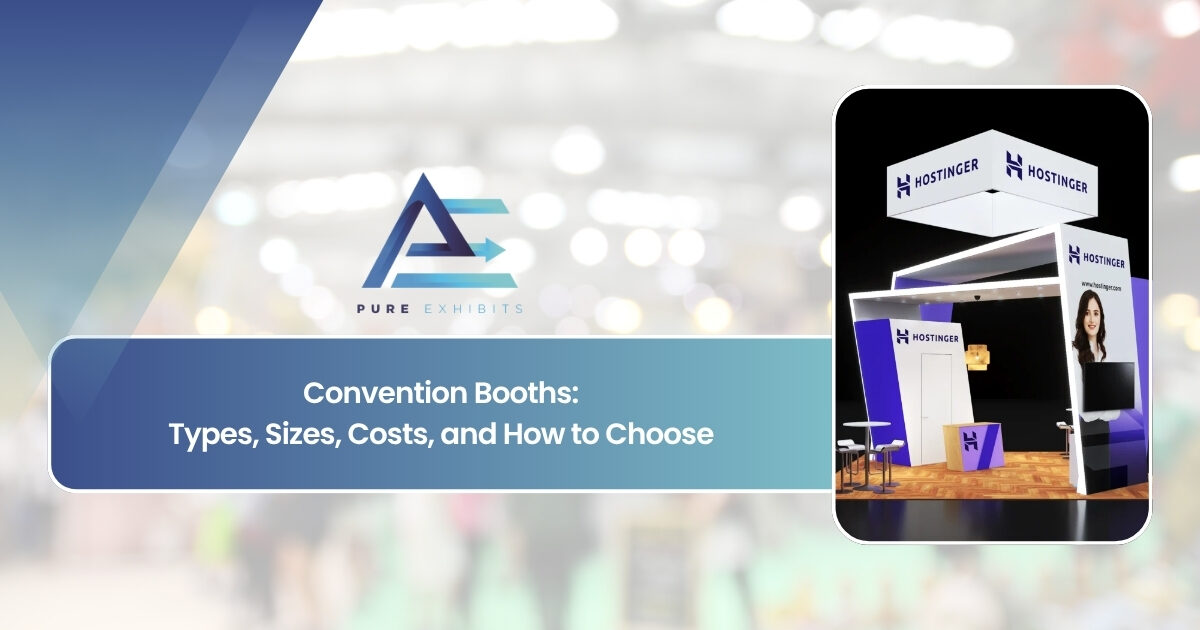
Planning to exhibit at a convention center for the first time? The very first thing that comes to every first-time exhibitor’s mind is which booth builder they should choose. Choosing the right convention booths is super important, whether you’re showing up for the first time or setting one up for tons of vendors. It affects foot traffic, budget, and even how your brand looks from a distance in a jam-packed space.
What is a Convention Booth?
Convention booths are 10×10 display spaces that companies use at events like conventions or trade shows. This area can be super basic or, it can be intricate with custom features like LED lights and big screens.
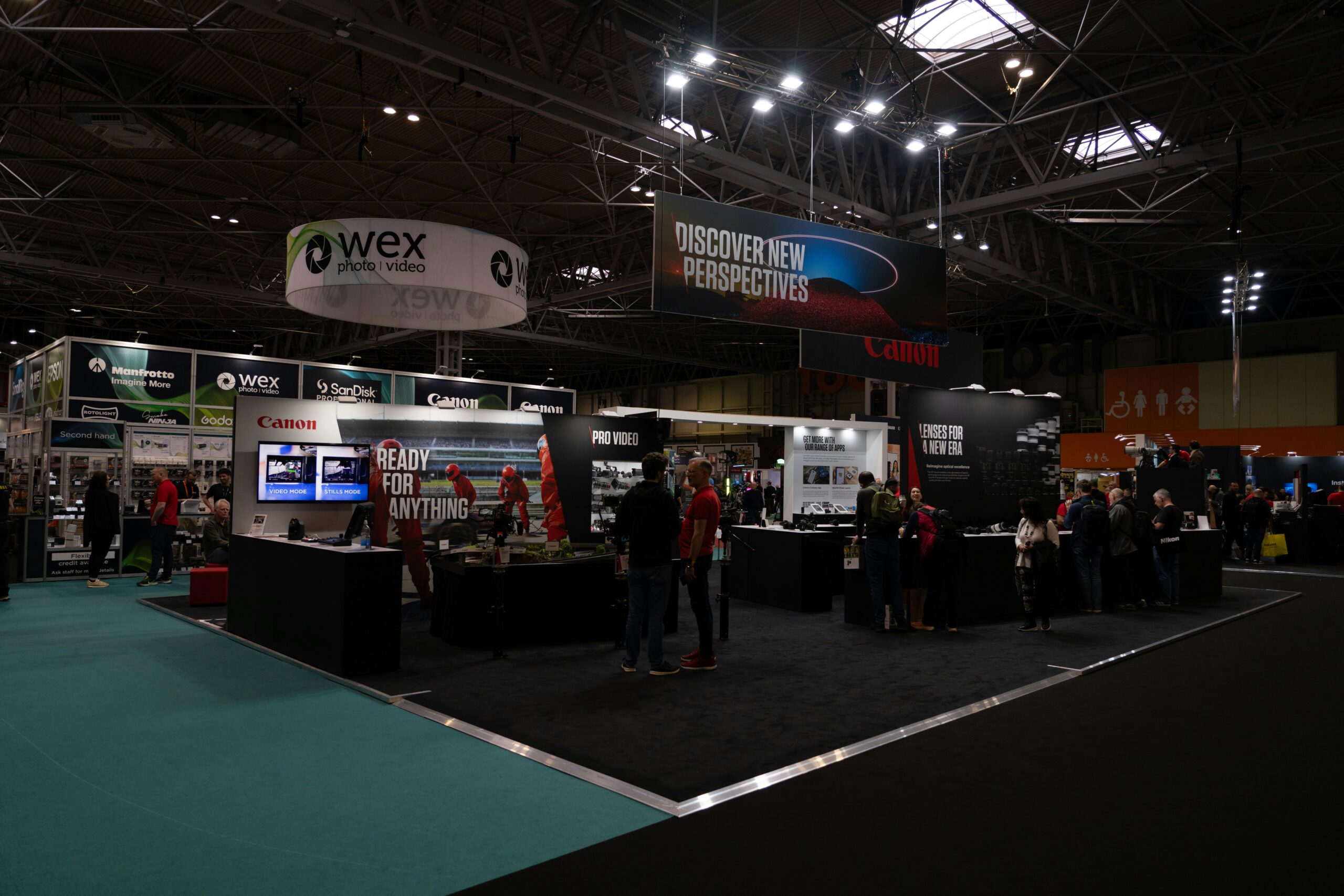
Types of Convention Booths
Pipe and Drape Booths
Pipe and drape the backbone of most convention booths. It uses aluminum poles, crossbars, and fabric panels to create booths. Ever walk into a convention and see a curtained-off area with your favorite brand’s name on it? That’s probably a pipe and drape setup.
Who Buys It?
People like convention organizers, event venues, and rental companies buy it. They need to split big spaces for events into smaller convention booths. The kits come in different sizes, too, whether you’re setting up just one 10×10 space or multiple booths for a larger area.
Setup
Setting up is easy and tool-free. The uprights just screw into steel base plates, crossbars slot in place, and drape panels hang from the bars. One person can assemble a single convention booth in under ten minutes.
Cost Range
Prices start at around $100–$200 for a single booth kit and go up to $1,200–$3,500 for multi-booth packages that cover 5–25 spaces.
Drawbacks
The downside? Pipe and drape convention booths only provide the basic structure. Exhibitors have to bring their own displays, banners, and graphics to decorate their space.
Pop-Up Displays
A pop-up display is the perfect choice for first-time convention exhibitors. Essentially, it’s an accordion or push-button frame that unfolds to 8–10 feet wide and is covered in a custom-printed fabric graphic.
Who Buys It?
People who buy these convention booths include first-timers, small biz owners, solo sellers, or those working a 10×10 booth on a limited budget.
Setup
Setting up only takes one person, no tools, and about 5–10 minutes.
Cost Range
It costs between $500 and $2,000, which covers the graphic and a carry case.
Best For
These displays look pro yet don’t break the bank like options costing $3,000+.
Plan Your Booth with Confidence
Let our team help you navigate show rules, vendors, and service orders.
Tension Fabric / SEG Displays
Tension fabric convention booths use silicone-edged graphics, or SEG, which fit into a frame’s perimeter channel. This creates a smooth, seamless look with no visible hardware. Compared to pop-up displays, they seem much more professional.
Set-Up
Setting one up takes about 10 to 25 minutes based on its size.
Cost Range
Prices run from $800 to $4,500, depending on extra features like counters or if it’s a single or multi-frame setup.
Best For:
These displays work best for people doing three or more conventions yearly, looking for a stylish yet mid-priced option.
Backlit Displays
Backlit convention booths have LED-illuminated frames that shine through fabric graphics, making them glow.
Setup
Super quick, just 10 to 25 minutes
Cost Range
These displays cost between $1,500 and $6,000+ for a 10-foot setup. Larger convention booths cost even more.
Important
Crucially, the frame must be made to integrate LED lighting. You can’t upgrade a regular fabric display with backlights later. If you’re thinking about it now or will in the next couple of years, go ahead and get the backlit version upfront.
Best For
The backlit booths work best at high-traffic conventions and shows with fierce competition, where the goal is to make a major visual impression.
Modular Exhibit Booths (10×20 and Larger)
Modular exhibits use reconfigurable parts like frames and panels to create different setups for each show. So, you can switch from a 10×20 layout to other shapes like L or U forms, or create distinct product areas and storage spaces.
Setup
30 to 90 minutes, which is pretty quick.
Cost Range
Pricing is anywhere from $2,000 up to $12,000+ for a 10×20 system, while a 20×20 island setup starts at around $10,000.
Best For
These convention booths work best for companies hitting multiple yearly conventions, showing off physical items, or simply wanting to invest in an exhibit as a lasting marketing tool.
Island Displays (20×20 and Larger)
Island booths are right in the middle of a convention floor instead of around the edge. That way, people can see them from all four sides. Hence, these convention booths are perfect for brands wanting a strong presence at big events. These setups feature full-circle branding, tall structures, huge overhead signs, spaces for meetings, and private storage areas.
Cost Range
They cost between $10,000 and much more than $20,000 if buying. Renting is usually better for those who don’t need them often.
Best For
Large companies and major product launches use these convention booths most, especially at key industry shows.
Convention Booth Sizes: What the Numbers Mean
| Booth Size | Floor Space | Best For |
|---|---|---|
| 8*8 or smaller | Under 64 sq ft | Tabletop setups, small expos, limited budgets |
| 10*10 | 100 sq ft | Standard — fits a backwall, counter, and 2–3 staff |
| 10*20 | 200 sq ft | Growing exhibit programs, more products to display |
| 10*30 | 300 sq ft | Long inline spaces, multiple product zones |
| 20*20 | 400 sq ft | Island exhibits, major convention presence |
Not Sure Which Size You Need?
Our team can walk you through your space requirements, budget, and show goals to recommend the perfect booth size for your next event.
Choosing the Right Convention Booth: 5 Things to Do First
Firstly, think about your space – figure that out before anything else. Your room size dictates your hardware choices, so select your displays only after you’ve nailed down your measurements.
Next, consider how often you’ll hit up the conventions. For those hitting them once or twice a year, focus on making a big visual splash and getting good value. But if you’re there more regularly, prioritize something quick to set up, durable, and easy to transport.
Ask yourself where your booth will be situated. In a huge convention with rivals showing off top-notch exhibits, going all out with a backlit or SEG display is worth the investment for that extra attention. For a small, local expo, though, a basic pop-up backwall is sufficient.
Ask who’s setting up the booth, and how much time they will have. For small teams, tool-free, self-setup systems work best. If you go for larger modular setups, expect to need at least two people or up to an hour to put everything together. Double-check the convention’s setup times beforehand, too.
Are you an exhibitor or an organizer? Exhibitors just need a display for their space. But organizers and venue folks require pipe-and-drape kits to set up booth areas in the first place. That’s a whole other purchase.

Considerations Most Buyers Miss
Venue restrictions
These can be strict, especially at places requiring union labor for certain installs, like hanging banners. These usually need union rigging, so always check your convention center’s rules in the exhibitor kit.
Multi-day durability
Displays also need to last through multi-day events without looking worn out. Since tension fabric and SEG systems keep their shape better, they’re great choices for consumer conventions that run two to four days long. Vinyl-graphic options might sag or wrinkle after setup day, though.
Shipping and receiving
For conventions at big hotels and centers, know the advance warehouse deadline for your booth display. Missing the specific arrival window means shipping gets refused. Find out the shipping schedule before you commit.
Rush production
If your show is soon, manufacturers may do rush production, sometimes as quickly as 24–48 hours post artwork approval. But the catch? Approving the artwork can slow things down. To avoid this, have your graphics file ready to go.
Convention Booth Setup Tips From Experienced Exhibitors
Use one clear message, not every detail.
Big, simple graphics catch eyes better than walls of text. At conventions, folks zoom past, giving you just three seconds of attention.
Having a counter transforms your booth.
It gives your crew a spot, makes a soft boundary to naturally pause at, and hides stuff underneath. Almost everyone who does this more than once learns to add one.
Overprepare for what might need fixing.
Bring extra cords, ties, tape, and a toolkit. Surprises happen.
Take setup pictures.
They help you or someone else quickly rebuild it next time.
Conclusion
Convention booths aren’t generic. A first-time exhibitor at a local hobby expo doesn’t need the same setup as a brand manager running a 20×20 island at a national industry conference. Plus, an event organizer setting up 50 vendor spaces has different needs, too.
First, figure out your space, show schedule, and setup constraints. These will help you decide what booth to get. The best booth isn’t always the fanciest one in the catalog. Instead, it’s the one that’s easy to transport, sets up quickly, still looks good by the end of the show, and fits in your budget.
So remember, everything else is just details, and those details matter.
Let’s Build Something Extraordinary
Share your event details and we’ll craft a custom booth solution designed to captivate your audience and maximize your ROI.
Frequently Asked Questions
What are the different types of booths?
The term ‘booth’ usually falls into two categories: event/trade show booths (for marketing), and restaurant seating booths (for private dining).
What size is an exhibition booth?
The standard exhibition booth size is 10×10 ft (approximately 3mx3m). There are other sizes too, such as 10×20, 20×20, etc.
What materials are used in exhibition booths?
There are 4 common types of materials used in exhibition booths. They are aluminium frameworks, graphics and backdrops, signage and accents, and interlocking foam/carpet tiles. These materials have substitutes as well, such as MDF, plywood, and so on.
What is the difference between a booth and an exhibition stand?
Stands offer a more immersive experience, while booths prioritize personal interaction. Selecting the best exhibition option for a business requires knowing about these differences.