
There is an established set of rules and regulations at the George R. Brown Convention Center in Houston that regulates booth heights, installation of hanging signs, the movement of freight, electrical connections, and restrictions for exhibitor staff on the show floor. Familiarizing yourself with these GRB exhibitor rules before arrival will help avoid compliance problems and extra charges.
In this guide, you will find essential George R. Brown Convention Center Exhibitor Tips and rules that any exhibitor should know before entering the facility for the first time.
The full logistics and booth rental overview for the GRB is in the Houston & George R. Brown exhibitor guide.
Booth Height and Design Rules
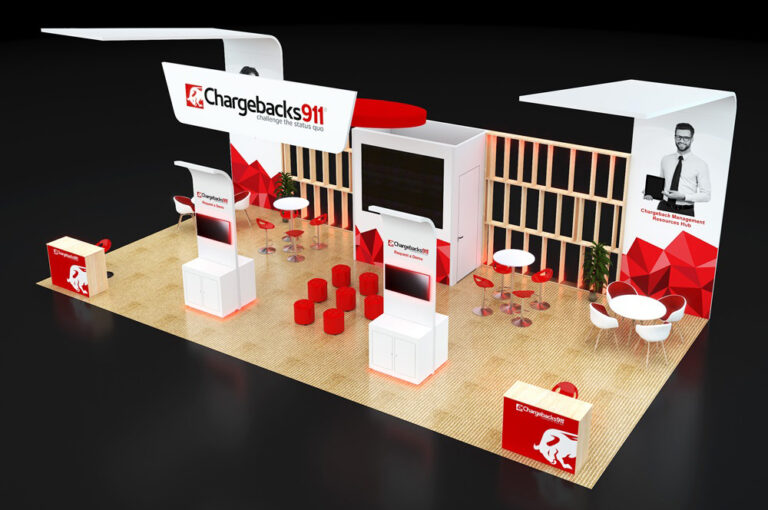
However, there is a restriction on the height of the booths depending on the booth style. Typically, inline booths may have a maximum height of 8 feet at the back wall only, while island-style booths can be taller, up to 16-20 feet.
GRB Booth Height Rules by Configuration
| Booth Type | Typical Max Height | Notes |
|---|---|---|
| Inline (back wall) | 8 feet | Standard inline limit: no structures taller than 8 ft within 5 ft of a neighbor |
| End-cap | 12 feet | May vary by show: confirm in exhibitor manual |
| Island (structure) | 16–20 feet | Subject to ceiling clearance in the assigned hall |
| Hanging signs | Requires approval | Submit the rigging plan per the exhibitor manual deadline |
Pure Exhibits helps exhibitors stay compliant at the George R. Brown Convention Center. Let’s plan your Houston booth.
Labor Rules at the GRB
The labor jurisdiction of the George R. Brown Convention Center determines which work must be performed by licensed contractors and which may be performed by exhibitors. Electrical connections must be made by a licensed electrician; exhibitors’ personnel cannot connect any wires themselves. Drayage is handled by the general services contractor exclusively.
Related: Trade Show Booth Rentals in Houston, TX
GRB Labor Jurisdiction by Task
| Task | Who Does It | Can Exhibitor Self-Perform? |
|---|---|---|
| Electrical connections | Licensed electrician via GSC | No |
| Rigging / hanging signs | Licensed rigger via GSC | No |
| Drayage (dock to booth) | GSC labor | No |
| Booth structure assembly (own property) | Exhibitor staff | Yes, within limits: confirm per show |
| Graphics installation (own property) | Exhibitor staff | Typically, yes: confirm per show |
Freight and Drayage Rules
Freight at the George R. Brown Convention Center must arrive through approved channels, either the advance warehouse or direct-to-show delivery during assigned move-in windows. Exhibitors cannot bypass the drayage system by carrying freight directly from a vehicle to their booth space, even for small items above the hand-carry threshold. The logistics rules framework is detailed in the Pure Exhibits trade show logistics guide.
GRB Freight Rules
| Rule | What It Means for Exhibitors |
|---|---|
| All freight above the hand-carry threshold goes through drayage | No self-moving of crates, cases, or pallets from dock to booth |
| Advance warehouse has a cutoff date | Freight arriving after cutoff must come direct-to-show |
| Direct-to-show must arrive in the assigned window | Early or late arrivals risk dock congestion and delay |
| Hand-carry items have size/weight limits | Confirm qualifying items per the show’s exhibitor manual |
Electrical and Utilities Rules
It is important to note that all electrical work done in the George R. Brown Convention Center must be done by electricians who have been licensed and contracted by the general service contractor of the show. Power strips cannot be used without approved electrical sources, which is a very common infringement. All electrical orders must be submitted before the show’s deadline, with early-bird pricing available weeks in advance as outlined in the Pure Exhibits trade show budget guide.
GRB Electrical Rules for Exhibitors
| Rule | Why It Matters |
|---|---|
| All connections require a licensed electrician | Self-connecting to venue power is a compliance violation |
| Power strips must connect to the ordered service | Using power strips without an ordered outlet is a common violation |
| Electrical orders follow tiered pricing | Early-bird saves 20–40% over floor pricing |
| Extension cords must be of an appropriate gauge | Undersized extension cords are a fire hazard and are prohibited |
Pure Exhibits manages GRB labor coordination so clients don’t get caught in compliance disputes on setup day.
Hanging Sign and Rigging Rules
For hanging signage at the George R. Brown Convention Center, you will need to apply for permission and have it installed by professional riggers ordered through the general services contractor. Large and heavy hanging structures may also need structural drawings. You must apply for the rigging plan ahead of the exhibitor manual deadline because spaces run out, and late applications may mean that the signage is not hung. The full approach to reading these deadlines is in the Pure Exhibits exhibitor manual guide.
GRB Hanging Sign and Rigging Rules
| Rule | Requirement |
|---|---|
| Rigging plan submission | Required before the exhibitor manual deadline |
| Structural drawings | May be required for signs above a specified weight |
| Installation by a licensed rigger | Cannot be self-installed |
| Ceiling clearance confirmation | Must verify assigned hall clearance before design is finalized |
Move-In, Move-Out, and Booth Teardown Rules
Move-in and move-out at the GRB follow assigned windows that must be respected. Teardown cannot begin before the official show close; early teardown is prohibited and is considered a violation that can result in penalties from the show organizer. Scheduling your outbound freight carrier and crew for after official show close is part of the pre-show planning approach in the Pure Exhibits pre-show planning checklist.
Pure Exhibits helps clients navigate every GRB rule from design through teardown. Visit the Pure Exhibits Las Vegas page and the Pure Exhibits homepage to start planning.
GRB Move-In and Teardown Rules
| Rule | Requirement |
|---|---|
| Move-in window | Arrive within assigned date/time: early arrival risks dock hold |
| No early teardown | Teardown cannot begin before the official show closes |
| Outbound freight booking | Must be pre-arranged before the show opens |
| Empty crate storage | Crates must be labeled and removed to storage by the move-in deadline |
Houston Convention Center Booth Policies: Design and Construction Considerations
Beyond the nine official guidelines, Houston Convention Center booth policies include additional design and construction requirements that affect how your exhibit should be built. These vary by the show’s general contractor, but the following apply broadly at GRB.
Height restrictions on inline booths
At GRB shows, the standard inline (linear) booth has a maximum height of 8 feet for the rear wall and a graduated height structure in the front portion of the booth in order to allow sight lines for adjacent exhibitors. Consult your exhibitor services manual for your specific show’s height restrictions.
Island and perimeter booths
The island and corner/perimeter booths have more height restrictions; these booths can have greater heights, up to 20 feet or more. Hanging signs will need prior approval and installation by the GRB-licensed rigging crew; they cannot be self-installed.
Structural booth components
Multi-level booths will need a Fire Prevention Permit, as mentioned above, and also require the submission of structural engineering plans.
Floor protection
Exhibitions that are held at GRB will usually have certain requirements about flooring protection in the exhibit hall, especially if any heavy machines/equipment are being exhibited. Consult your exhibitor services manual for your particular show.
Pure Exhibits handles GRB electrical ordering and compliance for clients. Request your exhibit quote today.
Practical George R. Brown Convention Center Exhibitor Tips
Review your specific show’s exhibitor services manual, not just GRB’s general guidelines
GRB’s venue rules form the foundation, but your show’s general contractor adds additional requirements specific to that event. Both documents matter.
Order all services through the official portals early
Smart City for utilities, Levy for food and beverage, GRB’s AV and rigging team for any overhead elements. All of these have discount deadlines that can save meaningful money when hit.
Design your exhibit for freight efficiency
GRB’s loading dock protocols and material handling costs are directly affected by how your exhibit is packed and how heavy it is. A lighter, well-organized shipment costs less in drayage and moves through the dock more efficiently.
Plan your team’s parking and access separately from freight logistics
Exhibitor and attendee parking at GRB is available at the GRB Parking Garage on Lamar Street and at several nearby facilities. Confirm parking arrangements before move-in day rather than sorting this out under show-day pressure.
Know GRB’s hall layout
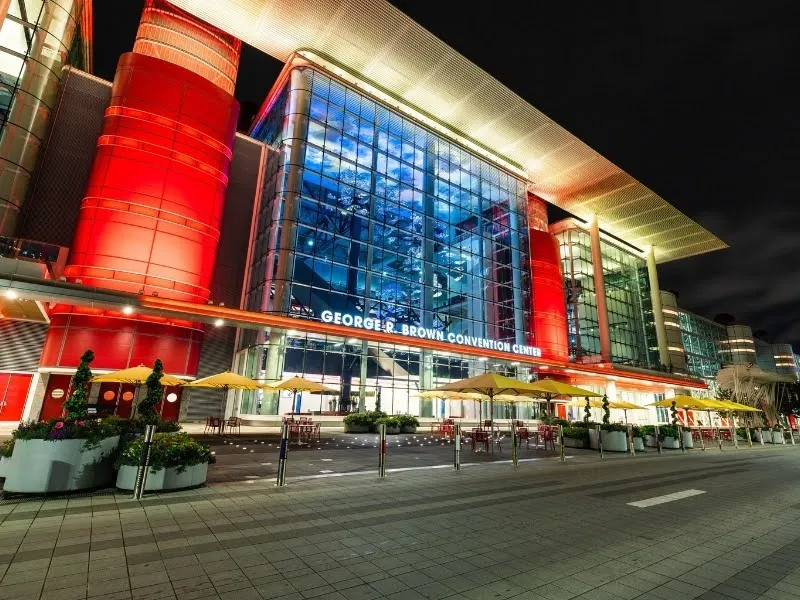
GRB has multiple exhibit halls across different levels, including Hall A, Hall B, Hall C, and Hall D, along with meeting rooms and the convention center’s expansive skybridge connections. Confirm which hall your show occupies so your team knows where to go on move-in day.
How Pure Exhibits Supports Exhibitors at the George R. Brown Convention Center
Pure Exhibits designs and builds custom exhibits and rental displays for companies exhibiting at trade shows across the United States, including shows at the George R. Brown Convention Center in Houston. Our team is aware of all the George R. Brown Convention Center Exhibitor Tips and rules. Our exhibit designs account for GRB exhibitor compliance requirements from the first concept, like height limits, fire code materials, self-supporting structures, and rigging considerations, which are built into the design brief before fabrication begins, not discovered as corrections on move-in day.
For exhibitors coming to GRB from out of market, or local Houston companies wanting professional exhibit support, we provide custom design, rental options, shipping coordination, and on-site installation management. One dedicated project manager handles your project from design approval through teardown.
Let’s Build Something Extraordinary
Share your event details and we’ll craft a custom booth solution designed to captivate your audience and maximize your ROI.
15 Questions About George R. Brown Convention Center Rules: Answered
What are the booth height limits at the George R. Brown Convention Center?
Inline booths are typically limited to 8 feet at the back wall. Island booths can be taller, often 16–20 feet, subject to ceiling clearance in the assigned hall. Confirm per the show in the exhibitor manual.
Can exhibitor staff perform their own booth setup at the GRB?
Assembly of your own booth components is often self-performable. However, electrical connections, rigging, and drayage require credentialed contractors. Confirm the specific rules per show in the exhibitor manual.
Who handles drayage at the George R. Brown Convention Center?
Drayage is handled exclusively by the general services contractor’s labor. Exhibitors cannot move freight from the dock to their booth space on their own, regardless of size or weight.
Can exhibitors use power strips at a GRB show?
Yes, but only when connected to an ordered electrical service. Power strips plugged into unapproved sources, or used without a corresponding electrical order, are a common compliance violation.
How do hanging signs work at the GRB?
Hanging signs require a rigging plan submitted before the exhibitor manual deadline, ceiling clearance confirmation for your assigned hall, and installation by a licensed rigger. They cannot be self-installed.
What happens if the booth freight arrives outside the move-in window?
Freight arriving outside the assigned window may be held at the dock until space is available, which can delay setup. Book your freight carrier to arrive within your assigned window precisely.
Is early teardown allowed at the GRB?
No, teardown before the official show close is prohibited and may result in penalties from the show organizer. Plan for teardown to begin immediately after official close.
What are the electrical rules at the George R. Brown Convention Center?
All electrical connections must be made by a licensed electrician ordered through the GSC. Exhibitor staff cannot make their own connections, and extension cords must be of an appropriate gauge for the load they carry.
Where can I find the full GRB exhibitor rules?
The exhibitor manual distributed by the show organizer contains all GRB-specific rules for each event. Review it thoroughly as soon as it’s received, before making any final booth design or logistics decisions.
What is the hand-carry threshold at the GRB?
The hand-carry threshold varies by show, but typically allows small items that a single person can carry by hand without equipment. Anything requiring a cart, dolly, or two people typically falls above the threshold and requires drayage.
Do the GRB rules change from show to show?
The venue’s base rules remain consistent, but individual show organizers can layer additional rules or grant exceptions through their exhibitor manual. Always confirm rules per the specific show’s manual rather than assuming consistency.
What are the empty crate storage rules at the GRB?
Empty crates and cases must be labeled and moved to storage by the show’s move-in completion deadline. The GSC typically handles empty crate storage and returns them to your booth during move-out.
Does Pure Exhibits help clients with GRB compliance?
Yes, Pure Exhibits coordinates labor, freight, and setup for clients at the George R. Brown Convention Center and venues nationwide, helping avoid compliance issues before they become problems.
Can I bring my own furniture and carpet to a GRB show?
Yes, exhibitors can supply their own furniture and flooring. This can reduce GSC rental costs but adds freight weight and drayage costs. Weigh the trade-off against the GSC rental cost for your specific show.
What is the most important GRB rule for first-time exhibitors?
Understanding labor jurisdiction- specifically which tasks require credentialed contractors – is the most important rule for first-time GRB exhibitors. Arriving without this knowledge creates compliance disputes and setup delays on move-in day.