
Your booth sits on bare concrete for three to five days, and your staff stands on it for eight hours at a time — yet flooring is the last line item most exhibitors think about. The wrong choice means staff fatigue, an uninviting booth surface that repels attendees, and sometimes a safety citation from show management on move-in morning.
Trade show booth flooring affects three things your show ROI depends on: how long your staff can stay alert and on their feet, how professional your booth looks from the aisle, and whether you pass the show’s exhibitor safety requirements. This guide covers every flooring type used on today’s show floors — what each one costs, where it performs well, and where it fails. For a full picture of how flooring fits into a complete exhibit build, see how our trade show booth builder team integrates flooring into the design from the start.
Why Does Trade Show Booth Flooring Affect Your Show Results?
Convention hall floors are bare concrete — flat, hard, and cold. That surface is not neutral. It communicates to every attendee who steps into your space that they are in a temporary structure, not a brand environment. Flooring is the first physical element an attendee experiences when they enter your booth, and it sets the quality expectation for everything else they see.
Staff performance is the more direct impact. Studies by occupational health researchers confirm that standing on hard concrete for extended periods accelerates fatigue compared to standing on cushioned or resilient surfaces. At a four-day show like CES or Pack Expo Las Vegas, where your staff is on their feet from 9 a.m. to 5 p.m. each day, the flooring choice directly affects their energy level, engagement quality, and ability to sustain conversations in the final hours of each day.
Flooring also carries a brand signal. A 10×10 booth with a clean hardwood laminate floor reads differently from a 10×10 with bare hall carpet. At shows like SEMA or NAB Show — where the design standard is high and brand presentation is scrutinized — flooring is one of the details that separates polished from generic.

What Are the Most Common Types of Trade Show Booth Flooring?
Five flooring types dominate the trade show market. Each has a specific use case, a cost range, and a set of tradeoffs that make it better or worse for your show environment.
Carpet Tiles
Carpet tiles are the most widely used flooring at trade shows. They ship flat, install without adhesives, and pack into a standard shipping case. Most general service contractors — Freeman and GES among them — offer carpet rental through the official show order form, which means you can add carpet to your booth without sourcing it separately. Carpet tile provides moderate cushioning, reduces noise inside the booth, and comes in a wide range of colors and patterns.
The limitation is appearance. Carpet tiles show wear quickly — scuffs, compression marks from crates during move-in, and foot traffic patterns accumulate by day two of a multi-day show. At high-design shows like CES or Re:Invent, carpet tile reads as the default choice, not a deliberate design decision.
Foam and EVA Interlocking Tiles
Foam interlocking tiles — often made from EVA (ethylene-vinyl acetate) — provide the best underfoot cushioning of any trade show flooring type. They are lightweight, pack flat, and assemble without tools. For your staff’s physical comfort over a four- or five-day show, foam tiles outperform every other option at this price point.
The tradeoff is visual. Foam tiles look like gym flooring, because that is largely what they are. At shows where booth aesthetics are evaluated by attendees and competitors — HIMSS, Salesforce Dreamforce, and most B2B technology shows — foam tiles undermine the design investment you have made in the rest of the booth.
Hardwood and Laminate Flooring
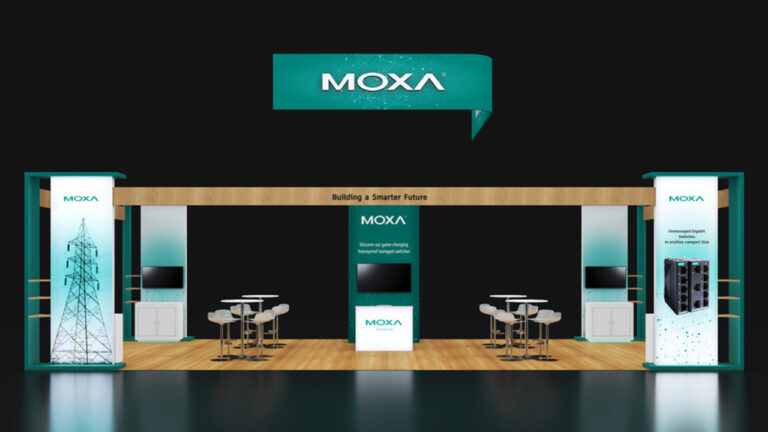
Hardwood-look laminate flooring is the premium choice for exhibitors who want a finished, professional surface. Interlocking laminate panels install in minutes, disassemble without tools, and pack into cases that fit standard freight. The visual result is a surface that reads as a permanent, high-quality environment — which is exactly what you want at a design-competitive show.
Laminate adds weight to your freight shipment, which increases drayage costs. It also adds height — typically half an inch to three-quarters of an inch — which requires a beveled transition edge at the booth entry to meet show safety requirements. At shows where your neighbors are using carpet or foam, a laminate floor is one of the most cost-efficient ways to visually separate your booth from the surrounding space.
Vinyl and LVT (Luxury Vinyl Tile)
Vinyl flooring — particularly LVT — offers the look of stone, tile, or wood at a lighter weight than hardwood laminate. LVT handles moisture better than laminate, which matters at outdoor show sections and food-and-beverage events. The surface is easy to clean between show days, which is an advantage for exhibitors running sampling stations or live cooking demonstrations.
LVT is less cushioned than foam and slightly less visually premium than hardwood laminate, which places it in the middle ground between comfort and aesthetics. It is a strong choice for healthcare, food service, and retail exhibitors who need a clean, hygienic surface without the full cost of custom hardwood.
Rubber Flooring
Rubber flooring is used primarily at industrial and manufacturing shows — Pack Expo Las Vegas, CONEXPO, and automotive events at SEMA — where heavy equipment, vehicles, or machinery is present in the booth. Rubber provides impact resistance, grip, and durability under equipment weight. It is not a comfort or aesthetics choice; it is a functional choice for exhibitors who need the floor to hold up under conditions that would damage any other material.
| Flooring Type | Best For | Comfort | Visual Impact | Approx. Cost / 10×10 |
|---|---|---|---|---|
| Carpet tiles | Any show; GSC-rented option | Moderate | Standard | $150–$400 rental |
| Foam / EVA tiles | Long show days; staff comfort priority | High | Gym-like — avoid at design shows | $80–$200 purchased |
| Hardwood laminate | Design-competitive shows; B2B; tech | Moderate | Premium | $300–$700 purchased |
| Vinyl / LVT | Healthcare, food, retail, outdoor sections | Moderate | Clean and professional | $250–$600 purchased |
| Rubber | Industrial, automotive, heavy equipment | Low | Functional | $200–$500 purchased |
How Do You Choose the Right Flooring for Your Trade Show Booth?
Your flooring decision comes down to four variables: the show’s design standard, your staff’s physical needs, your freight and logistics constraints, and whether you plan to rent or own the flooring.
Match the Flooring to the Show’s Design Standard
At design-competitive shows — CES, HIMSS, NAB Show, Re:Invent — carpet tile is the minimum acceptable standard and hardwood laminate or LVT is the expected level for a booth trying to project a premium brand. At industrial or consumer shows with mixed exhibitor quality, carpet tile performs adequately. At outdoor or semi-outdoor sections, vinyl or rubber is the appropriate choice regardless of design considerations. For a deeper look at how flooring fits into the full booth design picture, the 10×10 trade show booth ideas guide covers every surface decision for the most common booth size.
Factor In Drayage Weight
Every pound your freight shipment gains adds to the drayage charge you pay the show’s general service contractor. Hardwood laminate and rubber are the heaviest flooring options. Foam tiles are the lightest. For a 10×10 booth shipping to a show at the Las Vegas Convention Center — where Freeman handles drayage for most events — the weight difference between foam tiles and hardwood laminate for the same footprint can add $150 to $400 to your drayage bill. On a multi-show annual program, that difference compounds across every event. For a full breakdown of how flooring, structure, and service costs stack up by booth size, see the trade show booth rental cost guide before you finalize your flooring decision.
Decide Between Renting and Buying
Carpet tile is available as a rental through most shows’ official GSC order forms. Every other flooring type — laminate, vinyl, foam, rubber — must be purchased and shipped as part of your freight. If you exhibit at one show per year, renting carpet through the GSC is the most cost-efficient approach. If you exhibit at three or more shows, purchasing a quality laminate or LVT floor and amortizing the cost across shows generates a better per-show cost than carpet rental. For the complete financial comparison — including when renting your full exhibit makes more sense than owning — the rent or buy trade show booth guide covers the full decision framework.
Check the Show’s Flooring and Safety Requirements
Most shows require that any flooring that raises the booth surface above the hall floor level — laminate, LVT, rubber, or foam above a certain thickness — must have a beveled edge or ramp at the booth entry. This requirement is a safety standard enforced by show management and the venue’s facility team. Failure to include the transition edge results in either a forced modification during move-in or a removal order. Pure Exhibits includes transition edges as standard on all raised flooring designs.
Want Flooring Included in Your Booth Quote?
Pure Exhibits Handles Everything.
What Flooring Works Best at Las Vegas Trade Shows?
Las Vegas shows set a higher design bar than most markets. At the Las Vegas Convention Center, Mandalay Bay, and the Venetian Expo, exhibitor booth quality is scrutinized by attendees who visit dozens of shows each year. The flooring choice that is acceptable at a regional event can read as under-invested at CES or SEMA. Our team provides las vegas trade show booth rentals that include flooring as part of the complete package — so you are not choosing a floor surface in isolation from the rest of the booth design.
CES — Venetian Expo and LVCC
At CES, exhibitors range from startup 10×10 booths to $5-million custom islands. At the Venetian Expo, where many mid-size technology exhibitors are placed, hardwood laminate or LVT flooring is the expected standard. Carpet tile is visible as the lower-investment option. If you are exhibiting at CES in a 10×10 or 10×20 space and your design budget is limited, upgrading the floor to laminate is one of the highest-return adjustments you can make. Flooring works best when chosen alongside the complete booth — for a full view of how all elements come together, explore our exhibition booth design services.
SEMA — Las Vegas Convention Center
SEMA exhibitors in the indoor LVCC sections typically use carpet tile or rubber, depending on whether equipment or vehicles are present. Custom carpet — branded with a logo or pattern printed into the surface — is common among premium automotive exhibitors and adds a brand-specific layer to the floor without the weight and logistics of hard flooring. For 20×20 trade show booth rental configurations and larger at SEMA, custom carpet or rubber is the standard choice.
HIMSS — Mandalay Bay
HIMSS exhibitors operate in a clinical brand environment where clean, professional surfaces are expected. LVT — particularly in light gray, white, or neutral wood tones — is a strong choice for healthcare exhibitors at Mandalay Bay. The surface reads as intentional and hygienic, which aligns with the brand standards of medical device, health IT, and pharmaceutical companies exhibiting at this show.
Pack Expo Las Vegas — LVCC
Pack Expo involves working machinery, heavy equipment, and manufacturing demonstrations. Rubber flooring or heavy-duty vinyl is appropriate for booths with operating equipment. For exhibitors at Pack Expo in a 10×10 trade show booth without equipment demonstrations, carpet tile is the practical choice — the show’s industrial environment makes premium laminate flooring a lower-priority investment than it would be at a technology show.
What Does Trade Show Booth Flooring Cost From Start to Finish?
Flooring cost has three components: the material itself, the freight weight it adds to your shipment, and the drayage charge the GSC applies to that weight. Many exhibitors calculate only the first component and are surprised by the second and third.
| Cost Component | Carpet Tile (Rental) | Hardwood Laminate (Owned) | Foam Tiles (Owned) |
|---|---|---|---|
| Material cost — 10×10 | $150–$400 / show | $300–$700 (one-time purchase) | $80–$200 (one-time purchase) |
| Added freight weight | None (GSC-rented, no shipping) | Moderate — adds ~50–80 lbs for 10×10 | Low — adds ~10–20 lbs for 10×10 |
| Estimated added drayage | None | $100–$300 per show | $30–$80 per show |
| Usable shows before replacement | N/A — rented fresh each show | 20–30+ shows with care | 10–20 shows depending on wear |
| Per-show cost at 3 shows/year | $150–$400 / show | $60–$130 / show (Year 2 onward) | $15–$40 / show (Year 2 onward) |
The table shows that owned laminate flooring reaches a significantly lower per-show cost within the first two years for exhibitors doing three or more shows annually. For exhibitors at one show per year, GSC-rented carpet tile remains the most cost-efficient option — no freight, no storage, no drayage premium.
What Are the Installation Rules for Raised Trade Show Flooring?
Every show has flooring guidelines that are enforced by show management and the venue. Violating these rules results in modification orders during move-in — which consume your installation time and sometimes require purchasing materials from the GSC at show-floor prices.
-
Beveled transition edges are required at any booth entry point where the floor is raised above the hall surface. This is a safety standard enforced at virtually every major U.S. show. The edge must create a gradual slope, not a vertical step. Pure Exhibits provides beveled transition edges as standard on all raised-floor designs.
-
Maximum height limits apply at most shows. The typical maximum is two inches for non-platform floor coverings. Taller sub-floor platforms — used to hide cabling or create a visual level change — require advance approval and may require structural engineering documentation at some venues.
-
Adhesives are generally prohibited. Most shows do not permit gluing or adhering flooring to the hall floor. All flooring must be free-standing and removable at show close without residue or damage to the venue surface.
-
Carpet underlayment is permitted at most shows. Adding a foam pad beneath rented carpet tile significantly improves staff comfort without violating height restrictions. The pad adds minimal weight and minimal cost.
-
Freight identification labeling must be on all flooring cases. Every case shipped to the advance warehouse must carry the correct show name, booth number, and exhibitor name. Unlabeled or mislabeled flooring cases are the most common reason flooring does not make it to the booth before move-in closes.
What Flooring Mistakes Do Exhibitors Make Most Often?
These are the flooring decisions that consistently create problems on the show floor — from safety citations to brand mismatches to last-minute freight surprises.
-
Ordering carpet rental too late. GSC carpet rental orders placed after the advance order deadline carry a premium surcharge — sometimes 30 to 50 percent above the early-order price. Submit your carpet rental order at the same time as your electrical and furniture orders.
-
Using foam tiles at a design-competitive show. Foam tiles are comfortable and cheap. They also look exactly like gym flooring. At HIMSS, CES, or any B2B show where brand presentation is evaluated, foam tiles undermine every other design investment you have made in the booth.
-
Forgetting the transition edge on laminate floors. A raised laminate floor without a beveled entry edge is a tripping hazard and a show safety violation. Show management will order you to fix it during move-in, which consumes installation time you cannot get back.
-
Ignoring flooring weight when calculating drayage. Hardwood laminate for a 20×20 booth can add 200 to 300 pounds to your freight shipment. At $150 to $200 per hundred-weight for drayage at major shows, that weight addition adds $300 to $600 to your show cost. Factor this into your flooring decision before purchasing.
-
Choosing flooring that conflicts with the brand. A technology company with a sleek, minimalist booth design and foam interlocking floor tiles has a brand-material conflict. A healthcare exhibitor with clinical white LVT and a cluttered, colorful booth has the same conflict in the opposite direction. Flooring must be chosen as part of the full booth design, not as an independent decision.
Conclusion
Trade show booth flooring is not a finishing detail — it affects staff performance across every day of the show, signals brand quality to every attendee who enters your space, and carries logistics and cost implications that compound across your annual show program. The right flooring for your booth depends on the show’s design standard, your freight constraints, and how many events you exhibit at each year.
Pure Exhibits includes flooring as part of the complete booth design brief — not as an afterthought. Whether your next show is at the Las Vegas Convention Center, McCormick Place, or the Georgia World Congress Center, the flooring recommendation is built into your 3D rendering before fabrication begins. Request your quote from our las vegas exhibit builder team and get a full design including flooring delivered within 72 hours.
Let’s Build Something Extraordinary
Share your event details and we’ll craft a custom booth solution designed to captivate your audience and maximize your ROI.
Frequently Asked Questions
Do I need flooring for my trade show booth?
You are not required to add flooring in most cases — convention halls provide bare concrete, and some shows include basic hall carpet in the exhibit space fee. However, bare concrete is physically demanding on staff over multi-day shows and does not communicate a finished brand environment. At design-competitive shows like CES or HIMSS, exhibiting on bare concrete or basic hall carpet places your booth below the visual standard of neighboring exhibitors. Custom flooring is a practical and brand investment, not a technical requirement.
What is the most comfortable trade show booth flooring for staff?
Foam and EVA interlocking tiles provide the most underfoot cushioning of any flooring type used at trade shows. For staff standing eight hours per day over a four- or five-day show, foam tiles reduce fatigue more effectively than carpet, laminate, or vinyl. If comfort is the primary priority — particularly at longer shows like Pack Expo or CONEXPO — foam tiles are the correct choice. If comfort and visual appearance are both priorities, use a hardwood laminate floor with a foam underlayment pad installed beneath it.
Can I rent trade show booth flooring instead of buying it?
Yes. Carpet tile is available for rental through the official order form of most shows’ general service contractors — Freeman and GES both offer carpet rental at standard inline prices. Other flooring types — laminate, LVT, foam, and rubber — must be purchased and shipped as part of your freight. For exhibitors at one or two shows per year, GSC carpet rental is the most cost-efficient approach. For exhibitors at three or more annual events, purchased flooring reaches a lower per-show cost within one to two years.
What flooring is best for a 10×10 trade show booth?
For a 10×10 booth at a design-competitive show — CES, HIMSS, NAB Show — hardwood laminate or LVT is the recommended choice. The surface elevates the visual quality of the booth disproportionately relative to its cost, and the installation is straightforward for a 100-square-foot footprint. For a 10×10 at a regional or industrial show where design competition is lower, GSC-rented carpet tile is sufficient. Add a foam pad beneath the carpet if staff comfort over a multi-day show is a concern.
Is hardwood flooring allowed at trade shows?
Hardwood and hardwood-look laminate flooring is permitted at virtually all major U.S. trade shows, provided it meets the show’s height and safety requirements. The standard requirement is a beveled transition edge at the booth entry — a gradual slope from the hall floor up to the raised flooring surface — to prevent a tripping hazard. Most shows also require that the flooring be free-standing and removable without adhesives or damage to the venue surface. Pure Exhibits includes compliant transition edges on all raised flooring designs.
Does trade show flooring affect drayage costs?
Yes. Drayage — the material handling charge paid to the show’s general service contractor — is calculated by shipment weight at most major shows. Hardwood laminate and rubber are the heaviest flooring materials and add the most to your drayage bill. Foam tiles are the lightest. GSC-rented carpet eliminates the weight variable entirely because it is not shipped — it is delivered directly by the contractor. When evaluating flooring options, calculate the added drayage cost for your show’s per-hundred-weight rate before finalizing the purchase.
What is the standard trade show flooring height limit?
Most shows set a maximum height of two inches for non-platform floor coverings. Taller sub-floor platforms — used to conceal cabling, create ADA-compliant ramps, or produce a visual level change in the booth — require advance approval from show management. Requirements vary by show and venue; always check the official exhibitor kit for your specific event. Pure Exhibits reviews the height and safety requirements for every show as part of the pre-installation checklist.
Can I use the same flooring at multiple trade shows?
Yes. Purchased flooring — laminate, LVT, foam tiles, or rubber — is designed to be assembled, disassembled, and reused. Hardwood laminate panels typically withstand 20 or more show cycles with proper handling and storage. Foam tiles wear faster under heavy foot traffic and typically need replacement after 10 to 20 shows depending on traffic volume. Store flooring flat in padded cases between shows to prevent warping or surface damage. Pure Exhibits includes flooring in multi-show inventory management for annual rental program clients.
What flooring should I use if my booth includes heavy equipment?
Use rubber flooring or heavy-duty vinyl for any booth where working machinery, equipment over 500 pounds, or vehicles are present. Rubber provides the impact resistance and grip required to handle equipment weight and movement without cracking, deforming, or creating slip hazards. Hardwood laminate and foam tiles are not rated for heavy equipment loads and will fail under the weight of machinery or vehicle tires. At SEMA, Pack Expo, and CONEXPO, rubber or industrial vinyl is the standard choice for equipment-demonstration zones.
How far in advance should I order trade show flooring?
If you are renting carpet through the show’s GSC, submit your order at least four to six weeks before the show to qualify for the advance order rate and avoid surcharges. If you are purchasing flooring to ship, your purchase and freight timeline should align with your booth’s advance warehouse shipping window — typically two to three weeks before move-in for major shows. Flooring ordered or shipped at the last minute risks arriving after the advance warehouse cut-off, which means it must be shipped direct-to-show at higher freight cost.
What flooring should I avoid at design-competitive shows?
Avoid foam interlocking tiles at shows where brand aesthetics are evaluated by attendees — CES, HIMSS, Re:Invent, Salesforce Dreamforce, or any show with a predominantly senior-level B2B audience. Foam tiles look like gym flooring, which conflicts with a professional brand environment regardless of how strong the rest of the booth design is. At these shows, spend the incremental cost to use hardwood laminate or LVT, which provide comparable comfort with a fraction of the visual downside.
Does Pure Exhibits include flooring in booth rental packages?
Yes. Pure Exhibits integrates flooring into the booth design brief and rental quote. The flooring recommendation is made during the initial design consultation based on your show, your brand, your freight constraints, and your budget. The floor is included in your 3D rendering so you can see how it integrates with the full booth design before approving fabrication. The complete package — flooring, structure, graphics, freight, installation, and dismantling — is covered in one fixed-price quote.