
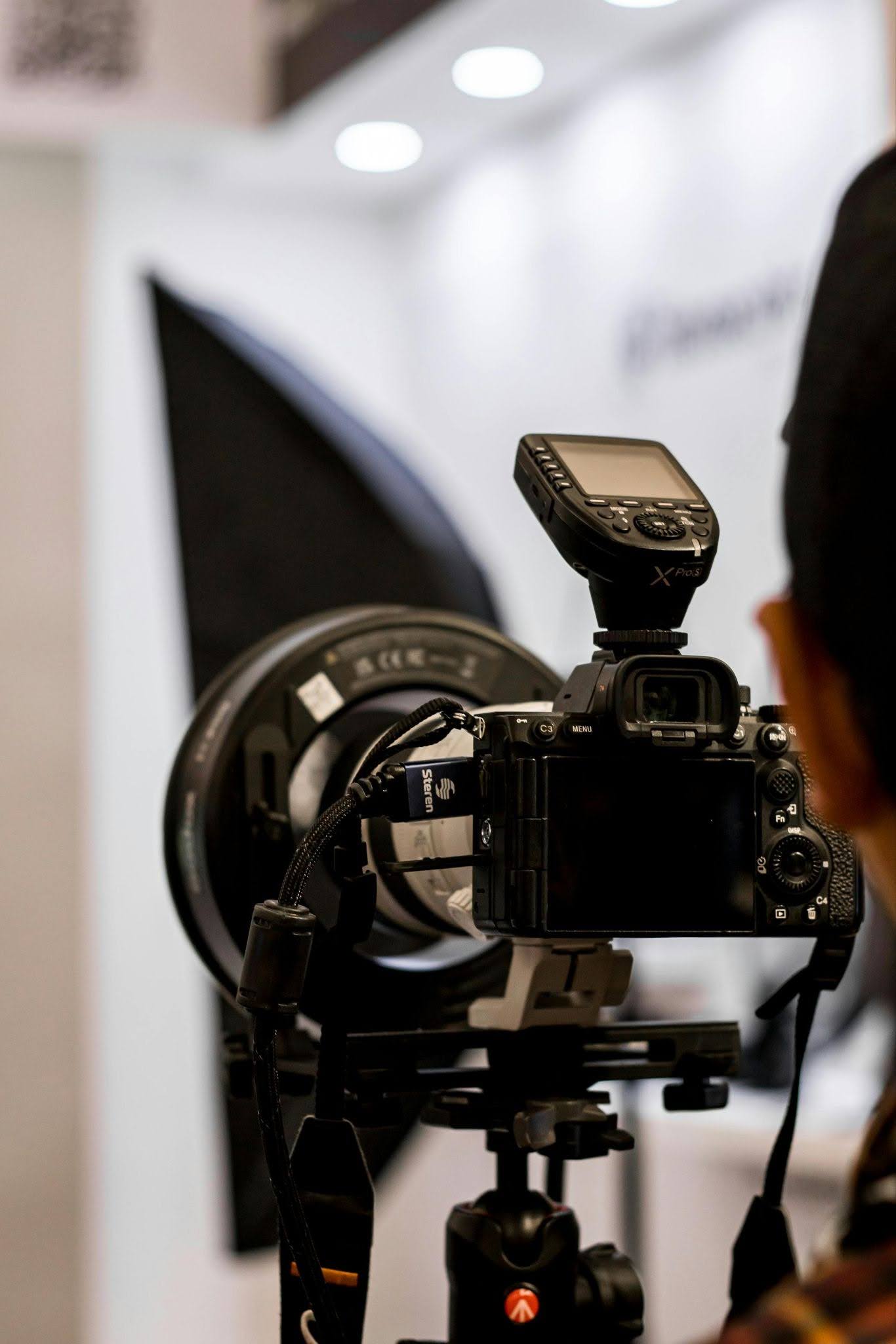
Most exhibitors spend months and tens of thousands of dollars building a booth — and then document it with a handful of blurry smartphone photos taken between conversations. The problem is not the effort. It is the lack of a plan. A well-executed trade show photography strategy turns your exhibit investment into content that keeps working for 12 months after the show closes: social posts that build credibility, sales deck images that show proof of brand presence, website assets that outperform stock photography, and pre-show marketing for next year that proves the booth is worth attending. This guide walks through every step — from planning your shot list and booking a photographer to managing convention lighting and repurposing images across every channel that matters.
Whether you are a first-time exhibitor building a exhibition booth design strategy from scratch, or an experienced exhibitor who has never been happy with post-show photos, this guide gives you a system that produces images your marketing team will actually use.
Building a booth worth photographing?
Pure Exhibits designs exhibit rentals that look as good in photos as they do in person.
Why Does Trade Show Photography Matter More Than Most Exhibitors Realize?
The ROI of a well-photographed exhibit extends far beyond the show itself. During the event, real-time photos posted to social media create a sense of momentum and credibility for anyone who could not attend in person. After the show, professional booth images become proof assets — showing prospects that your company has serious market presence, that your booth was busy, and that your product generates real buyer interest.
The absence of strong photos is more damaging than most marketing teams acknowledge. When a prospect researches your company between a trade show conversation and a sales call, they are looking for confirmation that your company is credible. Pixelated iPhone photos of an empty booth accomplish the opposite. Professional images of an engaged exhibit — staff interacting with buyers, product demos in progress, a well-lit and branded environment — do the credibility work before your sales rep picks up the phone.
Good trade show photography also feeds your next show’s pre-event marketing. Emails and social posts that include real photos from a previous year’s exhibit consistently outperform text-only or stock-photo campaigns because they show prospects what the experience of visiting your booth actually looks like. A single day of professional photography, planned correctly, can produce enough content to support a full year of marketing across every channel you use.
What Should Be on Your Trade Show Photography Shot List?
The most common reason exhibitors end up with unusable photos is not the photographer — it is the absence of a shot list. Without a structured brief, even a skilled photographer will spend time on easy ambient shots and miss the specific, purposeful images your marketing team needs.
| Shot Type | What to Capture | Best Used For | Priority Level |
|---|---|---|---|
| Wide booth overview | Full exhibit from aisle, both directions | Website, social media, PR recap | High — shoot first |
| Staff-attendee interaction | Natural conversation at demo stations | Sales decks, case studies, LinkedIn | High — candid only |
| Product / demo close-up | Screen content, hands on product, detail shots | Blog posts, email, product pages | High — multiple angles |
| Crowd / foot traffic | Busy aisle with booth visible in background | Show recap, future exhibitor pitches | Medium — timing dependent |
| Detail / branded elements | Logo, signage, graphics, lighting | Design portfolio, vendor reviews | Medium — architecture shots |
| Speaker / presentation moments | Presenter at screen, engaged audience | Thought leadership, social proof | Medium — if applicable |
| Team / group photo | Staff posed at booth before show opens | LinkedIn, internal communications | Low — quick and easy |
Build your shot list before the show in collaboration with your marketing team, not after. Start by asking: what are the top three ways we will use these photos in the next six months? If the answer is website hero images, LinkedIn posts, and next year’s email campaign, that directly determines which shot types to prioritize. Wide overview shots, candid staff-attendee interaction, and high-energy crowd photos cover all three use cases. Share the completed shot list with your photographer at least one week before the show so they can plan their approach to timing and positioning.
Also consider what your booth design makes possible. The trade show booth design trends 2026 favor immersive environments, bold graphics, and technology integration — all of which photograph exceptionally well when the booth is properly lit. If your booth includes a striking visual element — an LED wall, a dramatic backlit graphic, a product demo station with dynamic on-screen content — that element should be on the shot list as a deliberate feature, not an afterthought.
How Do You Manage Convention Center Lighting for Better Booth Photos?
Convention center lighting is the single biggest technical challenge in event photography. Most halls use a combination of overhead fluorescent or metal halide fixtures — which produce a greenish or cool cast — layered with the exhibit’s own LED or spotlight lighting. The result is a complex, mixed-light environment that requires deliberate technique to control. Understanding this challenge before you arrive is what separates photographers who consistently deliver strong booth images from those who deliver technically mediocre ones.
| Lighting Scenario | Challenge | Recommended Fix | Camera Setting Tip |
|---|---|---|---|
| Overhead fluorescent (most halls) | Greenish cast, flat shadows | Custom white balance to 4,000–4,500K | Shoot in RAW for easy correction |
| Mixed LED booth + hall lighting | Inconsistent color across frame | Prioritize booth lighting, close the aperture | Manual mode; bracket exposures |
| Backlit graphics / LED walls | Silhouetted subjects in foreground | Fill flash or reflector on subjects | Expose for the subject, not background |
| Dark carpet / low ambient | Noisy images at high ISO | Raise ISO to 1600–3200 with noise reduction | Fast prime lens at f/1.8–f/2.8 |
| Outdoor / natural light (if applicable) | Harsh shadows or overcast flatness | Shade diffusion or reflector fill | Spot metering on subject face |
From the exhibit design side, your booth lighting ideas have a direct impact on how well the space photographs. Booths with consistent, high-quality LED lighting — especially warm white spotlights on key elements and backlit graphic panels — create a defined lighting environment that photographers can read and work with. Booths that rely entirely on overhead hall lighting are harder to photograph well because the light is uncontrolled and unflattering. If photography matters to your post-show marketing, it is worth thinking about booth lighting as a photography asset, not just a visitor experience element.
What Equipment Does a Professional Trade Show Photographer Need?
Not all commercial photographers are equally equipped for convention floor work. Event photographers who primarily shoot weddings or portraits may be unfamiliar with the specific technical demands of a high-noise, mixed-light, crowded floor environment. When you hire a photographer for booth coverage, ask about their gear — it tells you a lot about their experience level with this specific type of work.
| Equipment | Recommended Spec | Why It Matters at Trade Shows |
|---|---|---|
| Camera body | Full-frame mirrorless or DSLR | Low-light performance; fast autofocus in crowds |
| Primary lens | 24–70mm f/2.8 zoom | Versatile — covers wide booth shots and medium portraits |
| Fast prime lens | 50mm or 35mm f/1.8 | Essential for low-light candid shots without flash |
| Speedlight / flash | TTL-capable, diffused bounce | Fill light for backlit scenes and interaction shots |
| Extra batteries (×3 minimum) | Matched to camera body | Convention centers rarely have easy power access |
| High-capacity memory cards (×4) | 256GB+ UHS-II rated | Avoid mid-show card swaps; redundancy is critical |
| Laptop or tablet for review | Color-calibrated display | On-site edit selection saves post-show processing time |
One practical note on flash use: some convention centers and individual shows restrict on-floor flash photography, particularly in halls with neighboring AV presentations or sensitive demo environments. Check the exhibitor regulations in your show kit before the event and confirm your photographer is aware of any restrictions. Diffused bounce flash and reflector-based fill light are usually compliant alternatives that still solve the low-light problem without violating venue rules.
Should You Hire a Professional Photographer or Use Your Own Team?
This is a question most exhibitors ask when budgeting for a show. The answer depends on how seriously you plan to use the images and what your marketing team’s capacity is. For exhibitors who plan to use booth photos across their website, sales materials, email campaigns, and social channels, professional trade show photography is a clear investment with measurable returns. For smaller exhibitors or first-time shows where the primary goal is just having documentation, a skilled internal team member with a modern mirrorless camera and some preparation can produce serviceable results.
If you are investing in a booth at a major show — especially for Las Vegas trade shows or other large national events — hiring a professional is almost always the better decision. Convention floors are chaotic, the shooting window is narrow, and experienced trade show photographers know how to move around the floor, anticipate peak traffic moments, and deliver organized, edited files within 48–72 hours of the show close.
| Hiring Factor | What to Look For | Red Flag |
|---|---|---|
| Portfolio relevance | Trade shows, corporate events, convention floors | Only outdoor or studio work |
| Convention experience | Knowledge of venue lighting, access rules | Never shot in a convention center |
| Turnaround time | 48–72 hours for selects, 5–7 days for full delivery | Two weeks or more with no interim delivery |
| Deliverable format | Full-res + web-optimized, organized by shot type | Single folder dump of raw files |
| Rights / licensing | Full commercial usage rights, no ongoing fees | Licensing restricted to one use or platform |
| Day-of communication | Responds to direction and adapts shot list on the fly | Rigid shooter who follows a fixed list only |
When reviewing a photographer’s portfolio for trade show work, look for images that were made in active, crowded environments — not cleaned-up empty booths after hours. The ability to capture genuine energy and interaction is what distinguishes good event photography from architectural photography of a trade show booth.
How Do You Brief Your Staff to Support Better Candid Photos?
The best images from any exhibit are candid ones: staff engaged in genuine conversation with an attendee, a buyer leaning in to look at a product demonstration, a group laughing at something that just happened on screen. These moments cannot be staged convincingly, but they can be created by design. Well-briefed, energetic staff who are genuinely engaged with visitors produce the raw material that photographers need. This is another reason why thoughtful trade show staff training pays dividends beyond lead conversion — it also produces a better visual record of your booth.
Before the show, let your team know a photographer will be working the floor. Brief two specific behaviors: first, continue conversations naturally when the photographer is nearby — do not freeze, break off, or look at the camera. Second, maintain consistent energy and engagement throughout the day, not just during peak morning hours. Photographers shooting across a full show day will capture candid moments throughout — tired, distracted, or phone-focused staff are obvious in photos and undermine the impression your booth is trying to create.
Also coordinate one structured team photo before the show floor opens on day one. This gives you a polished group image with your booth fully dressed and lit, before traffic complicates access. Schedule it 20–30 minutes before floor open, confirm the exhibit is completely staged, and allow the photographer 10 minutes to work the group from multiple angles. It is the easiest, most predictable image of the day — get it done early.
Want a booth that looks as strong in photos as it does in person?
Pure Exhibits delivers exhibit designs built for the camera and the crowd.
When Is the Best Time to Shoot During a Trade Show?
Timing is everything in trade show photography. The show floor has predictable energy patterns that directly affect what kinds of shots are possible at different points in the day. Understanding these patterns lets you schedule your photographer — and your own attention — to capture the most valuable moments. Include photography timing in your overall trade show preparation guide so it does not get crowded out by logistics.
Pre-Show (30–45 Minutes Before Floor Opens)
This is the only window to photograph the booth fully staged, completely undisturbed, and properly lit without crowds, foot traffic, or neighboring booth noise competing for the frame. Use this time for wide overview shots, detail and signage photography, and the team group photo. Once the floor opens, the controlled environment is gone.
Mid-Morning Peak (First 90 Minutes of Show Hours)
Trade show floors hit peak traffic 60–90 minutes after opening. This is when the most valuable candid interaction shots happen: engaged conversations, demo stations with multiple attendees, aisles with visible energy. Your photographer should be moving continuously during this window, capturing candid moments from multiple angles without interrupting the flow of conversations.
Early Afternoon
Traffic typically dips after the morning rush and before the post-lunch surge. Use this quieter period for any staged or structured shots — product close-ups, screen content photography, detail architecture shots — that require the photographer’s full attention without the distraction of managing crowd angles.
Final Hour of Show Day
Late-day lighting and energy vary by show. Some events maintain strong traffic into the final hour; others thin out significantly. If the floor stays busy, continue candid capture. If it slows, wrap photography and use the time to review the day’s selects so you can identify any missed shots to prioritize on day two.
How Do You Repurpose Trade Show Photos Across Marketing Channels?
Great trade show photography is not a one-time asset. The images you capture at a single show can support marketing across channels and campaigns for the full calendar year that follows — provided you organize and deploy them strategically. The table below maps your best shot types to the channels and formats where they perform best.
| Content Channel | Best Photos to Use | Recommended Format / Size | Timing |
|---|---|---|---|
| LinkedIn post (day-of) | Busy booth, staff interaction, crowd shot | 1200×1200 or 1080×1350 portrait | During or same day as show |
| Instagram / social recap | Detail shots, signage, team photo | Square or 4:5 portrait | Day of or day after |
| Email newsletter | Wide booth overview + one product shot | 600px wide, compressed | Within 3 days of show close |
| Website / press page | Full booth overview, high-res product shots | Full resolution with alt text | Within 1 week of show |
| Sales deck | Staff-attendee interaction, demo close-ups | Widescreen 16:9 crops | Within 2 weeks of show |
| Next year’s pre-show marketing | Crowd + energy shots from current year | All formats kept at full resolution | Archived immediately |
One high-impact use case that most exhibitors overlook: booth photography as pre-show marketing for the following year. When you promote your exhibit presence 4–6 weeks before the next show, emails and social posts that include real photos of your previous booth — especially busy crowd shots and engaged demo interactions — perform significantly better than text-only announcements. The photos prove that your booth is a destination worth planning into an attendee’s schedule. Archive your full-resolution files immediately after delivery, organized by show, year, and shot type, so they are accessible when your first time exhibitor guide content or next year’s pre-show campaign needs them.
Also brief your photographer to capture the visual details that make your brand identity legible in photos: the specific color of your trade show booth graphics, the way your logo reads from aisle distance, the look of your branded counter or reception area. These details matter for design reviews, vendor assessments, and brand audits — and they are easy to miss if the photographer is focused only on people and action.
A Camera Plan Is Part of Your Exhibit Strategy — Not an Afterthought
The exhibitors who get the most value from every show are the ones who treat trade show photography as a planned deliverable, not a bonus task. They book the photographer before the show, build the shot list in collaboration with marketing, brief the staff, schedule the pre-floor setup window, and have a content deployment plan ready before the first image is even delivered. The result is a single investment that pays off across 12 months of marketing — stronger credibility with prospects, better social content, more compelling sales materials, and pre-show campaigns that actually convert. Your booth deserves to be seen. Give it the documentation plan to match. For exhibit designs that photograph as well as they sell, reach out to Pure Exhibits at purexhibits.com.
Let’s Build Something Extraordinary
Share your event details and we’ll craft a custom booth solution designed to captivate your audience and maximize your ROI.
Frequently Asked Questions
How much does it cost to hire a trade show photographer?
Professional event photographers for trade show work typically charge between $800 and $2,500 for a single-day engagement, depending on experience, market, deliverable volume, and turnaround time. Multi-day coverage at a 3–4 day show may run $1,500–$4,500 total. Always confirm what is included: edited selects vs. full gallery, commercial licensing, file formats, and turnaround time. Cheap day rates that exclude proper editing and commercial rights are rarely a bargain.
Do I need permission to photograph attendees at a trade show?
Most trade shows include a photo consent clause in the attendee registration agreement, which gives exhibitors and show organizers latitude to photograph and publish images taken on the show floor. That said, best practice is to avoid publishing close-up portraits of identifiable individuals without a signed model release if the image will be used in paid advertising. For editorial and social use, show-floor consent clauses generally apply. Check the specific show’s regulations in your exhibitor kit.
Can I take my own photos at a trade show or do I need a professional?
You can take your own photos, and modern mirrorless cameras make it more achievable than it used to be. However, convention center lighting is technically demanding, the shooting window is narrow, and you cannot simultaneously photograph and manage your booth effectively. For any show where you plan to use images professionally — website, sales materials, social media — hiring a dedicated photographer produces materially better results and frees your team to focus on what they are there to do.
What camera settings work best inside convention centers?
Shoot in RAW format to preserve maximum flexibility in post-processing. Set your white balance manually to match the dominant light source (typically 4,000–4,500K for fluorescent halls). Use a fast lens (f/1.8–f/2.8) to manage low-light situations without excessive ISO. In mixed-light environments, prioritize your shutter speed at 1/200s or faster to avoid motion blur in candid interaction shots. Bracket exposures when shooting backlit graphic panels.
How long should I book a trade show photographer for?
For most exhibitors, 4–6 hours of coverage per show day is sufficient if the photographer is focused and working from a prepared shot list. A full day (8–10 hours) is worth the investment at major shows with long floor hours or if you need coverage across multiple show days. Confirm exactly when show hours run and when floor access opens for setup photography — that pre-open window is valuable and easy to miss if the photographer arrives late.
Should I photograph every day of a multi-day trade show?
Not necessarily. Day one and day two typically generate the highest traffic and the most valuable candid interaction shots. Day three or four often sees reduced attendance. A common approach is full professional coverage on day one (for pre-show setup shots plus peak-traffic candids) and a half-day on day two (for any missed shots and continued candid coverage). Day three onwards can be handled by an internal team member with a decent camera.
What is the best time to photograph an empty booth for promotional purposes?
The best window for clean, professional booth photography is 30–45 minutes before the show floor opens on day one. The exhibit is fully staged and lit, the hall has general illumination without crowd interference, and your team is present but not yet engaged in conversations. This is the only reliable window during the show for this type of controlled shot. If the show’s move-in schedule allows, a quick walk-through the evening before can also produce excellent booth detail shots.
Can photos from one trade show be used to promote a different show?
Yes — and this is one of the most underused content strategies for exhibitors. Strong booth photos from one show can absolutely be used in pre-show marketing for a different event, especially if the booth configuration is similar. Crowd shots and interaction images convey energy and presence regardless of which specific event they were taken at. Keep high-resolution originals organized by show for exactly this purpose.
What image file formats should I request from my photographer?
Request full-resolution JPEGs for immediate use plus RAW files (CR3, ARW, or NEF depending on camera brand) for archival purposes. Full-resolution JPEGs are ready for website, print, and social use; RAW files allow re-editing if your brand guidelines or cropping needs change. Ask for web-optimized versions (compressed JPEG under 500KB) if your team will be uploading directly to social or email platforms without a resize step.
How many photos should a trade show photographer deliver?
For a 4–6 hour engagement, expect 80–150 fully edited selects from a professional photographer who is working to a shot list. Larger galleries of 300+ images often indicate less curation — which means more work for your team to sort through. Ask for a curated delivery of the best images in each shot category rather than a volume dump of every frame captured.
What should I do with trade show photos immediately after the show?
Sort and tag your best images within the first week while the show context is fresh. Organize by shot type (overview, interaction, product, detail, team) and upload to a shared folder accessible to your marketing and sales teams. Post social media selects within 24 hours of show close — engagement drops sharply after 48 hours. Assign one team member to catalog and archive the full-resolution originals in a named folder (show name + year) so they are findable for future campaigns.
Does Pure Exhibits provide any photography services?
Pure Exhibits specializes in exhibit design, rental, and I&D — not photography directly. However, we regularly connect clients with experienced trade show photographers in Las Vegas and at other major show destinations. We also design booths with photography in mind: well-lit, visually striking environments that produce strong images and give photographers the conditions they need. Reach out at purexhibits.com and we can point you in the right direction.