
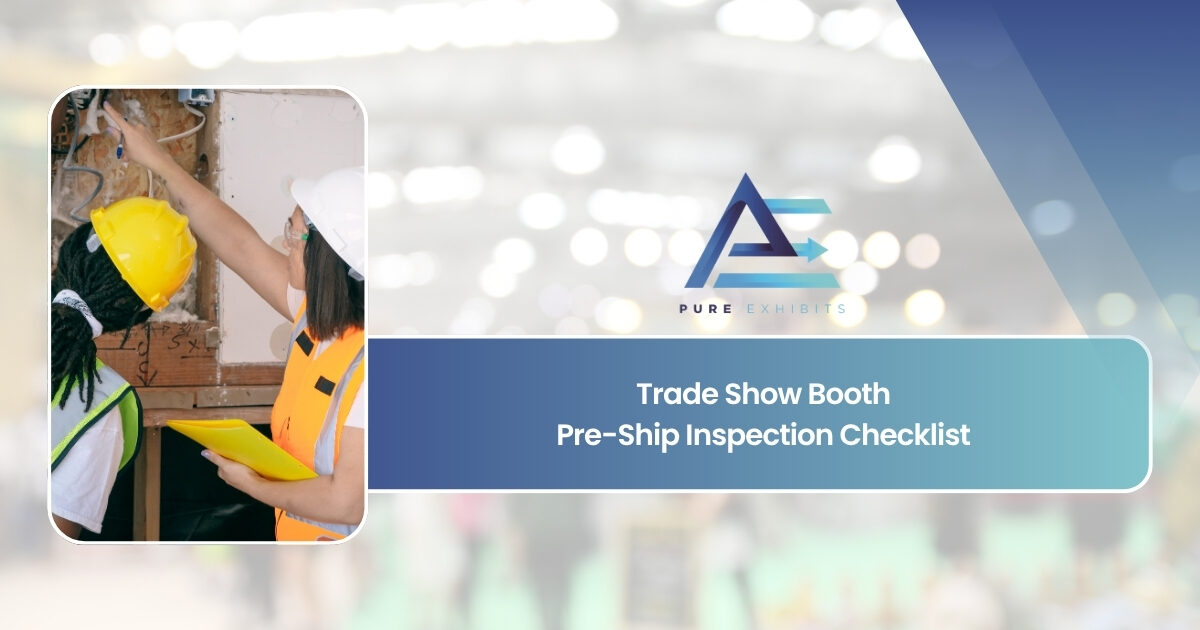
Even though a booth may seem flawless in a CAD drawing, it could end up having cracked panels, missing cables, or incorrectly printed graphics at the trade show venue. This is where a trade show booth pre-ship inspection checklist becomes vital, since it must be conducted on every booth before it gets shipped from the warehouse to the trade show venue.
This is important because the cost of detecting a defect at the warehouse in Las Vegas is just a phone call and some hours to correct the problem, whereas it becomes very costly when the same defect is discovered during the move-in process, especially because the time to correct this issue will be short, and getting replacement components will involve many miles of travel.
This trade show booth pre-ship inspection checklist guide walks through what a thorough trade show booth pre-ship inspection should cover, how the timing of inspection relates to the broader show calendar, what documentation should come out of the process, and the most common issues that get missed when inspection is rushed.
Booth inspection before shipping is closely tied to the pre-staging walkthrough described in PureExhibits’ trade show installation and dismantling guide, since both processes exist to remove uncertainty before a booth ever reaches the show floor.
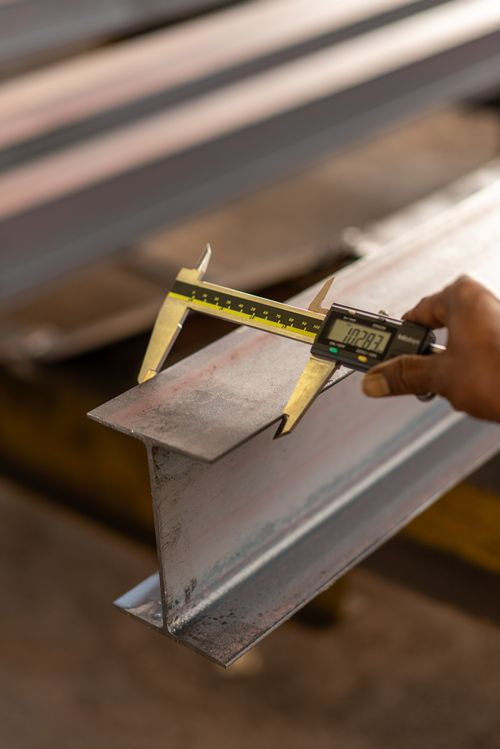
Why a Pre-Ship Inspection is Non-Negotiable
Most exhibitors don’t inspect their booth before shipping. They assume that because the booth worked at the last show, it will work at this one. That assumption fails in predictable ways:
-
Graphics faded or scuffed from the previous show’s dismantle, not noticed until they’re hanging in the booth under LED spotlights
-
Structural hardware missing: a single bolt or connector that went missing during teardown, now sitting on a convention center floor in another city.
-
AV equipment malfunctioning: a monitor that was damaged during freight, discovered only when it’s powered on at 7 am on move-in day.
-
Wrong components shipped: a 10×20 backwall sent to a 10×10 show because someone pulled the wrong crate
None of these is catastrophic if caught at your warehouse two weeks before the show. All of them are catastrophic at 7 am on move-in day.
A pre-ship inspection is simply the act of catching those problems when you can still fix them.
Pure Exhibits inspects every booth component in our Las Vegas warehouse before it ships, so problems get caught on our floor, not yours. Let’s talk about your next show.
What Should a Trade Show Booth Pre-Ship Inspection Checklist Cover?
For the pre-shipment checklist to be thorough, it has to take into account every single component that is used in putting together the booth. There are specific things that can go wrong with structural, graphical, electrical, furnishings, AV, and signage components, and a list that only takes care of the apparent ones will ignore what actually creates problems at the site.
Structural booth inspection before shipping confirms that panels, frames, and connection hardware fit together cleanly and that nothing has warped or been damaged since the last time the booth was assembled. Graphics inspection checks print quality, color accuracy against approved proofs, and the physical condition of printed panels or fabric. Electrical inspection verifies that every outlet, light fixture, and powered display element works as expected and meets the venue’s electrical code requirements.
Furniture and AV inspection confirms that rented or owned pieces match the approved layout and that all screens, connectors, and charging cables are present and functional. Gaps here often surface during PureExhibits’ trade show booth furniture and layout guide planning conversations, and are worth re-checking at inspection time. Signage inspection confirms that every printed sign matches current branding and messaging, since signage is often updated close to a show date and can be the easiest item to overlook.
Pre-Ship Inspection Checklist by Component
| Component | What to Check | Common Failure Point |
|---|---|---|
| Structure | Panel fit, frame integrity, connection hardware | Warping or damage from prior shows |
| Graphics | Color accuracy, print quality, and physical condition | Color drift between proof and final print |
| Electrical | Outlets, lighting, code compliance | Loose connections, missing certifications |
| Furniture | Match to the approved layout, condition | Substituted pieces not matching the layout plan |
| AV equipment | Screens, cables, connectors, and charging | Missing or incompatible cables |
| Signage | Current branding, correct messaging | Outdated signage from a prior show |
How Far Before a Show Should Pre-Ship Inspection Happen?
The trade show booth quality check should be done in such a way that there is sufficient time to make corrections, even if a problem is identified. Normally, the pre-ship inspection should be completed at least one to two weeks prior to the time when the booth will have to be shipped. This would give ample room to reorder a defective part or reprint graphics if need be.
This timing dovetails with the broader pre-show calendar described in PureExhibits’ trade show pre-show planning checklist, which lays out the full sequence of milestones: paperwork, staffing, logistics, and trade show booth quality check, leading up to move-in day. Booths with more complex builds or custom elements should be inspected even earlier, since custom components often have longer lead times if something needs to be remade.
Pre-Ship Inspection Timeline by Weeks Out
| Weeks Before Ship Date | Exhibit Pre-Show inspection Activity |
|---|---|
| 3–4 weeks | Initial structural and graphics inspection for custom builds |
| 2 weeks | Full component inspection complete; issues flagged for resolution |
| 1 week | Final walkthrough confirming all flagged issues are resolved |
| Ship day | Final visual check during crating and loading |
Pure Exhibits builds inspection into the pre-show calendar, not as an afterthought, but as a scheduled milestone. Let’s plan your next show’s timeline together.
How Does a Las Vegas Warehouse Make Pre-Ship Inspection More Reliable?
With a Las Vegas-based warehouse, the possibilities are different for pre-ship inspection. The individual pieces that make up a booth can be put together as a full unit at one location and then inspected, rather than having to conduct inspections on the individual parts that are spread out in multiple locations.
This warehouse-based exhibit pre-show inspection model is the same infrastructure that supports the pre-staging walkthrough process covered in our trade show installation and dismantling guide. Assembling the booth once in a controlled environment before it ever reaches the show floor means problems get caught and fixed where there’s still time and resources to do it properly, rather than discovered for the first time during a compressed move-in window.
Warehouse Inspection vs. On-Site-Only Discovery
| Factor | Warehouse Pre-Ship Inspection | Discovery During Move-In |
|---|---|---|
| Time to fix | Days to weeks | Hours, under deadline pressure |
| Access to replacement parts | Full warehouse inventory available | Limited to what’s on hand or locally sourceable |
| Cost of fix | Lower: planned, unhurried | Higher: rush shipping, rush labor |
| Risk to show timeline | Minimal | Significant: can delay booth readiness |
What Documentation Should Come Out of a Pre-Ship Inspection?
It will be difficult to take action on and nearly impossible to prove an undocumented pre-shipment inspection. An ideal inspection process should result in a written report accompanied by photographs for each component that was inspected, along with the findings and proof that the problem has been corrected.
This documentation also supports compliance and accountability conversations, much like the paperwork processes covered in PureExhibits’ trade show compliance and NDA guide. Photo documentation in particular gives both the exhibitor and the exhibit company a shared, dated record of the booth’s condition at the moment it shipped, useful if any damage occurs in transit and a claim needs to be filed.
Pre-Ship Inspection Documentation Checklist
| Document | Purpose |
|---|---|
| Component inspection log | Records the condition of each system checked |
| Photo documentation | Visual record of booth condition at ship time |
| Issue resolution log | Confirms flagged issues were fixed before shipping |
| Sign-off confirmation | Formal approval that the booth is ready to ship |
Every Pure Exhibits pre-ship inspection comes with full photo documentation, so you always know exactly what was shipped and in what condition. Request a quote today.
What Are the Most Common Issues a Pre-Ship Inspection Catches?
Certain issues show up again and again during exhibit pre-show inspection, and most of them are preventable with a consistent checklist. Color drift between an approved proof and the final printed graphic is one of the most common, since printing equipment and substrates can shift color slightly between runs. Loose or missing hardware from repeated assembly and disassembly across multiple shows is another frequent finding.
Staffing and engagement issues found later on the show floor often trace back to gaps that should have been caught at inspection, for example, a missing charging cable for an interactive display referenced in PureExhibits’ trade show staff training and booth engagement guide can quietly undermine an otherwise well-prepared booth team if it isn’t caught before ship date.
Common Pre-Ship Issues and Fixes
| Issue | Root Cause | Fix |
|---|---|---|
| Color drift in graphics | Printing equipment/substrate variance | Compare against approved proof; reprint if needed |
| Loose hardware | Repeated assembly/disassembly wear | Replace worn fasteners before shipping |
| Missing cables/connectors | Items separated during prior teardown | Verify full inventory against the component list |
| Outdated signage | Branding has been updated since the last show | Cross-check signage against current brand guidelines |
| Electrical inconsistencies | Wear or improper prior repairs | Full electrical test before crating |
How Does Booth Size Affect Pre-Ship Inspection Time?
Larger booths take longer to inspect simply because there are more components, more zones, and more systems to verify; the relationship is fairly direct. Understanding how a booth’s footprint, referenced in detail on PureExhibits’ trade show booth sizes page, maps to its inspection time helps with realistic scheduling, especially when multiple booths are being prepared for different shows around the same time.
Estimated Inspection Time by Booth Size
| Booth Size | Estimated Inspection Time | Notes |
|---|---|---|
| 10×10 | 1–2 hours | Single-zone layouts are inspected quickly |
| 10×20 | 2–4 hours | Additional furniture and signage to verify |
| 20×20 | 4–8 hours | Multiple zones, often AV-heavy |
| 20×40+ | 1–2 days | Full custom builds with extensive electrical and AV systems |
Visit the PureExhibits homepage or our Las Vegas page to learn more about how our warehouse-based inspection process protects every show we support.
Trade Show Booth Pre-Shipment Inspection Checklist: Common Mistakes
Inspecting from memory
“We just used this booth last month, it’s fine.” Go through every section of the checklist, every time. The scuffed graphic panel, the missing connector, and the failing monitor all looked fine at the last show.
Skipping AV because “it worked before”
AV equipment is vibration-sensitive. Even properly crated equipment can suffer internal damage in transit. Every device must be powered on and tested before every show.
Not removing old shipping labels
This is one of the most common causes of misrouted freight in the trade show industry. Carriers follow labels. If an old label from a show in Las Vegas is still on your crate when you ship to Chicago, there is a real chance it ends up in Nevada.
Inspecting too late
An inspection that reveals problems three days before your ship deadline is an inspection that reveals problems you can no longer fix. Build your inspection date into your show calendar the moment you confirm registration.
Skimming the hardware count
A missing bolt takes 30 seconds to find at your warehouse. On the show floor, with a crate full of components that won’t connect, it takes 3 hours and a trip to the hardware store, if you can find one near a convention center.
Not photographing outbound crates
If freight arrives damaged and you have no pre-ship photos, your claim will be disputed. If you have timestamped photos of intact crates on departure day, your claim is documented.
Working with Pure Exhibits: What We Inspect Before Every Shipment
When you rent a booth from Pure Exhibits, creating a trade show booth pre-ship inspection checklist is part of our standard process, not a premium add-on.
Before every deployment, our team:
-
Verifies full inventory against the manifest for your specific show and booth configuration
-
Inspects all structural components for damage from the previous show’s dismantling
-
Checks all graphics for scuffs, fading, and color accuracy under proper lighting
-
Powers on and tests all AV equipment: monitors, interactive displays, cabling
-
Confirms all hardware kits are complete and bagged per component group
-
Photographs all components open and packed, with timestamped records filed per show
-
Labels all crates with your show name, venue, booth number, and contact info
-
Removes all prior show labels before new labels are applied
-
Provides you with a pre-ship confirmation, including crate count, weight, and manifest
You don’t need to run this inspection from scratch on your end. But you should know what to look for when your freight arrives at the venue, because the road between our warehouse and the show floor has a few miles of opportunity for things to go wrong.
Let’s Build Something Extraordinary
Share your event details and we’ll craft a custom booth solution designed to captivate your audience and maximize your ROI.
15 Questions About Trade Show Booth Pre-Ship Inspection Checklist: Answered
What is a pre-ship inspection for a trade show booth?
A pre-ship inspection is a structured, component-by-component review of a booth’s structure, graphics, electrical systems, furniture, AV equipment, and signage performed before the booth ships to a show, intended to catch and resolve any issues while there’s still time to fix them properly.
Why does pre-ship inspection matter for trade show exhibitors?
It matters because the cost and difficulty of fixing a problem grow dramatically the closer it is to move-in day. A defect caught in a warehouse is a manageable fix; the same defect discovered during a compressed on-site installation window can jeopardize the entire show.
What components get checked during a pre-ship inspection?
A complete inspection checks structural integrity, graphics quality and color accuracy, electrical systems and code compliance, furniture condition and layout match, AV equipment functionality, and signage accuracy against current branding.
Who is responsible for conducting a pre-ship inspection?
The exhibit company’s warehouse and production team typically conducts the inspection, since they have direct access to the assembled booth and the technical knowledge to evaluate each system. Clients can request documentation or photos from the process even if they aren’t physically present.
How does a centralized warehouse improve pre-ship inspection reliability?
A centralized warehouse allows the entire booth to be assembled as a complete unit and inspected in one controlled environment, rather than inspecting scattered components separately. This makes it far easier to catch issues that only show up when everything is put together.
What happens if an issue is found during a pre-ship inspection?
The issue is documented, flagged, and resolved before the booth ships, whether that means reprinting a graphic, replacing hardware, or sourcing a missing component. The goal is for every flagged issue to be closed out before the booth leaves the warehouse.
How far in advance of a show should pre-ship inspection happen?
As a general guideline, inspection should be complete one to two weeks before the booth needs to ship, with custom builds inspected even earlier to allow time for remade components if something doesn’t pass inspection.
What documentation should result from a pre-ship inspection?
A complete inspection should produce a written component log, photo documentation of the booth’s condition, a record of any issues found and how they were resolved, and a final sign-off confirming the booth is ready to ship.
What’s the difference between a pre-ship inspection and a pre-staging walkthrough?
A pre-ship inspection checks individual components for condition and function before the booth is fully assembled. A pre-staging walkthrough involves assembling the entire booth in the warehouse to confirm it goes together correctly as a complete unit; the two processes complement each other.
Can exhibitors request to see or participate in a pre-ship inspection?
Yes, many exhibitors request photo documentation or a virtual walkthrough of the inspection process, particularly for high-stakes shows or new custom builds, even when they aren’t able to be physically present at the warehouse.
What are the most common issues found during pre-ship inspection?
Color drift between an approved graphic proof and the final print, loose hardware from repeated assembly and disassembly, missing cables or connectors, outdated signage, and minor electrical inconsistencies are among the most frequently caught issues.
How does booth size affect how long the inspection takes?
Larger booths with more zones, furniture, and AV systems take proportionally longer to inspect; a 10×10 might take one to two hours, while a full 20×40 custom build can take a full day or more to inspect thoroughly.
What happens if damage is found very close to the ship date?
If damage is found close to the ship date, the priority becomes assessing whether a fast repair or substitute part is possible without compromising quality. This is exactly why earlier inspection timing matters; it builds in a buffer for situations like this rather than leaving no room to react.
How does pre-ship inspection reduce risk during on-site installation?
By confirming every component works and fits correctly before it ever leaves the warehouse, pre-ship inspection removes a major category of surprises from the installation process, allowing the on-site team to focus on execution rather than troubleshooting.
Are rental booths inspected the same way as custom-built booths?
Rental booths go through the same core inspection categories: structure, graphics, electrical, furniture, AV, and signage, though custom builds often require additional scrutiny on one-off components that don’t have a prior-show track record to draw on.