
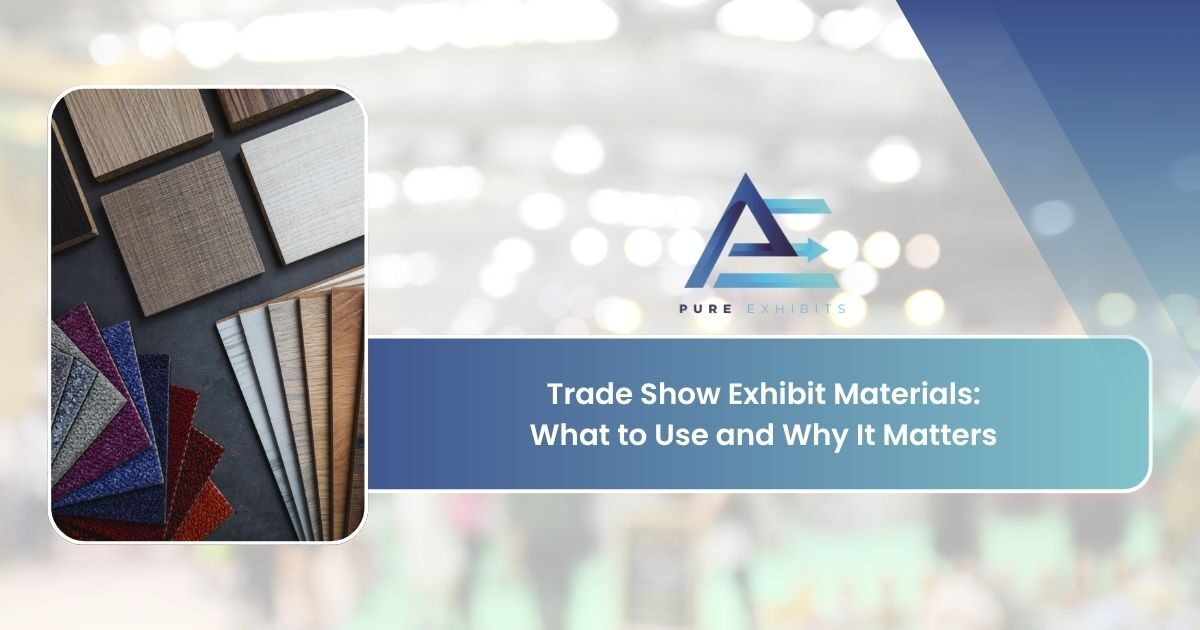
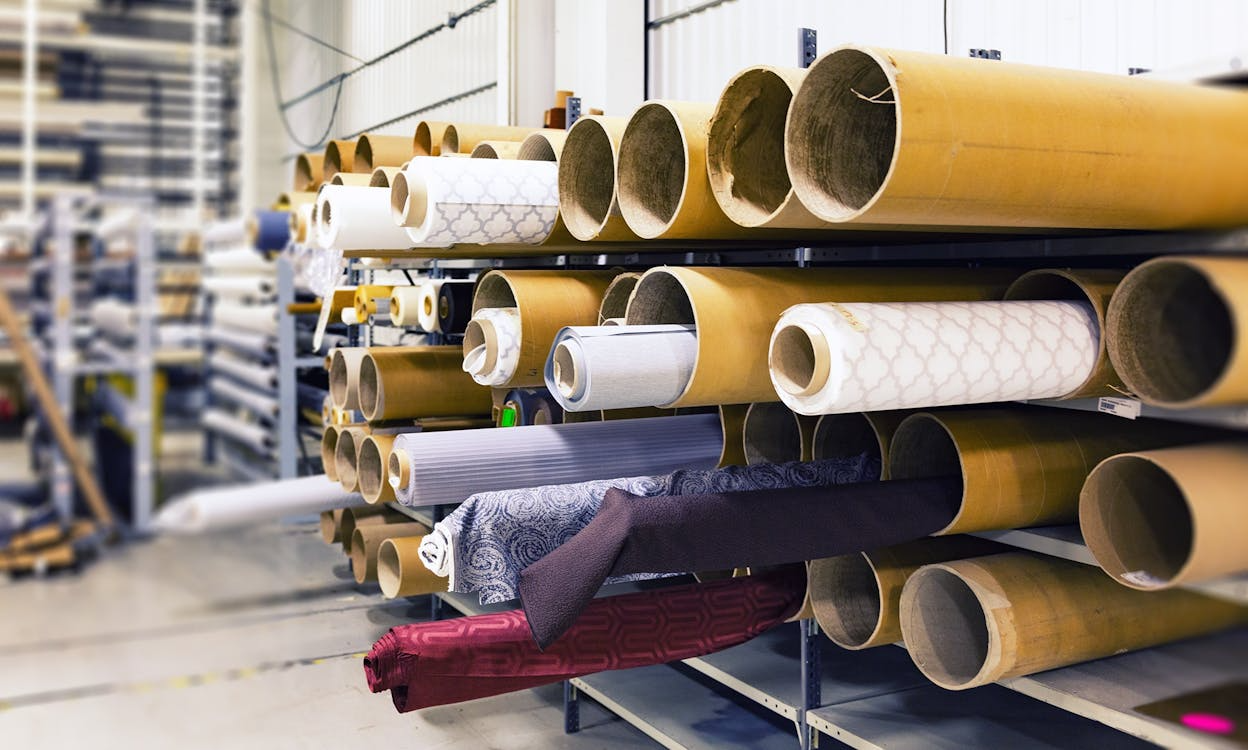
Every element of a trade show exhibit is made of something — and the something matters more than most exhibitors realize when they are focused on design and messaging. The frame material determines how much your exhibit weighs and how much that weight costs to ship and handle. The graphic substrate determines how your brand prints, how it holds up across three days of show-floor handling, and whether it survives being rolled, folded, and cased for the next event. The flooring material determines how your staff feels by day three and how the booth reads to attendees walking past. These are not secondary technical decisions — they are foundational choices that affect your exhibit’s performance, longevity, total cost of ownership, and environmental footprint.
The challenge is that most exhibitors make trade show exhibit materials decisions reactively: accepting whatever materials their vendor specifies, defaulting to what they used last time, or choosing on aesthetics alone without understanding the trade-offs. This guide covers every major material category in exhibit construction — structure, graphics, flooring, lighting, and sustainable alternatives — with specific guidance on when to use each and what the real-world implications of each choice are. For the design context these materials fit into, see our exhibition booth design guide.
Need help selecting the right materials for your exhibit?
Pure Exhibits designs rental booths built for performance, portability, and longevity.
What Structural Materials Are Used in Trade Show Exhibit Frames?
The structural system is the skeleton of your exhibit — everything else attaches to it, and its material properties determine the weight, rigidity, assembly complexity, and longevity of the entire booth. Most exhibitors never think about what their frame is made of until they get the drayage invoice or discover that a joint has cracked after the fifth show. Understanding the options before you commit to a design prevents both of those surprises.
| Structure Material | Weight | Durability | Shipping Cost Impact | Best Application |
|---|---|---|---|---|
| Aluminum extrusion | Light — 30–50% less than steel | High — resists corrosion, handles repeat assembly | Low — compact cases, fewer lbs | Modular frames, SEG systems, portable exhibits |
| Steel / heavy tube | Heavy — 2–3× aluminum | Very High — rigid, impact resistant | High — heavy drayage, large cases | Permanent or semi-permanent custom builds |
| Wood / MDF substrate | Medium-Heavy | Medium — susceptible to humidity and chipping | Medium-High — bulky, fragile corners | Custom counters, branded furniture, accent walls |
| Lightweight composite (Dibond, Foamex) | Light — 60–80% less than MDF | Medium — resists moderate impact | Low — thin profile, easy to case | Hanging panels, accent walls, product display shelves |
| PVC / acrylic | Light to medium | Medium — scratches easily; acrylic cracks under stress | Low | Sign holders, product risers, transparent display elements |
| Fabric / tensioned textile | Very Light | High — washable, wrinkle-resistant options | Very Low — compresses into soft case | Backwalls, canopies, hanging banners, curved displays |
Aluminum extrusion is the dominant structural material in modern exhibit construction for good reason: it is lightweight, strong, corrosion-resistant, and modular. Aluminum extrusion systems allow frames to be reconfigured between shows — adding or removing sections, changing orientation, adapting to different booth sizes — without fabricating new structural components. This flexibility is one of the core reasons aluminum-framed rental exhibit systems are so cost-effective across a multi-show calendar.
Wood and MDF remain common in custom exhibit construction, particularly for counters, branded furniture, and architectural accent elements where the material can be shaped, routed, and finished with more visual complexity than extruded metal allows. The trade-off is weight and fragility — wood is significantly heavier than equivalent aluminum elements, and MDF corners and edges are vulnerable to impact damage during transit. For exhibitors managing exhibit shipping across multiple shows per year, the weight difference between a wood-forward custom exhibit and a lightweight aluminum rental system represents hundreds or thousands of dollars in drayage savings annually.
What Are the Best Graphic Materials for Trade Show Exhibits?
Graphics are the visual layer of your exhibit — the element that carries your brand identity, communicates your value proposition, and creates the first impression that determines whether an attendee stops or keeps walking. The substrate your graphics are printed on affects print quality, color accuracy, durability, shipping weight, and what happens when the graphic is handled, folded, or exposed to convention center conditions for three days.
| Graphic Material | Print Surface | Durability | Weight | Best Use Case |
|---|---|---|---|---|
| Tension fabric (dye-sublimation) | Smooth matte or slight sheen | High — washable, no crease memory | Very Low | Backwalls, curved displays, hanging elements |
| SEG fabric (silicone edge) | Premium matte finish | High — frame-tensioned, no wrinkle | Very Low | Backwall panels, counter wraps, large format frames |
| Direct-print rigid (Dibond) | Photographic quality | Very High — scratch/impact resistant | Low-Medium | Permanent header panels, product display walls |
| Foam board (Gatorboard) | Smooth, vibrant color | Low — dents, tears, moisture-sensitive | Very Low | Light-use inserts, interior signage, table top panels |
| Backlit fabric (lightbox) | Luminous, glowing finish | High — designed for repeated use | Low (fabric only) | Backlit walls, illuminated headers, product spotlights |
| Vinyl banner (outdoor grade) | Semi-gloss, bold color | Very High — weather, UV resistant | Low | Outdoor events, heavy-traffic areas, temporary signage |
| Acrylic / plexiglass print | Clear or frosted, elegant finish | Medium — scratches, cracks under impact | Medium | Awards display, product pedestals, premium accent elements |
Tension fabric printed via dye-sublimation is the current standard for most modern exhibit graphics — and for good reason. The printing process bonds ink permanently into the fiber rather than sitting on top of it, which means no cracking, peeling, or fading even after repeated washing and re-installation. Tension fabric is lightweight, compresses into a compact case, and produces vibrant, accurate color that photographs extremely well for trade show booth graphics documentation and social media use. SEG (silicone edge graphics) — a variation where the fabric edge has a silicone strip that inserts into a channel in the frame — produces an even cleaner finish with perfectly taut, frame-to-frame precision.
Rigid substrate graphics — Dibond, Gatorboard, acrylic — serve different purposes. Dibond (aluminum composite material) is the premium choice for rigid panels that need to withstand repeated handling: it is lightweight for a rigid material, impact-resistant, and produces photographic-quality direct printing. Gatorboard is lighter and less expensive but much more fragile — appropriate for lightweight interior signage but not for panels that will be cased, shipped, and reinstalled multiple times. Acrylic introduces an elegant premium aesthetic for product display elements and branded sign holders but requires careful case padding to prevent cracking.
How Does Lighting Technology Affect Trade Show Exhibit Performance?
Lighting is the most underestimated trade show exhibit materials category — and the one that most consistently separates exhibits that stop traffic from those that blend into the hall’s ambient lighting. The right lighting makes graphic colors pop, makes products look their best, and creates a visual warmth that draws attendees toward your booth from aisle distance. The wrong lighting — or no booth-specific lighting at all — leaves your exhibit looking flat and uninviting under convention center fluorescent overhead fixtures. For a comprehensive breakdown of application options, see our booth lighting ideas guide.
| Lighting Type | Color Accuracy (CRI) | Heat Output | Energy Use | Best Application |
|---|---|---|---|---|
| LED spotlights (track) | 85–95+ CRI options | Very Low | Low — 10–30W per fixture | Focused product and graphic illumination |
| LED lightbox / backlit frame | 90+ CRI | Very Low | Low — even backlight | Backlit graphic panels, headers, feature walls |
| LED strip / tape light | 80–90 CRI | Very Low | Very Low | Accent lighting, under-counter glow, shelf underlighting |
| Fluorescent tubes (older systems) | 70–80 CRI | Medium | Medium | Avoid — color rendering poor; being phased out |
| Metal halide / halogen (legacy) | 85–95 CRI | High — heat under enclosed structure | High | Avoid — heat risk, high energy, being replaced by LED |
| Color-changing RGB LED | Variable — set to white for product | Very Low | Low | Brand color washes, ambient mood, event activations |
LED technology has effectively replaced every other lighting type for exhibit applications. LED spotlights offer color rendering index (CRI) ratings of 85–95+, which means colors appear accurate and vibrant rather than washed out or color-shifted. They generate almost no heat — critical when lighting is mounted close to graphic panels or operating for 10 hours per day across multiple show days. They draw a fraction of the electrical power of older halogen or metal halide systems, which reduces the electrical service you need to order and the associated show services cost.
Backlit lightbox systems — LED-illuminated frames behind translucent printed fabric — are one of the highest-impact visual elements available in exhibit design at their price point. A backlit header or feature wall creates a luminous, glowing appearance that is impossible to miss from across the show floor. Backlit graphics require a slightly different print preparation than standard fabric graphics (colors must be adjusted for transmission rather than reflection), but the visual return justifies the additional production step for any exhibitor who wants maximum visual impact from a limited footprint.
What Flooring Options Work Best in a Trade Show Exhibit?
Flooring is the most physically demanding element in your exhibit — it supports staff standing for 10 hours a day and attendees walking in and out continuously. It also contributes significantly to the overall aesthetic of the space, demarcating your exhibit footprint visually and creating a sense of intentional design versus bare convention center concrete. Most shows require flooring of some kind; the question is which type best serves your budget, aesthetic, and logistical profile.
| Flooring Material | Comfort Level | Install Complexity | Weight / Shipping | Best For |
|---|---|---|---|---|
| Interlocking foam tiles | Medium — cushioned standing | Very Easy — snap together, no tools | Light | Budget-conscious; easy self-install; any size booth |
| Carpet tiles (modular) | Medium — standard floor feel | Easy — lay and trim to fit | Medium | Traditional look; easy to configure any shape |
| Rigid vinyl plank (LVT) | Medium-High — hard surface | Medium — click-lock or glue-down | Medium-Heavy | Premium look; durable for multi-day traffic |
| Raised platform (aluminum) | High — defines zones, adds drama | Complex — requires assembly crew | Heavy | Island booths; premium product display zones |
| Carpet with padding (show-ordered) | High — full cushion feel | Easy — installed by show services | N/A — ordered on-site | Convenient; premium feel; higher cost than bring-your-own |
| Rubber/foam anti-fatigue mat | Very High — staff comfort | Very Easy — unroll and place | Light | Staff standing zones; overlaid on any other floor type |
Staff comfort is the most consequential flooring factor that exhibitors routinely underestimate. A staff member standing on hard vinyl plank or thin carpet for 10 hours per day across three show days experiences significantly more physical fatigue than one standing on cushioned foam tiles or carpet with a foam underlayer. That fatigue is visible in the afternoon hours of every show day — in engagement level, energy, and the quality of conversations being had. Anti-fatigue mat overlays in the primary staff standing zone are a simple, inexpensive addition to any flooring system that pays off in measurable staff performance. Budget for them as a standard line item.
For exhibitors choosing flooring as part of an owned exhibit, raised platform systems represent a premium option worth considering for island configurations. A raised platform — typically 3–6 inches of aluminum-framed elevation — creates a defined, stage-like environment that visually separates the exhibit from the surrounding floor. It allows integrated cable management below the platform surface, creates a sense of architectural authority on the show floor, and provides an additional platform for trade show installation of integrated flooring materials. The trade-off is weight, assembly complexity, and cost — raised platforms are not practical for small inline booths but can justify the investment on a 20×20 island that will be used repeatedly at major shows.
Using the Right Materials for Your Exhibit?
Pure Exhibits selects and integrates the right materials for every exhibit rental — structure, graphics, flooring, and lighting.
What Sustainable Materials Are Available for Trade Show Exhibits?
Sustainability has moved from a niche consideration to a genuine purchasing criterion for exhibitors across industries. Many companies now have ESG commitments that include reducing the environmental impact of their trade show program, and the trade show booth design trends 2026 show a clear industry-wide shift toward sustainable trade show exhibit materials — driven both by brand values and by the practical reality that lighter, more modular systems that reduce waste are also more cost-effective over time.
| Sustainable Material | Traditional Alternative | Environmental Benefit | Performance Trade-off |
|---|---|---|---|
| Recycled aluminum frame | Virgin aluminum or steel | Reduced mining impact; fully recyclable | None — identical performance |
| Bamboo / FSC-certified wood panels | MDF / particle board | Renewable source; lower VOC options available | Slightly softer; requires sealing for humidity |
| Recycled fabric graphics (rPET) | Virgin polyester fabric | Made from recycled plastic bottles | Identical visual quality; slightly higher print cost |
| Water-based inks (HP latex) | Solvent-based inks | No VOCs; safe for indoor display | Slightly less scratch resistance on some substrates |
| Modular / reusable components | Single-use custom builds | Eliminates waste from show-to-show replacement | Requires design discipline to maintain modular integrity |
| LED lighting (vs. halogen) | Halogen or metal halide | 80% less energy; no hazardous mercury | Higher upfront cost; far lower operating cost |
The most significant sustainability decision for most exhibitors is not the specific material specification — it is the choice between a modular, reusable exhibit system and a custom build that is partially or fully discarded after each show cycle. Single-use or low-reuse custom exhibit builds generate substantial waste: foam, wood, vinyl, and plastic components that cannot be repurposed are discarded after teardown at every major show in the country. A modular aluminum and fabric system, by contrast, can be reconfigured and reused across dozens of shows over several years — the only components replaced are the graphics, which update with your messaging rather than requiring a full rebuild.
Recycled fabric graphics — printed on rPET fabric made from recycled plastic bottles — are now available from most major graphic print suppliers at comparable quality and minimal price premium over standard polyester fabric. Water-based latex inks, used by HP Latex and similar systems, eliminate the volatile organic compounds (VOCs) produced by solvent-based printing and are safer for both the print environment and enclosed indoor display spaces. These are straightforward specification choices that can be implemented without changing the design, appearance, or budget of the exhibit.
How Do Material Choices Affect Exhibit Shipping and Storage Costs?
The connection between trade show exhibit materials and logistics cost is one of the most direct and least-discussed relationships in exhibit planning. Every pound of material in your exhibit costs money to ship to the show and costs money again in drayage at the venue. Every cubic inch of case volume affects how many cases your exhibit requires, which affects minimum drayage charges. Every material that requires special handling — fragile rigid panels, oversized crates, climate-sensitive substrates — adds cost and complexity to the freight chain.
The weight differential between a wood-heavy custom exhibit and a lightweight aluminum-and-fabric system is significant. A fully custom 10×20 booth built with MDF structural components, wood furniture, and rigid substrate graphics might weigh 800–1,200 lbs. The equivalent 10×20 rental exhibit built with aluminum extrusion frames and tension fabric graphics typically weighs 250–450 lbs. At a drayage rate of $130 per hundredweight, that weight difference represents $715–$975 in drayage savings per show, per direction — meaning $1,430–$1,950 in drayage savings per show when both inbound and outbound are counted. Across a calendar of five shows per year, that is $7,150–$9,750 in annual drayage savings from the material choice alone.
Storage costs are equally affected by material choices. Heavy, custom exhibits require dedicated storage space — often climate-controlled to protect wood and rigid substrates from warping, humidity, and pest damage. Lightweight aluminum and fabric systems store in a fraction of the space, often in standard shipping cases that can be stacked efficiently. Proper trade show storage of a lightweight rental system costs significantly less annually than climate-controlled storage for an equivalent custom exhibit — adding another layer of cost advantage to material decisions made at the design stage.
How Do You Choose the Right Materials for Your Specific Exhibit Program?
The right material specification for your exhibit is not universal — it depends on your show frequency, booth configuration, budget model, transport method, venue environment, and brand positioning. The decision framework below maps these factors to material priority recommendations so you can approach the selection process with a clear set of criteria rather than defaulting to vendor suggestions or past habits.
| Decision Factor | Prioritize Lightweight / Portable If… | Prioritize Premium / Custom If… |
|---|---|---|
| Show frequency | 3+ shows per year; multi-city calendar | 1–2 flagship shows per year |
| Booth size | 10×10 to 10×20; modular inline | 20×20 island and larger |
| Budget model | Rental; cost-per-show optimization | Owned; long-term capital investment |
| Transport method | Air freight possible; self-transport | Ground freight only; exhibit partner ships |
| Show environment | Variety of venues; indoor and outdoor | Single consistent flagship venue |
| Brand positioning | Credible, professional, functional | Flagship, premium, immersive |
For most exhibitors attending three or more shows per year in varying venues and cities, the decision matrix points clearly toward lightweight, modular, aluminum-and-fabric systems. These systems optimize for the full cost of ownership — shipping, drayage, storage, reconfiguration, and graphics refresh — rather than just the upfront fabrication cost. They also tend to be the materials used in rental exhibit programs, which distribute the capital cost of a well-designed system across multiple clients and shows rather than requiring the full investment from a single exhibitor.
For flagship exhibitors at one or two major annual shows — especially those with large island footprints and a consistent venue — premium materials including raised platforms, custom wood furniture, and architectural rigid elements can be justified when the per-show cost is calculated against the multi-year life of the exhibit. The key is being honest about the full cost: amortized fabrication cost plus annual storage, shipping, refurbishment, and graphics refresh. When these are calculated together against the cost of a well-designed rental system, the trade show booth rental cost comparison often surprises exhibitors who assumed ownership was automatically cheaper.
How Do You Maintain and Extend the Life of Your Exhibit Materials?
The longevity of any exhibit material is determined more by how it is handled, stored, and maintained than by its inherent durability rating. Exhibitors who invest in good materials and then pack them carelessly, store them in uncontrolled conditions, or fail to clean them between shows often replace materials far earlier than necessary. A few straightforward maintenance disciplines extend the useful life of every major exhibit component significantly.
Fabric Graphics
Tension fabric and SEG graphics can be machine-washed on a gentle cycle with cold water and mild detergent — a capability that sets them apart from rigid graphic substrates, which cannot be cleaned without risk of damage. Wash fabric graphics after any show where they have been exposed to heavy foot traffic, food, or significant handling. Air dry completely before folding and casing — storing damp fabric accelerates mold growth, which permanently damages the print. Replace graphics when color fading is visible or when the fabric shows permanent distortion that washing does not resolve.
Aluminum Frames
Aluminum extrusion frames require minimal maintenance — wipe down with a damp cloth between shows to remove dust and fingerprints. Inspect all connector hardware and locking mechanisms after every show teardown. Replace worn or damaged connectors immediately rather than waiting for a failure during setup at the next event. Store frames in their original labeled cases with all hardware accounted for — components stored loosely in mixed cases become assembly problems at the next setup.
Flooring
Interlocking foam and carpet tiles should be swept or vacuumed after each show day and allowed to dry completely before packing. Store flat — do not roll rigid tiles, as this creates permanent curvature. Vinyl plank flooring can be mopped with a standard floor cleaner; avoid saturating the seams with water. Inspect all tiles for cracks, tears, or significant soiling before the next show and replace individual damaged tiles rather than the full floor system.
Lighting
LED fixtures require almost no maintenance beyond occasional dusting of the lens and inspection of mounting brackets. Check power cables for fraying or connector damage before each show. Confirm beam angle adjustment screws are tight before freight ships — fixtures that shift during transit arrive at the show pointed in the wrong direction. Keep one spare LED bulb or fixture in your emergency supplies case for any system that uses replaceable components.
The Materials You Choose Shape Every Outcome Your Exhibit Delivers
Trade show exhibit materials are not a technical footnote in the exhibit design process — they are the physical foundation on which every performance outcome depends. The weight of your structure drives your shipping and drayage cost. The substrate of your graphics determines whether your brand looks vibrant or faded on day three. The flooring type determines whether your staff is energized or exhausted by mid-afternoon. The lighting technology determines whether your booth pulls attention from across the aisle or disappears into the ambient hall lighting. Making these decisions deliberately — with an understanding of the trade-offs, the total cost implications, and the logistics reality of your specific show program — is what separates exhibits that perform consistently from those that look good in the concept rendering and underperform on the floor. Pure Exhibits designs rental exhibits with materials chosen for visual impact, logistical efficiency, and longevity across a real multi-show program. Reach out at purexhibits.com to start the conversation.
Let’s Build Something Extraordinary
Share your event details and we’ll craft a custom booth solution designed to captivate your audience and maximize your ROI.
Frequently Asked Questions
What is the most common material used in trade show booth frames?
Aluminum extrusion is the most widely used structural material in modern trade show exhibit construction. It is lightweight, strong, modular, and corrosion-resistant — properties that make it ideal for exhibits that ship repeatedly and are assembled and dismantled multiple times per year. Aluminum extrusion systems include popular formats like SEG frames, tension fabric display systems, modular connecting structures, and custom aluminum fabrications.
What is the difference between SEG and tension fabric graphics?
Both are fabric-based graphics printed via dye-sublimation, but they use different installation methods. Tension fabric graphics typically use a stretch mechanism — the fabric is pulled taut around a frame system using hooks, channels, or a slip-fit back structure. SEG (silicone edge graphic) fabric has a silicone strip heat-bonded to its perimeter that inserts into a channel routed into the frame, producing a perfectly flat, tightly stretched finish with no visible mounting mechanism. SEG typically produces a cleaner, more premium result.
How long do trade show exhibit materials typically last?
Well-maintained aluminum frame systems last 10–15+ years with normal show use. Fabric graphics typically last 3–5 years before color fading or fabric degradation is noticeable — though they can be reprinted at a fraction of the cost of replacing the frame. Rigid substrates like Dibond last 5–7 years under normal handling. Flooring systems (foam tiles, vinyl plank) typically last 5–8 years with proper cleaning and storage. LED lighting systems can last 10+ years before lamp degradation becomes visible.
Can trade show fabric graphics be reprinted without replacing the frame?
Yes — and this is one of the primary economic advantages of fabric-based exhibit systems. When your messaging, branding, or product lineup changes, only the printed graphic fabric needs to be replaced. The aluminum frame, lighting, flooring, and hardware remain in place. This makes graphic refresh significantly less expensive than rebuilding a rigid substrate or custom-painted system, and it is the core reason why fabric-and-aluminum systems have a lower total cost of ownership over a multi-year exhibit program.
Is foam board a good material for trade show graphics?
Foam board (including Gatorboard) is appropriate for light-duty applications — interior signage, table top displays, temporary inserts — where it will not be subjected to repeated transit, significant handling, or direct attendee contact. It is not appropriate for primary exhibit panels that will be cased, shipped, and reinstalled multiple times. Foam board dents, tears, and moisture-warps too easily for use in any application where durability matters.
What flooring should I use for a 10×10 trade show booth?
For a 10×10 booth, interlocking foam tiles or modular carpet tiles offer the best combination of cost, weight, and ease of installation. Both can be self-installed without tools or additional labor, ship in a compact case, and produce a professional finished look. Add an anti-fatigue mat in the primary staff standing position for comfort across a full show day. Avoid raised platform systems for a 10×10 — the cost and complexity are not justified at this footprint size.
What is Dibond and why is it used in trade show exhibits?
Dibond is a brand name for aluminum composite material (ACM) — a rigid panel made of two thin aluminum sheets bonded to a polyethylene core. It is lightweight relative to its rigidity, impact-resistant, weather-resistant, and accepts direct UV or latex printing with excellent color accuracy. In trade show applications, Dibond is used for permanent header panels, product display walls, counter faces, and any rigid graphic element that needs to withstand repeated transit and handling.
How do I choose between buying and renting exhibit materials?
The rent-vs.-buy decision depends primarily on show frequency and configuration consistency. If you attend 3+ shows per year at varying venues and need to adapt your configuration, renting gives you access to current materials, graphics refresh flexibility, and zero storage cost. If you attend 1–2 flagship shows per year at consistent venues with a stable brand identity, ownership can amortize favorably over 3–5 years. Calculate the full cost of ownership — fabrication, storage, shipping, refurbishment, graphics refresh — before comparing to rental cost.
What materials hold up best for outdoor trade show events?
For outdoor or partially outdoor events, prioritize UV-resistant and weather-resistant materials: outdoor-grade vinyl banners, powder-coated aluminum frames (more corrosion-resistant than standard anodized), galvanized or stainless steel hardware for any structural connectors, and acrylic or aluminum composite for signage elements. Avoid paper-based materials, foam board, and standard fabric graphics without UV protection coating. Weight down or anchor any overhead elements that could be affected by wind.
Can exhibit materials be recycled after their useful life?
Yes — with the right materials specification. Aluminum extrusion frames are fully recyclable and accepted by standard metal recyclers. Fabric graphics made from polyester are recyclable through textile recycling programs, though availability varies by region. Rigid substrates like Dibond can be recycled through aluminum recyclers. Wood and MDF components are more difficult to recycle and typically go to landfill — one of the practical environmental arguments for aluminum-based systems.
What is the lightest material option for a portable trade show exhibit?
Tension fabric systems on lightweight aluminum extrusion frames represent the lightest practical option for a professional-grade exhibit. A complete 10×10 tension fabric backwall with aluminum frame can weigh as little as 15–25 lbs and ship in a single soft case. SEG fabric systems on lightweight frames are slightly heavier but still dramatically lighter than any rigid substrate alternative. For pop-up displays and banner stands, fiberglass rod systems are the lightest structural option available.
Does Pure Exhibits use sustainable materials in its rental exhibits?
Yes — Pure Exhibits builds rental exhibits primarily from aluminum extrusion framing and dye-sublimation tension fabric graphics: both of which are recyclable, reusable, and significantly lighter (and therefore more energy-efficient to ship) than wood or rigid substrate alternatives. We use LED lighting exclusively across all exhibit designs. Graphics can be printed on rPET fabric (recycled polyester) upon request. Contact us at purexhibits.com to discuss material specifications for your next exhibit.