
Baby Brezza · ABC Kids Expo 2026
Parents call it the Baby Keurig. So the booth was built like an appliance showroom, not a baby stand.
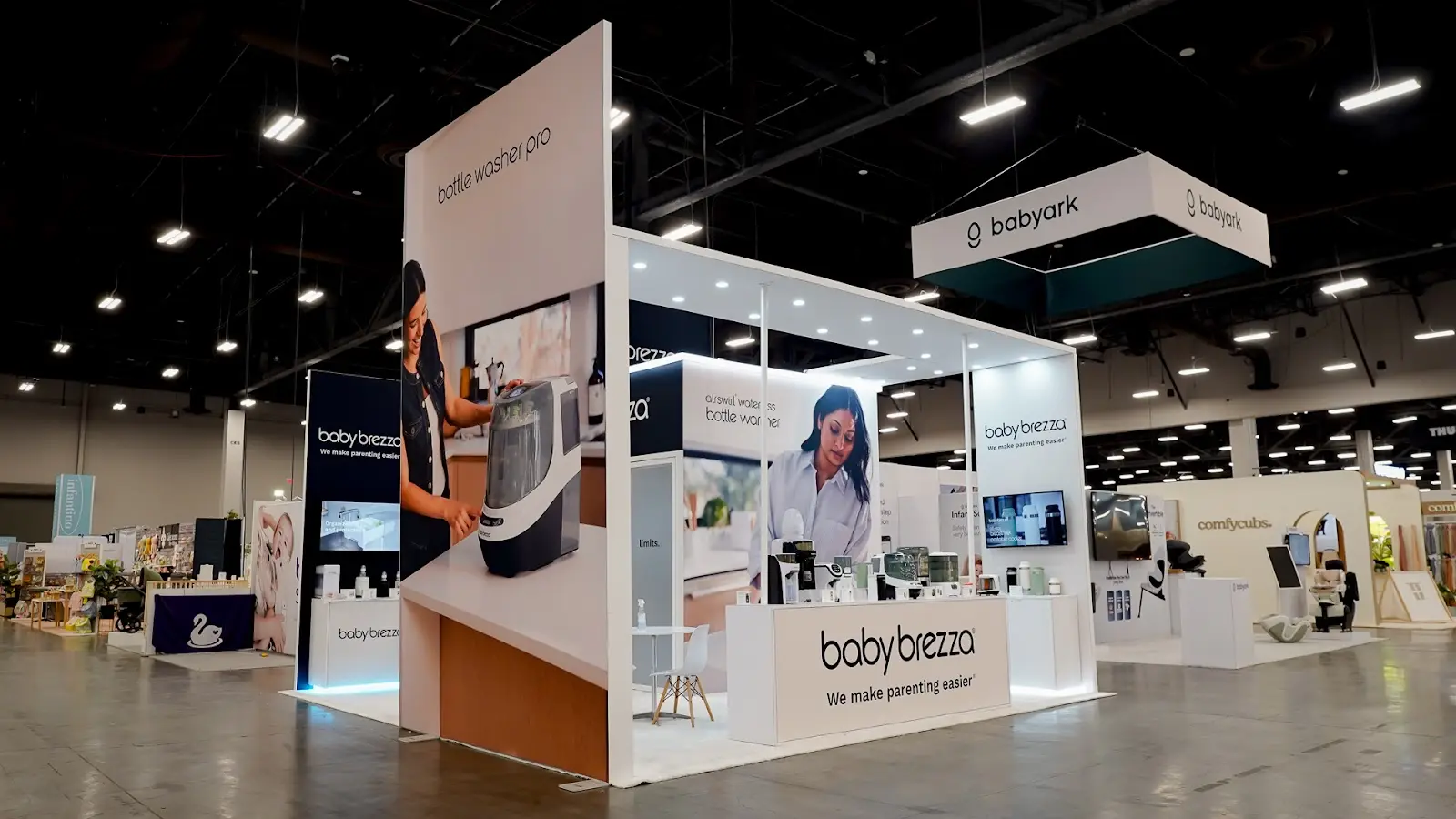
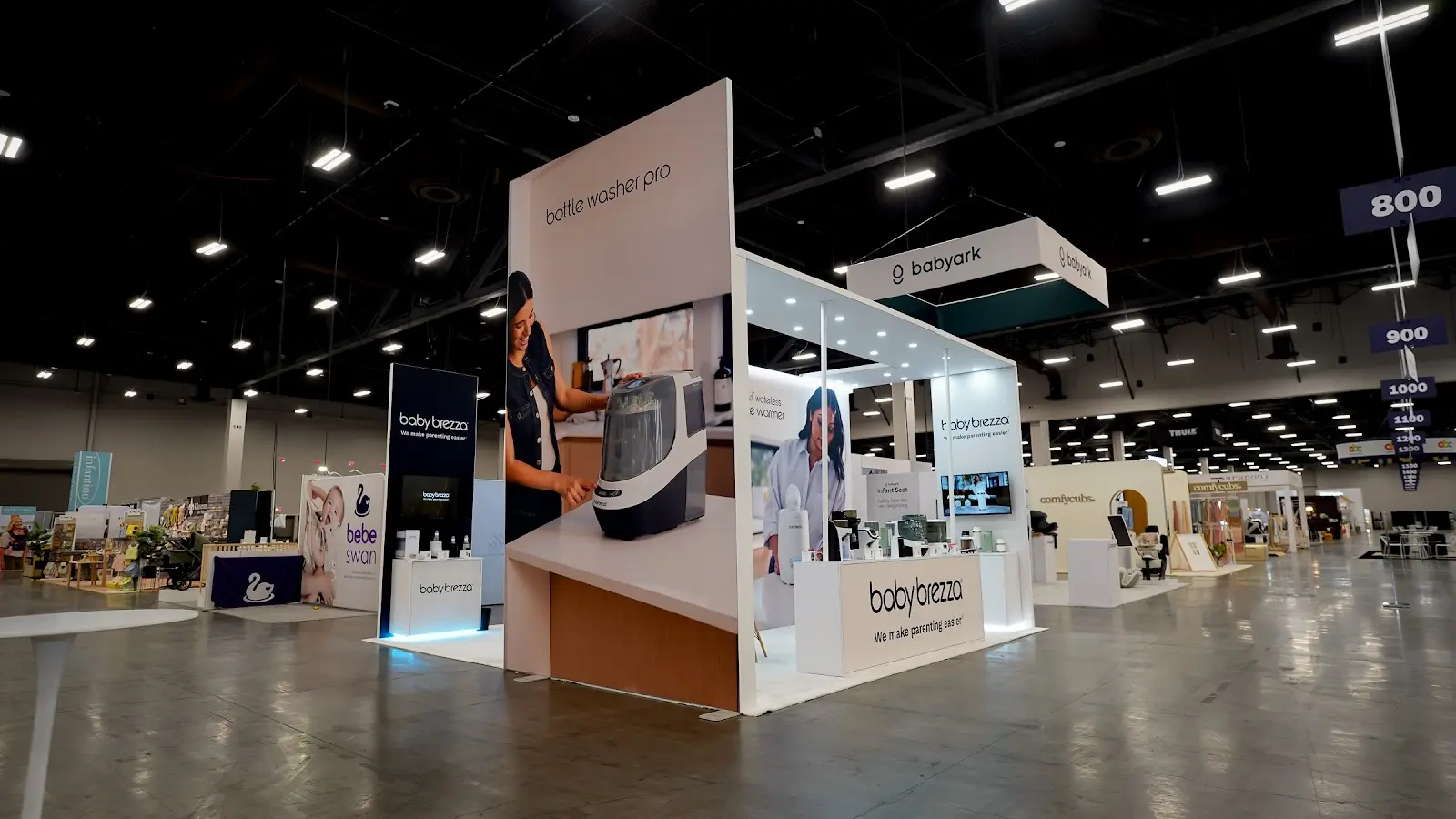
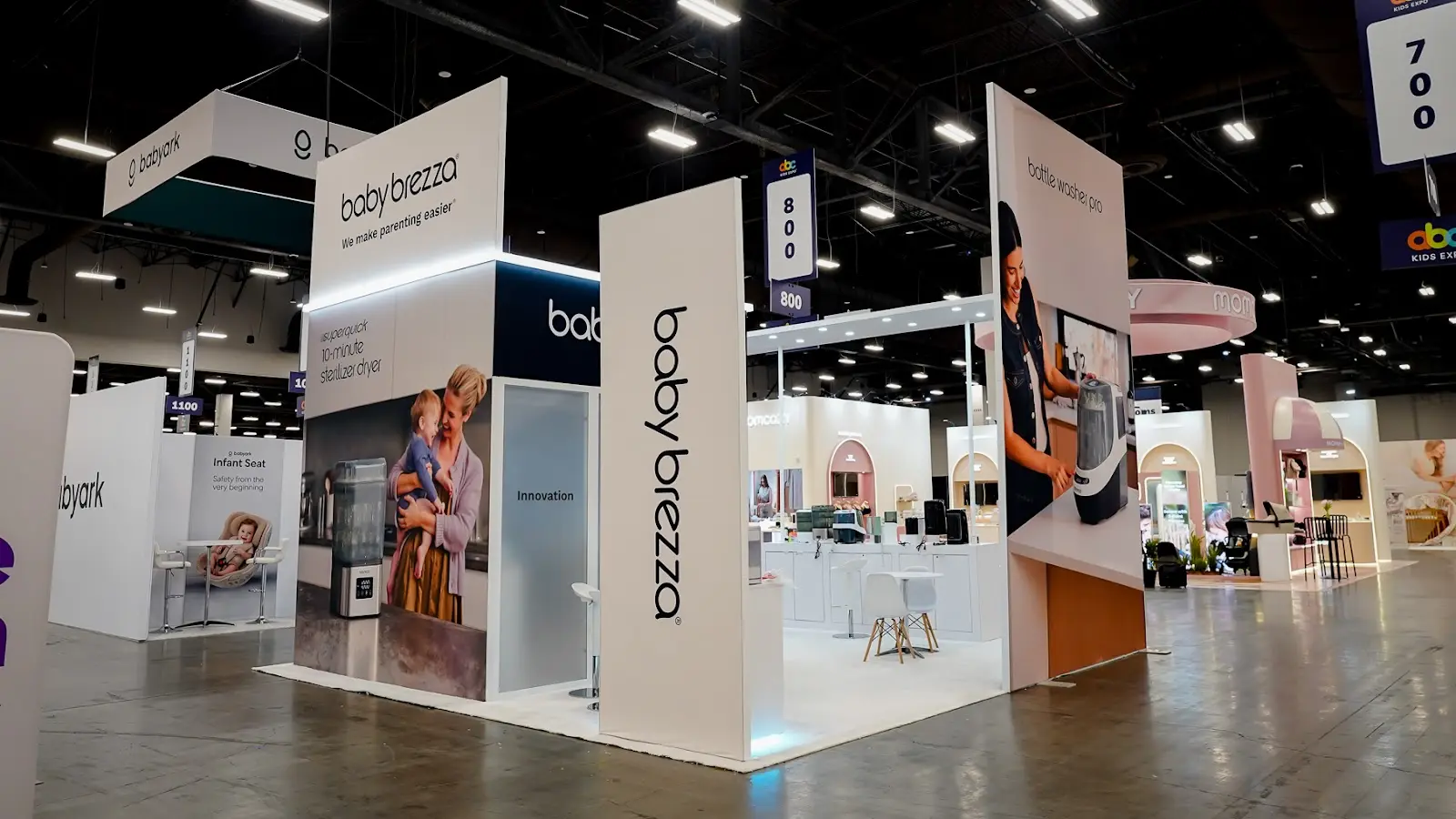
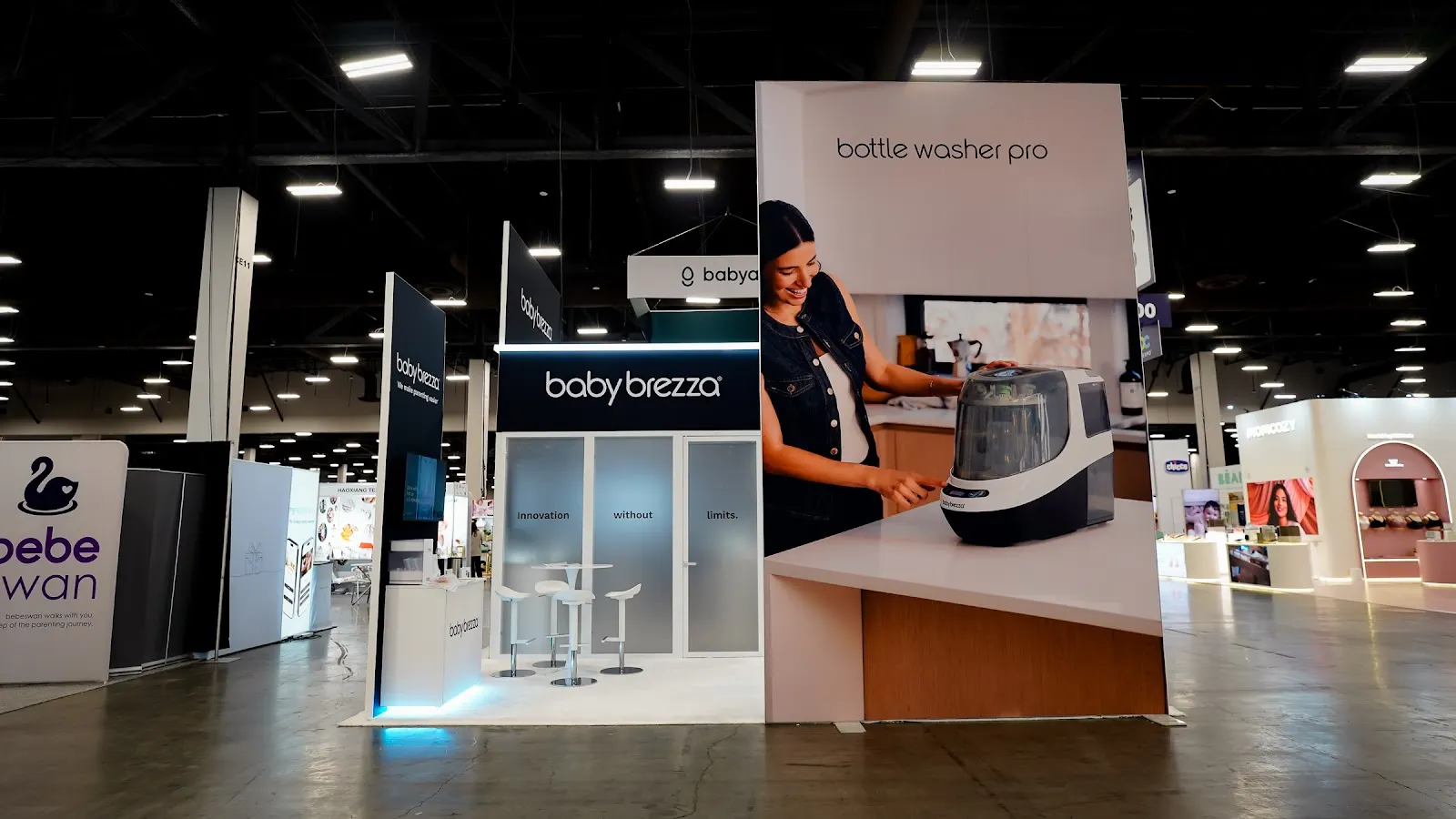
ABC Kids Expo is a hall of plush, prints and primary colour. Baby Brezza sells premium countertop appliances that happen to be for babies, to retail buyers deciding shelf space and price positioning. For the 2026 show at Mandalay Bay, Pure Exhibits built a 20 × 30 island in near-total white — the visual language of kitchen retail, dropped into a juvenile products floor.
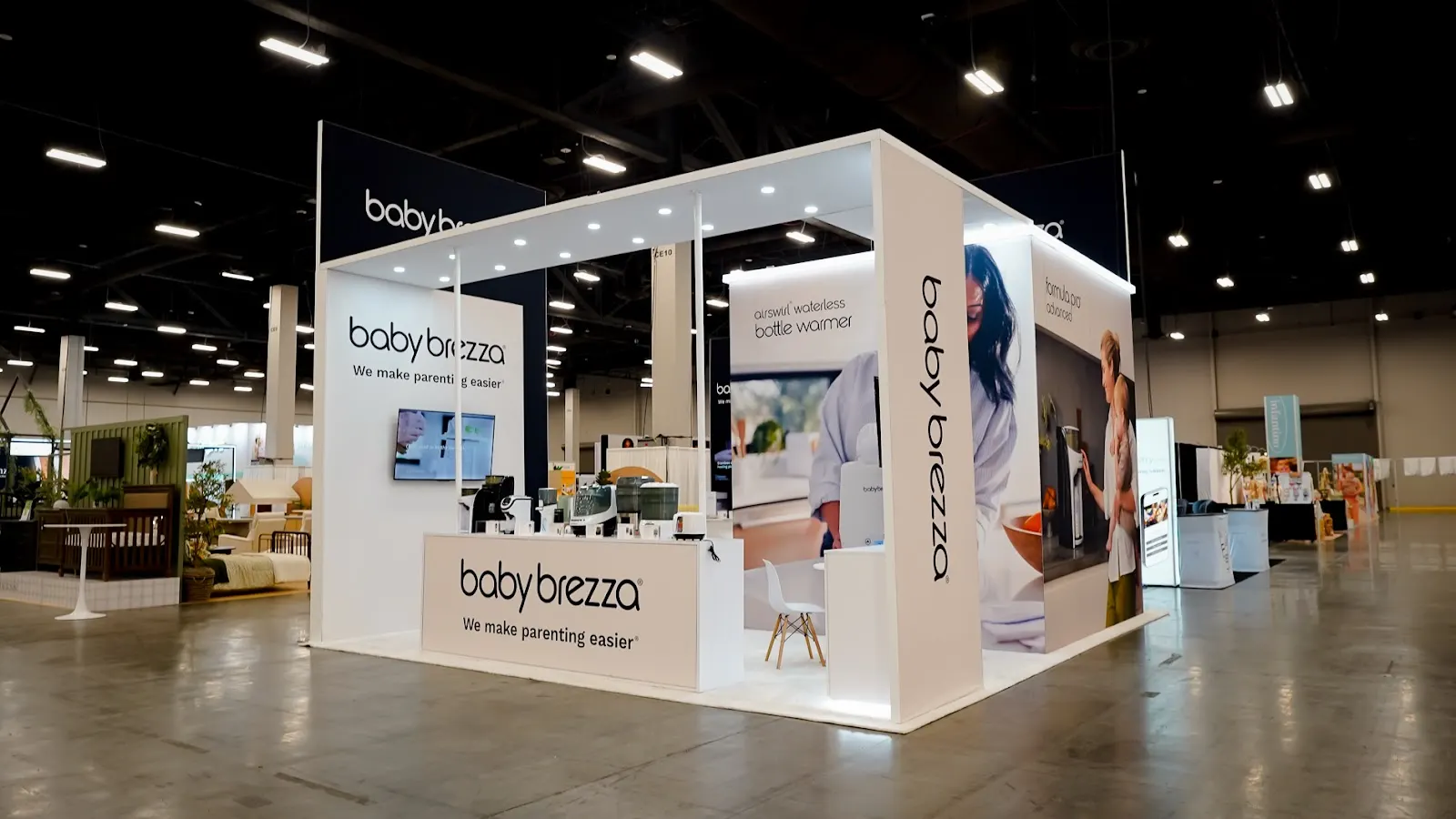
Selling a kitchen appliance at a baby show
Baby Brezza has a category problem that is entirely of its own making, and mostly a good one. Its flagship product is a machine that mixes and warms a formula bottle at the press of a button, and the company’s own marketing acknowledges what customers actually call it: the Baby Keurig. That comparison is precise. It is a countertop appliance, priced like one, bought like one, and judged partly on whether a parent wants to look at it every day in their kitchen. None of that is how juvenile products are normally sold.
ABC Kids Expo is where those two worlds collide. It is North America’s largest juvenile products gathering — over 3,000 attendees and 320-plus exhibiting brands across three days at Mandalay Bay — and the floor looks the part: soft goods, pattern, plush, and a great deal of saturated colour. The audience is not parents. It is retail buyers, specialty store owners and category managers deciding what earns shelf space and at what price. A booth that adopts the visual grammar of the show around it tells that buyer the product belongs in the gear aisle. Baby Brezza needed the opposite signal.
“The appliance many moms call the Baby Keurig.”Baby Brezza, on the Formula Pro Advanced
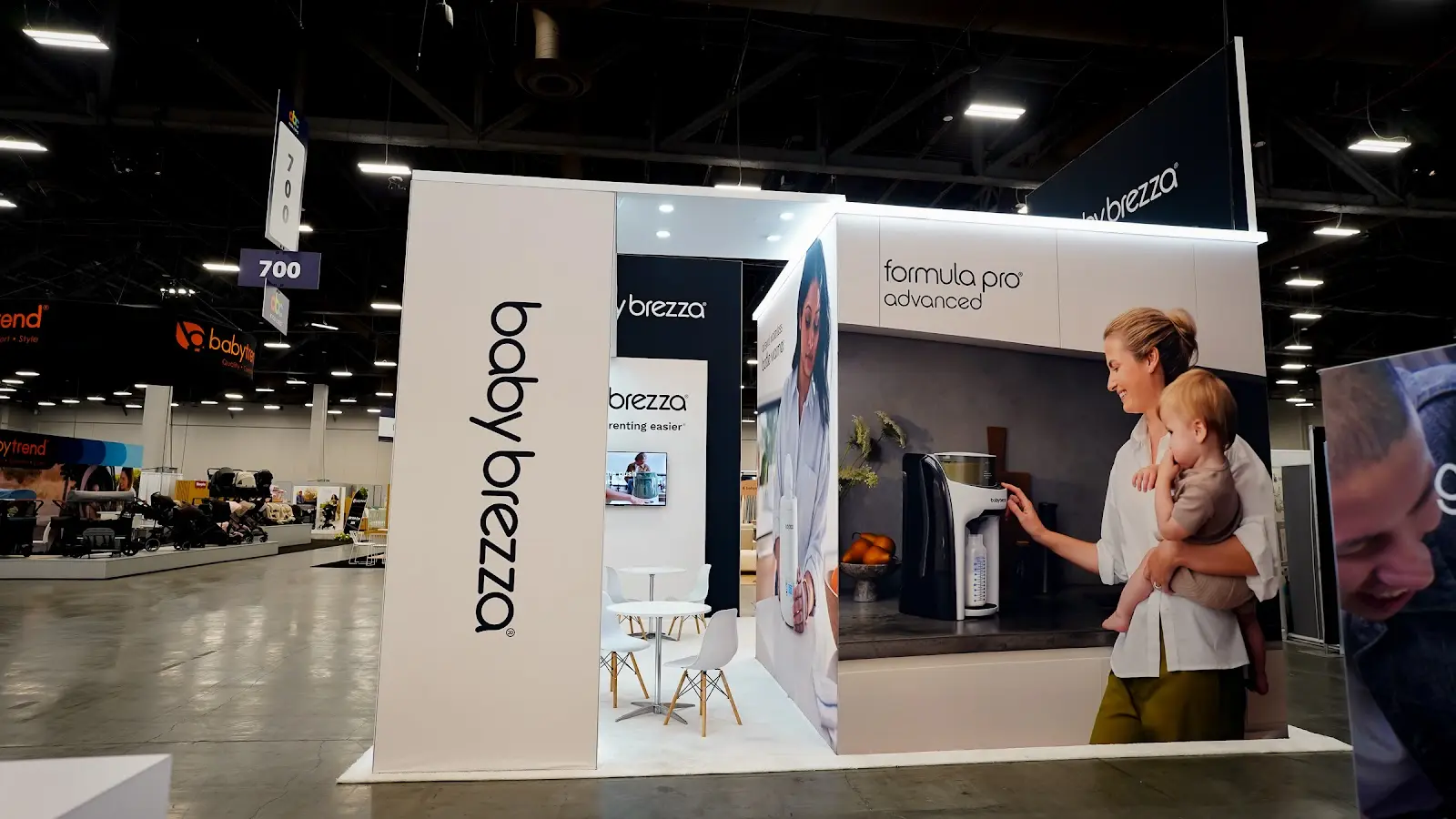
Designing a showroom instead of a stand
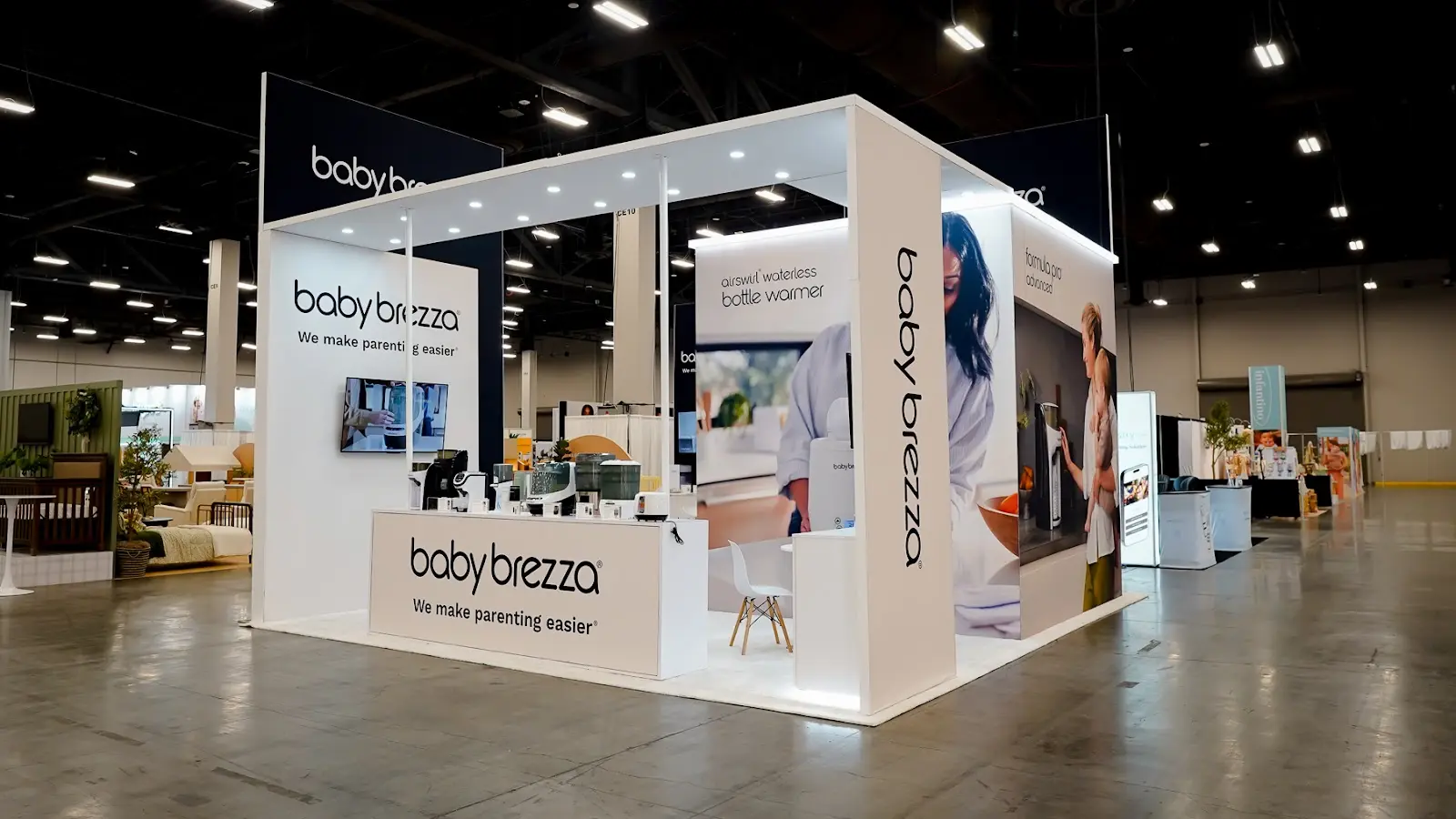
The Countertop Test
Every design decision ran through one question: would this look right in a premium kitchen department? Products were presented at counter height on clean, uninterrupted white surfaces, spaced the way appliances are merchandised rather than crowded the way gear usually is. That single reference point does a lot of work with a buyer, because it answers the question they are actually holding — not what the product does, but where in their store it goes and what it can be priced at.
White as the Loud Choice
On most show floors white is the safe, forgettable default. At ABC Kids Expo it is the opposite. Surrounded by pattern, plush and saturated colour, a near-monochrome white island becomes the quietest thing in the hall and therefore the most conspicuous. It is a genuinely risky move — restraint reads as blandness if the execution is even slightly loose — and it only works because the finish quality carries it at close range.
The Product Has to Run
A formula machine is unconvincing described and obvious demonstrated. The moment a buyer watches a warm bottle appear in under a minute, the value proposition needs no further explanation. The layout treated live demonstration as the primary function of the exhibit rather than an activity squeezed in beside the meeting table, with power, water and drainage planned into the structure instead of bolted on afterwards.
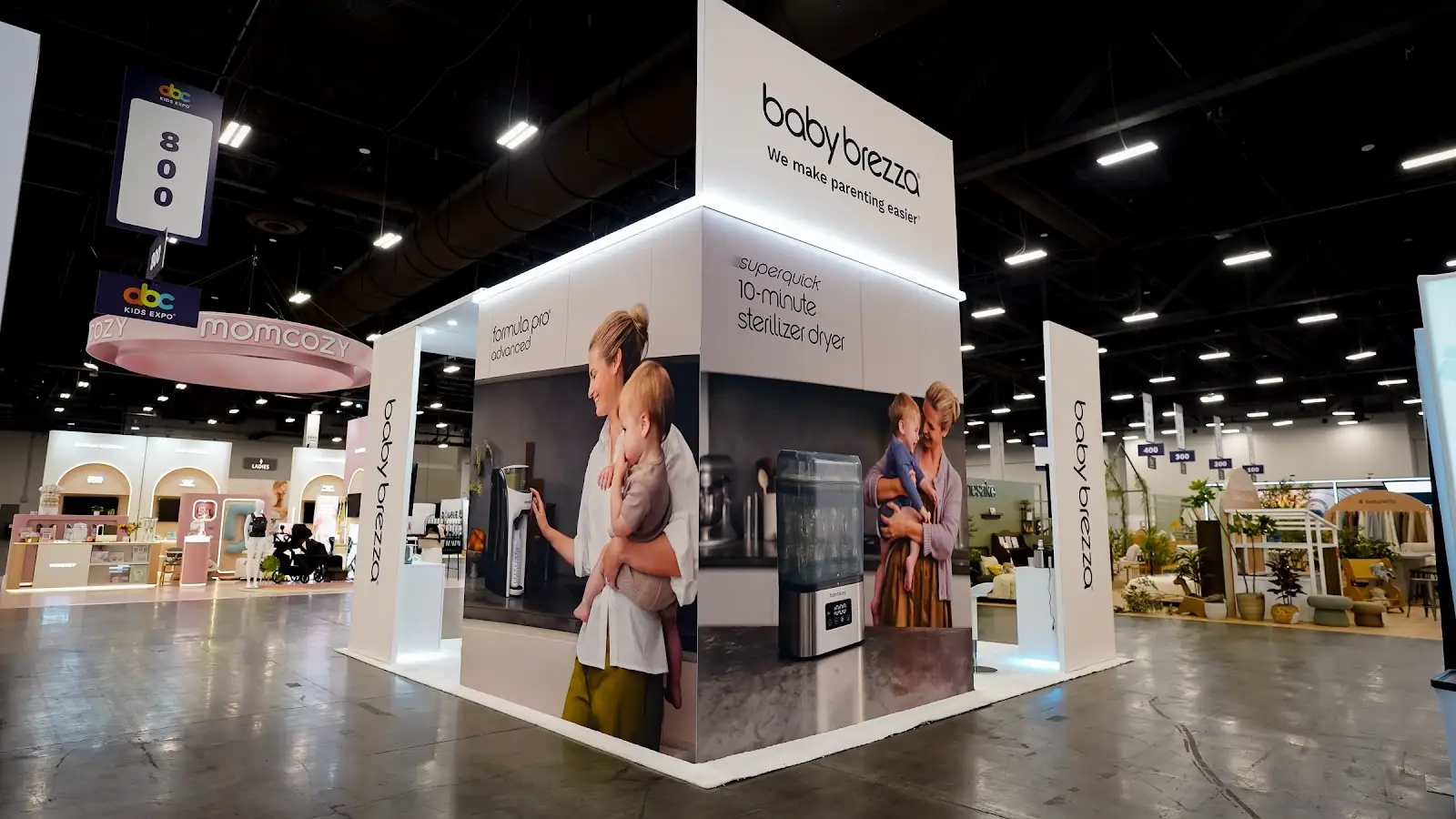
Built for Buyers, Not Parents
Consumer marketing and buyer marketing pull in different directions, and a booth cannot serve both without becoming muddled. There is no emotional storytelling about parenthood here, because the person walking the aisle is doing a job: assessing margin, footprint, packaging, and whether the brand will still be around next season. The exhibit was written and laid out for a working buyer with a schedule — product forward, claims specific, and enough room to have a real conversation without leaving the aisle’s line of sight.
Sightlines Across 300,000 Square Feet
Mandalay Bay gives ABC roughly 300,000 net square feet, and a buyer covers it in three days with a list. Being findable matters as much as being attractive. Height and a bright, self-evident brand mark let the island be spotted and returned to, which is how these shows actually work — buyers walk the floor once to survey it, then come back to the stands they can locate again.
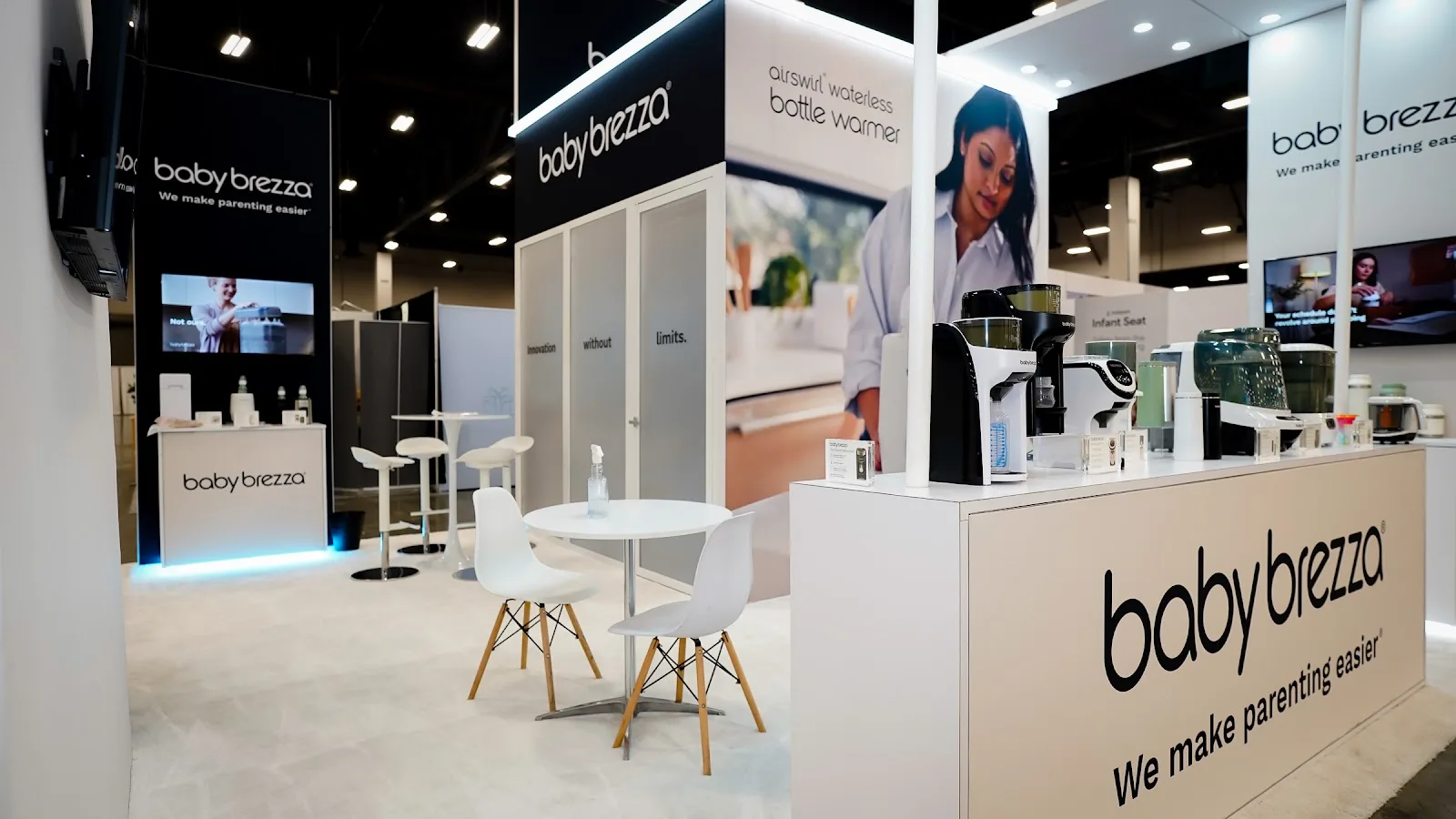
An Island That Reads as a Room
Four open sides can become four half-used ones. The structure was organised so the 20 × 30 read as a defined space a buyer stepped into rather than a platform they circled, with the product surfaces forming the walls. That is showroom logic rather than exhibit logic, and it changes the behaviour it produces: people who step inside a room stay in it, and staying is the whole point when the conversation you want takes ten minutes rather than ten seconds.
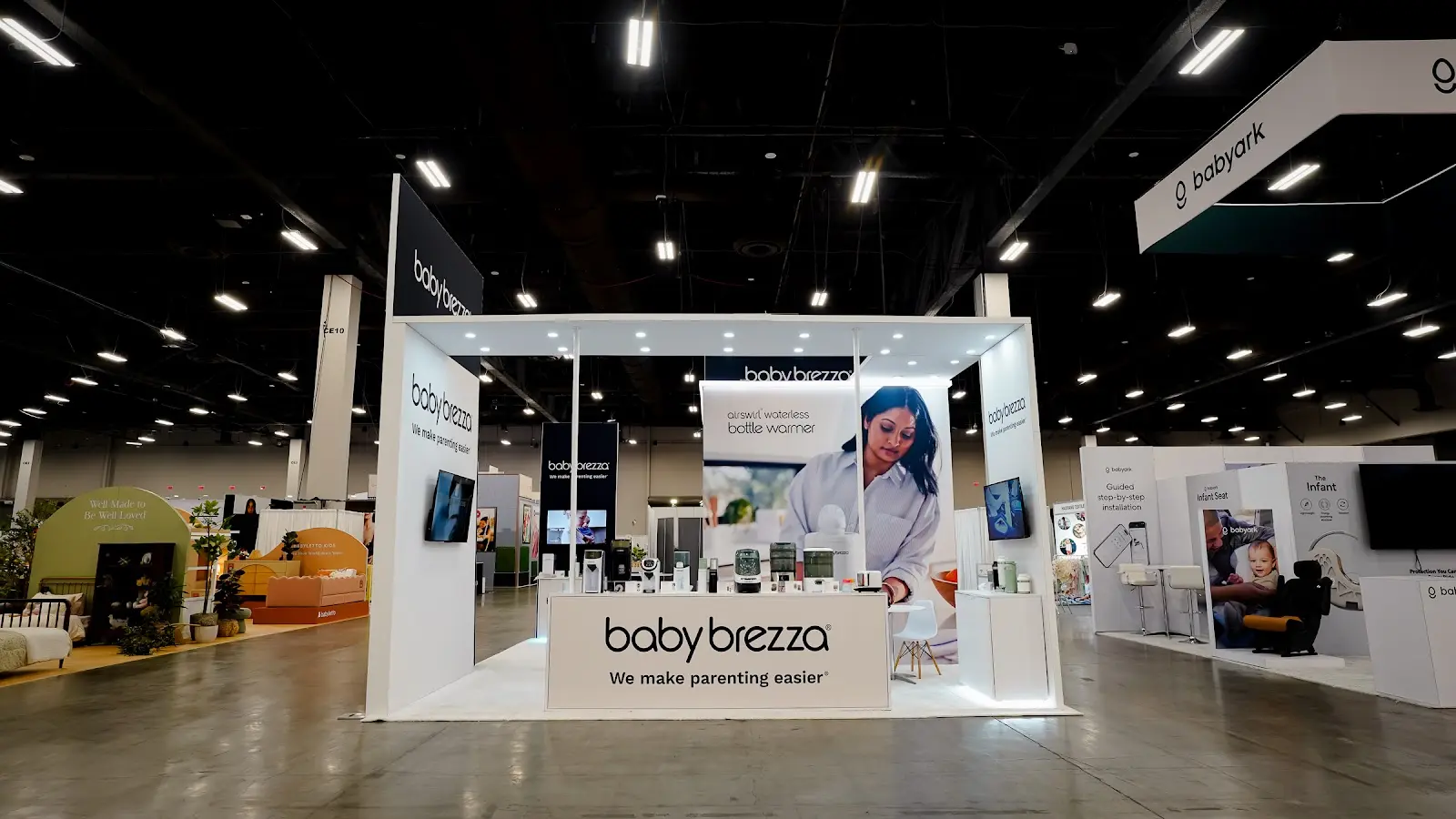
The booth in detail
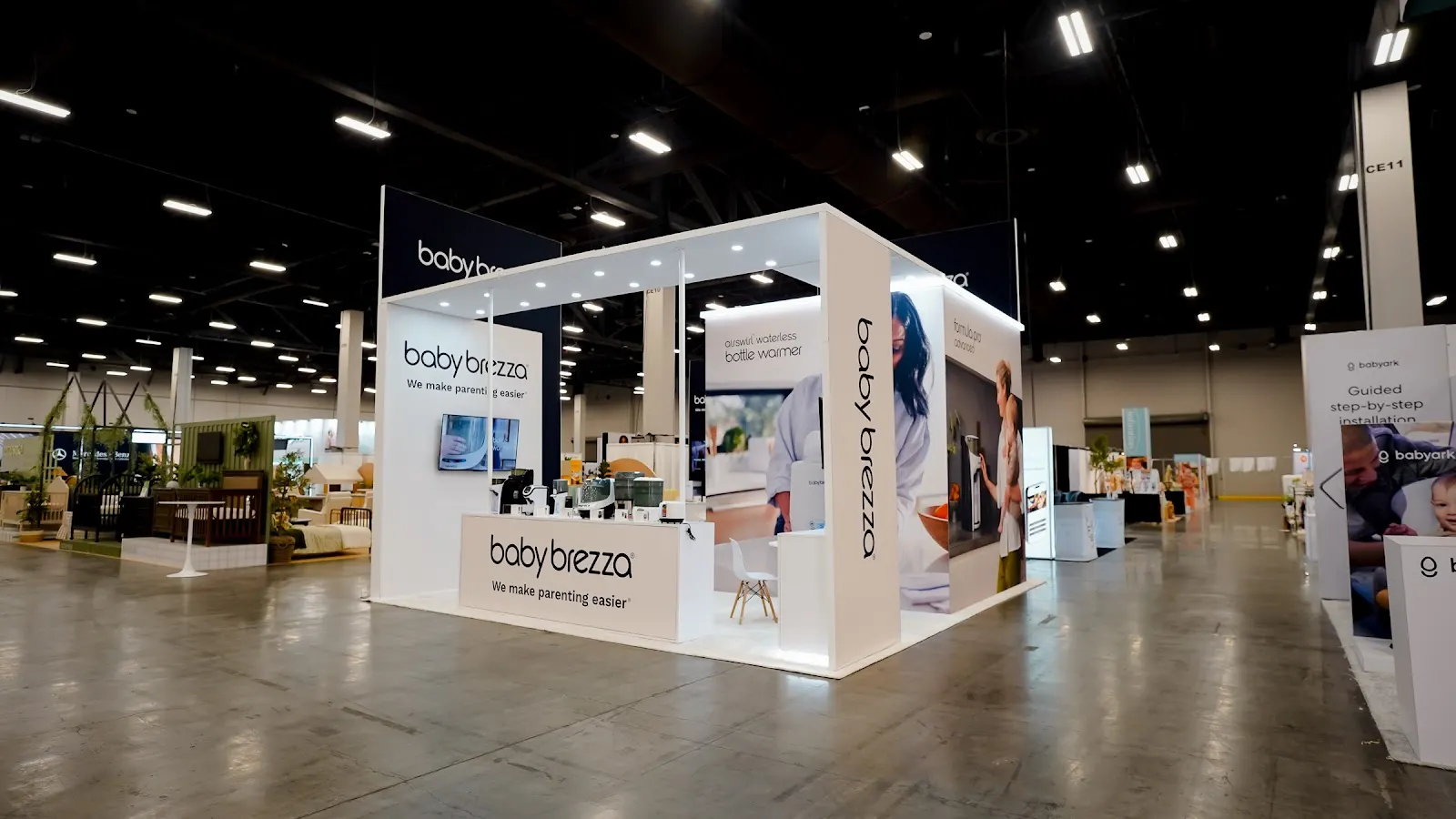
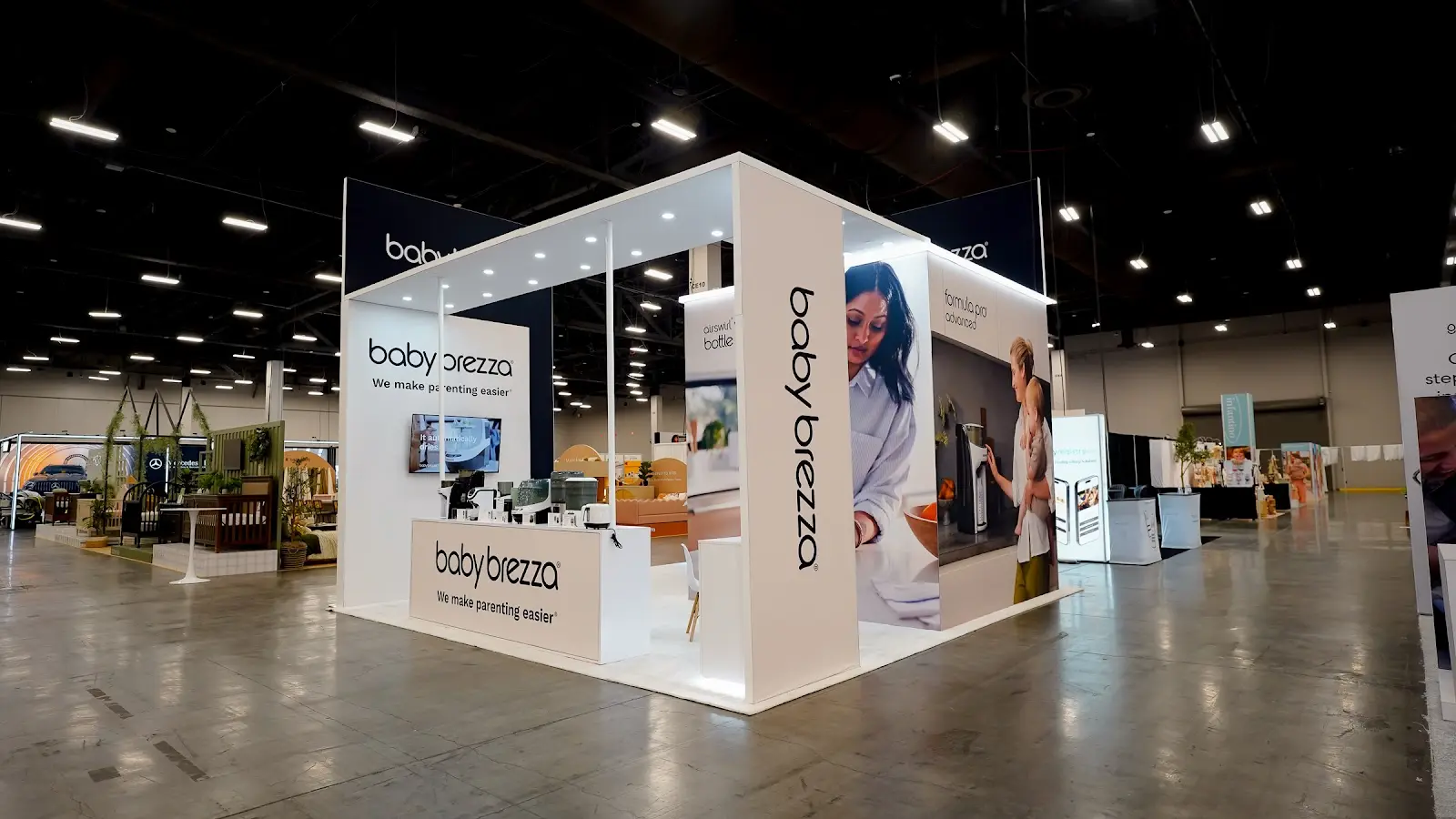
Experience the booth
A walkthrough of the Baby Brezza 20 × 30 island at ABC Kids Expo 2026 — through the white structure and past the counter-height product surfaces that gave the exhibit its showroom character.
The build at a glance
Where the product sits in the store
The commercial question at a buyer-facing show is narrower than it is at a consumer one. A retailer is not deciding whether the product is good; they are deciding which fixture it belongs on, what it sits next to, and what margin the category will carry. An exhibit that looks like premium kitchen retail answers all three before anyone speaks, and it does so more credibly than a price sheet, because a brand that invests in that level of finish is signalling how it expects to be merchandised. Baby Brezza says its products have reached more than ten million families worldwide, and the exhibit was built to look like it came from a company at that scale rather than one asking for a chance.
Timing sharpened the case. The 2026 edition introduced a New Product Showcase featuring more than sixty brands, concentrating novelty into a single destination and making the rest of the floor noisier with competing launches. In that context, a stand that reads as calm and established is doing something structurally different from one shouting about what is new. Pure Exhibits builds islands across categories where the buyer, not the consumer, is the audience — for a technology example of the same discipline, see the case study on Globant at Adobe Summit 2026.
Explore our island exhibits
A 20 × 30 green island organised around working AI pods instead of a reception counter and lounge.
View Case Study → Adobe Summit 2026 Comwrap ReplyA 20 × 20 magenta LED exhibit built around interactive stations and a social activation point.
View Case Study → RSA 2026 AppdomeA 20 × 30 island with a large overhead hanging sign, engineered for maximum floor-level visibility.
View Case Study → RSA 2025 TeramindA 30 × 60 Diamond Sponsor island — one of the largest custom installations at the conference.
View Case Study →Build for the buyer in the aisle
Buyer-facing shows reward a different kind of exhibit than consumer ones: product forward, finish immaculate, and a layout that holds someone for ten minutes rather than ten seconds. Pure Exhibits designs and fabricates custom booths from 10 × 10 inlines to 30 × 60 islands for consumer brands, juvenile products companies and technology firms at ABC Kids Expo, Las Vegas Market and beyond — with fixed, transparent pricing and no hidden line items.