
Ever thought about how an image shown on a screen translates to a two-story booth designed especially for you at the trade show floor? It is known as exhibit fabrication – a process where your design is transformed into a realizable, transportable, and reusable exhibit.
The exhibit fabrication process follows seven core stages: engineering and construction drawings, material sourcing, structural construction, graphics production and installation, quality control with a full pre-build test, and crating for shipment. A basic 10×10 typically moves through this process in 3–5 weeks; a complex custom island can take 10–14 weeks. Understanding how booths are made at each stage helps you spot where delays typically happen, and what to ask a fabricator before committing to a timeline. Here is how a custom booth is made, step by step.
Related: Top Security Trade Shows in the USA in 2026
What the Exhibit Fabrication Process Actually Covers
-
The exhibit fabrication process is everything that happens between an approved design and a booth ready to ship; the physical construction stage that turns renderings into a real, tested structure.
-
It’s distinct from design (planning the layout and branding) and from installation (assembling the finished booth at the show).
-
Understanding exhibit manufacturing steps in detail matters because problems caught during fabrication are dramatically cheaper to fix than problems discovered during install week on the actual show floor.
Ready to Fabricate a Custom Booth? Get a Quote at purexhibits.com
Step 1: Design and Engineering
First, the concept will be transformed into production drawings and three-dimensional representations with precise dimensions, materials, and engineering to ensure structural stability. This is where creative design becomes functional design – an excellent fabricator ensures that what looks good on paper can actually be fabricated, transported, and reassembled.
Skipping thorough engineering here is one of the most common sources of costly rework later in the custom booth build process.
Step 2: Material Sourcing
Following that, materials are sourced and acquired – aluminum extrusions for framing, woods and MDF for counters and walls, acrylics for signage and backlighting, tension fabrics for graphics, and hardware and electronics. These material selections will affect the final weight, durability, and cost to ship, so they are made with full life cycle considerations.
Step 3: Structural Build
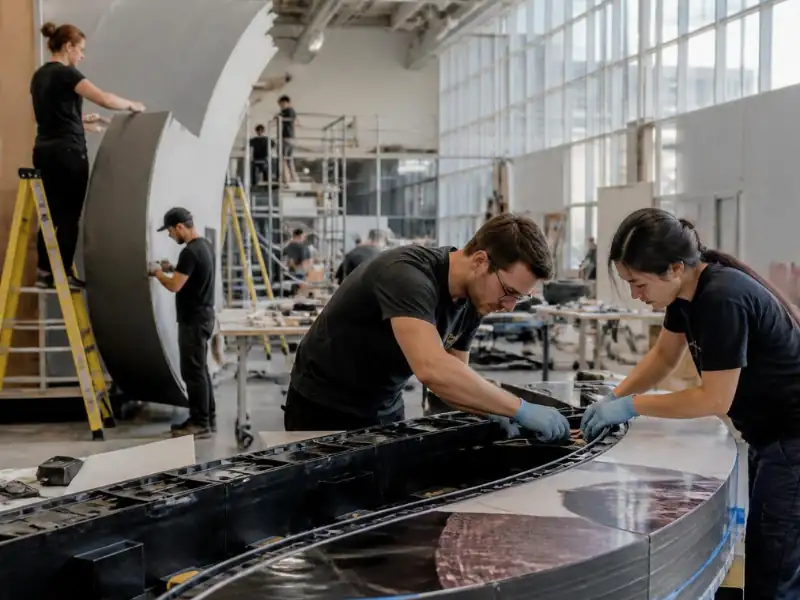
This is where how booths are made becomes physically visible: carpenters, metalworkers, and technicians build the structural frame, walls, counters, and any custom architectural elements in a dedicated fabrication shop. Components are typically built in sections that will later be assembled on the show floor, with careful attention to how each piece packs down for shipping and reassembles cleanly at the venue.
Step 4: Graphics Production
Graphics are printed, laminated, and then installed on the structure. Graphics play a very important role – high resolution and color matching are very important since attendees will notice graphics first, and graphics are what makes a booth good or bad.
Step 5: Finishing and Integration
Painting, laminating, lighting integration, and detailing bring the exhibit to its final look, and technology, like monitors, LED, and interactive elements, is integrated and tested. For a larger footprint, this is where an island like our 20×20 trade show booth rentals gains the polish that makes it feel custom and complete.
Step 6: The Test Build
This is the step most often shortened under time pressure, and the one that matters most. A genuine fabrication process trade show partner performs a full pre-build in the shop: assembling the entire exhibit exactly as it will appear on the show floor, checking every connection, verifying lighting and AV function, and confirming graphics align correctly across panels. Any fit or finish issues get caught and corrected here, not during a compressed install window at the venue.
Step 7: Packing and Crating
Finally, components are protected in custom crates engineered for safe transport and easy reassembly. Smart crating reduces damage and speeds installation. For shows in our market, our Las Vegas trade show booth rentals team then handles delivery, drayage coordination, and on-site build.
Exhibit Fabrication Stages
| Stage | What Happens | Why It Matters |
|---|---|---|
| Design & engineering | Production drawings and 3D | Ensures the design is buildable |
| Material sourcing | Select and order materials | Controls weight, cost, durability |
| Structural build | Frame, walls, counters | The bones of the exhibit |
| Graphics | Print and mount graphics | First thing attendees notice |
| Finishing | Paint, lighting, technology | The premium, custom look |
| Test build | Full in-shop assembly | No surprises on move-in |
| Crating | Custom protective packing | Protects and speeds install |
Get a Custom Fabrication Timeline and Quote at purexhibits.com
What Fabrication Means for Your Budget and Timeline
Custom fabrication typically takes 6–12 weeks and rewards planning. If a full custom build is more than you need, a fabricated rental delivers a custom look for less. Our trade show booth rental benefits explain why renting a fabricated exhibit fits most programs.
Realistic Timelines by Booth Complexity
| Booth type | Total fabrication timeline |
|---|---|
| Basic 10×10 (modular/rental-grade) | 3–5 weeks |
| Standard 10×20 custom | 6–8 weeks |
| 20×20 island, moderate complexity | 8–12 weeks |
| Large custom island with tech integration | 10–14 weeks |
These ranges start from design approval, not from your first conversation with a fabricator, which typically adds several more weeks of design and revision time before fabrication even begins.
Fabrication vs. Modular: Choosing Your Build
Not all exhibitions need to be completely fabricated. This depends upon your needs, budget, and frequency of changes in your booths. A fully fabricated exhibit provides a unique and impactful exhibit design and is great for flagship programs. Modular systems provide quick assembly with ease of use from one show to another as well as from one size to another. Hybrid designs combine both types to provide an outstanding exhibition design.
The format you choose shapes cost, timeline, and reusability, so it is worth understanding your options before committing. Our trade show display rental guide compares display systems side by side, from portable and modular to fully fabricated custom builds.
-
Choose full fabrication for a flagship, one-of-a-kind presence
-
Choose modular for speed, flexibility, and easy reconfiguration
-
Choose a hybrid to balance uniqueness with practicality
-
Match the build to how often your booth size and design change
Regardless of the route you choose, the basic principles of excellent construction remain: proper engineering, complete test-build, and quality materials. They guarantee that your exhibit will look perfect not only once but every time.
Request a Free Exhibit Fabrication Consultation at purexhibits.com
What Can Delay the Custom Booth Build Process
-
Late design changes. Revisions made after engineering drawings are finalized often require reworking construction specs, adding real time back into the schedule.
-
Specialty material lead times. Custom finishes, unique hardware, or specific lighting components can take longer to source than standard materials.
-
Skipped or rushed pre-build. Compressing quality control to meet a deadline increases the risk of discovering a fit issue during actual show-floor installation instead of in the shop.
-
Graphics revisions late in production. Color or content changes after printing has started can push the whole schedule back by days or weeks.
Questions to Ask About a Fabricator’s Process
Before committing to a partner for your exhibit fabrication process, ask:
-
Is fabrication handled in-house, or outsourced to a separate shop?
-
Does their process include a full pre-build and quality-control check before shipping, rather than just a partial review?
-
What’s their realistic timeline for your specific booth size and complexity, stage by stage?
-
How do they handle late design change requests without blowing the schedule?
-
Can they show completed exhibits comparable in scale to what you’re planning, not just renderings?
Booth Fabrication Guide: Conclusion
Understanding the real exhibit fabrication process, not just a one-paragraph summary, but the actual stage-by-stage timeline and where things typically go wrong, gives you a much clearer picture of what to expect and how to evaluate a potential fabrication partner. The exhibits that show up flawlessly on the floor aren’t lucky; they’re the ones that underwent rigorous engineering, careful material sourcing, and a full pre-build quality check before they ever left the shop.
Pure Exhibits manages the full exhibit fabrication process in-house, with a complete pre-build check before every exhibit ships. Talk to us about your next custom booth build process.
Let’s Build Something Extraordinary
Share your event details and we’ll craft a custom booth solution designed to captivate your audience and maximize your ROI.
Booth Fabrication Guide: Frequently Asked Questions
What is the exhibit fabrication process?
It is the sequence that turns a design into a finished booth: design and engineering, material sourcing, structural build, graphics, finishing, a test build, and crating for transport.
How long does the fabrication process take?
Most custom exhibits take 6–12 weeks from approved design to finished, crated booth, depending on size and complexity.
What is the first step in fabricating a booth?
Design and engineering: turning the approved concept into detailed production drawings and 3D renderings with exact dimensions and materials.
What materials are used to build exhibits?
Common materials include aluminum extrusion, wood and MDF, acrylic, tension fabric, steel for hanging structures, and LED lighting and electronics.
What is a test build and why does it matter?
A test build is the full in-shop assembly of the exhibit before shipping, done to verify fit, finish, and function so there are no surprises on move-in.
How are graphics produced in fabrication?
Large-format graphics are printed, laminated, and mounted or tensioned onto the structure, with high-resolution imagery and precise color matching.
Can fabrication be done on a tight timeline?
Yes, rush fabrication is possible at added cost, and a fabricated rental can shortcut sourcing and shipping. Our last-minute trade show booth rentals can compress the build timeline when a deadline is tight.
Why is crating important?
Custom crates protect components in transit and are engineered for easy reassembly, reducing damage and speeding installation on-site.
How much does custom fabrication cost?
Costs vary widely with size and complexity, from tens of thousands for a mid-size booth to six figures for large islands with millwork and technology.
Is fabrication only for purchased booths?
No. Rental exhibits are fabricated too. Renting a fabricated booth delivers a custom look without the cost of owning and storing it.
How does fabrication affect shipping costs?
Material and structural choices affect weight, and lighter fabrication reduces drayage, which is billed by weight at most shows.
What is the difference between fabrication and modular systems?
Fabrication builds a bespoke exhibit from raw materials, while modular systems assemble reconfigurable components. Many booths are hybrids of both.
How do I know if a fabricator is good?
Review their shop and portfolio, confirm they perform a full test build, ask about materials and reusability, and require itemized pricing. 10×20 trade show booth rentals offer a faster, lower-cost path than full custom fabrication.
Can a fabricated booth be reused?
Yes. Well-fabricated exhibits are engineered for multiple shows, with reconfigurable and refreshable elements to extend their life.
Who fabricates custom trade show booths?
Pure Exhibits designs and fabricates custom exhibits and fabricated rentals with in-house build, graphics, and installation.