
Ambient.ai · ISC West 2026
A hall full of hardware — and a company whose entire pitch is that you already own enough of it.
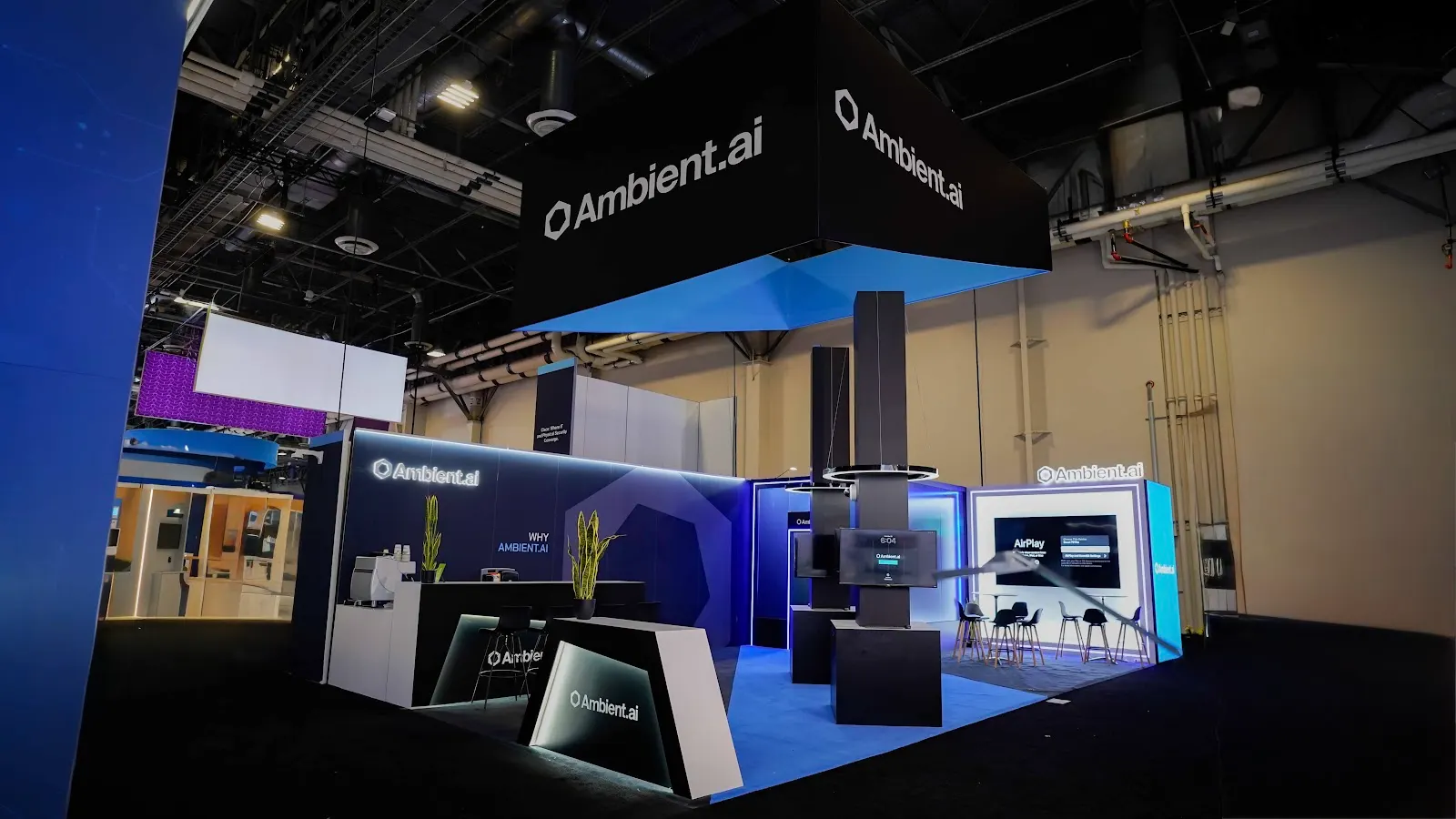
ISC West is 700-plus exhibitors with cameras, locks, turnstiles and drones on tables. Ambient.ai sells software that runs on the cameras a customer already has, so putting a product on a table would have argued against its own case. Pure Exhibits built a 20 × 40 island at The Venetian Expo shaped like the room the buyer already works in: a security operations centre, dark and screen-led.
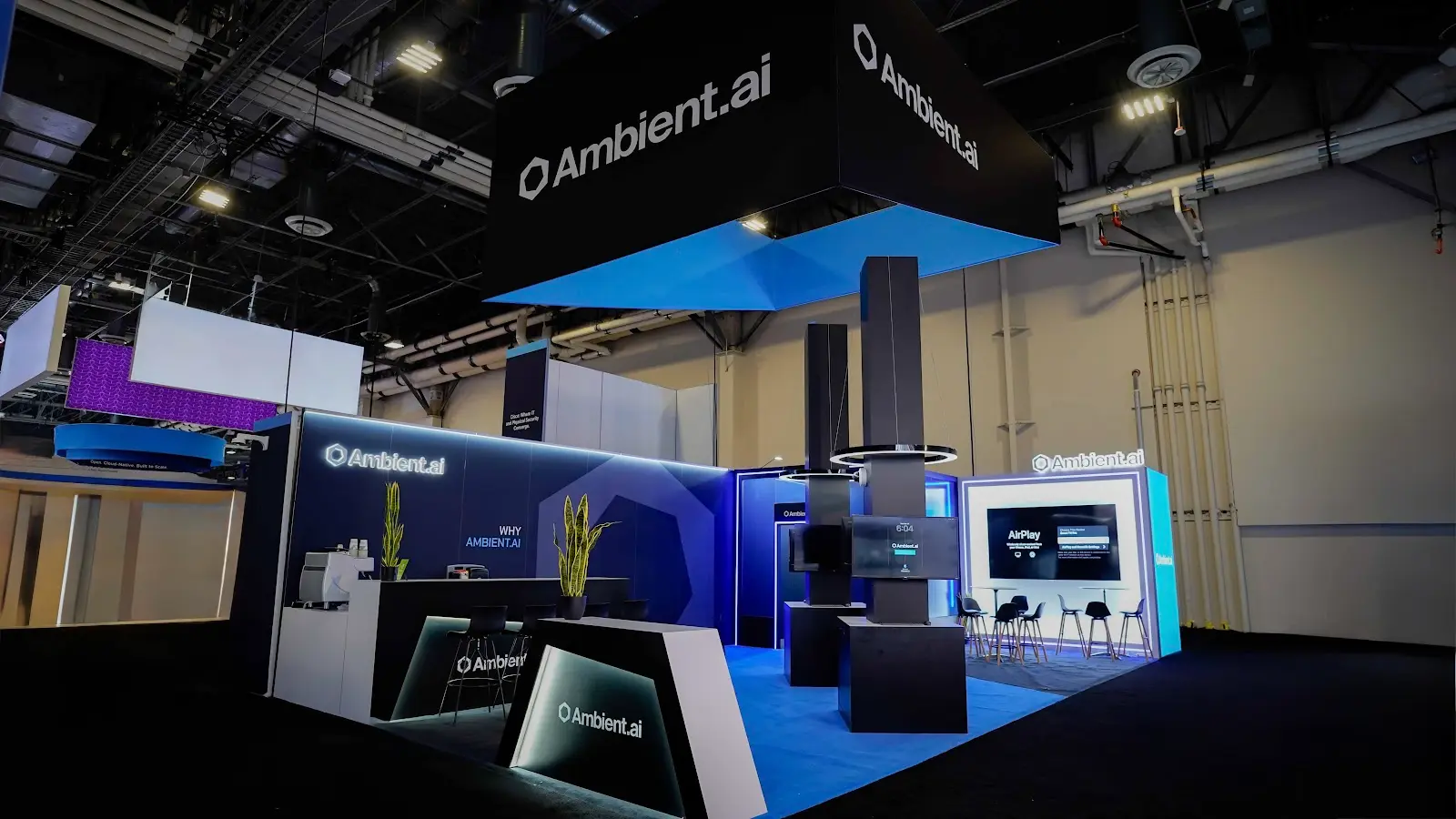
Selling software on a floor built out of hardware
ISC West is an unusually physical trade show. More than seven hundred exhibitors fill The Venetian Expo with things you can pick up and turn over — cameras, readers, locks, turnstiles, drones, robots — and the standard booth grammar follows directly from that: a table, a product on it, someone beside it explaining the spec sheet. Ambient.ai has nothing that fits on that table. It sells computer vision intelligence that layers onto the cameras, video management systems and access control a customer already owns, with no rip-and-replace. Setting a camera on a plinth would have quietly undercut the pitch.
There is a second, subtler problem. Ambient.ai’s differentiator in a hall full of surveillance vendors is what it refuses to do: no facial recognition, no personally identifiable information stored. That is a claim about restraint, made in a room where most of the marketing is about seeing more. A booth that shouted would have contradicted it just as surely as a camera on a table would. Pure Exhibits built the exhibit around a single reframe — stop showing the product, and build the environment the product runs inside.
“No facial recognition. No PII stored.”Ambient.ai — Privacy by Design
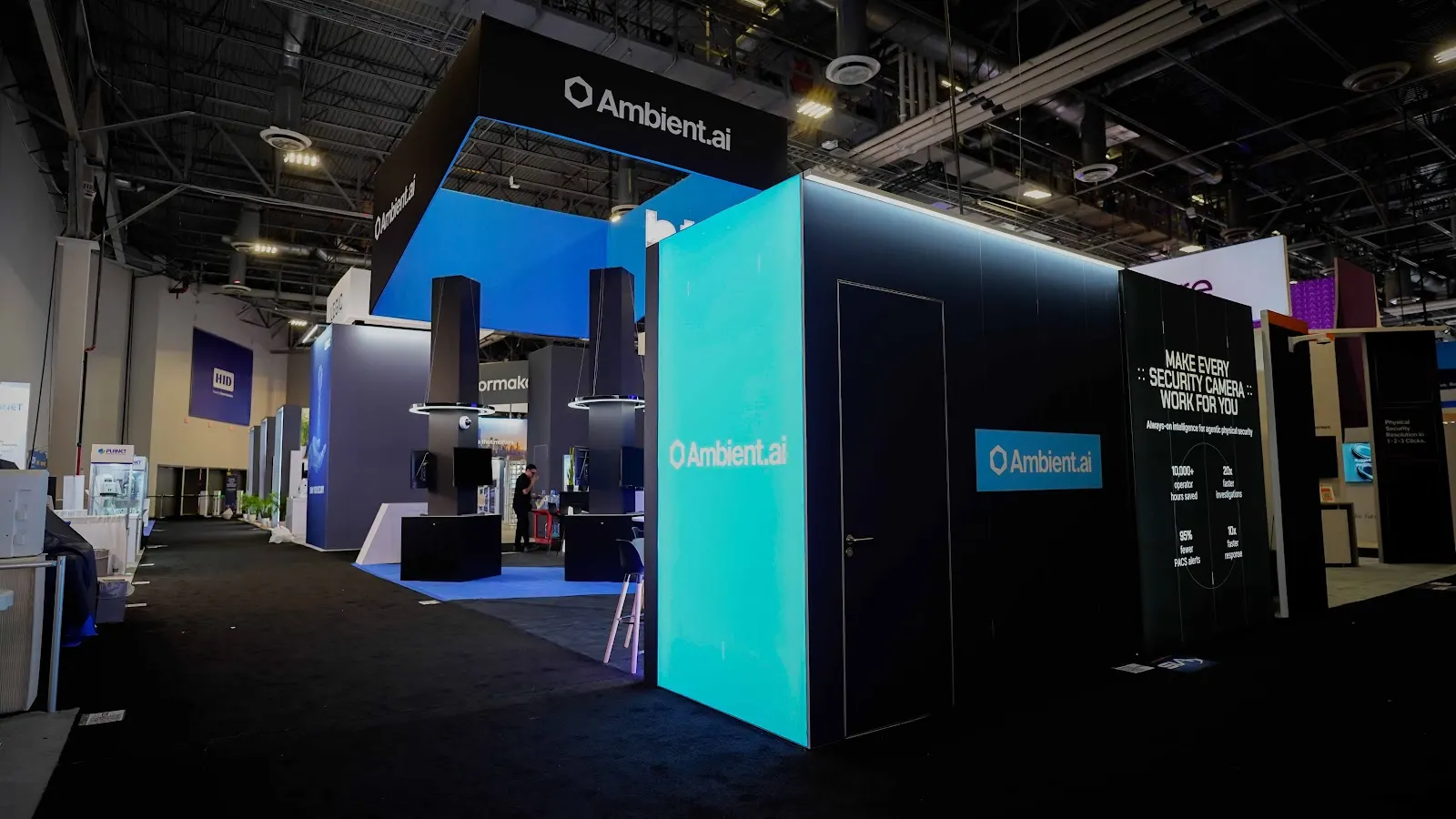
Building an operations centre instead of a product table
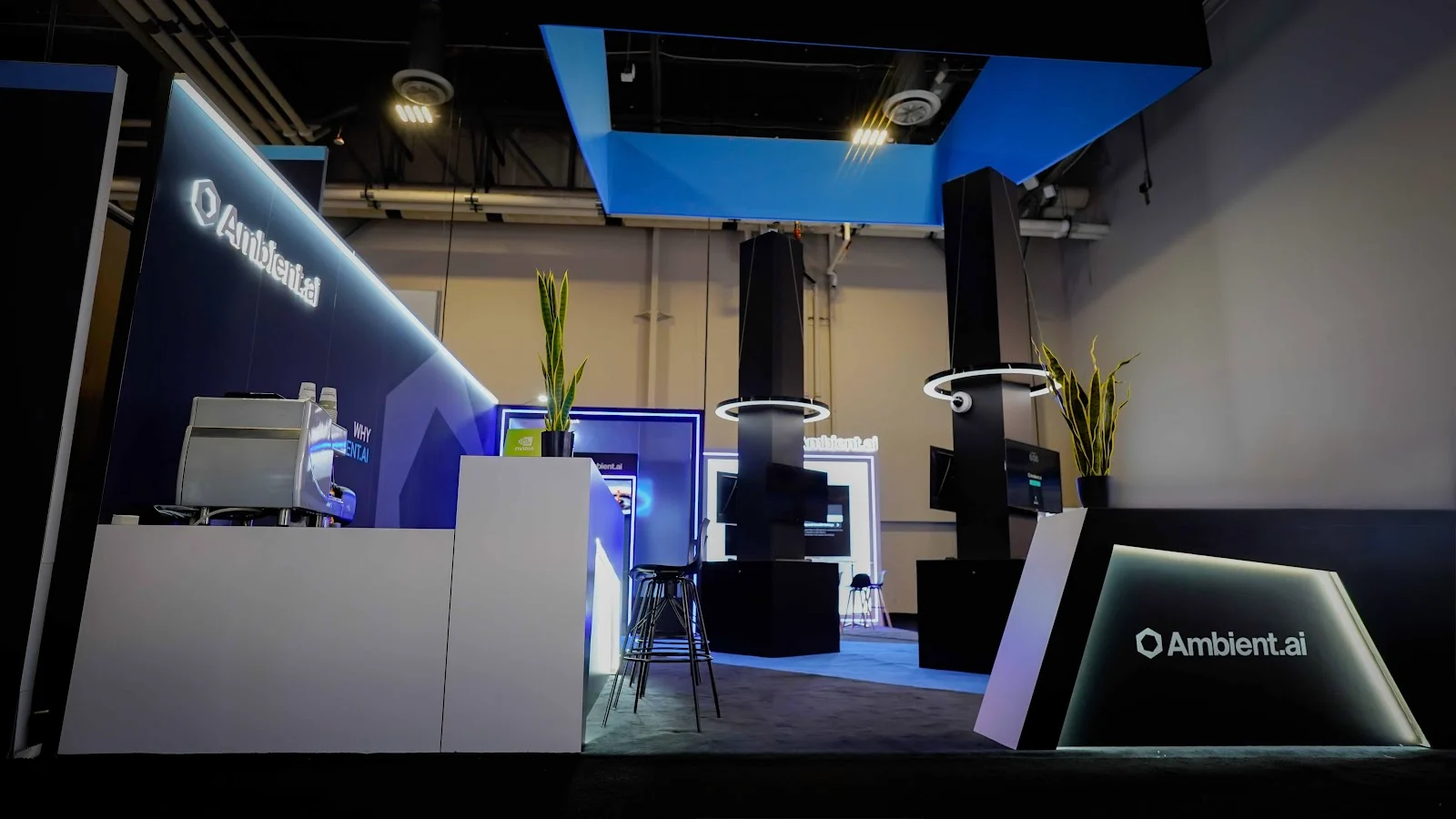
The Booth as a SOC
The organising idea was to make the exhibit resemble a security operations centre rather than a showroom — the actual room where Ambient.ai’s software is used all day, and the room its buyer sits in. That recognition does work no graphic can. A SOC manager walking the aisle does not have to be told what the company does or where it fits; they recognise their own working environment from ten feet away and arrive already understanding the category. It is a shortcut through the most expensive part of any trade show conversation.
Nothing on the Table, on Purpose
The absence is the argument. Every neighbouring booth had hardware to hand over, and the temptation to match that — a camera, an edge appliance, something to hold — is strong, because empty surfaces feel risky. Resisting it kept the proposition intact: a company whose value is that you do not need to buy more equipment should not be handing you equipment. The exhibit had to be interesting without a prop, which is a harder brief and a clearer one.
Going Dark in a Bright Hall
Convention centre lighting is relentless and most exhibitors add more of it. Building in black and deep blue does two things at once: it makes screens legible instead of washed out, which matters when the screens are the entire product, and it creates a pocket of visual quiet that the eye lands on precisely because everything around it is bright. The risk is looking closed; the mitigation is keeping the perimeter open and letting the light come from the displays.
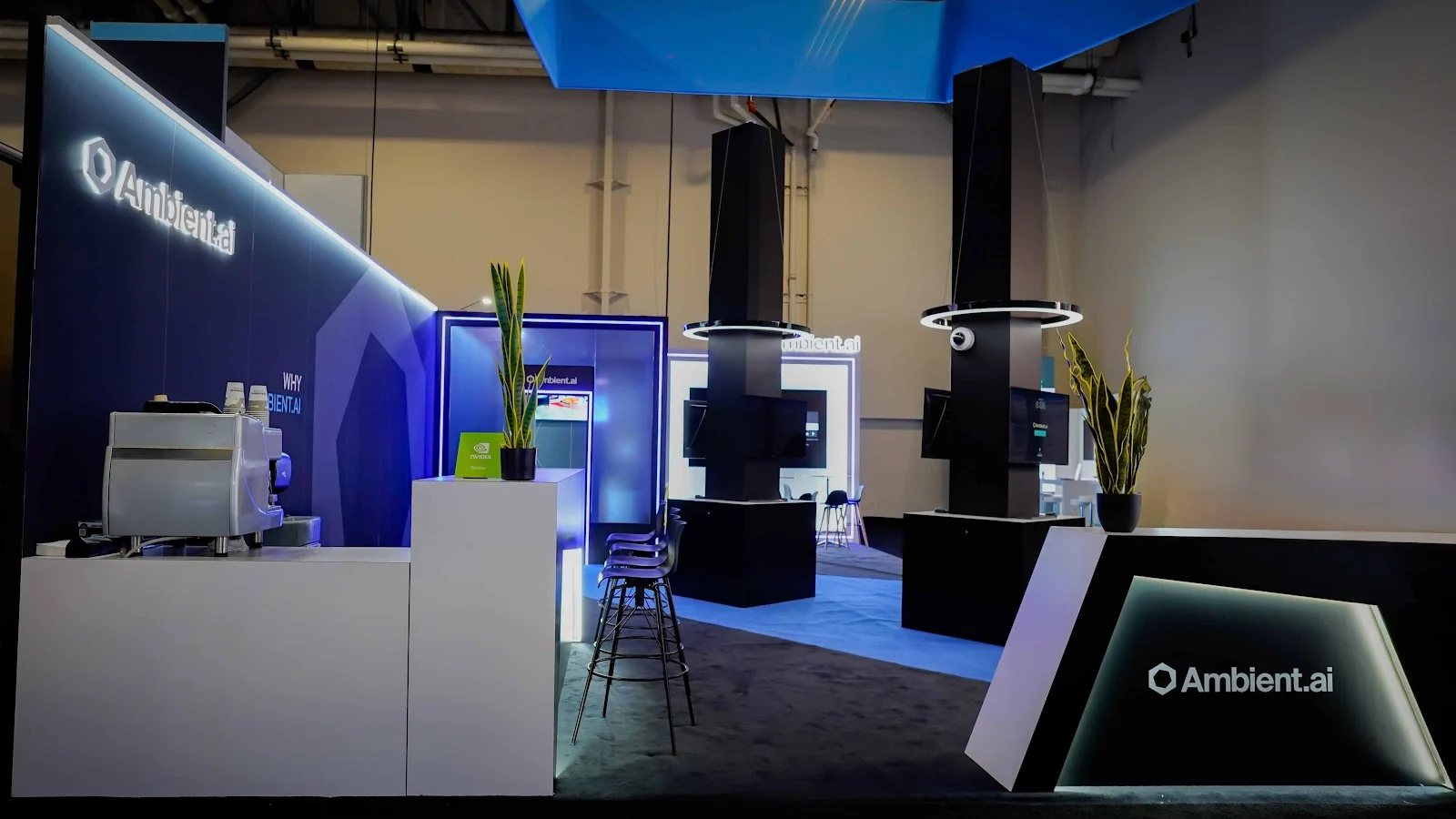
The Screens Are the Product
When software is the entire offering, screen placement stops being decoration and becomes the floor plan. Displays were positioned to be readable from the aisle at walking pace rather than only from inside the footprint, on the reasonable assumption that most people will never step in. That changes what belongs on them: fewer words, larger type, and a visual that communicates category and capability in the two or three seconds a passer-by actually gives it.
Eight Hundred Square Feet Is a Statement
A 20 × 40 is a substantial commitment at ISC West, and in a hall where floor size is read as a proxy for company size, taking one is itself a signal — particularly for a software business among established hardware manufacturers with decades of trading history. The footprint had to justify itself through use rather than scale alone, which meant resisting the urge to fill it and instead giving the demonstration areas enough room to gather a small group without blocking the aisle.
The Quiet Argument
Restraint had to be visible, not just stated. A composed, dark, uncluttered exhibit is a physical expression of a company that processes everything and keeps nothing personal — and it reads very differently from the surrounding stands competing on how much they can detect. For a security buyer increasingly asked to justify privacy posture to legal and to their own employees, a booth that behaves calmly is doing quiet argumentative work the whole time it is open.
Experience the booth
A walkthrough of the Ambient.ai 20 × 40 island at ISC West 2026 — through the open perimeter and into the dark, screen-led interior that gave the exhibit its operations-centre character.
The build at a glance
Looking like the room your buyer already works in
Category confusion is the expensive problem at a show like ISC West. A visitor has three days, seven hundred stands and a limited attention budget, and the first judgement they make about any booth is which shelf the company belongs on. Software companies surrounded by hardware companies get mis-shelved constantly, and the cost is not a lost sale so much as a lost second of consideration — the moment where someone decides this is another camera vendor and keeps walking. Building the exhibit to resemble an operations centre answered that question before it was asked, using recognition rather than explanation.
The show itself made the timing useful. ISC West 2026 leaned harder into emerging technology than previous editions, adding an ISC Startups cluster of around twenty-five first-time exhibitors and debuting a Security Experience Center, which meant a floor more receptive than usual to companies arguing that the future of physical security is software rather than equipment. For a related problem — a services firm at a platform conference with nothing to demonstrate — see the case study on Genpact at Google Cloud Next 2026, which reached the opposite conclusion and spent its floor space on enclosed meeting rooms.
Explore our security portfolio
A 20 × 30 island with a large overhead hanging sign, engineered for maximum floor-level visibility in a crowded security market.
View Case Study → RSA 2026 RadwareA 20 × 20 island balancing enterprise security authority with a striking, differentiated visual presence.
View Case Study → RSA 2025 TeramindA 30 × 60 Diamond Sponsor island — one of the largest custom installations at the conference.
View Case Study → Google Cloud Next 2026 GenpactThe same problem — nothing to demo — answered the opposite way, with enclosed private meeting rooms inside a 20 × 20.
View Case Study →When there’s nothing to put on the table
Software companies at hardware shows have the hardest exhibit brief there is: no prop, no plinth, and a category that has to be understood before a conversation can start. Pure Exhibits designs and fabricates custom booths from 10 × 10 inlines to 30 × 60 islands for security, AI and enterprise technology brands at ISC West, RSA, Google Cloud Next and beyond — with fixed, transparent pricing and a floor plan built around how your buyer actually decides.