
No matter what type of exhibit you have, there will come a time when it reaches the end of its life – it is out of date, damaged, out of brand due to a rebrand, or just taking up valuable storage space. So the question arises: what exactly do you do with that custom-built booth you no longer want?
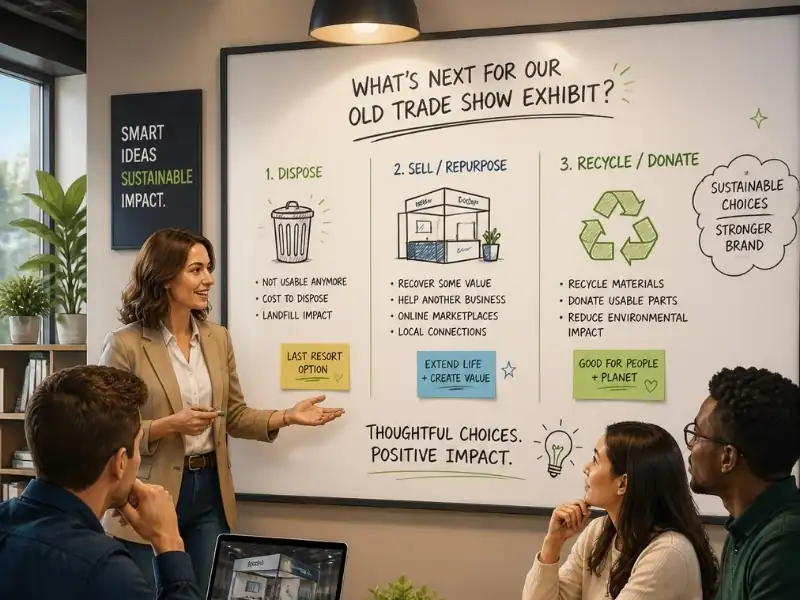
To get rid of a trade show exhibit, you generally have five paths: refurbish and reuse components, donate it for a tax write-off, sell it through a resale marketplace, recycle individual materials, or pay for disposal through your exhibit management company or the venue directly. Selling recoups the most value but takes the longest; disposal is fastest but costs money instead of recovering it. The right choice depends on your exhibit’s condition and how much time you have before you need the storage space or a tax-year deadline. Here is a guide to disposing of your old tradeshow exhibit.
Related: Trade Show Installation and Dismantle: The Complete I&D Guide
Why Getting Rid of a Booth is Harder Than It Sounds
-
A custom exhibit is big, bulky, heavy, and brand-specific, which makes it difficult to discard.
-
It cannot simply be thrown away into a dumpster because much of it is recyclable material and not supposed to go to the landfill.
-
It may also incur some cost in discarding the crates and other structures. Knowledge of your options will help you pick the best way forward.
Get Rid of a Trade Show Exhibit: Your Options
-
Sell it: used-booth marketplaces and brokers buy resalable exhibits
-
Donate it: schools, nonprofits, and startups can use structures and furniture
-
Recycle it: aluminum, steel, and some substrates are recyclable
-
Repurpose it: reuse components for showrooms, offices, or smaller booths
-
Refurbish and keep: sometimes an update beats disposal
-
Have your exhibit house handle removal and recycling responsibly
Before scrapping, ask whether a refresh is smarter. Modular 10×10 booth rentals can often be reconfigured into a smaller, current booth instead of being thrown away.
Sell Used Trade Show Booth: Marketplaces and Realistic Value
Selling recovers the most value of any disposal method, but it takes time and requires realistic expectations. To sell used trade show booth inventory:
-
List on dedicated marketplaces: UsedBooths, SWXStore, and ExhibitTrader specialize specifically in secondhand exhibit sales, reaching buyers who already know what they’re looking at.
-
General marketplaces like eBay or Craigslist can work for smaller components or simpler structures.
-
Advertise at your last show. A “trade show booth resale” sign during pre-show setup or post-show teardown reaches exhibitors actively thinking about exhibit needs.
Realistic value expectations: The used exhibits are always sold at much lower value than their original price because of their condition, lack of branding on account of its specificity (this restricts the range of buyers to some extent), and the relevance of the exhibit design. Always have your drawings available before putting it on sale.
Rethinking an Owned Booth? Explore Rental Instead at purexhibits.com
Donate for a Tax Deduction
Donating is often the best option when an exhibit still has real usable life but doesn’t fit your brand anymore. Schools, nonprofits, and startups are common recipients, sectors where a usable structure and updated graphics can offset a real budget gap. Two practical notes:
-
Put transport and modification costs in writing. The recipient will likely need to alter branding and may need help moving the structure; a simple agreement upfront avoids confusion later.
-
Get a receipt for tax purposes. A charitable donation of business property may be deductible; confirm the specifics with your accountant, since this depends on your entity type and the exhibit’s assessed value.
Recycle Exhibit Materials
When a structure is too worn for reuse or resale, you can still recycle exhibit materials rather than sending everything to a landfill:
-
Aluminum framing is highly recyclable and often has real scrap value.
-
Fabric graphics, particularly polyester dye-sublimation prints common in the industry, are increasingly accepted by specialty textile recyclers.
-
Laminate and wood components are harder to recycle, but some facilities accept them separately from general waste.
Ask your exhibit management company whether they have an established recycling process; some can separate and route materials appropriately rather than treating a retired exhibit as a single disposal job.
Option Best When Note
| Option | Best When | Note |
|---|---|---|
| Sell | Booth is current and resalable | Modular sells easier than custom |
| Donate | Structure has reuse value | Good for tax and goodwill |
| Recycle | Booth is worn or dated | Aluminum and steel recycle well |
| Repurpose | You can reuse components | Showrooms, offices, smaller booths |
Read Also: The Ultimate Trade Show Checklist for First-Time Exhibitors
Old Booth Disposal Through a Vendor or Venue
When nothing is salvageable, old booth disposal typically runs through one of two channels:
-
Venue disposal. Some venues will collect and dispose of an exhibit directly after a show, avoiding the cost of shipping a structure home you never intend to use again. Compare the venue’s disposal fee against return shipping cost before choosing this route; it isn’t always the cheaper option.
-
Exhibit management company disposal. If a vendor is already storing your exhibit, they can typically dismantle and dispose of it directly, handling appropriate material separation. Cost varies by location and local recycling/landfill regulations.
-
Buy-back option. If you purchased the exhibit from a design/build company, ask whether they offer a buy-back or trade-in credit toward your next project; many don’t pay cash, but a build-cost discount is common.
The Better Long-Term Answer
-
An old booth disposal is an ever-present problem associated with ownership because all items that are owned will become waste at some point.
-
The renting approach avoids this issue, adding to the reasons why firms are switching to renting.
-
Our renting vs buying a trade show booth weighs the full lifecycle cost, including end-of-life disposal, of owning versus renting.
Getting Help
-
Whatever route you choose, an experienced exhibit house can help you sell, repurpose, or responsibly recycle an old booth, and design its replacement.
-
See the range of what a professional shop builds and refreshes in Las Vegas trade show booth rentals, and for shows in our market, our trade show booth rental benefits team can advise on the smartest next step.
Final Thoughts
Deciding how to get rid of a trade show exhibit doesn’t have to mean a dumpster is the only option. A structurally sound exhibit can often be refurbished and reused, a well-maintained one can be sold or donated, and even a fully retired structure can have its materials recycled rather than landfilled. Match the option to your exhibit’s actual condition and your timeline, and you’ll either recover some value or at least avoid unnecessary waste and disposal costs.
Pure Exhibits builds rental exhibits designed for reuse and refresh from the start, and helps clients plan responsibly for end-of-life, storage, resale, or recycling, as part of the original project. Get in touch with Pure Exhibits about your next exhibit, built to last longer than the one you’re retiring.
Let’s Build Something Extraordinary
Share your event details and we’ll craft a custom booth solution designed to captivate your audience and maximize your ROI.
Get Rid of a Trade Show Exhibit: Frequently Asked Questions
How do I get rid of an old trade show exhibit?
Options include selling it, donating it, recycling it, repurposing components, refurbishing it, or having your exhibit house remove and recycle it responsibly.
Can I sell a used trade show booth?
Yes. Used-booth brokers and marketplaces buy resalable exhibits, though modular systems sell more easily than heavily branded custom booths.
How much can I get for a used booth?
Typically only a fraction of the original cost, depending on condition, how custom it is, and demand. Factor in listing and shipping effort.
Can a trade show booth be recycled?
Yes. Aluminum framing and steel are highly recyclable, and many substrates and electronics can be diverted from landfill through proper channels.
Should I donate my old exhibit?
Donating structures and furniture to schools, nonprofits, or startups is a good option when the booth has reuse value, and it can offer goodwill benefits.
Can I repurpose an old booth?
Yes. Components can be reused for showrooms, offices, or reconfigured into a smaller booth rather than discarded.
Is it better to refurbish than dispose?
Often, yes. If the structure is sound, refurbishing graphics and components is cheaper and greener than scrapping and rebuilding. Our rush booth rental options mean you never own a booth to dispose of.
How do I dispose of a booth responsibly?
Route recyclable materials to recycling, donate reusable pieces, and use an exhibit house that dismantles and recycles rather than landfilling.
Why is disposing of a custom booth hard?
Custom exhibits are bulky, heavy, and brand-specific, which limits resale and makes disposal costly compared to modular systems.
Does renting avoid disposal issues?
Yes. With rentals, you retire or change a booth by ending the rental; there is nothing to store, sell, or scrap.
What parts of a booth are recyclable?
Aluminum extrusion, steel, some rigid substrates, and certain electronics can be recycled through appropriate facilities.
Can my exhibit house remove an old booth?
Many exhibit houses will dismantle, recycle, or repurpose an old exhibit, often as part of designing its replacement.
Is selling or recycling better?
Sell if the booth is current and resalable to recover value; recycle if it is worn or dated and cannot be reused. 20×20 trade show booth rentals let you change your look without scrapping anything.
How does disposal affect the rent vs. buy decision?
End-of-life disposal is a hidden cost of ownership. Renting eliminates it, improving the lifecycle economics of not owning.
Who can help me retire and replace an exhibit?
Pure Exhibits helps clients sell, repurpose, or responsibly recycle old exhibits and design their replacements.