
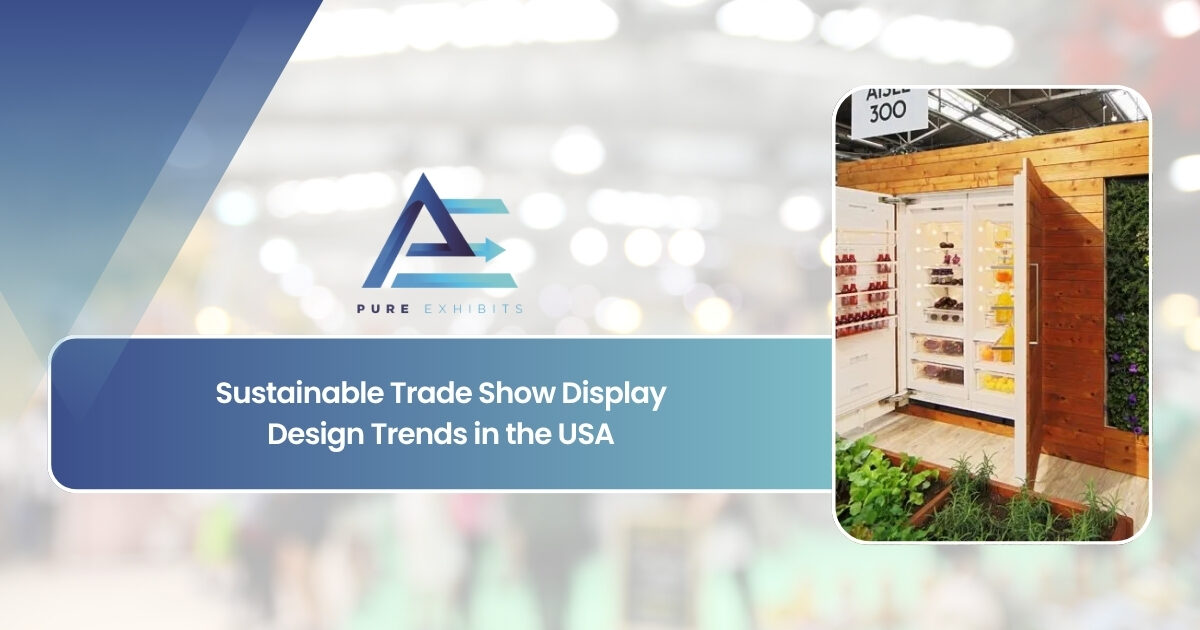
According to an estimate by TSNN, the exhibition industry contributes up to 600,000 tons of waste annually in the U.S. alone. Sustainability has become an increasingly important consideration for exhibitors, event organizers, and procurement teams. This has increased the demand for eco-friendly trade show display design.
This guide discusses all new sustainable trade show booth design trends that are changing the booths’ structure all over the USA today. We have covered tips for exhibitors, whether they construct booths themselves, rent them from a trade show booth rental in the USA, or operate several shows per year in Las Vegas and other venues.
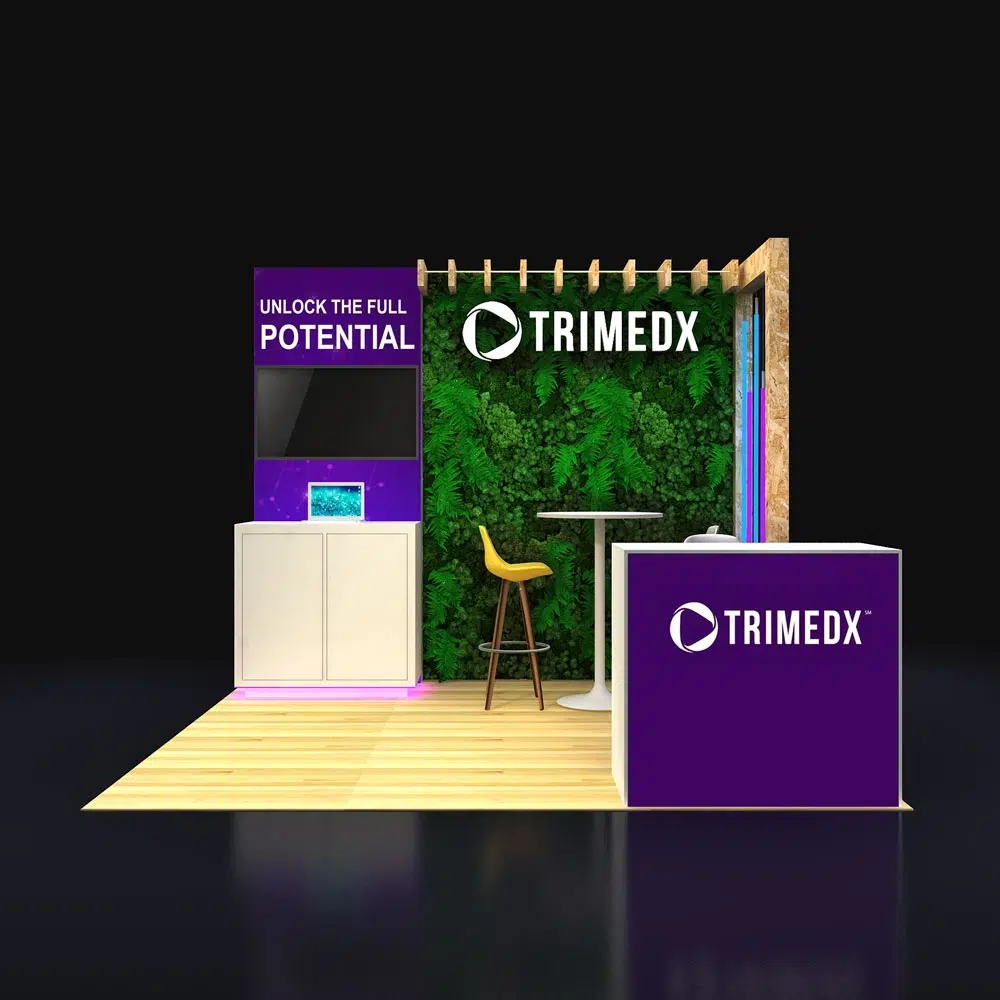
Trend 1: Modular Systems That Build Once and Serve Many Shows
The most consequential sustainable trend in U.S. trade show booth design is not a material choice. It is a structural philosophy: build a system, not a one-time object.
Modular designs offer a 40–60% lower total cost of ownership over five years compared to fixed custom builds. The logic is straightforward. A single-use booth is built, shipped, installed, dismantled, and disposed of. A modular system is built once, configured differently for each show, updated with new graphics when messaging changes, and reused until the hardware reaches the end of life, at which point aluminum frames are recycled rather than landfilled.
This is one of the most common trends trade show booth rentals are adopting.
Trend 2: Aluminum Frames Replace Wood-Heavy Construction
Aluminum is becoming a more desirable option because of its longevity, weight, and the fact that it can be recycled. Wood-based structures may only be used once before being thrown away. Contrarily, aluminum frame structures can be utilized for years through various trade shows, and even reconfigured when needed.
The change is not only environmentally beneficial but operationally also. Aluminum frames are lighter than wood core structures and hence help cut down on drayage charges, which are one of the highest and underrated expenses incurred at the Las Vegas Convention Center ($150-$350 per hundred weight).
A 10×20-foot aluminum-framed exhibit booth is usually 40-60% lighter than the same size in wood core.
Many Las Vegas trade show booth builders are moving towards this trend in the USA.
Trend 3: Fabric Graphics Over Rigid Single-Use Panels
Fabric graphics are very light in weight and convenient to carry. Fabric printing offers an option to use lighter materials rather than heavy and solid boards, thus reducing costs and minimizing waste.
Fabric panels printed via dye-sublimation:
-
Are machine washable, extending useful life across multiple shows
-
Produce no visible seams across large display surfaces
-
Can be reprinted individually when messaging changes, without replacing the entire frame system
-
Are recyclable through textile recycling programs at the end of life
The graphic replacement model also changes the sustainability math of a booth. When a product launches or a rebrand occurs, only the printed panels need to change. The aluminum frame system, which is the majority of the exhibit’s embodied materials, stays in circulation. This is a direct reduction in the manufacturing demand that creates trade show waste in the first place.
Planning Your Next Trade Show Booth?
See how our modular exhibit solutions can reduce costs, waste, and logistics headaches.
Trend 4: LED Lighting as a Standard, Not an Upgrade
The use of LED lighting no longer incurs an additional cost when it comes to creating sustainable booths. LED lights are among the chosen options when it comes to trade show display design trends for USA 2026 shows, as they use less power and last longer while providing a sleek look.
It is clear why LEDs offer higher sustainability compared to halogen or fluorescent lights. This is because the former uses 75-80% less energy than the latter for equivalent output. Moreover, this can last for tens of thousands of hours instead of hundreds. It is particularly true for exhibitors who need to order power from the GSCs at the convention centers, whose prices are based on amperage.
Trend 5: Rental as the Default Sustainable Model for Multi-Show Exhibitors
For exhibitors who attend fewer than four shows per year, or whose booth size varies across their show calendar, renting is not just financially efficient; it is the most materially efficient option available.
When you rent from full-service Las Vegas trade show booth builders, the hardware serves multiple exhibitors across its service life. The manufacturing demand per exhibitor is distributed across every rental. This is the structural logic of a circular economy applied to trade show exhibits: assets in continuous reuse, graphics reprinted per client, frames reconfigured per show.
The most effective sustainable booths in 2026 use rental or modular systems that demonstrate reuse across multiple events. Forward-thinking exhibitors are now communicating this choice explicitly at the booth, signage, or digital kiosk content that notes “this exhibit structure is reused across multiple events” as a direct sustainability signal to attendees.

Trend 6: Digital-First Content Replaces Printed Collateral
Printed banners and brochures often end up in landfills after events. Digital signage and interactive kiosks are eco-friendly substitutes. They are easy to update and bring an engaging dynamic to your booth.
The single largest volume of post-show waste from most exhibitors is not the booth structure; it is the printed collateral that nobody took. Stacks of brochures, spec sheets, and product guides that were produced for one show and landfilled after it.
The sustainable replacement is a combination of:
-
Monitor-integrated displays showing product video, use case content, and brand narrative
-
QR codes linking to digital asset libraries that attendees access on their own devices
-
Interactive touchscreen kiosks replacing printed catalogues with searchable, updatable digital product libraries
-
NFC-enabled lead capture replacing business card collection with instant CRM entry
It not only helps reduce wastage, but it also eliminates the expense involved in reprinting materials due to changing specifications and the difficulty associated with managing how much collateral to stock in the booth, both of which will be part of the 2026 trade show display design trends.
Layouts using minimalism that allow for 30%-40% more floor space than conventional booths make for attractive environments that ensure natural traffic movement. With the elimination of printed collateral in favor of digital material, there will also be less clutter in the booths.
Trend 7: Quantified Sustainability — Making Green Choices Visible
Progressive companies measure their sustainability efforts through metrics presented at the booth, such as how many pounds of material have been reclaimed, how many tons of carbon emissions have been offset due to shipping methods, or what percent of the booth was built using recycled materials.
It is this very trend that defines sustainability practices from mere greenwashing practices. Every company could put a recycling emblem on its booth. Fewer can actually display the figure – “this booth has been used in 14 previous events” or “Our aluminum structures help save up to 240 lbs of landfill waste over similar wood construction.”
Trade show booth rentals in the USA that work with modular systems already have this data. Pure Exhibits tracks the lifecycle of every rental unit in our inventory. How many shows it has served, how many clients have used each frame system, how many replacement graphic reprints have been produced vs. full hardware replacements. These numbers are available to clients who want to communicate their sustainable exhibit choices to show floor visitors.
Not Sure Whether to Rent or Buy Your Next Booth?
Our exhibit specialists can help you compare costs, sustainability benefits, and long-term ROI based on your trade show schedule and exhibit goals.
What Las Vegas Exhibitors Should Know Specifically
Las Vegas is not just the highest-volume U.S. trade show market; it is one of the most logistically demanding. Sustainable trade show display design choices that reduce weight, simplify crating, and allow local storage have compounded financial benefits in this specific market:
Drayage: Every pound you remove from your exhibit crates reduces drayage fees at LVCC, Venetian Expo, and Mandalay Bay. Aluminum-frame modular systems and fabric graphics weigh less than wood-and-rigid-panel equivalents. This is directly measurable on your GSC invoice.
Local storage: An exhibit stored with Las Vegas trade show booth builders like Pure Exhibits between shows eliminates round-trip freight shipping emissions. The exhibit does not cross the country; it moves 20 minutes from our facility to the advanced warehouse.
Show frequency: Las Vegas hosts more major trade shows per year than any other U.S. city. CES, NAB, SEMA, SHOT Show, G2E, and dozens more cluster across the calendar. A modular rental system that redeploys locally across multiple shows in the same calendar year represents a significantly lower carbon and cost footprint than purchasing and shipping a new exhibit for each event.
Sustainability Doesn’t Have to Cost More: It is often assumed that going green costs extra money. However, when it comes to trade shows, being eco-friendly actually saves you money. By moving away from bulky and rigid components towards lighter tension fabric and modular systems that can be reused time after time, you are already significantly minimizing your resource use and cutting down on logistics expenses.
How to Make Your Next Trade Show Booth More Sustainable
Move Towards Modular Aluminum Frameworks
While custom wooden setups may look great, they tend to be time-consuming and end up in dumpsters following a single weekend of use.
The Solution: Focus on infinitely configurable, modular framing systems. They are very durable, lightweight, and can be used in hundreds of different layouts for many years to come.
Transition from Print to Digital Literature
Stop using bulky paper folders, glossy printed catalogs, and hard paper business cards.
The Solution: Add touch screen or tablet kiosk stations where attendees can scan a QR code to get instant access to email catalogs, technical documentation, case studies, etc., via their mobile device.
Source Conscious Substrates and Fabrics
When graphics do need to be printed and updated, the materials you choose matter. Traditional PVC and plastic foam boards generate high greenhouse gas emissions during production and do not biodegrade.
The Solution: Ask your fabrication partner to use eco-friendlier alternatives:
Tension Fabric Graphics: Comprised of recycled PET (from plastic bottles), tension fabric graphics stack up densely and are very light, with the ability to wash and reuse the fabric.
Sustainable Coreboards: Replace plastic foam coreboards with highly dense, fully recyclable paper-based structural boards ( like Falconboard).
Eco-Flooring: Choose sustainable flooring products using renewable materials such as cork or bamboo, or modular rubber floor tiles.
Upgrade to Smart LED Lighting
Lighting is essential for drawing a crowd, but traditional incandescent or halogen arm-lights burn massive amounts of power and generate intense heat, making your booth uncomfortable.
The Solution: Ensure your entire lighting array is 100% LED. LEDs consume up to 80% less energy than standard bulbs, last up to 25 times longer, and run completely cool. Many modern trade show booth rentals can also integrate smart dimmers or sensors that adjust based on ambient hall lighting to optimize energy use throughout the day.
Sustainable Trade Show Display Design Trends: The Bottom Line
Sustainability is moving from being a distinguishing factor to becoming a requirement. The exhibitors who decided to go the route of modular, rental-based booths with LED lighting and fabric graphics three years ago are achieving greater return on investment and perception among attendees than exhibitors who continue using single-use exhibits.
The good news for exhibitors facing this change today is that the infrastructure is already established.
Ready to build a sustainable exhibit program for your next U.S. trade show? Pure Exhibits designs, builds, and rents trade show booths across the USA, with full-service support in Las Vegas and nationally. Contact us to discuss a modular or rental approach built around your show calendar.
Let’s Build Something Extraordinary
Share your event details and we’ll craft a custom booth solution designed to captivate your audience and maximize your ROI.
Frequently Asked Questions
What materials are used in sustainable trade show booth design?
The most widely used sustainable materials in U.S. trade show booth design in 2026 are aluminum extrusion frames (lightweight, tool-free assembly, fully recyclable at end of life), dye-sublimation tension fabric graphics (machine washable, individually replaceable, lighter than rigid panels), FSC-certified or recycled composite panels for counters and wall surfaces, and LED lighting fixtures that consume 75–80% less energy than halogen equivalents.
Is renting a trade show booth more sustainable than buying one?
Yes. When you rent a booth, the hardware will be used by many exhibitors during its lifespan, thus spreading the production burden over many lease cycles. Graphics are reproduced only for each individual. The frame system continues in use indefinitely; it is not a one-time use that gets thrown away after it is used. Companies that exhibit less than four times a year or whose booth sizes are inconsistent throughout the year can avoid the one-time production process altogether. Renting booths from local trade show booth rentals, like Pure Exhibits, helps minimize the environmental impact due to emissions from interstate shipping of exhibits.
Do Las Vegas convention venues have sustainability requirements for trade show booths?
Las Vegas venues are moving in this direction. The Las Vegas Convention Center (LVCC) has sustainability programs in place covering waste diversion, energy efficiency, and water conservation at the facility level. Mandalay Bay Convention Center is one of the few Las Vegas venues certified by the U.S. Green Building Council. At the show level, many of the largest Las Vegas events, including CES and NAB, have introduced exhibitor sustainability guidelines encouraging reusable materials, digital collateral over printed, and reduced single-use components.