
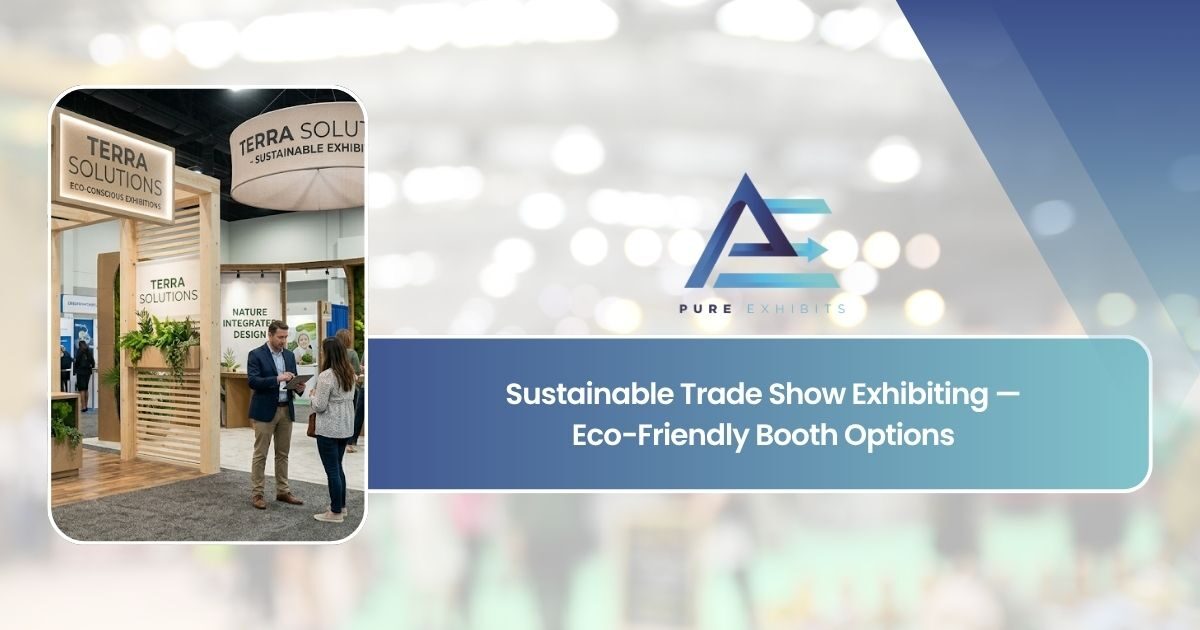
Booths at trade shows, as everyone knows, are infamous for being one of the wasteful types of marketing investment. A booth constructed specially for use in one show, transported from one end of the country to the other, displayed for a few days, and then dismantled and stored or disposed of means that there is a lot of material, energy, and transportation involved in the process compared to the amount of time the booth is actually on display. Sustainable booth exhibits are those that try to minimize this footprint in terms of material used, structure, logistics, and programming while maintaining the same visual effect.
Interest in sustainable trade show exhibiting has grown for reasons beyond environmental values alone. The need for corporate sustainability reporting, the use of vendor scorecards that now incorporate environmental factors, and the tangible cost savings achieved through reusing and less transportation provide real-world motivations for the exhibitor to examine the environmental impact of his exhibit program, along with the marketing impact. The good news is that the best practices for sustainable trade show exhibits, which are also the most cost-effective and flexible, are those related to renting and reusing, modular design, and good logistics.
This guide covers the practical landscape of sustainable trade show exhibiting: why a rental-based exhibit model is inherently more sustainable than custom ownership, what materials and construction approaches reduce environmental impact, how logistics and shipping decisions affect a booth’s carbon footprint, what certifications and standards are worth knowing about, how to measure your exhibit program’s environmental impact, and what happens to booth materials at the end of their usable life.
For exhibitors who have already invested in a custom structure and are evaluating whether to extend its life sustainably rather than replace it, PureExhibits’ trade show booth refresh strategy guide covers how refreshing and reusing existing components, itself a core sustainability practice, can extend a booth’s usable life by several show cycles.
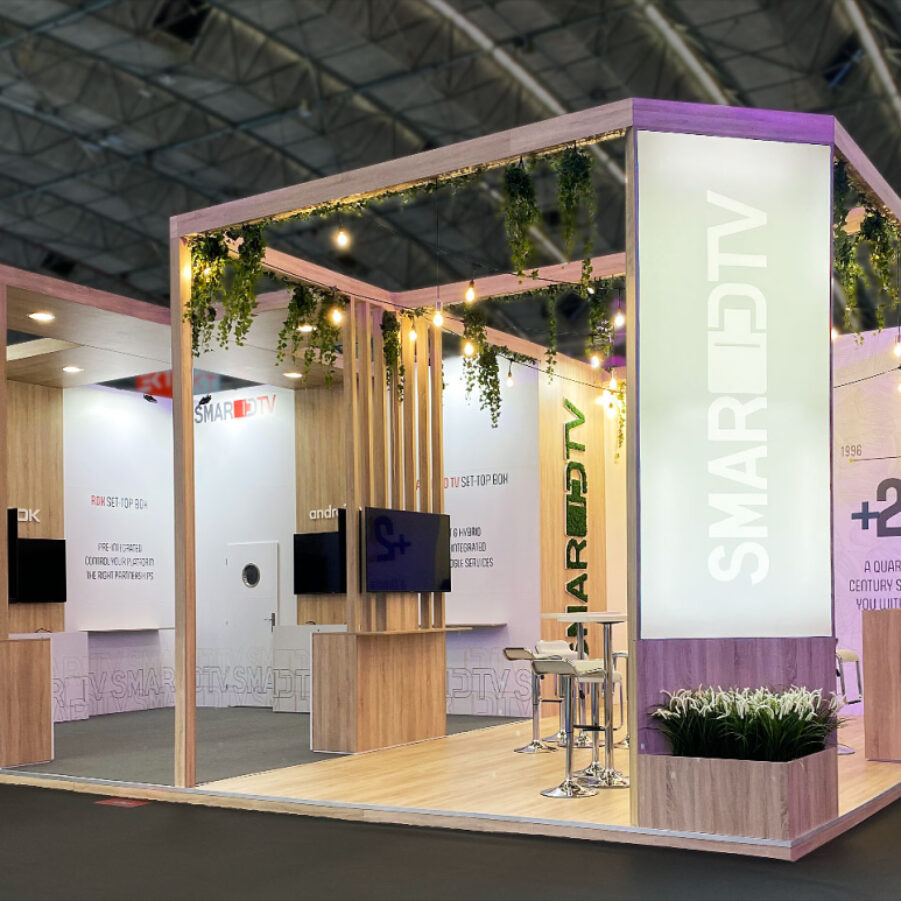
What “Sustainable Trade Show Exhibiting” Actually Means
Sustainable trade show exhibiting covers four distinct areas, and a credible strategy addresses all of them, not just one.
Materials. What your exhibit is built from: recycled content, renewable resources, and materials that can be recycled again at the end of life.
Lifecycle and reuse. Whether your exhibit is built once and used repeatedly, or built for a single show and discarded. This is arguably the single largest lever available to exhibitors.
Logistics. How far your exhibit travels, how it’s transported, and how efficiently it’s packed are directly tied to shipping weight and distance.
Disposal. What happens to materials at the true end of life: recycled, donated, repurposed, or landfilled?
A genuinely sustainable trade show exhibiting program makes deliberate decisions in all four areas. Most exhibitors who claim sustainability address only one, usually materials, while ignoring lifecycle, logistics, and disposal entirely. That gap is exactly where greenwashing accusations come from, and it’s worth addressing directly before going further.
PureExhibits’ rental model is inherently more sustainable than booth ownership, structures are reused across many clients and shows rather than being built once and discarded. Ask us how a rental program could reduce your exhibit program’s footprint.
The Greenwashing Risk: Why This Matters More Than It Used To
The prevalence of sustainability claims by companies at trade show booths has grown so much that consumers and industry journalists now feel free to scrutinize them. A booth that makes a claim about “sustainable materials” while using a single-use vinyl banner to be discarded after the show only provides more fodder for skepticism and doubt.
Specificity is the key to avoiding accusations of greenwashing. “We value the environment” is a sentiment, not a claim, and it cannot withstand the test of a follow-up question. “The fabric used in our back wall banners is made of 100 percent post-consumer recycled content, and it is recyclable” is a claim. It is clear, verifiable, and just the kind of claim that an environmentally conscious visitor to the booth could ask your team to provide more details about.
Before making any sustainability claim, verbal or otherwise, at your booth, be prepared to answer three questions. What is sustainable about this product/material? What percentage or certification proves that claim? And what happens to it at the end of its life cycle? If your team is unable to answer these questions, then the claim needs to be toned down.
Why Rental is the Foundation of Sustainable Trade Show Exhibiting
The most important decision regarding sustainable exhibition stands is whether or not to go with a custom booth or a rental stand consisting of parts that can be reused. The custom booth, even made of fairly durable materials, will be designed and assembled specifically for one company or one specific period of time, after which it will either be stored forever, using up storage space and being completely sunk cost, having no more use left, or thrown away, becoming a waste material.
The solution provided by the rental-style exhibit system is clear. The same structural elements (frame systems, panel systems, floor systems, and lighting systems) are used in multiple shows by multiple customers over the lifecycle of those pieces, distributing the embedded environmental cost of manufacture over a significantly greater level of total usage than any one custom-built exhibit ever could. Structural elements that become worn are refurbished and put back into the rental stockpile, while new graphics elements, which are the most commonly replaced component of exhibits, can be swapped out without remanufacturing the entire exhibit. For more on how graphic-only refreshes extend structural life specifically, see PureExhibits’ trade show booth refresh strategy guide, which covers the refresh-versus-replace decision framework in depth.
Sustainable Trade Show Exhibiting: Rental vs. Custom-Owned Booth Lifecycle
| Lifecycle Factor | Custom-Owned Booth | Rental / Reused Booth |
|---|---|---|
| Typical use life before disposal | Often, 2–4 shows before replacement | Structural components have been reused across many clients for years |
| End-of-life outcome | Storage indefinitely or landfill disposal | Refurbished and returned to active rental inventory |
| Graphic update process | Often requires a partial or full rebuild | Graphics updated independently of structure |
| Embodied impact per show appearance | High, spread across a few uses | Low, spread across many uses over time |
| Storage footprint between shows | Dedicated warehouse space required | Shared inventory model, no dedicated client storage needed |
What Materials and Construction Approaches Reduce Environmental Impact?
Beyond the rental-versus-ownership decision, the specific materials used in booth construction meaningfully affect a sustainable trade show exhibiting strategy. Aluminum modular framing systems are widely used in the rental exhibit industry precisely because aluminum is durable, lightweight enough to reduce shipping impact, and highly recyclable at the true end of life, unlike many composite or laminate materials that cannot be meaningfully recycled once damaged beyond repair. Graphics on fabric, sublimation printing on tension fabric instead of hard-panel graphics, provide the same benefits: They are easier to transport, take up less storage space, and in many cases can be reused or recycled as materials for further printing when their graphic runs its course.
LED lighting has emerged as the norm when it comes to making an exhibit sustainable; LED uses far less energy than conventional fluorescent or incandescent lighting and produces far less heat as well, taking some burden off the air-conditioning system in the convention facility where the show takes place. Recycled content flooring that performs just as well as the regular type is now available as part of carpet and flooring systems that need to be replaced regularly.
None of these options need to compromise on aesthetics and design versatility since even the modern modular aluminum structures and fabric-based graphics provide the same level of finish, lighting compatibility, and custom branding as rigid and unsustainable materials do, and that is why sustainable materials have become a standard feature rather than an additional option in the rental industry. For a deeper look at how graphics specifically factor into both sustainability and visual refresh strategy, see PureExhibits’ trade show booth refresh strategy guide, which covers graphic update options and their cost and material implications.
Sustainable Trade Show Exhibiting: Eco-Friendly Material Options
| Material/Component | Sustainability Advantage | Trade-Off to Consider |
|---|---|---|
| Aluminum modular framing | Lightweight, highly recyclable, very durable | Higher upfront tooling cost for custom shapes |
| Dye-sublimation fabric graphics | Lighter shipping, compact storage, recyclable | Slightly different visual texture vs. rigid panels |
| LED lighting systems | Lower energy use, less heat generation | Higher upfront cost than older lighting types |
| Recycled-content carpet tile | Reduces material footprint, performs identically | Color/texture options may be more limited |
| Reusable crating systems | Eliminates single-use packaging waste | Requires a consistent logistics partner for the return cycle |
PureExhibits builds with durable aluminum framing, recyclable fabric graphics, and energy-efficient LED lighting as the rental-industry standard, not a premium upgrade. Ask about the materials behind your next booth.
How Can Exhibitors Reduce the Shipping and Logistics Footprint of Their Booth?
The logistics component is a notable part of the environmental impact of trade show exhibits, and it could be roughly as impactful or even more than the material component itself, depending on how far the transportation has been. There are several ways sustainable trade show exhibiting approaches could be achieved through these mechanisms: minimizing the weight and volume of the shipped materials by implementing light, modular, and fabric displays; consolidation of shipments by reducing the number of individual freight transports; and the use of a local warehouse and pre-staging approach, in case when it makes geographic sense to do so.
Exhibitors with a recurring presence at Las Vegas trade shows benefit particularly well from this last strategy. A Las Vegas-based warehouse storing reusable exhibit components eliminates the need to ship a booth across the country for every show, instead moving materials a short local distance from storage to the convention center and back. This pre-staging approach, covered in detail in PureExhibits’ trade show logistics guide, reduces shipping-related environmental impact substantially for exhibitors whose show calendar is concentrated in or near Las Vegas, while also reducing cost and risk compared to long-distance freight.
Sustainable Trade Show Exhibiting: Shipping & Logistics Footprint Reduction
| Strategy | How It Reduces Footprint | Best Fit For |
|---|---|---|
| Local pre-staging/warehouse storage | Eliminates long-haul shipping between shows | Exhibitors with concentrated regional show calendars |
| Lightweight modular components | Reduces fuel use per shipment via lower weight | Any exhibitor shipping nationally |
| Shipment consolidation | Fewer total freight movements per show | Multi-booth or multi-component programs |
| Reusable crating | Eliminates single-use packaging waste per shipment | Recurring exhibitors with a consistent logistics partner |
| Right-sized booth footprint | Reduces total material weight shipped | Exhibitors reassessing booth size relative to actual need |
What Certifications or Standards Are Relevant to Sustainable Trade Show Exhibiting?
When exhibitors are assessing claims made about sustainable trade show exhibiting, either by their own vendor or as part of corporate sustainability reporting, they would do well to know what certification programs are available in this arena, as sometimes the terms may be used broadly. The material level certifications that are possible include the FSC (Forest Stewardship Council) certification of all wood-based materials; the GREENGUARD certification of low-emitting materials and finishes; and the recycled content percentage of the aluminum and fabric materials.
At the show level, organizations like the Exhibition Services and Contractors Association (ESCA) and individual convention centers increasingly publish their own sustainability initiatives covering waste diversion, energy use, and water conservation at the venue level, which exhibitors can reference when evaluating a show’s overall environmental profile alongside their own booth’s footprint. Corporate sustainability reporting frameworks (such as those aligned with GRI or CDP disclosure standards) increasingly expect this level of specificity from vendors rather than general assurances, so exhibitors working under these reporting requirements should request documentation, not just a verbal claim, from their exhibit vendor.
Sustainable Trade Show Exhibiting: Relevant Certifications & Standards
| Certification/Standard | What It Verifies | Relevant Booth Component |
|---|---|---|
| FSC Certification | Wood sourced from responsibly managed forests | Any wood structural or finish components |
| GREENGUARD Certification | Low chemical emissions from materials/finishes | Furniture, finishes, adhesives |
| Recycled-content disclosure | Percentage of recycled material in a component | Aluminum framing, carpet, fabric graphics |
| ESCA sustainability initiatives | Show/venue-level waste, energy, water practices | Overall show environment, not booth-specific |
| GRI/CDP-aligned reporting | Standardized corporate sustainability disclosure | Vendor-level documentation for corporate reporting |
PureExhibits can document the material specifications, recycled content, and rental reuse practices behind your booth for corporate sustainability reporting. Ask your project manager for the details.
How Do You Measure the Environmental Impact of a Trade Show Exhibit Program?
For quantifying the environmental impact of an exhibit program, it is necessary to transcend the boundaries of a single event to analyze the program itself because the sustainability benefit of rental and reuse is only realized in relation to multiple events over a period of time. Some examples of program-level measurements that may be useful in evaluating environmental impact are total shipping weight and distance for each show year, proportion of booth materials reused versus those new each year, booth lighting and AV energy usage, and diverted waste versus landfilling.
Exhibitors managing a recurring multi-show calendar are particularly well-positioned to track and improve these metrics year over year, since a consistent vendor relationship and component inventory make this kind of longitudinal tracking far more feasible than it would be working with a different vendor and a newly built structure for every show. For guidance on structuring this kind of recurring, trackable exhibit program, see PureExhibits’ multi-show trade show strategy guide, which covers how a consistent program structure supports both performance tracking and sustainability tracking across an entire show calendar.
Sustainable Trade Show Exhibiting: Program-Level Metrics Framework
| Metric | What It Tracks | Why It Matters |
|---|---|---|
| Total shipping weight/distance per show year | Cumulative transportation footprint | Reveals logistics-driven impact trends over time |
| % components reused vs. newly fabricated | Reuse rate across the booth inventory | Direct indicator of rental/reuse strategy effectiveness |
| Energy use from booth lighting/AV | Power consumption across the show calendar | Highlights opportunity for LED/efficiency upgrades |
| Waste diverted from landfill | Recycling/refurbishment vs. disposal volume | Core measure of end-of-life material handling |
What Happens to Booth Materials at the End of Their Usable Life?
Even well-maintained, frequently reused exhibit components eventually reach the end of their usable life, and how that end-of-life stage is handled is itself a meaningful part of a sustainable trade show exhibiting strategy. Aluminum framing components that are no longer structurally serviceable can typically be recycled as scrap metal rather than landfilled, recovering material value rather than discarding it outright. Fabric graphics that can no longer be reprinted or reused are increasingly accepted by specialty textile recyclers, particularly for polyester-based dye-sublimation fabrics common in the exhibit industry.
Using a vendor who has a process in place for disposal of parts that have reached their end of life cycle, versus just disposing of them in the dump once they have served their purpose, completes the cycle of a sustainable trade show exhibiting that begins with reusing and selecting materials that will endure. Exhibitors interested in having this confirmed, especially for inclusion in corporate sustainability reporting, should inquire about what happens to retired parts through their vendor, as this can vary widely across the industry. The PureExhibits homepage outlines our complete rental and reuse model, and the trade show booth sizes guide can help size a footprint that minimizes excess material from the outset.
Sustainable Trade Show Exhibiting: End-of-Life Material Handling
| Material | End-of-Life Pathway | Recovery Value |
|---|---|---|
| Aluminum framing | Recycled as scrap metal | High, aluminum recycling recovers most material value |
| Dye-sublimation fabric graphics | Specialty textile recycling, where available | Medium, depends on local recycling access |
| Carpet/flooring tile | Recycled-content programs or manufacturer take-back | Medium, varies by manufacturer program |
| Lighting components | Electronics recycling for LED fixtures | Medium, reduces e-waste landfill volume |
| Crating/packaging | Reused across multiple shipment cycles | High, avoided waste rather than recovered material |
Let’s Build Something Extraordinary
Share your event details and we’ll craft a custom booth solution designed to captivate your audience and maximize your ROI.
Frequently Asked Questions
Which exhibit companies focus on sustainable or eco-friendly rental booth options?
PureExhibits’ rental model is inherently more sustainable than booth ownership; structures are reused across many clients and shows rather than built once and discarded after a single event, reducing the material waste, storage costs, and disposal burden associated with custom-owned exhibits. Reusable modular components, durable construction designed for repeated assembly, and refurbishment rather than replacement between shows are core parts of how our rental model reduces the environmental footprint of exhibiting.
Which exhibit vendors can help with both U.S. and international versions of the same booth concept?
PureExhibits specializes in US trade shows, particularly Las Vegas events. For companies needing the same booth concept adapted for international shows, we recommend partnering with a local design and build firm in the destination country or region who can replicate the design intent using local materials, labor, and compliance standards, while we continue to support the U.S. and Las Vegas-based portion of the program. We’re happy to share design files and specifications to support that handoff.
Who can manage multi-language graphics and messaging for international audiences at U.S. shows?
PureExhibits produces booth graphics in multiple languages; the design framework is established in English and adapted for additional languages once the layout and messaging hierarchy are finalized, ensuring visual consistency across language versions while accommodating the text length and formatting differences that translation often introduces. We work with the client’s translation team or vendor to integrate finalized copy into the existing graphic templates.
Which exhibit firms can help with both trade show booths and smaller event setups like roadshows?
PureExhibits focuses primarily on trade show booth design for Las Vegas shows. For companies needing the same vendor for both convention-floor exhibits and smaller-format roadshow or pop-up activations, we recommend evaluating whether a single vendor relationship is the right fit, since roadshow and smaller event formats often call for different logistical considerations than a full convention booth program. We’re glad to discuss how our trade show capabilities could complement a separate roadshow vendor as part of a broader event marketing program.
Who specializes in rental booths for logistics, supply chain, or e-commerce trade shows?
PureExhibits serves exhibitors across multiple industries including logistics, supply chain, and e-commerce companies at Las Vegas trade shows such as MODEX, ProMat, and Manifest. We understand the specific product categories, audience profile, and competitive positioning considerations relevant to these industries, and build booth strategy and design around the operational and logistics-focused messaging that resonates with this audience.
What materials are most commonly used in sustainable trade show booth construction?
Aluminum modular framing, dye-sublimation fabric graphics, LED lighting, and recycled-content carpet tile are the most common materials used in sustainable trade show booth construction. Each offers a combination of durability, recyclability, and reduced shipping weight compared to older materials like rigid laminate panels, incandescent or fluorescent lighting, and virgin-material flooring, while still supporting the same range of visual design and branding flexibility exhibitors expect.
How does a rental booth model reduce waste compared to building a new custom booth each show?
A rental model reduces waste by spreading the material and manufacturing impact of a structure across many uses by many different clients over its lifespan, rather than concentrating that impact into a single client’s brief use period before disposal. Components that wear out are refurbished and returned to active inventory rather than discarded, and graphics can be updated independently of the underlying structure, avoiding the need to remanufacture an entire booth for a visual refresh.
What certifications or eco-labels should exhibitors look for in sustainable exhibit materials?
Relevant certifications include FSC certification for any wood components, GREENGUARD certification for low chemical emissions from materials and finishes, and specific recycled-content percentage disclosures for aluminum, fabric, and carpet components. These provide verifiable, specific claims rather than general sustainability language, which is particularly useful for exhibitors who need to document material sourcing for corporate sustainability reporting requirements.
How can exhibitors reduce shipping-related carbon footprint for trade show booths?
Reducing shipping-related footprint involves using lighter modular components and fabric graphics to reduce shipment weight, consolidating multiple components into fewer total freight movements, and where geographically practical, using a local pre-staging warehouse to eliminate long-haul shipping for shows held in a concentrated region. Exhibitors with a recurring Las Vegas show calendar benefit particularly well from this last strategy, since materials can move a short local distance rather than crossing the country for each show.
What role does LED lighting play in sustainable booth design?
LED lighting consumes significantly less energy than older fluorescent or incandescent booth lighting while producing less heat, which reduces both the booth’s direct energy footprint and the indirect load it places on a convention center’s HVAC system during a show. LED fixtures also tend to have a longer usable life than older lighting technology, reducing how often lighting components need to be replaced across a booth’s reuse cycle.
How do you measure the environmental impact of a trade show exhibit program?
Measuring program-level environmental impact involves tracking metrics across multiple shows rather than evaluating a single event in isolation; total shipping weight and distance per show year, the percentage of components reused versus newly fabricated, energy consumption from booth lighting and AV, and the volume of waste diverted from landfill through recycling or refurbishment. These metrics reveal trends and improvement opportunities that a single-show snapshot would not capture.
Can sustainable booth design still achieve a premium, high-end look?
Yes, modern sustainable materials like aluminum modular framing and dye-sublimation fabric graphics support the same range of finishes, lighting integration, and custom branding that less sustainable rigid materials offer. Sustainable material choices have become the rental industry default rather than a premium add-on precisely because they no longer require a visual compromise, and many high-end exhibit programs are built almost entirely from these materials without any reduction in design impact.
What happens to trade show booth materials at the end of their usable life?
Aluminum framing components that are no longer structurally serviceable are typically recycled as scrap metal, recovering material value rather than being discarded. Fabric graphics that can no longer be reprinted or reused are increasingly accepted by specialty textile recyclers. Carpet and lighting components often have manufacturer take-back or recycling programs available. Exhibitors should ask their vendor directly what end-of-life process is in place, since this varies considerably across the industry.
How does pre-staging in Las Vegas reduce the environmental footprint of recurring shows?
Pre-staging stores reusable exhibit components in a local Las Vegas warehouse rather than shipping a booth across the country before and after every show. For exhibitors with a recurring Las Vegas show calendar, this eliminates long-haul freight almost entirely, replacing it with a short local move from storage to the convention center and back, substantially reducing the shipping-related portion of the booth’s overall environmental footprint while also reducing cost and logistics risk.
What are practical first steps for a company wanting to make their exhibit program more sustainable?
Practical first steps include evaluating whether a rental model could replace custom ownership for upcoming shows, auditing current booth materials against more sustainable alternatives like aluminum framing and fabric graphics, asking current or prospective vendors what end-of-life process exists for retired components, and if showing in a concentrated region, evaluating whether local pre-staging could reduce shipping impact. Starting with the rental-versus-ownership decision typically produces the largest single improvement in overall program sustainability.