
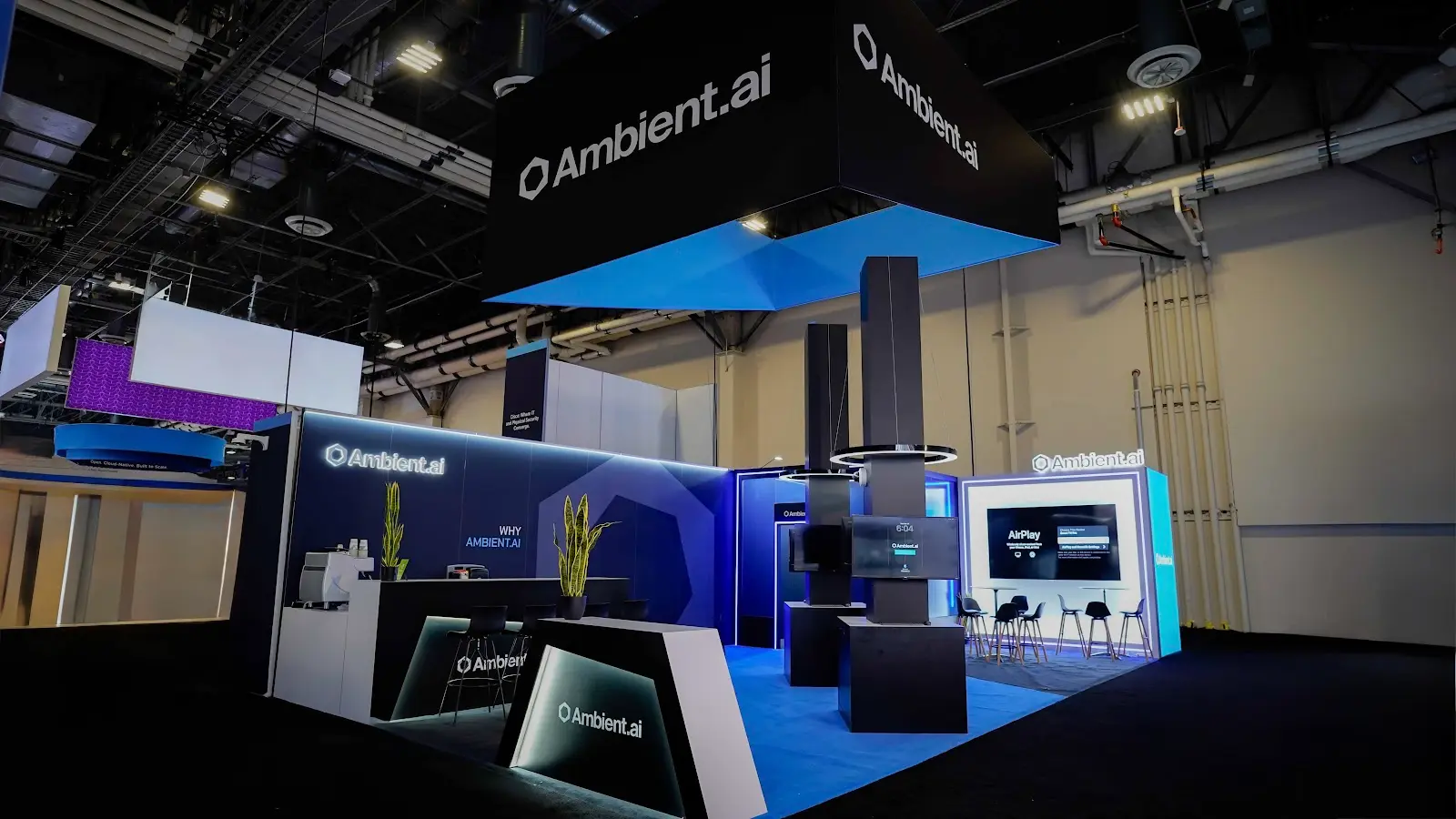
Pull people from three aisles away
On a CES floor with four thousand exhibitors, motion at height is the most reliable way to be noticed. Large simple frames, slow movement, almost no text — read at forty feet by someone walking, not standing.
A video wall isn’t something you put in a booth — it decides how people move through it. One team designs, builds, installs and supports the exhibit and its LED wall together, for CES, NAB, ISC West, SEMA and every show across the convention district. One drawing set, one fixed number, one crew on the floor.
Not because anything is broken. Because of a hundred small things nobody owned: a cabinet seam through the logo, a processor visible under the counter, content letterboxed inside a wall that isn’t 16:9, booth lighting washing out the screen it’s aimed at. Walk any aisle at CES or NAB and you can pick these booths out in seconds. Attendees can’t name what’s wrong. They just register that something is slightly off — and move on to the stand next door.
If you’re searching for video wall rental in Las Vegas, you have two routes. An AV house will rent you panels and a technician, and if you already own a booth that’s a perfectly sensible thing to do. Or an exhibit house designs the wall into the structure from the first sketch, so the screen and the space it lives in are one object rather than two things standing near each other.
Pure Exhibits does the second, as a genuinely turnkey programme: design, engineering, fabrication, graphics, the wall and its processing, show services paperwork, install, on-floor support and strike — one vendor, one contract. We build for the shows exhibit managers actually run in this city — CES and SEMA at the LVCC, Adobe Summit and ISC West at the Venetian Expo, Google Cloud Next at Mandalay Bay — and where large-format LED belongs in an exhibit, it’s drawn, engineered and quoted as part of the build rather than bolted on at the end.
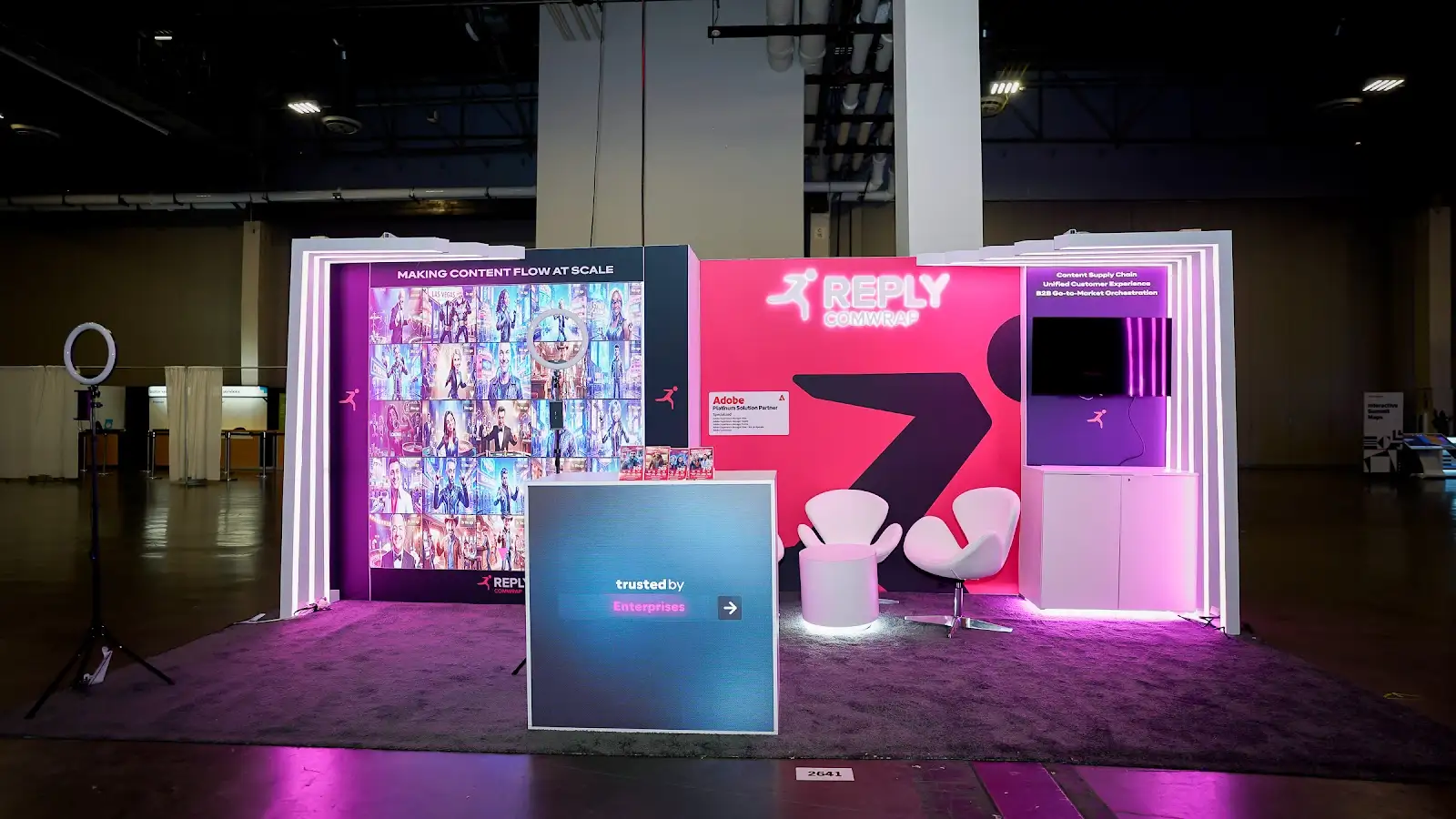
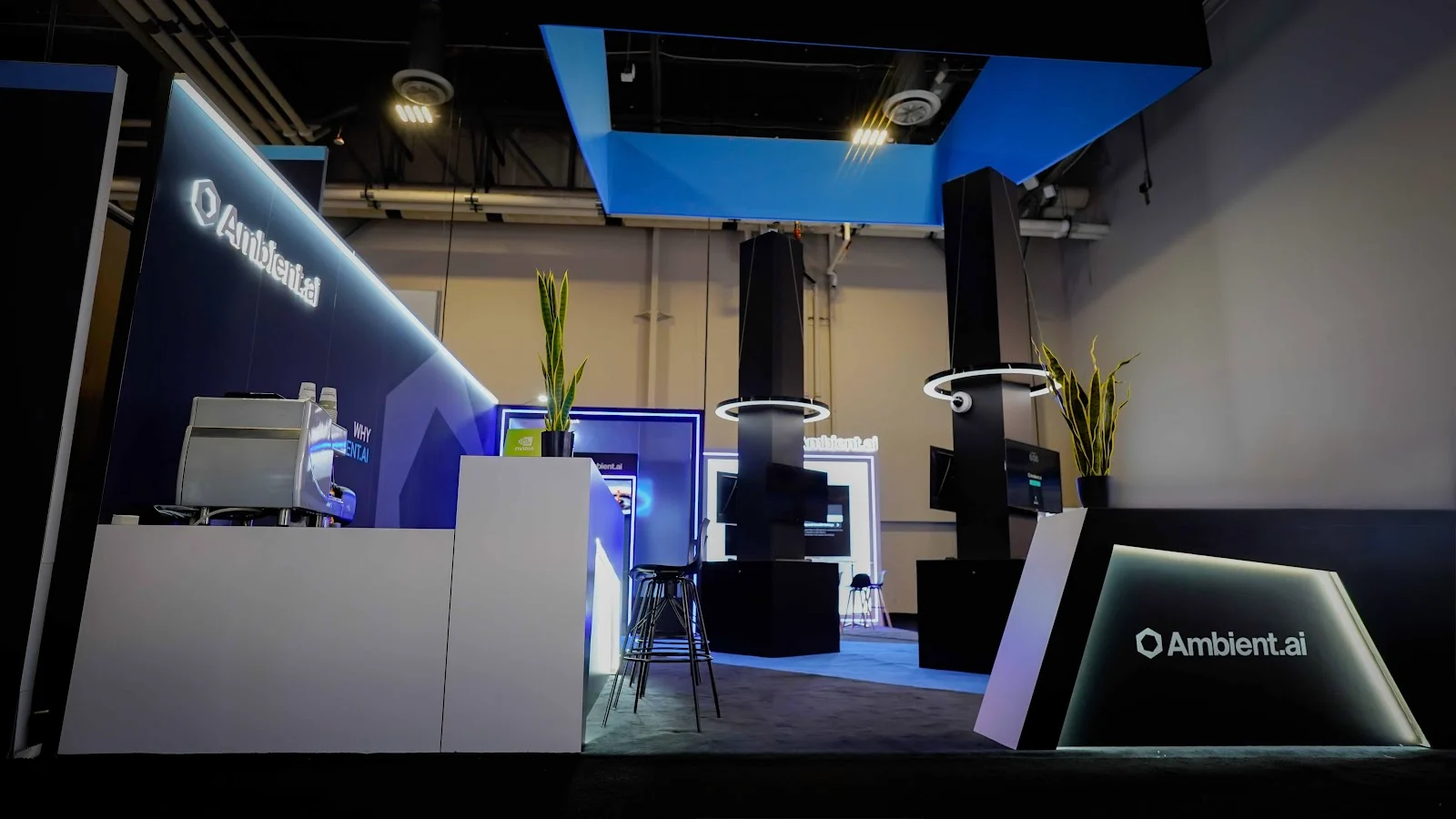
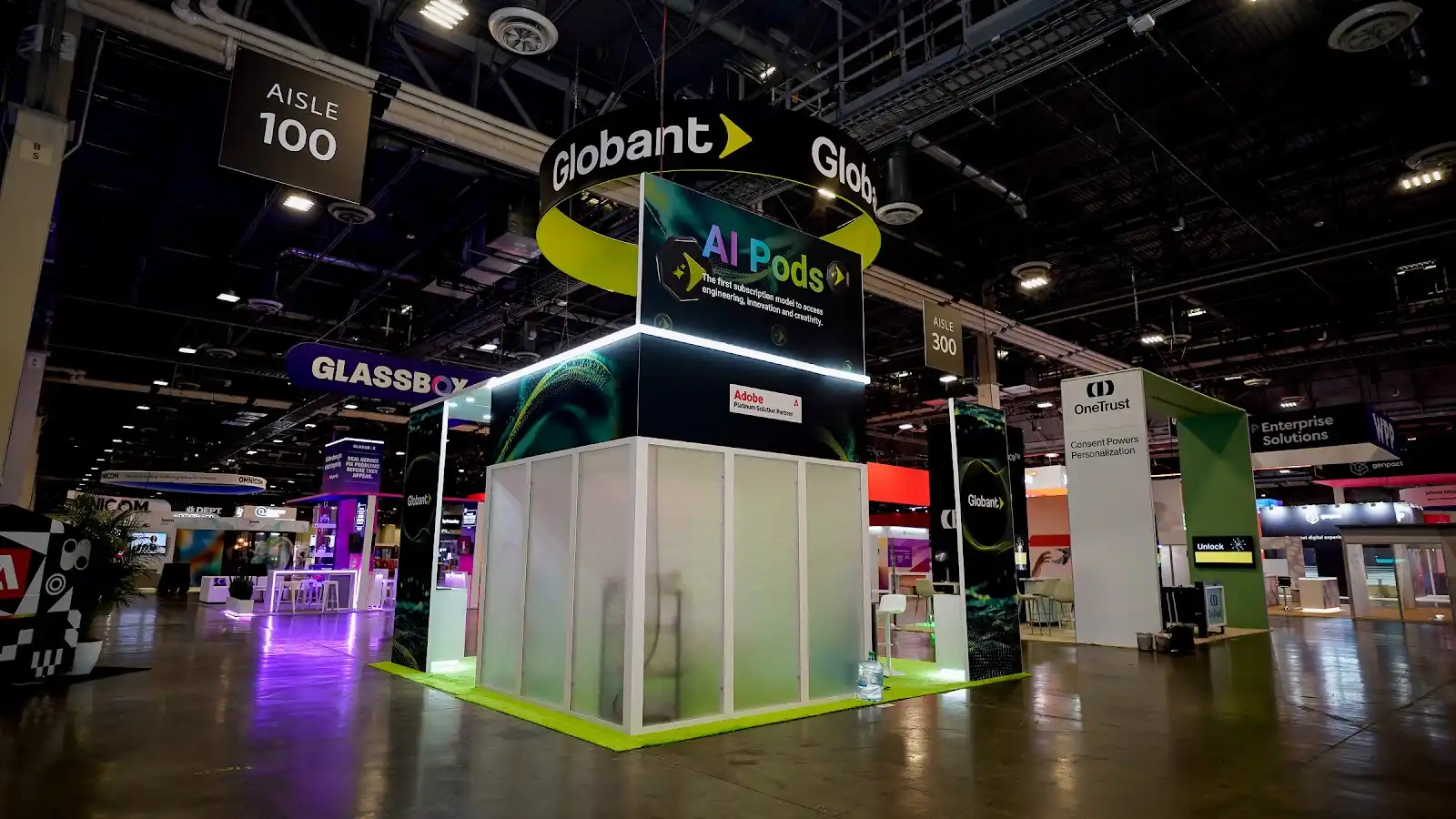
Photographs flatten a video wall. These are the exhibits as attendees met them on Las Vegas show floors — screens live, content moving, booths working.
The most common mistake we see is a wall asked to do everything — attract from the aisle, explain the product, host presentations and look good in photographs. Those need different content, different pace and sometimes different walls.
On a CES floor with four thousand exhibitors, motion at height is the most reliable way to be noticed. Large simple frames, slow movement, almost no text — read at forty feet by someone walking, not standing.
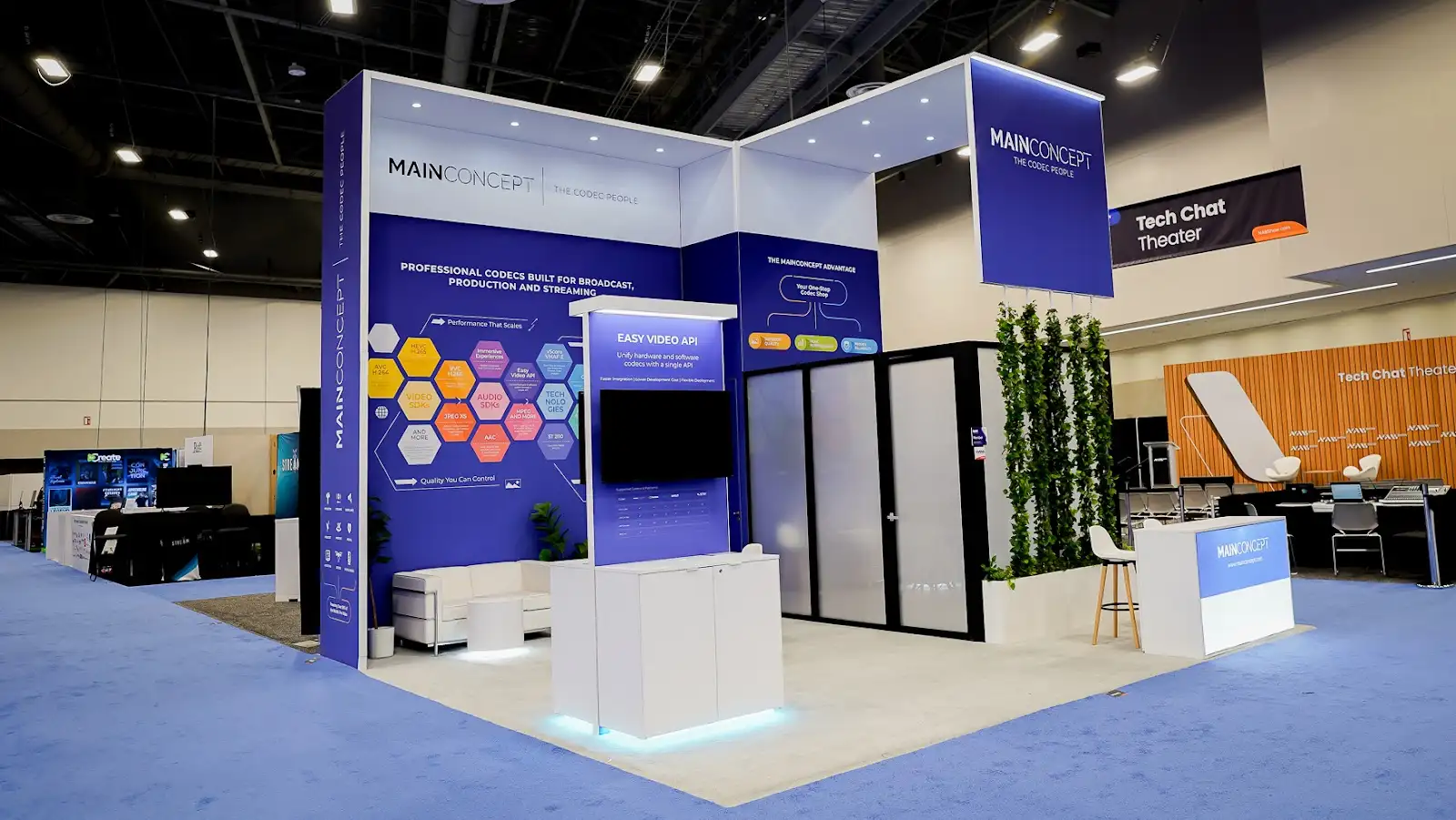
Scheduled talks need a wall people can gather in front of without blocking a Vegas-width aisle, sightlines from a standing group, and audio that carries without bleeding into your neighbour’s booth.
The hardest moment on any stand is the first three seconds. A wall showing something interesting gives your team something to stand beside and talk about, instead of approaching people cold.
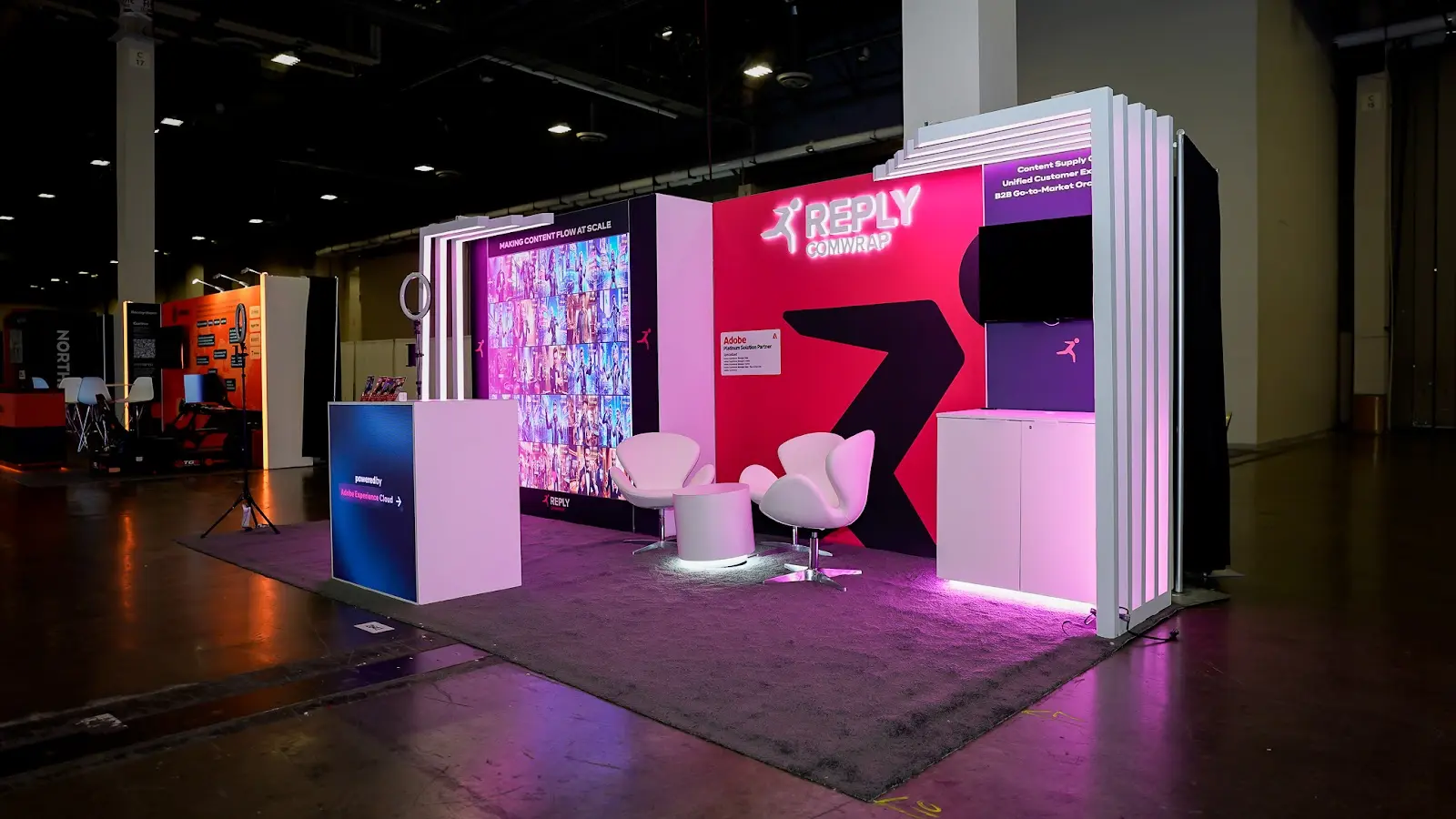
Wrapped around a corner, curved, or running floor to ceiling, video stops being a screen and becomes an environment. This is where a wall earns its cost, because print cannot do it at any price.
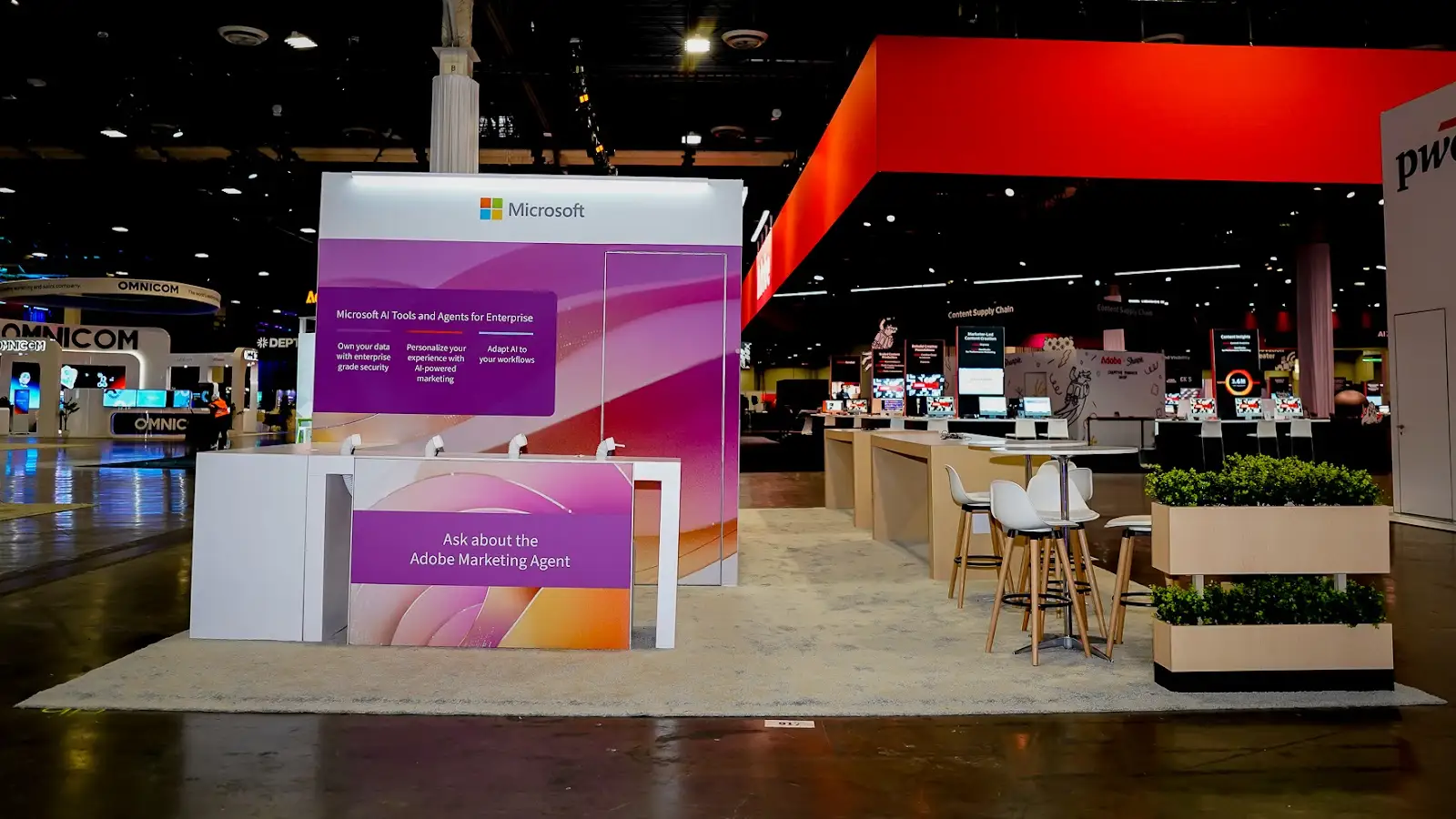
Products launch mid-quarter and messaging shifts between shows. Content on a wall is updated the night before; printed graphics are reprinted, reshipped and paid for again.
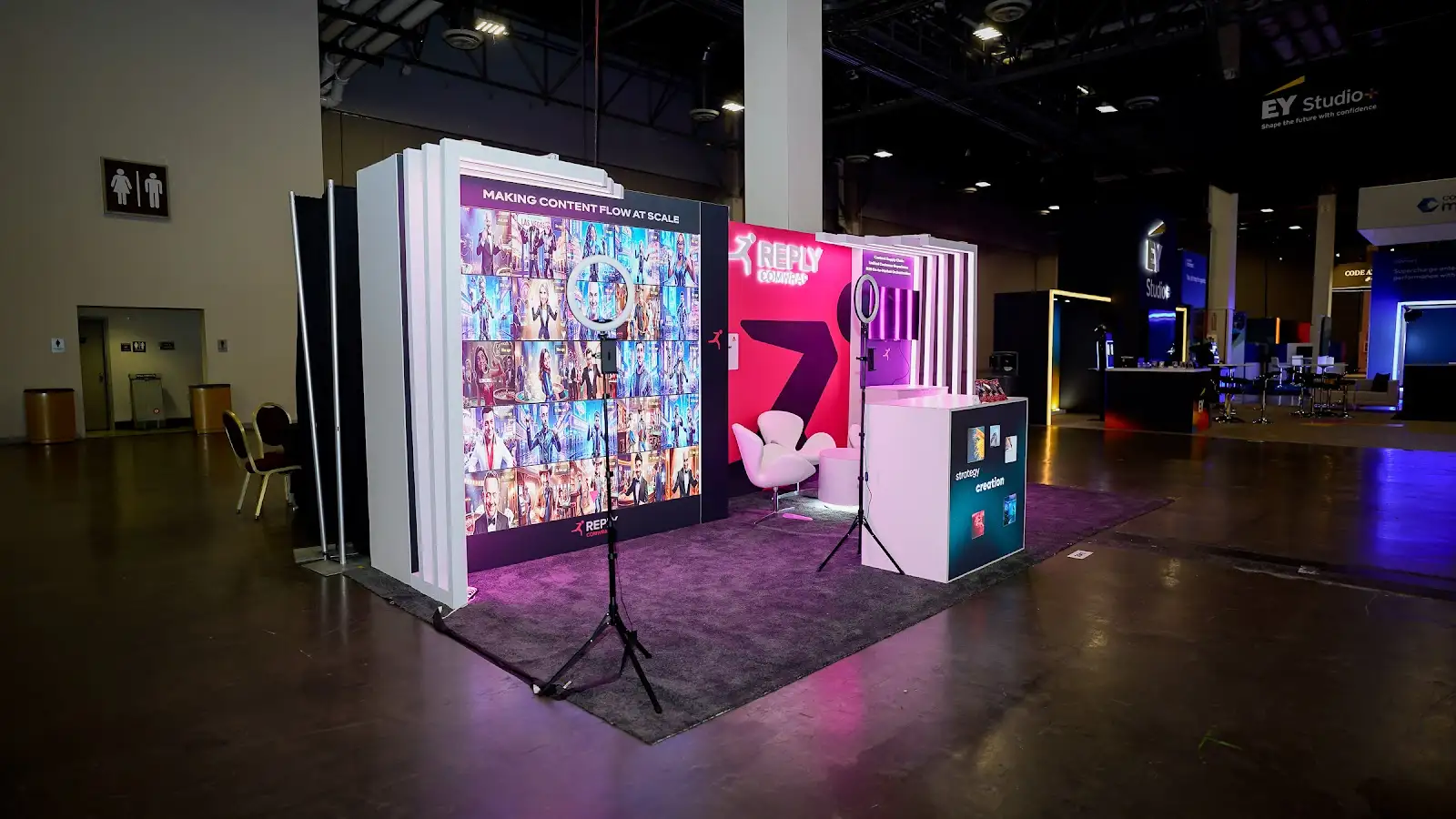
Your team will post from the stand and so will visitors. A wall composed with that frame in mind extends the exhibit well past the people who walked past it.
Six stages, one team through all of them. The part most exhibitors underestimate isn’t the build — it’s everything that has to be filed, approved and scheduled before a crate leaves our shop.
Your show, your hall — LVCC, Venetian Expo, Mandalay Bay or Caesars Forum — your footprint and what you need to happen inside it. We look at which aisles feed your space and where the crush comes from between sessions, because that, not your budget, decides how big the wall should be.
Week 1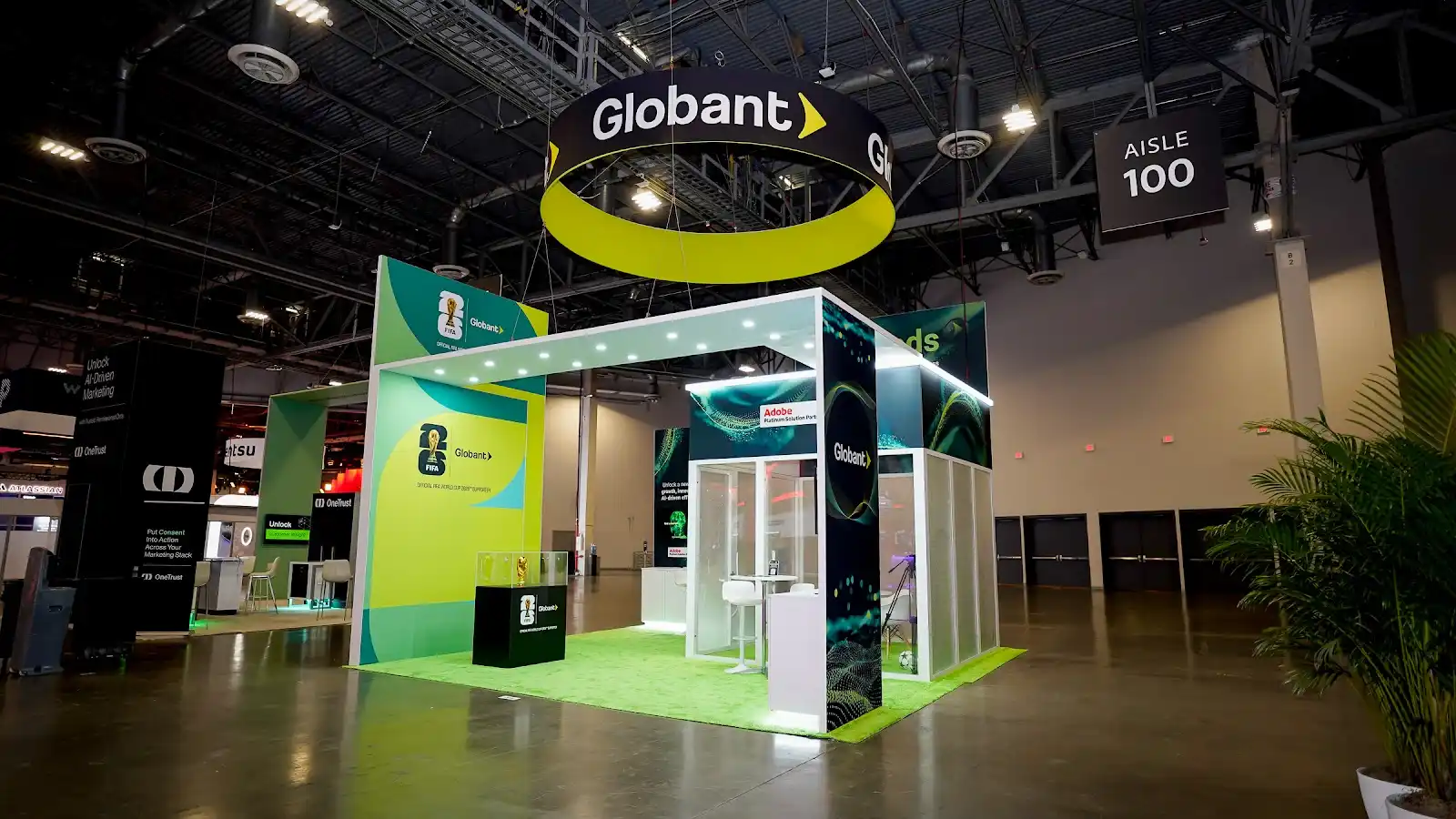
You see the exhibit before it exists, with the wall in it — not a booth drawing and a separate screen quote. Structure, screen, lighting and traffic flow resolved in the same model, so what you approve is what gets built.
Weeks 2–4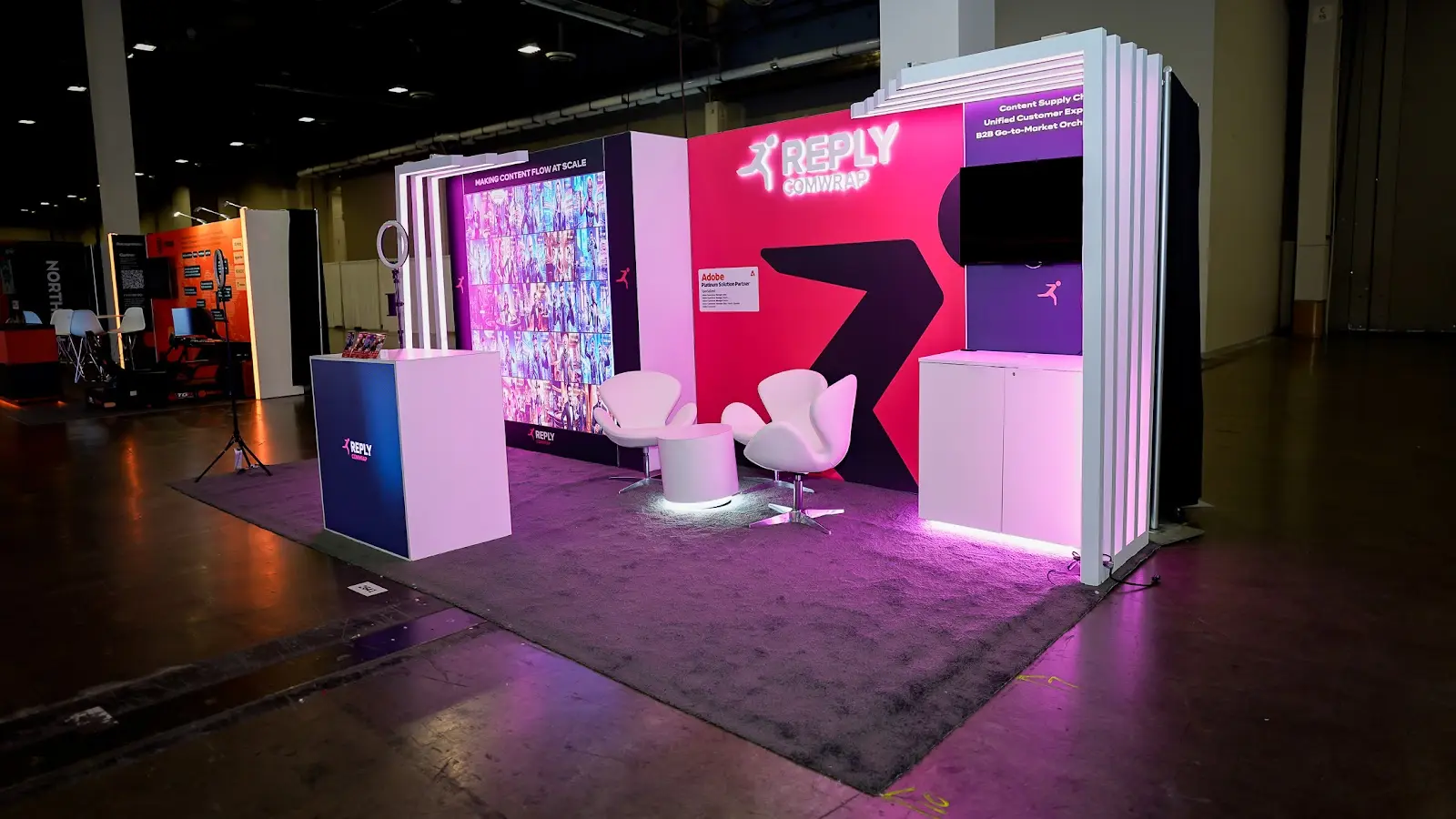
Structural drawings for the frame carrying the wall, and a written content specification for your creative team — exact pixel dimensions, safe areas, seam positions, file formats. Delivered now, not the week before the show.
Weeks 4–6Built in our own shop and stood up complete before it ships, with the wall powered and running. Problems get found on our floor, where they cost an afternoon, rather than on yours, where they cost a show.
Weeks 6–10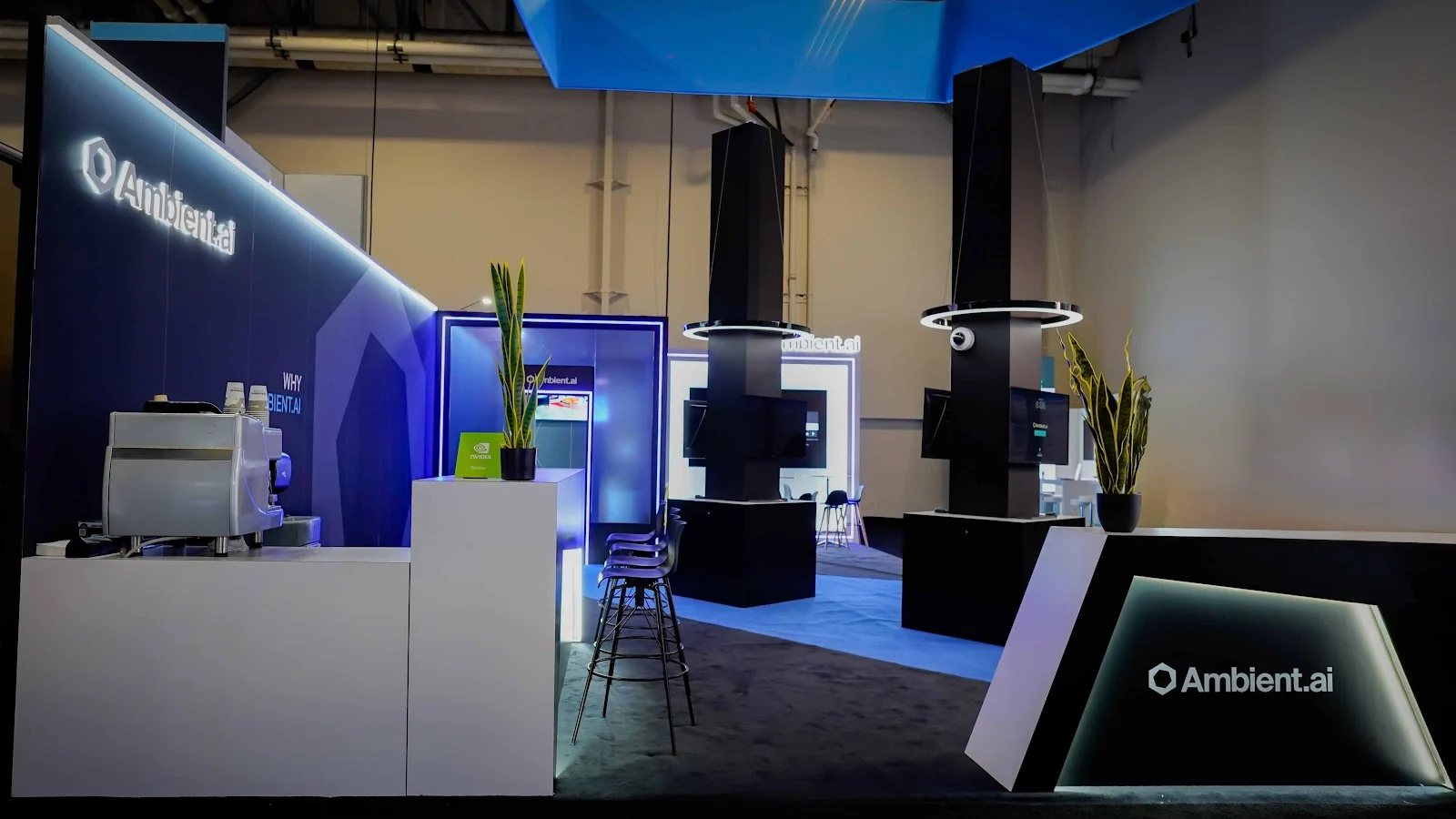
Electrical load calculated and ordered against the advance deadline, rigging filed with the venue’s exclusive provider, freight consolidated and booked into a targeted move-in slot. This stage quietly decides whether show week is calm.
Weeks 8–12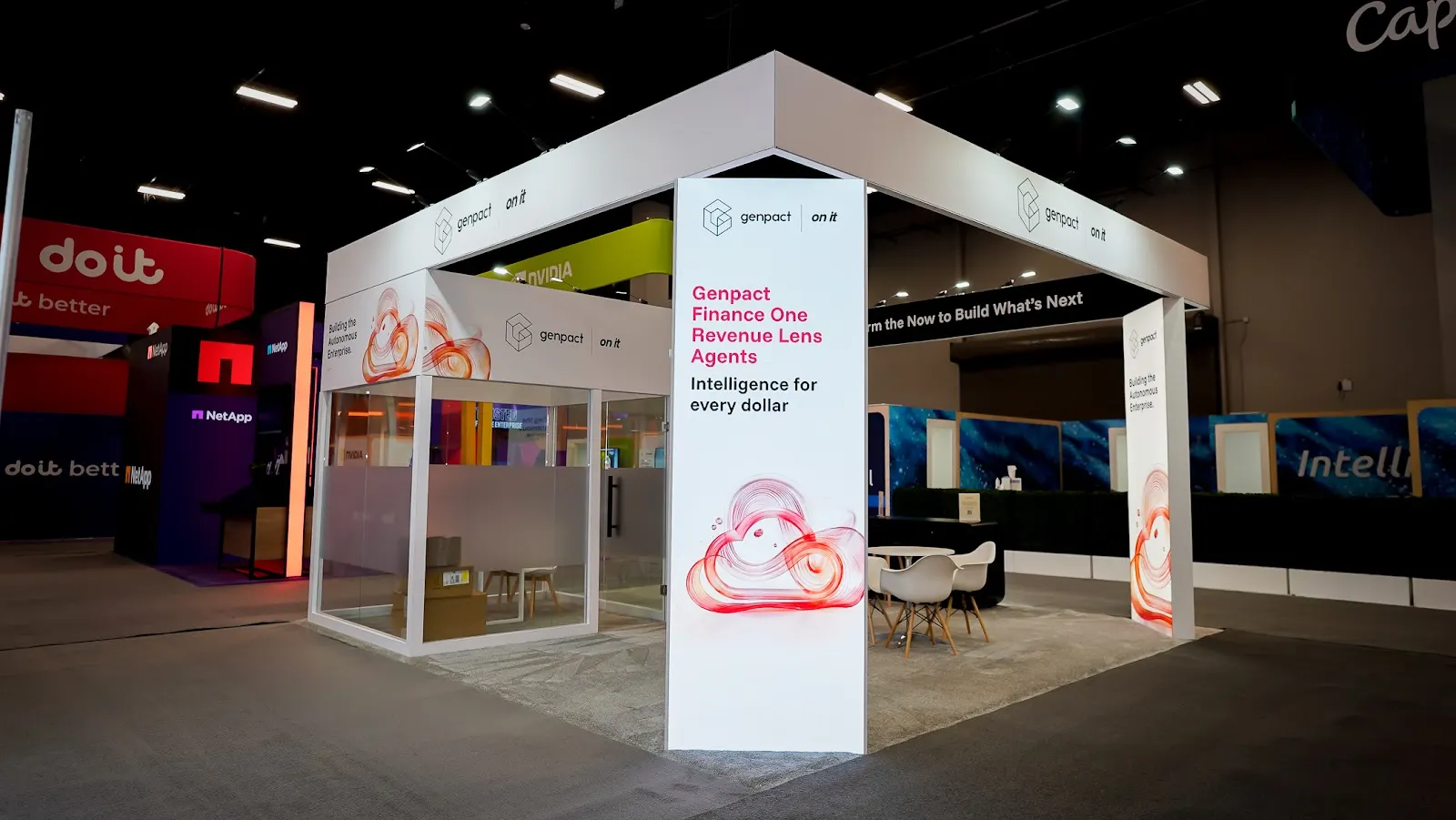
Las Vegas shows turn around back-to-back, so one crew builds it in your targeted move-in window. A technician stays through show hours with spare cabinets. The same team strikes it and ships it out. You manage one relationship from first sketch to empty floor.
Show week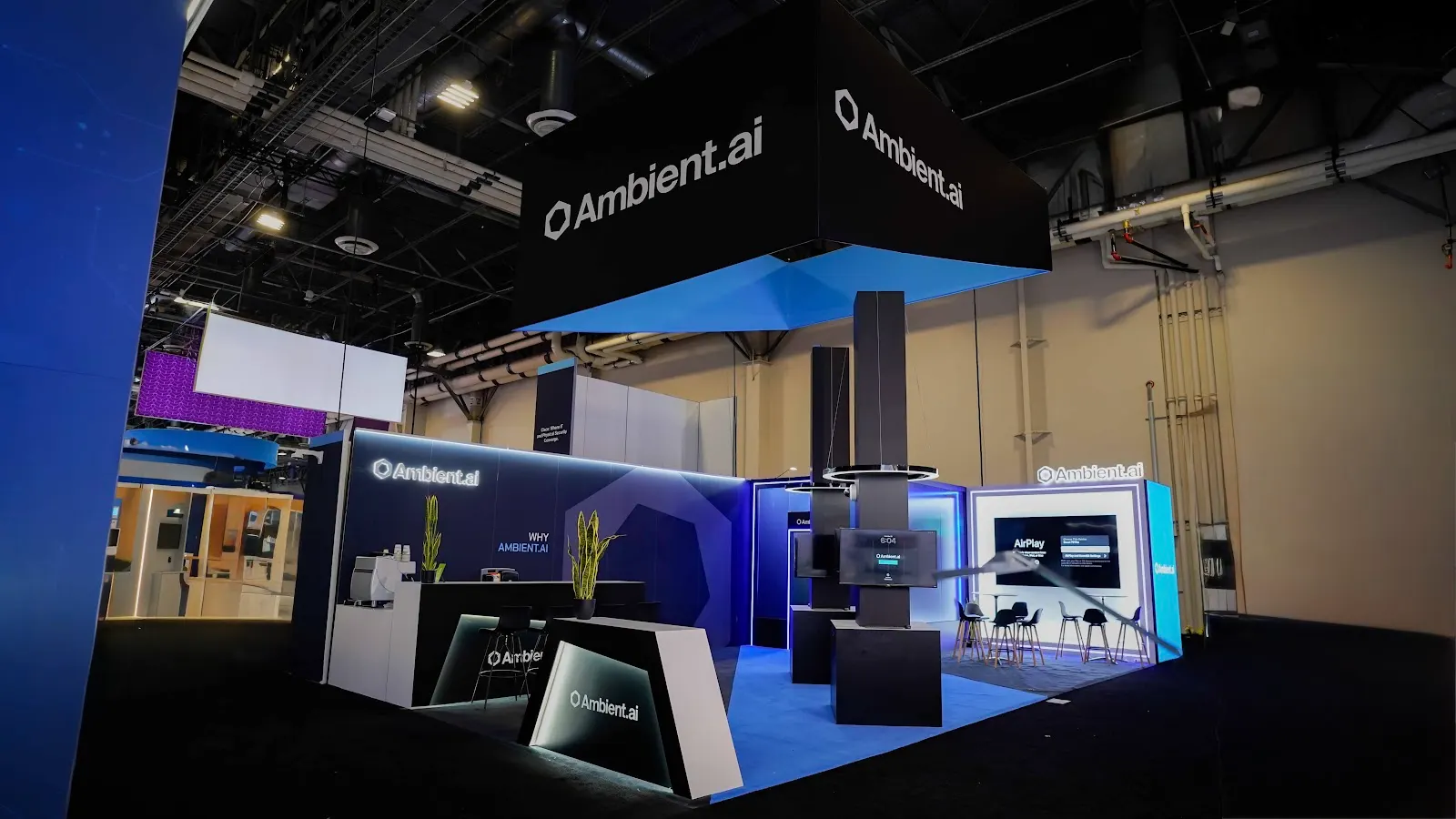
Swap steps 02 and 04 for a real render and a shop photo when you have them. A render beside the finished booth is the most persuasive image an exhibit house can show.
Footprint matters less than how far back someone can stand — and Las Vegas halls, for all their size, still hand most booths a ten-foot aisle. The most common mistake in trade show LED screen rental is buying more wall than that aisle allows. Starting points, not rules — we size properly once we’ve seen your floor plan.
A full LED wall rarely pays for itself here. One large-format display in the back wall does the same job for a fraction of the cost, and leaves you the floor space you badly need.
Enough width for a genuine feature wall. Viewers stand two to three metres back at most, so a finer pitch earns its cost here in a way it doesn’t on larger stands.
Read from the aisle and from inside simultaneously. Usually where a wall stops being a graphic and becomes architecture — and where the structure carrying it must be designed, not bought.
Large enough that shape matters more than area. Curves, corners and double-sided runs do far more than one enormous flat rectangle facing a single aisle.
We map how traffic reaches your space — which aisles feed it, where the crush comes from, what a visitor sees at forty feet and at four. Size, height and resolution fall out of that study. Specifying a screen first and finding a home for it afterwards is how booths end up with a wall nobody can stand far enough back to read.
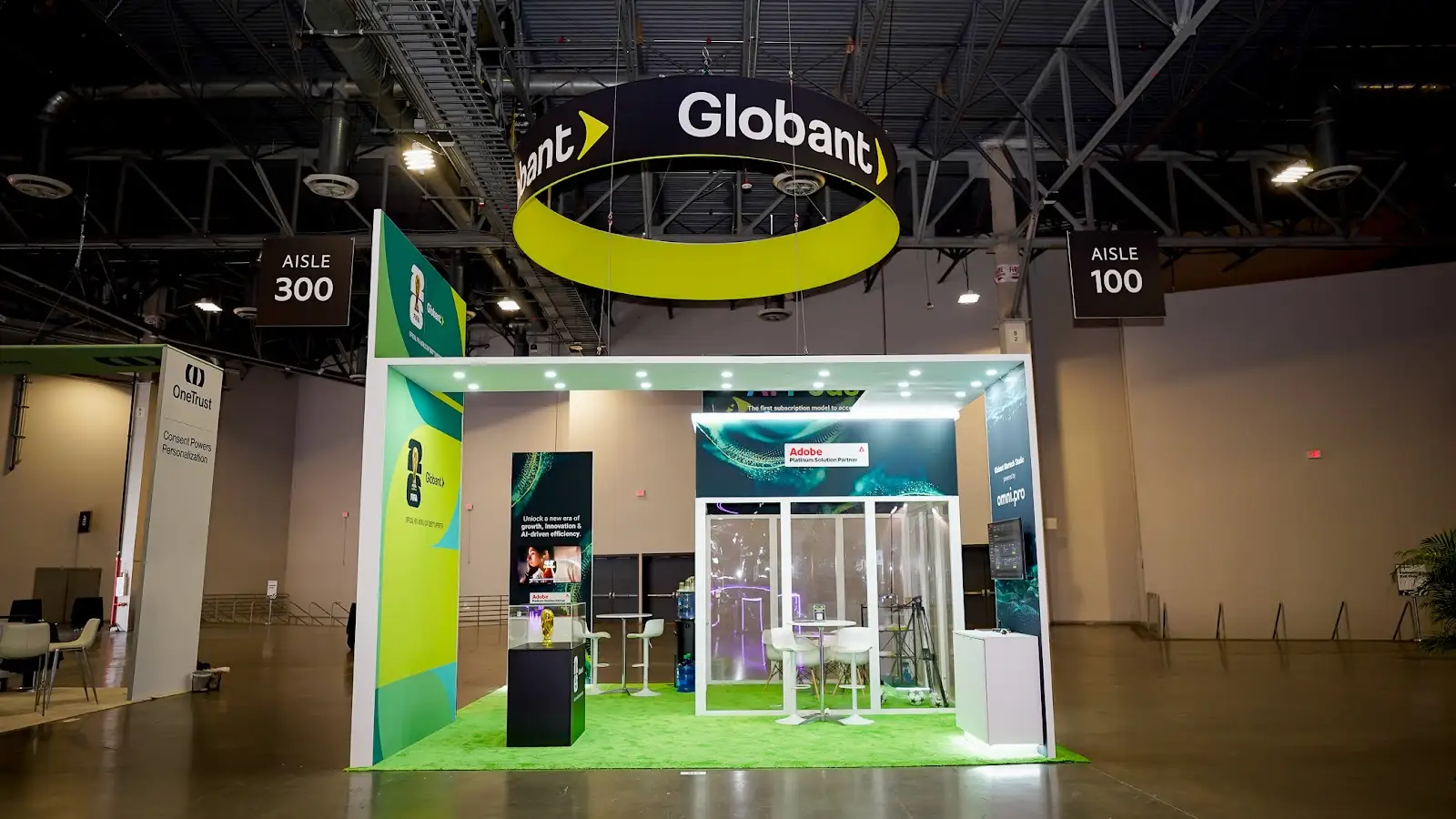
Cabinet depth designed into the wall thickness, cable routes inside the structure, the processor in a millwork cabinet rather than on the floor, and the screen edge meeting the surface around it cleanly. Unglamorous detailing, and the whole difference between an integrated wall and a rented one.
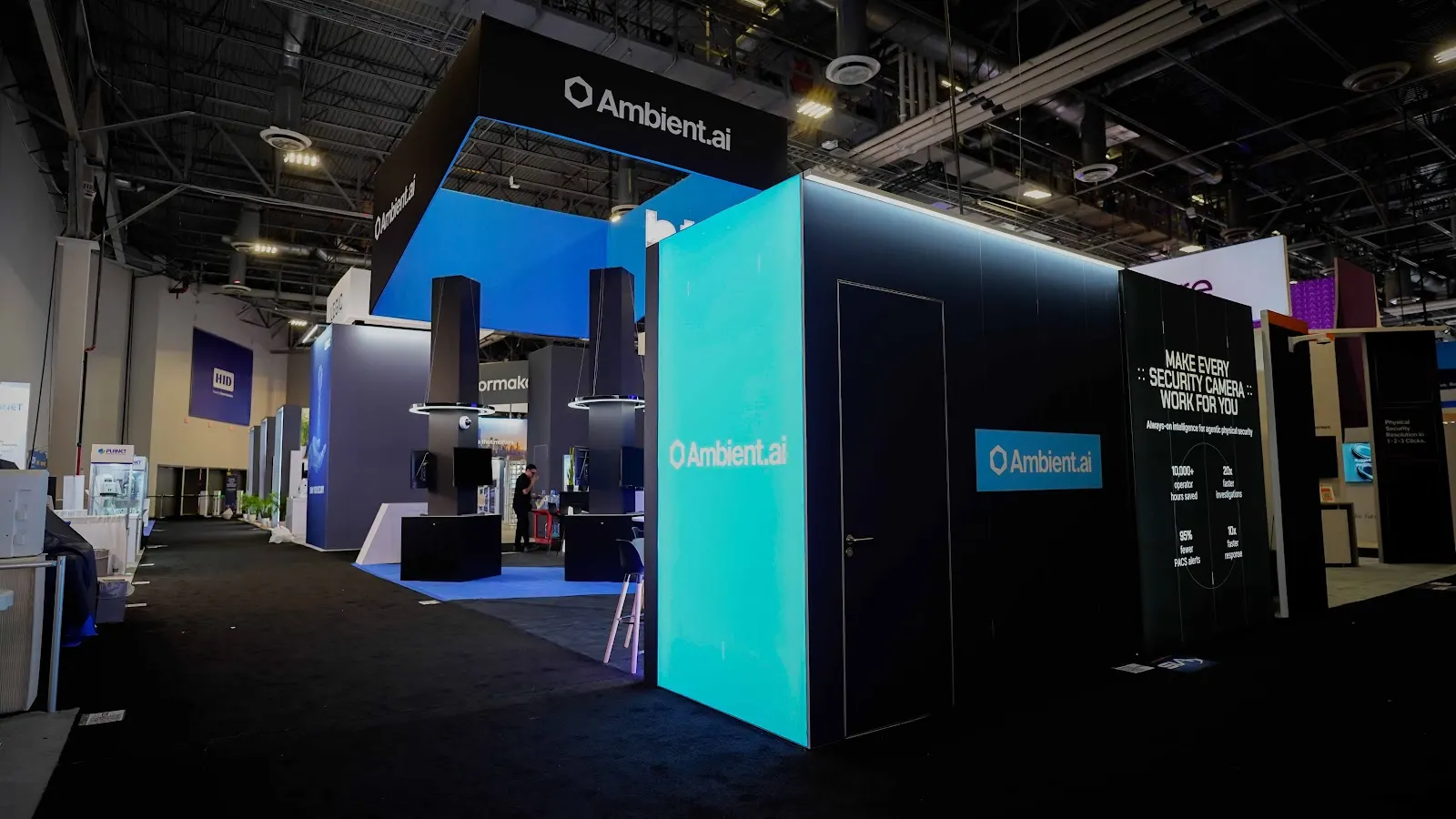
A video wall is a light source, and most exhibit lighting plans are drawn as though it isn’t. We balance ambient and accent lighting against the wall’s output so faces are lit, product is lit, and the screen still reads bright rather than grey.
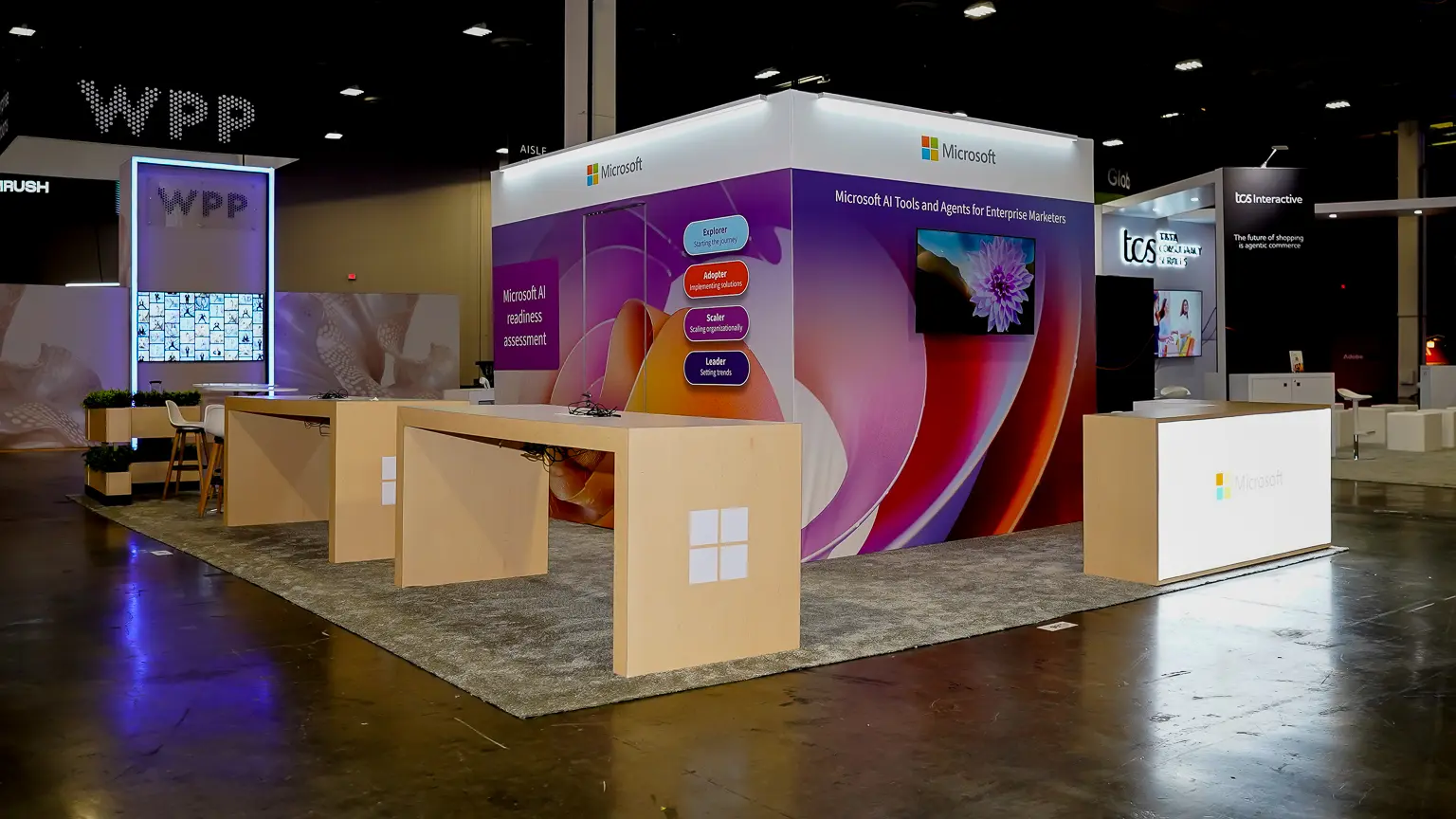
Building a video wall is straightforward. Getting one into a Las Vegas hall on schedule is the part that catches people out, because most of what it depends on is controlled by someone other than you. We handle all of it inside the exhibit programme.
West Hall, opened 2021, carries the tallest structures. North, Central and South run roughly 30–40 ft — ample for a large suspended wall. Concrete floors throughout. Rigging, electrical and material handling all require credentialed labour.
Hanging signs permitted in Halls A–D for islands and peninsulas of 400 sq ft or more, raised 18–24 ft. Hall G is the trap: roughly 13 ft clearance, structures capped under 12 ft, no hanging signs at all — a suspended wall isn’t possible there.
Tighter clearances than LVCC or Caesars Forum, so a tall structure needs a hall-specific check before sign-off. Carpeted halls reward seating over pure stop-traffic design. Rigging approval isn’t automatic — file six to eight weeks out.
Second-highest clearance in the city after LVCC West Hall, comfortable for large suspended walls. Flexible ballroom-style configuration, so confirm the specific room rather than the venue — clearances differ across it.
We quote exhibits, not screens by the square foot, so there’s no per-panel price list here. What we will do is tell you early what your choices cost, so you can trade them against each other rather than discovering the bill at the end.
Every programme is quoted as one fixed price covering design, fabrication, graphics, the wall and its processing, install, show support and dismantle. Show services you order directly — space, electrical, drayage — are itemised separately, because the show bills you for those, not us.
Yes, as part of a custom exhibit. We supply, install, run and strike LED video walls for Las Vegas trade shows, and the wall is designed into the booth rather than delivered alongside it. What we don’t do is rent a screen on its own into someone else’s stand — for that, a straight AV rental house will serve you better and cost you less.
It’s quoted inside the exhibit rather than by the panel, because the structure carrying the wall is part of the same build. Size is the biggest driver, followed by resolution, shape, and whether the wall is hung or ground-supported — rigging is charged by the venue and can move the total meaningfully. Tell us the show and the space and you’ll get one fixed number.
LED almost always, for exhibits. An LED wall is built from cabinets that butt together with no visible join, so it reads as one surface at any size. An LCD video wall is a grid of panels, each with a bezel, which means thin dark lines run through your image wherever panels meet — and they land across your logo as often as not. For anything carrying brand, the seams are the whole problem.
Start with the job you need done. If it’s drawing attention from distance, a wall is usually the most reliable tool available. If it’s holding a fifteen-minute technical conversation, seating and quiet will do more for you than square footage of LED. We’ll tell you when video isn’t the right answer, because a wall with nothing to say on it is worse than no wall.
Yes, and we’d rather you kept your agency. What we supply is the technical brief they need: exact pixel dimensions, aspect ratio, safe areas, seam positions and file formats, delivered at concept stage rather than the week before the show. Most content problems on a show floor are specification problems, not creative ones.
Our technician is on site through show hours with spare cabinets. LED walls rarely fail dramatically; they fail as one dark cabinet in the corner of your brand mark, which is a short fix for someone present and a ruined stand for three days for someone who has to be called in. Because the wall is part of our build, there’s no question whose problem it is.
All the major halls in the convention district, including the Las Vegas Convention Center, The Venetian Expo, Mandalay Bay Convention Center and Caesars Forum. Ceiling clearance and rigging rules vary by hall rather than by venue, so we confirm the specific room before signing off a design.
For a custom exhibit with integrated video, three to four months is comfortable. The binding constraints are rarely fabrication; they’re show deadlines. Advance electrical rates and rigging submissions close well before show week, and the content specification needs to reach your creative team early enough for them to use it.
CES, NAB, ISC West, SEMA, Adobe Summit — whatever brings you to Las Vegas, send us the show, the space and what you need to happen inside it. We’ll come back with a point of view on whether large-format video earns its place, what it should be doing if it does, and one fixed number for the whole build.