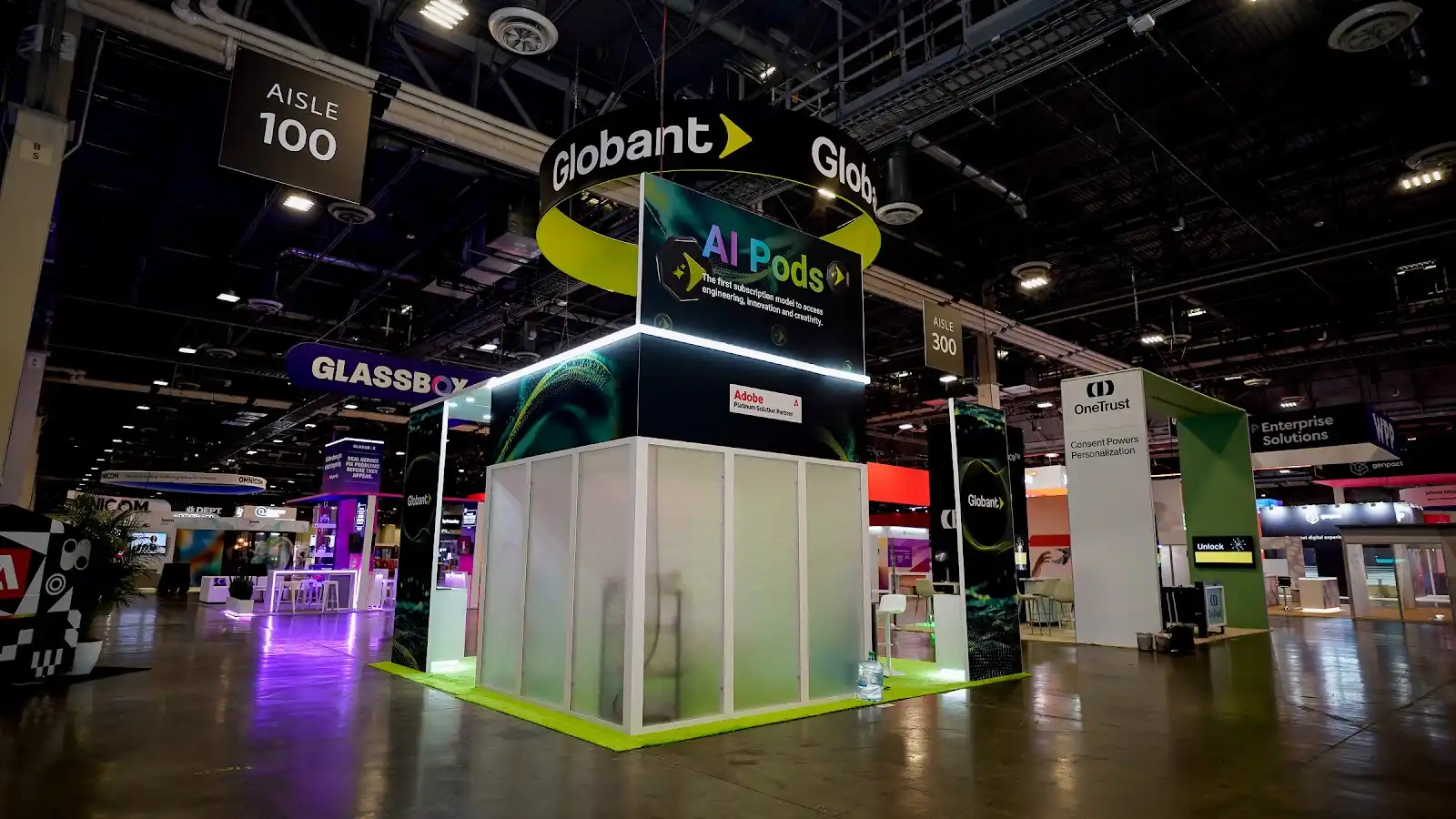
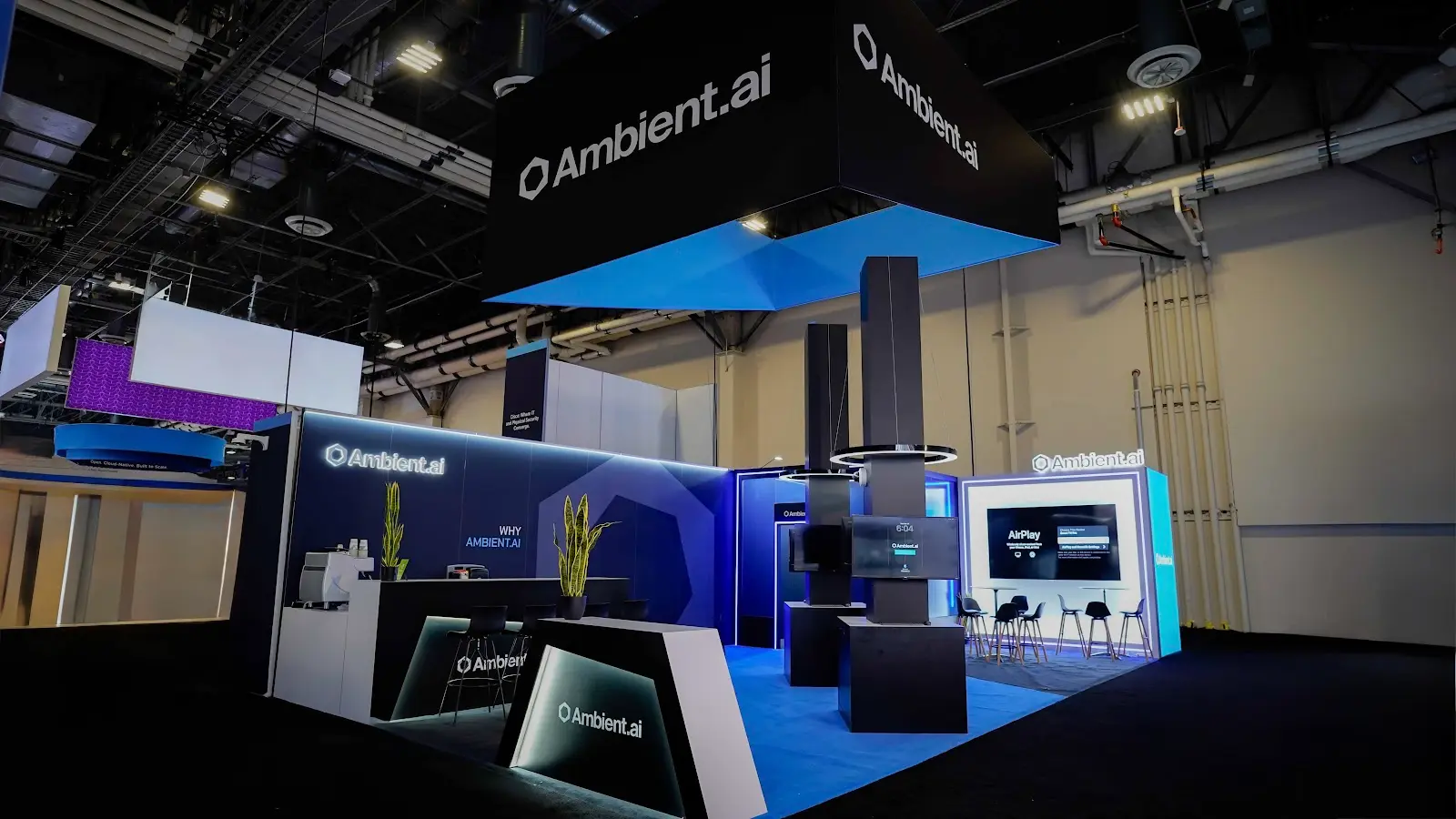
Orlando · Turnkey Video Wall Exhibits

Video Wall Rental for Orlando Trade Shows

The OCCC’s ceilings are painted black — a lit wall owns that airspace in a way no printed banner can. One team designs, builds, installs and supports the exhibit and its LED wall together, for IAAPA Expo, MegaCon, the PGA Show and every event across both buildings. One drawing set, one fixed number, one crew on the floor.

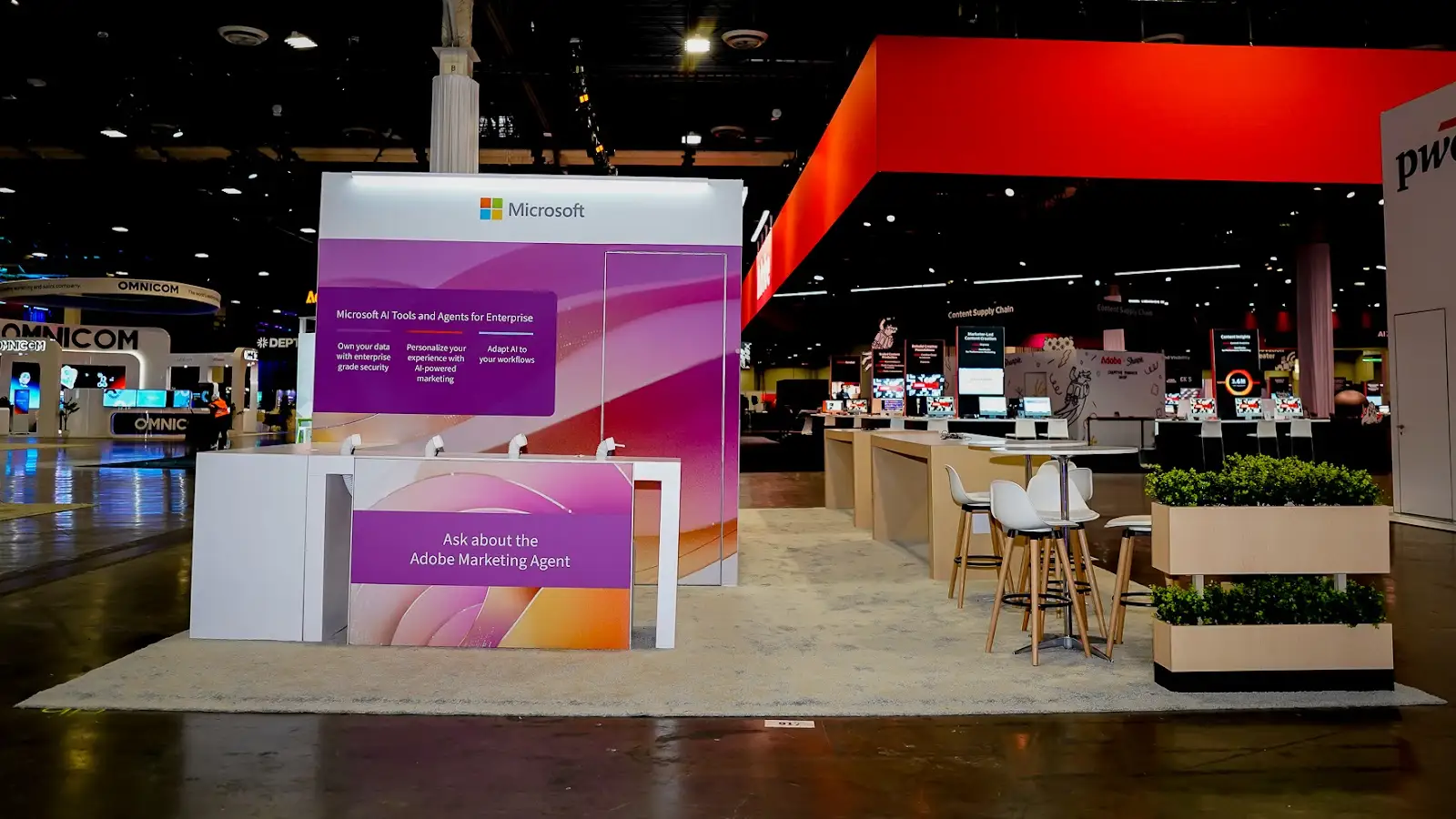
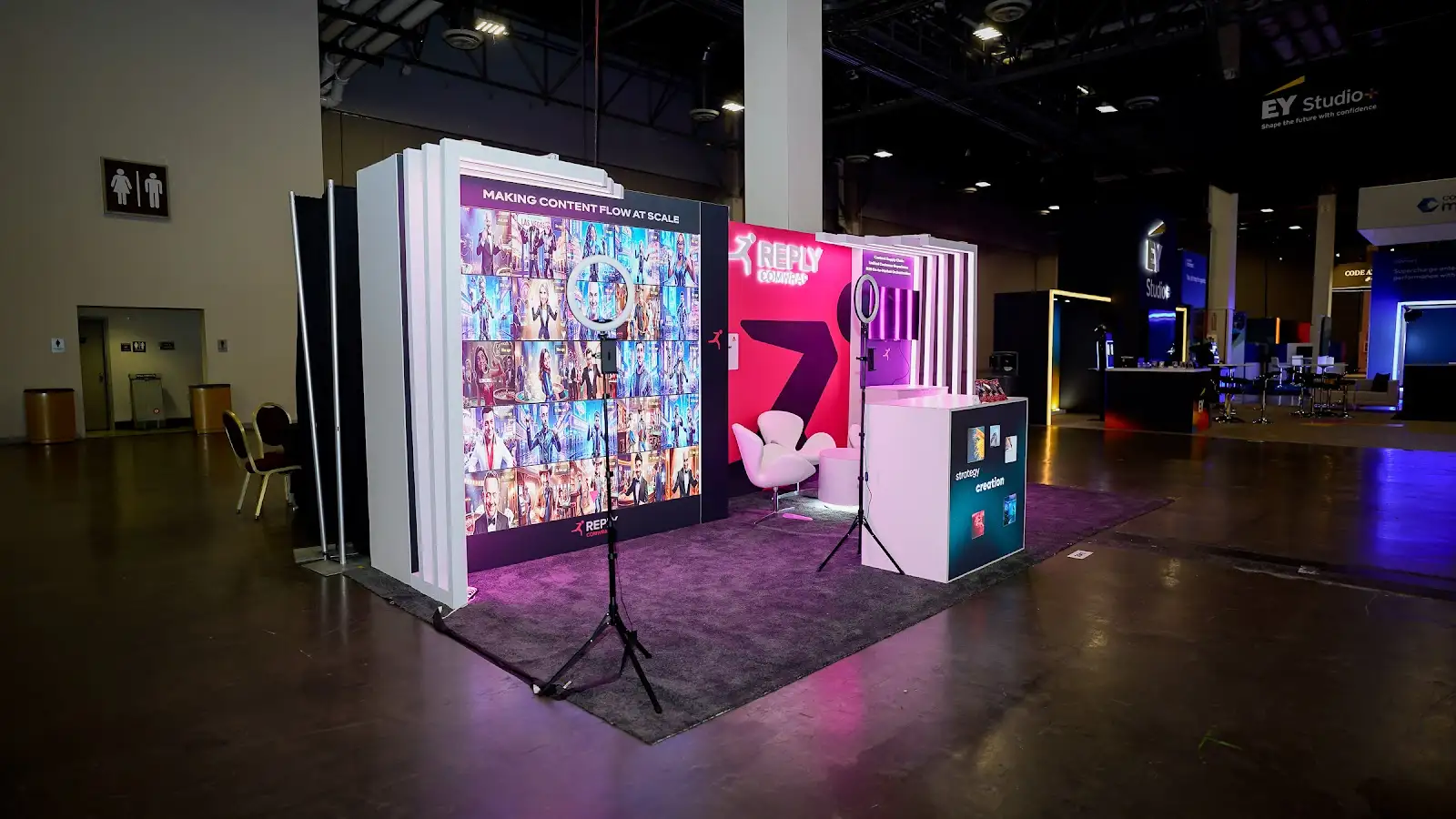
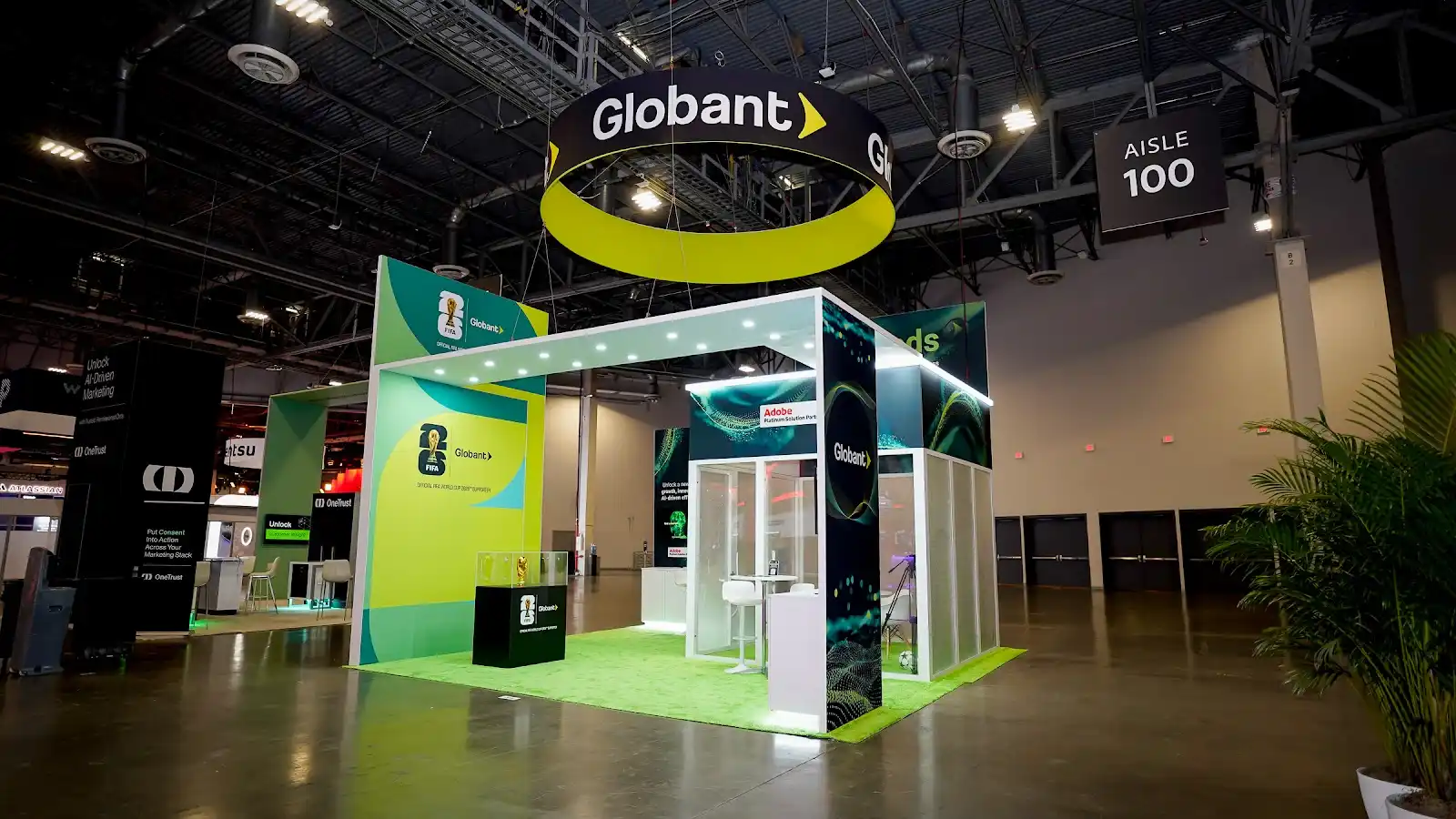
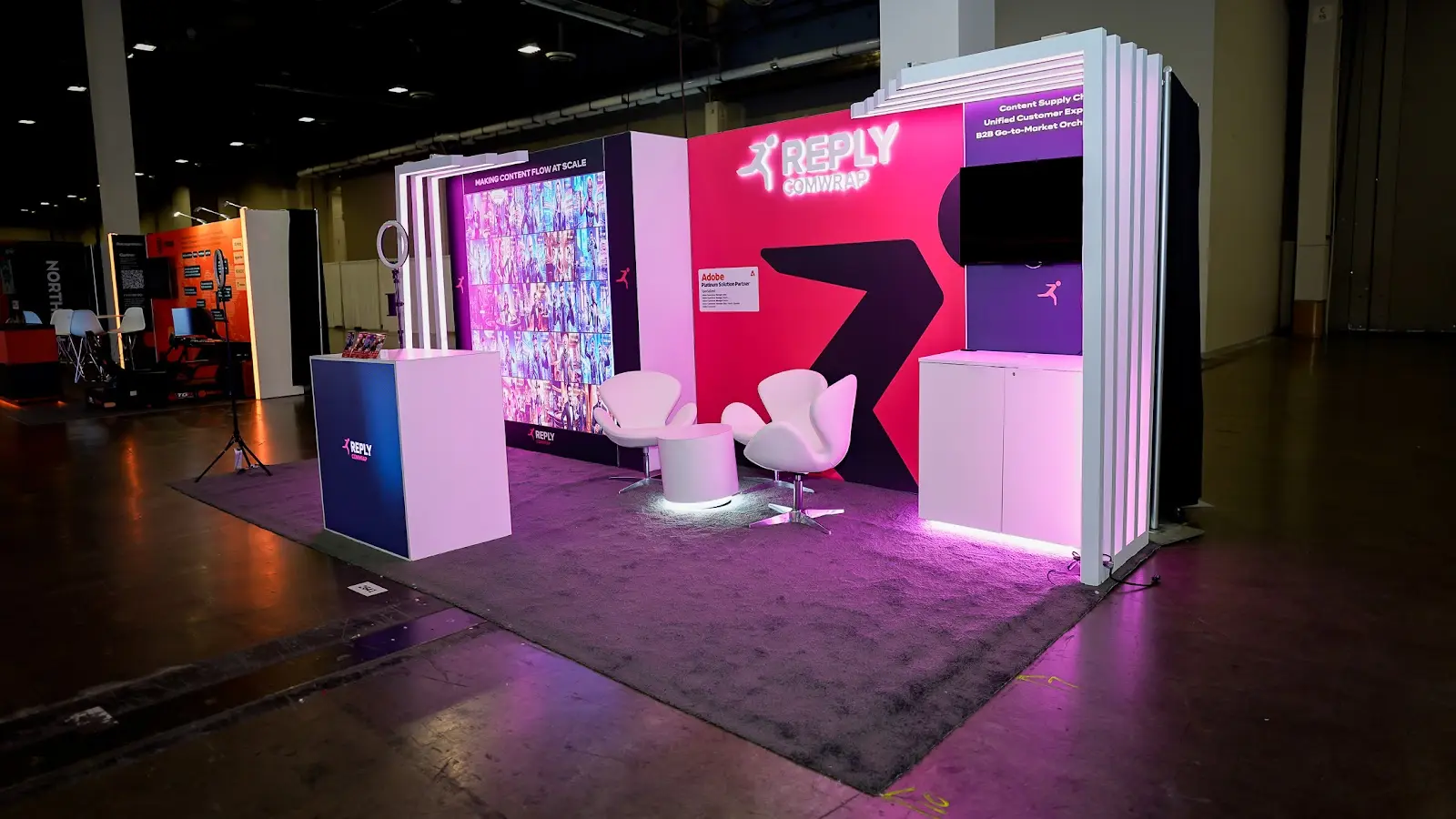
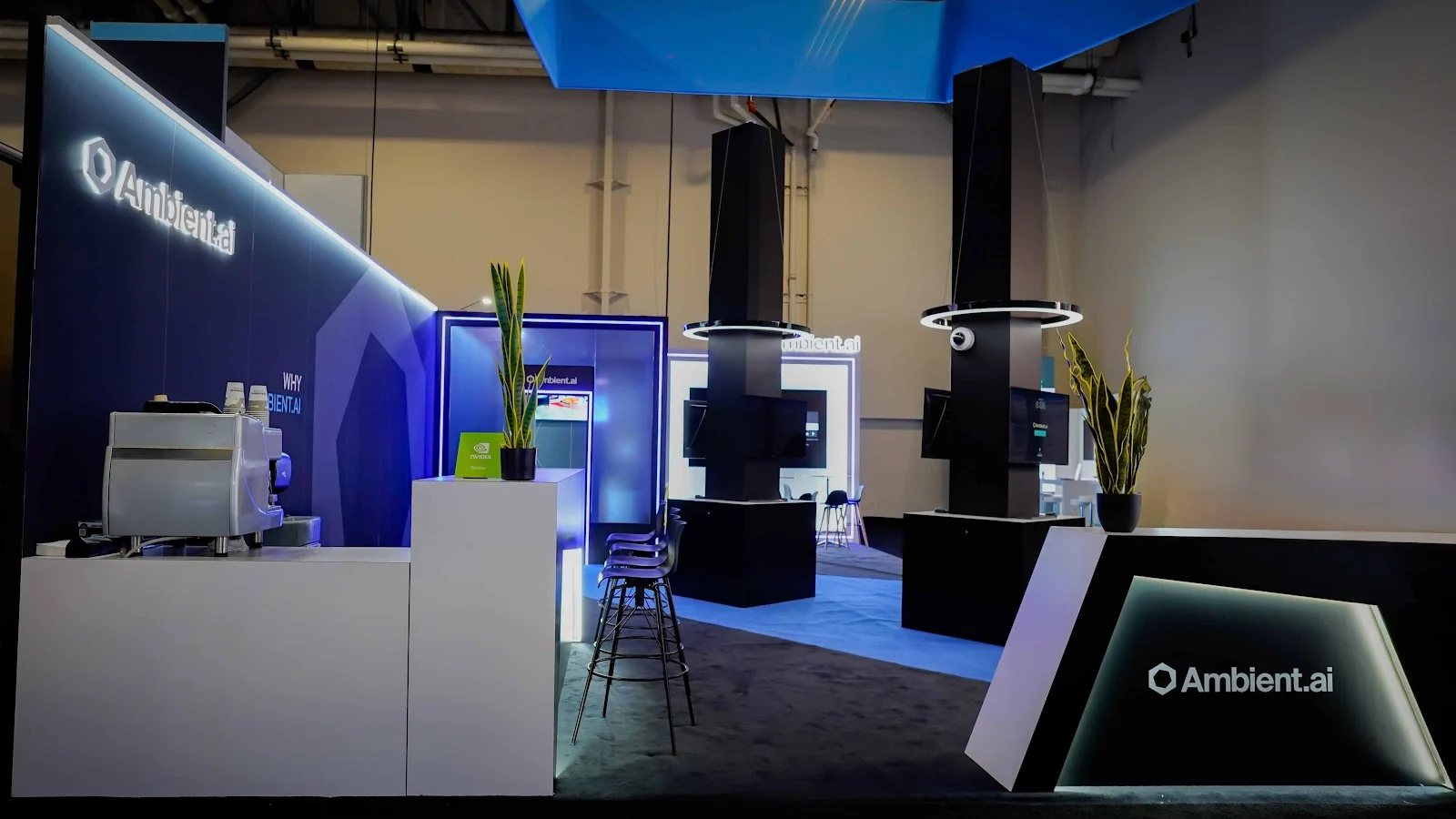
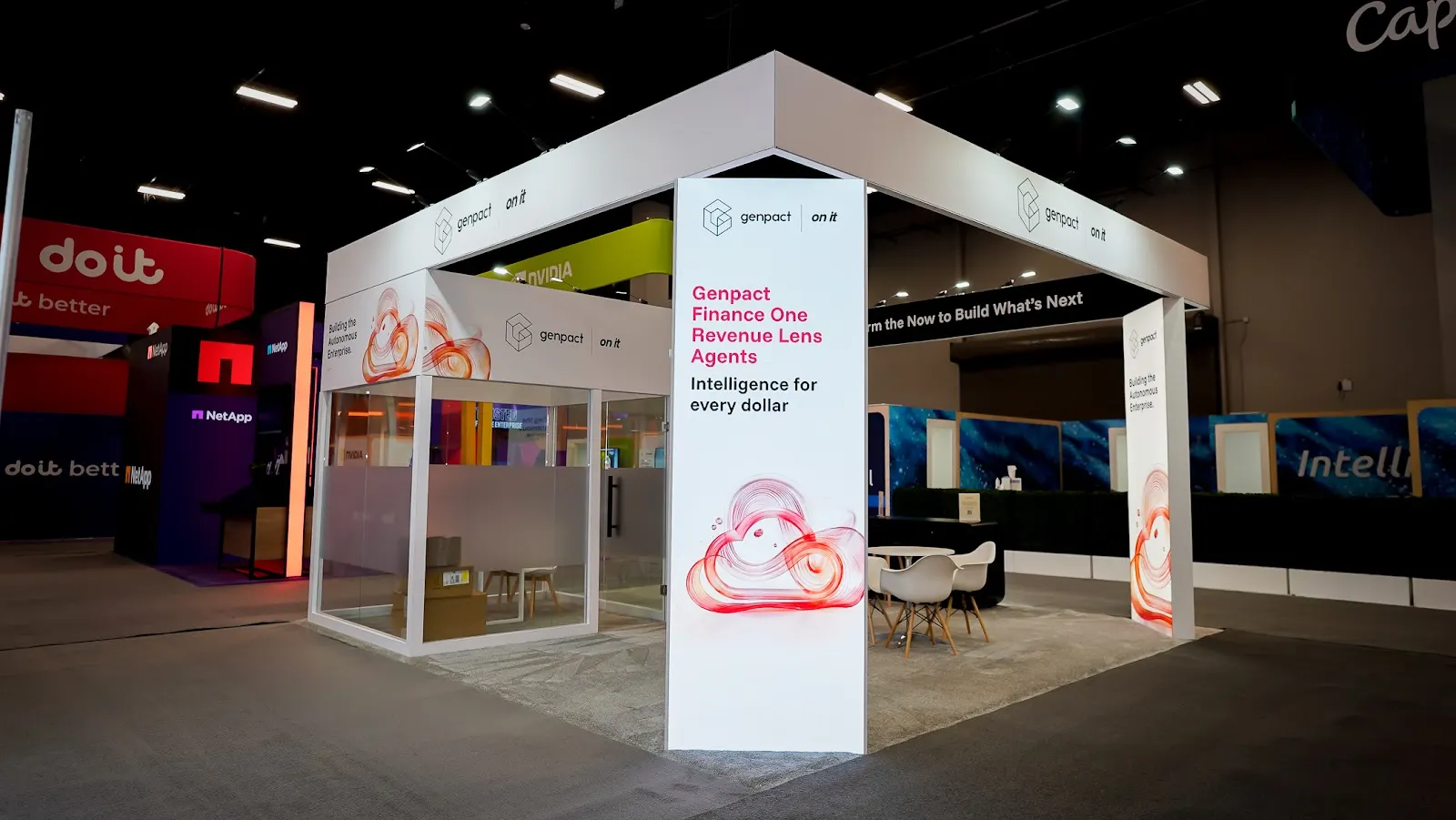
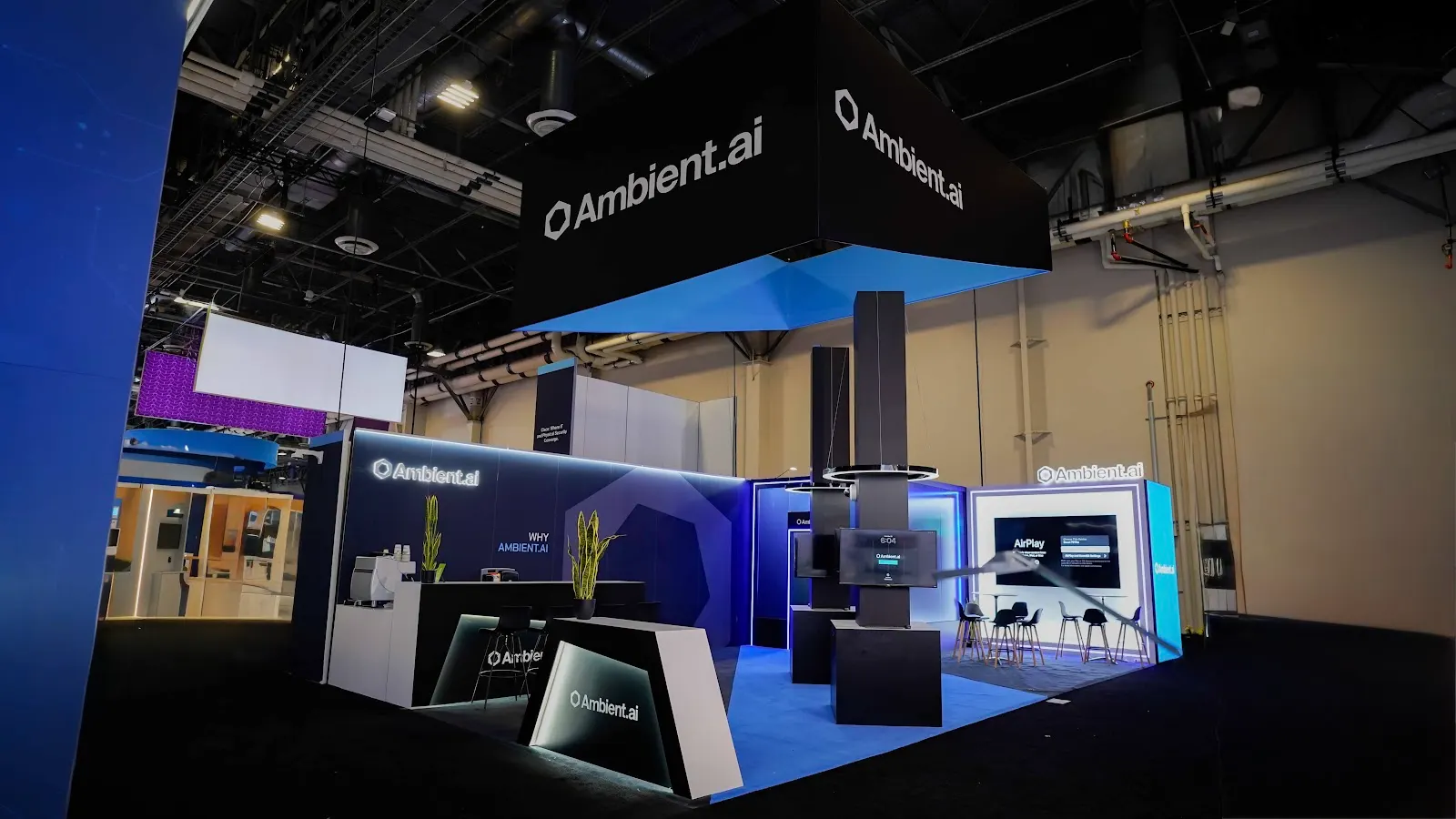
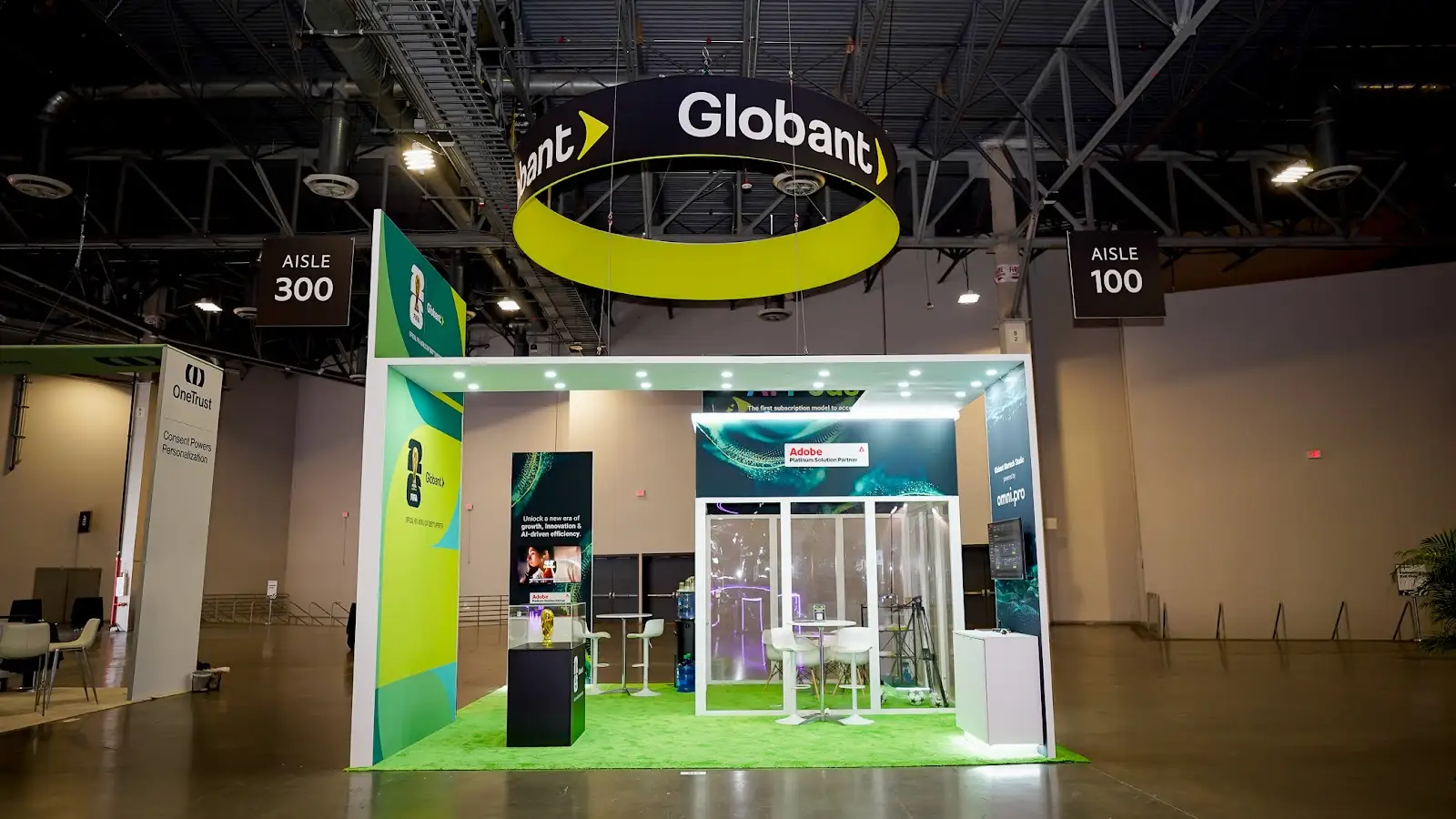
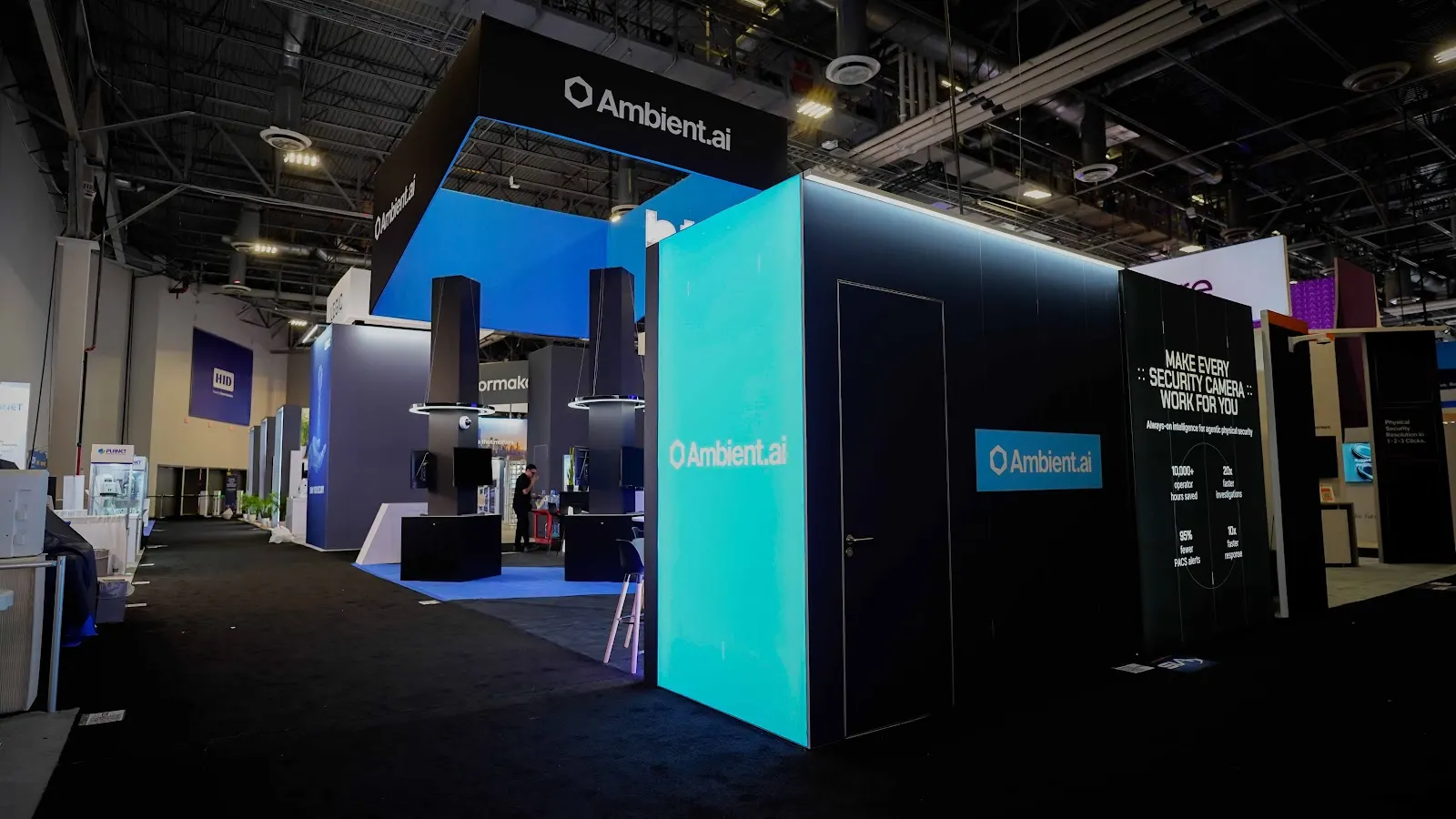
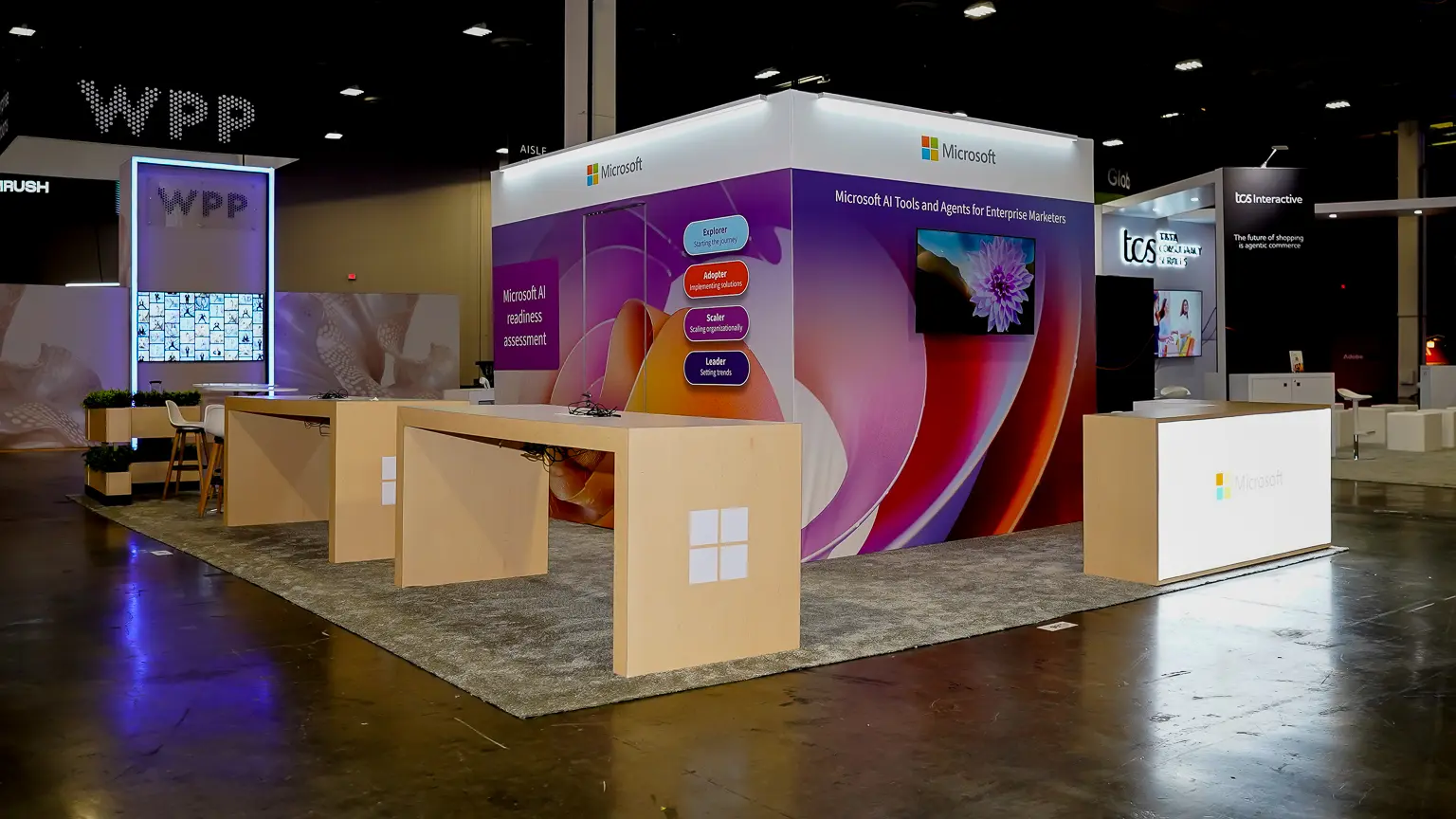
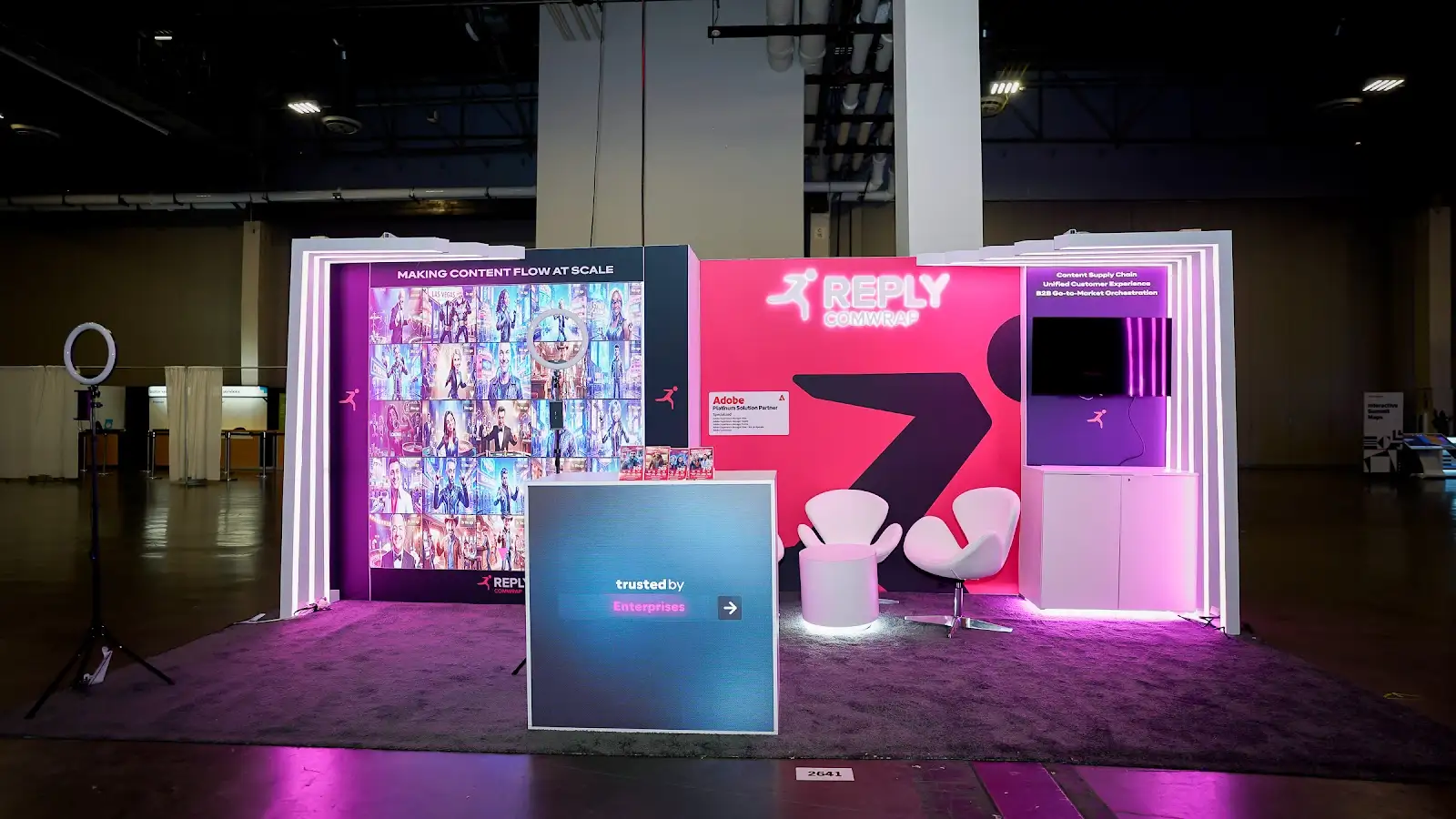
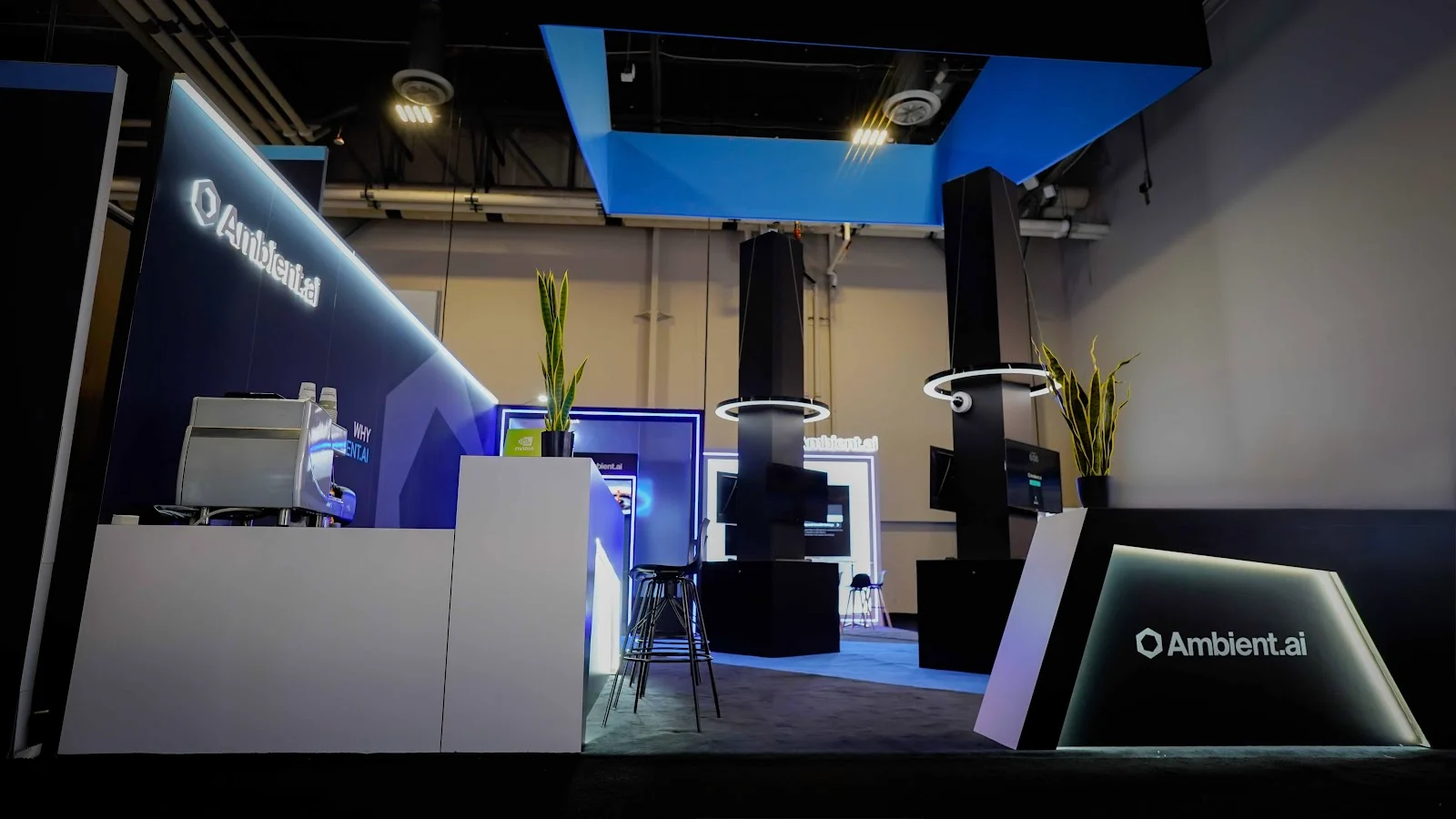
LED video wall rental integrated into a custom trade show exhibit built by Pure Exhibits for a Orlando show
One teamStructure & screen
One drawing setWall is in the design
One numberNo separate AV invoice
One dedicated crewInstall, show, strike
The Problem

A bolted-on screen announces itself. Attendees read it in half a second and keep walking.

Not because anything is broken. Because of a hundred small things nobody owned: a cabinet seam through the logo, a processor visible under the counter, content letterboxed inside a wall that isn’t 16:9, booth lighting washing out the screen it’s aimed at. Walk any aisle at IAAPA or the PGA Show and you can pick these booths out in seconds. Attendees can’t name what’s wrong. They just register that something is slightly off — and move on to the stand next door.

Screen rented separately

  • The screen is chosen after the booth is finished, so the design bends around a rectangle nobody planned for
  • Content is mastered at 16:9 because the wall’s real dimensions surfaced too late to matter
  • Cabinet joins and brackets land by accident — occasionally straight across the brand mark
  • Nobody reconciled booth lighting with screen brightness, so one of them always loses
  • An AV crew and an exhibit crew who’ve never met, meeting for the first time at your move-in slot
  • When something fails on day two, the first hour is spent establishing whose job it is

Designed into the exhibit

  • Wall size and placement are outputs of the sightline study, decided before structure is drawn
  • The true pixel map, safe areas and seam plan reach your creatives at concept, not at crunch
  • Seams are composed against the artwork so they disappear into it instead of cutting through it
  • Lighting is designed around a screen we know the exact brightness of, because it’s ours
  • One crew handles structure and screen through a single OCCC move-in slot
  • A technician stays through show hours with spares — accountability has one name on it
The Fix

Design the screen and the structure as one object, and the half-second read changes.

If you’re searching for video wall rental in Orlando, you have two routes. An AV house will rent you panels and a technician, and if you already own a booth that’s a perfectly sensible thing to do. Or an exhibit house designs the wall into the structure from the first sketch, so the screen and the space it lives in are one object rather than two things standing near each other.

Pure Exhibits does the second, as a genuinely turnkey programme: design, engineering, fabrication, graphics, the wall and its processing, show services paperwork, install, on-floor support and strike — one vendor, one contract. We build for the shows that fill the Orange County Convention Center — IAAPA Expo, MegaCon, the PGA Show and the medical and technology meetings that rotate through both buildings — and where large-format LED belongs in an exhibit, it’s drawn, engineered and quoted as part of the build rather than bolted on at the end.

On the Floor

The walls, running — filmed at the shows

You can’t judge an LED wall from a still image. These clips show the walls live — brightness, motion and crowds as they actually were on the floor.

SocureIntegrated LED build
RadwareIntegrated LED build
Sardine — MRC 2026Integrated LED build
EVEIntegrated LED build
What It’s Actually For

Six jobs a video wall can do inside an exhibit. It can’t do all six at once.

The wall that tries to attract, explain, present and photograph all at once serves four masters and none well. The productive question is which single job yours is for.

Large LED video wall drawing attention from the aisle at a Orlando trade show

Pull people from three aisles away

On an IAAPA floor where the exhibits themselves are rides and attractions, motion at height is still the most reliable way to be noticed. Large simple frames, slow movement, almost no text — read at forty feet by someone walking, not standing.
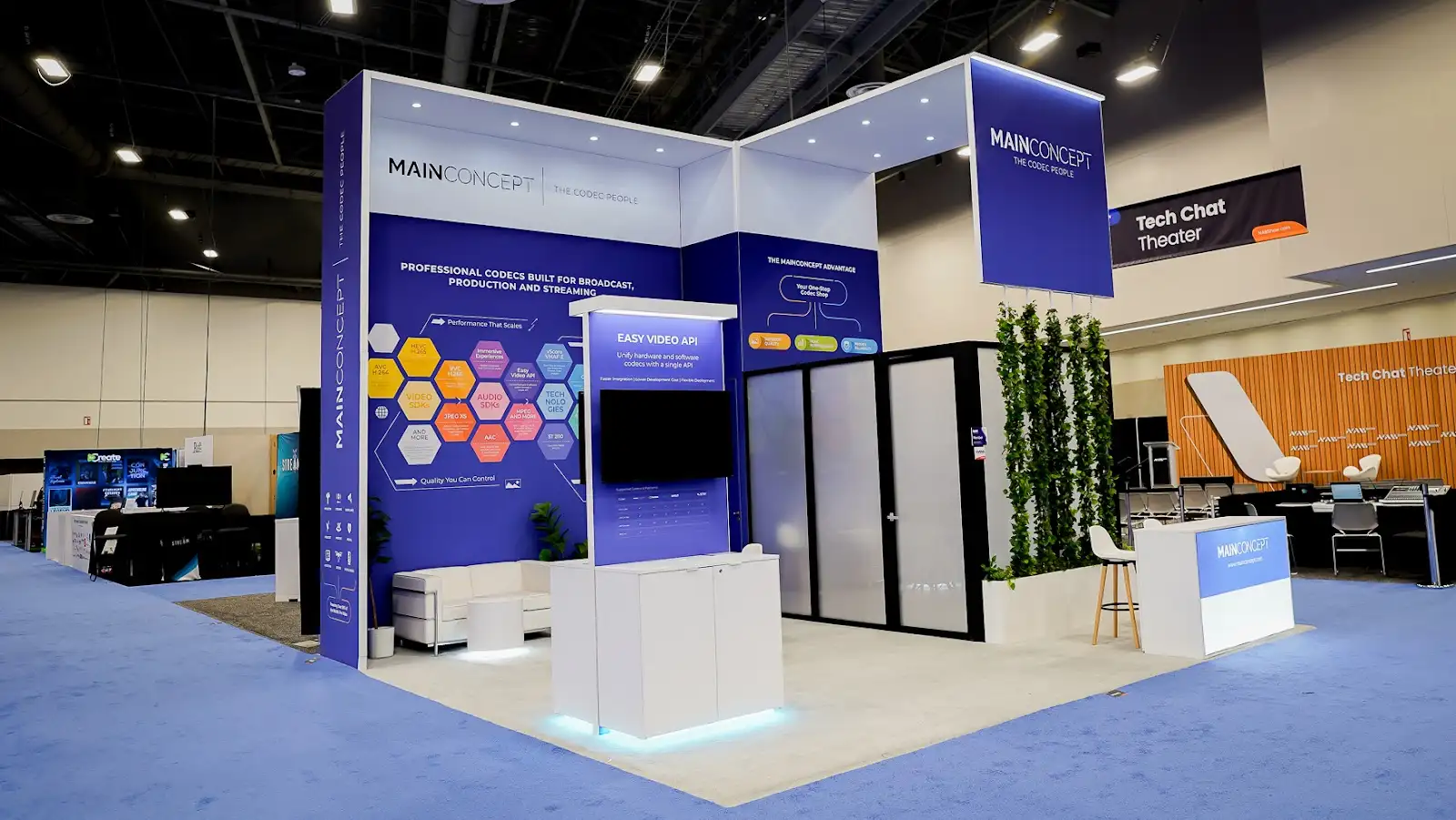
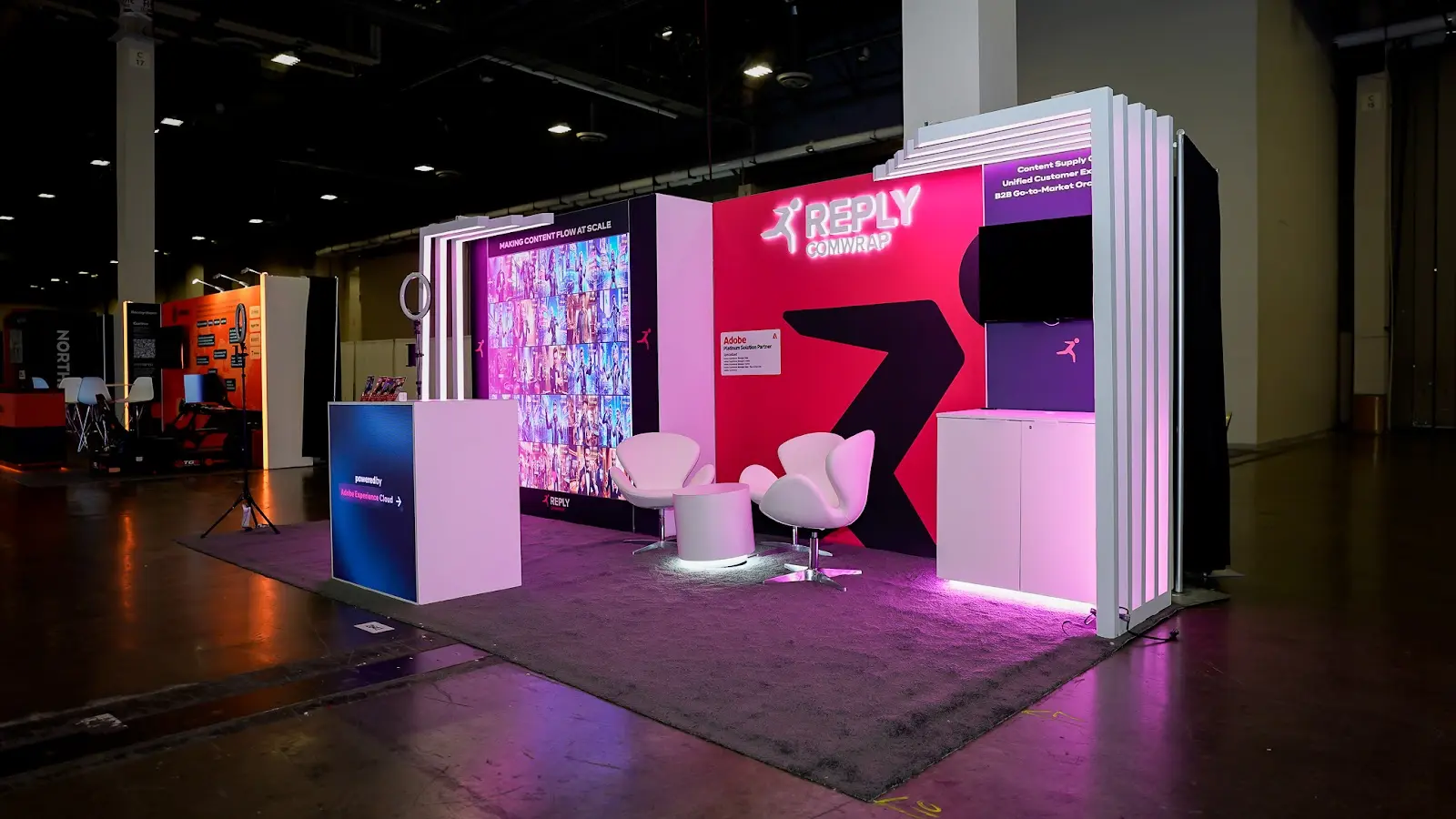
Presentation area anchored by a screen inside a custom trade show exhibit

Anchor a presentation

Hosting talks reshapes the booth: the wall rises for a standing crowd, the bay deepens so listeners clear the aisle, and sound is aimed at them rather than sprayed across the neighbours — details that live in the floor plan, not the AV order.

Staff and visitors in conversation beside screens in a custom island trade show booth

Give staff an opening line

Nobody enjoys cold-approaching strangers, including your best people. A wall running something worth stopping for does the approach for them — visitors arrive curious, and staff start mid-conversation instead of from zero.

LED panels wrapping the structure of a trade show booth to create an immersive environment

Make a room feel like somewhere

Wrap the LED around a corner or take it floor to ceiling and the booth stops containing a screen and becomes one. At the OCCC, under those black ceilings, an environmental wall doesn’t just impress — it owns the airspace.

Screen-led messaging in a trade show exhibit that can be updated between shows

Carry messaging that changes

The pitch that was right at IAAPA in November won’t be right unchanged at your spring show. Digital content updates overnight for free; printed graphics bill you again for every revision, plus freight.

Visitors photographing a video wall inside a custom trade show exhibit

Be the photograph

At consumer-heavy Orlando shows the audience arrives phone-first. A wall composed with the camera frame in mind gets photographed on purpose — and every share is the booth working an audience that never entered the hall.

Bringing It To Life

From an empty floor plan to a lit wall on show morning

Six stages, one team, one contract. At the OCCC the calendar belongs to the venue — its rigging department, its service deadlines, its fire marshal — so the filing starts long before the fabrication does.

01

The brief and the floor plan

Your show, your building — North/South or West at the Orange County Convention Center, which are not interchangeable — your footprint and what you need to happen inside it. We look at which aisles feed your space and where the crush comes from between sessions, because that, not your budget, decides how big the wall should be.

Week 1
Island exhibit layout planning for a Orlando trade show booth
02

Concept and 3D render

Structure, screen, lighting and traffic flow are resolved together in one 3D model, so the thing you approve is the thing that ships — not a booth render with an AV allowance floating beside it.

Weeks 2–4
Concept design for a custom trade show exhibit with an integrated LED video wall
03

Engineering and the content spec

The carrying structure is engineered to the OCCC’s thresholds — chain hoists above 100 lbs, rated hardware, engineer’s certification where demanded — while your agency gets the content spec: pixel map, safe areas, seams, formats.

Weeks 4–6
Brand content composed to the native resolution of a trade show LED video wall
04

Fabrication and a full build

Everything is stood up complete in our shop first, wall live and content playing. Faults found there cost hours; the same faults found on the second floor of the West Building cost the event.

Weeks 6–10
Custom exhibit structure with integrated LED wall assembled and tested before shipping
05

Show services and freight

Electrical filed on advance rates, the rigging booking placed with the OCCC’s own department — dedicated team if the schedule needs certainty — and freight consolidated into one targeted slot. This is the stage that decides whether show week is boring, which is the goal.

Weeks 8–12
Exhibit freight and show services coordination for a Orlando convention centre install
06

Install, show days, strike

One crew builds it in your targeted move-in window. A technician stays through show hours with spare cabinets. The same team strikes it and ships it out — useful in a building where the walk from dock to booth can be half a mile. You manage one relationship from first sketch to empty floor.

Show week
Completed custom trade show exhibit with LED video wall running on the show floor in Orlando

Swap steps 02 and 04 for a real render and a shop photo when you have them. A render beside the finished booth is the most persuasive image an exhibit house can show.

Sizing

What size wall does your booth actually need?

Footprint matters less than how far back someone can stand — and Orlando’s vast halls still hand most booths a ten-foot aisle. The most common mistake in trade show LED screen rental is buying more wall than that aisle allows. Starting points, not rules — we size properly once we’ve seen your floor plan.

10×10 InlineSingle large screen

A hundred square feet can’t afford a wall and doesn’t need one: it eats the budget and the standing room together. One big display in the back wall delivers the stop-and-look for a fraction of it.

10×20 Inline10–12 ft wide

Double the frontage is where a real feature wall enters the conversation. Everyone views it from a couple of metres, so finer pitch — usually wasted money — actually shows here.

20×20 Island12–16 ft wide

The island wall has two audiences — the aisle and the interior — and serving both is a structural problem as much as a visual one. From this size up the wall is architecture, engineered and approved, not equipment placed in a booth.

20×30 and up16–24 ft, or wrapped

Beyond 600 square feet, spend on shape before you spend on area. Wraps, curves and double-sided runs work multiple approaches at once — which matters in a building people cross half a mile of to reach you.

How We Design It In

The decisions that happen before anyone talks about screen size

01

Start from where people will stand

First we chart how the hall delivers people to you — feeder aisles, session surges, the half-mile West Building walk — and what has to register at forty feet versus four. Wall size, height and pitch are conclusions drawn from that chart. Buy the screen first and you inherit the classic mistake: a wall nobody can back far enough away from to read.

Open island exhibit planned around visitor sightlines to the video wall
02

Detail the structure and screen as one object

What makes a wall look built-in is invisible: cabinet depth hidden inside the wall section, cables in the structure, the processor boxed into millwork, the LED edge meeting its trim without a shadow gap. Miss those details and the wall reads as rented from across the hall.

Detail of an LED video wall meeting the surrounding booth structure cleanly
03

Light the booth around the screen, not at it

Under the OCCC’s black ceilings the wall is often the dominant light source in your space, and the lighting design has to accept that instead of fighting it. We balance the booth’s lighting against the screen’s measured output — faces lit, product lit, wall still luminous rather than flattened.

Trade show booth lit so the LED video wall stays bright under convention centre lighting
Orlando Specifics

The logistics that decide whether your video wall makes it onto the floor

Building a video wall is straightforward. Getting one into the Orange County Convention Center on schedule is the part that catches people out, because most of what it depends on is controlled by someone other than you. We handle all of it inside the exhibit programme.

  • The venue itself is the exclusive rigger. The OCCC’s own Rigging Services department installs everything overhead — outside contractors aren’t permitted to hang structures. Timing floats with move-in unless you pay for a dedicated rigging team, so we design and file for it rather than hoping.
  • Weight thresholds change the hardware. Anything over 100 lbs overhead requires a chain hoist, only rated rigging hardware is accepted, and the venue can demand a structural engineer’s certification. We engineer to those thresholds at design stage.
  • Power is ordered months out. Electrical, air, water and drainage all run through the OCCC’s exhibitor services system on advance deadlines, and internet is exclusive to Smart City. We calculate the wall’s load at design stage and file it with the rest.
  • Union labour, fire marshal scrutiny. Install and dismantle run on union labour, and multi-level or enclosed structures need stamped engineering drawings to the OCCC Fire Marshal — who does check.
~40 ft typical · Union

North/South Building

The majority of the North/South halls run around 40 feet of clearance — comfortable for large suspended walls and tall structures, with rigging points that vary enough across the floor that we confirm them against your exact booth location.

Half a mile long · Catwalks

West Building

Four storeys, half a mile long, with the exhibit halls up on the second floor. The trap is the catwalks: in the areas beneath them, hanging signs generally can’t be flown at all — a suspended wall booked under one has to be redesigned as ground-supported.

Black ceilings · Design fact

The light environment

The exhibit hall ceilings are painted black. Dark hanging signs vanish into them; anything luminous owns the airspace. It’s the single best argument for LED over print at this venue — a lit wall is visible in a way no dark banner can be.

2.1M sq ft · Two buildings

The scale problem

At 2.1 million square feet across two buildings, attendees survey the floor once and return to the stands they can find again. Height, light and a self-evident brand mark aren’t vanity here — they’re how you get found on day two.

Investment

What actually moves the number

No per-panel menu here — the wall isn’t a product we sell off the exhibit it belongs to. What we commit to instead is pricing your choices early: what the extra four feet costs, what the curve costs, what the OCCC’s rigging adds — so the trades happen on the drawing board.

The programme carries one fixed price: design, engineering, build, graphics, wall and processing, install, the show-floor technician, and strike. Services the OCCC sells directly — space, power, Smart City internet, drayage — remain on the venue’s invoice where you can see them.

  • Size dominates the price and is routinely over-bought — the aisle in front of the wall, not the hall, sets the useful maximum.
  • Pitch is bought by viewing distance, not pride. Past a few metres the fine-pitch premium literally cannot be seen.
  • Shape outprices area: curved and wrapped runs demand custom cabinets and slower installs than flat panels ever do.
  • Hung or grounded is a bigger fork at the OCCC than most venues, because the venue itself is the only permitted rigger — grounded designs sidestep the queue and the fees.
  • Content is a real cost centre whoever produces it — the brightest wall in the hall running weak content is just expensive noise.
Questions

Video wall rental in Orlando, answered

Do you offer video wall rental in Orlando?

Yes — built into a custom exhibit. For Orlando shows the wall is part of the booth’s drawing set from day one; we supply, install, run and strike it under a single contract, including the OCCC’s rigging process. If you only need panels dropped into an existing stand, an AV rental firm is the right call, and we’ll point you to one.

How much does a trade show video wall rental cost in Orlando?

Inside the exhibit price, never per panel — the structure and the screen are one build. Size moves the number most, then pitch and shape; at the OCCC the hung-versus-grounded decision matters more than usual, since all overhead work goes through the venue’s own rigging department at its rates. Give us the show and the space and the number comes back fixed.

LED or LCD — which is right for a trade show booth?

LED almost always, for exhibits. An LED wall is built from cabinets that butt together with no visible join, so it reads as one surface at any size. An LCD video wall is a grid of panels, each with a bezel, which means thin dark lines run through your image wherever panels meet — and they land across your logo as often as not. For anything carrying brand, the seams are the whole problem.

How do I know whether my booth even needs a video wall?

Decide the job before the hardware. Need to be found across 2.1 million square feet under black ceilings? A lit wall is close to unbeatable. Need long, quiet, technical conversations? Put the money into seating and acoustics instead. We’ll say so when video isn’t the answer — an idle wall is the costliest blank surface at the show.

Can you work with the content our agency produces?

Yes, and we’d rather you kept your agency. What we supply is the technical brief they need: exact pixel dimensions, aspect ratio, safe areas, seam positions and file formats, delivered at concept stage rather than the week before the show. Most content problems on a show floor are specification problems, not creative ones.

What happens if the video wall fails during the show?

Our technician is on site through show hours with spare cabinets. LED walls rarely fail dramatically; they fail as one dark cabinet in the corner of your brand mark, which is a short fix for someone present and a ruined stand for three days for someone who has to be called in. Because the wall is part of our build, there’s no question whose problem it is.

Which Orlando venues do you install video walls in?

Primarily the Orange County Convention Center, across both the North/South and West Buildings. The two are not equivalent: North/South halls typically offer around 40 feet of clearance, while the West Building’s catwalk areas generally can’t take hanging signs at all, so suspended walls there are redesigned as ground-supported. The OCCC itself is the exclusive rigging provider, which we plan and file for from day one.

How early do we need to start?

Give it three to four months for a custom build with integrated LED. Orlando’s constraints are procedural more than physical: the OCCC’s rigging bookings and advance service deadlines close early, engineer certification takes lead time when it’s required, and your agency needs the content spec while there’s still time to design to it.

Tell us the show and the building. At the OCCC, the building matters.

IAAPA, MegaCon, the PGA Show — send the event, the footprint and whether you’re in North/South or West. You’ll get a straight answer on whether large-format video earns its place under those black ceilings, what job it should do, and one fixed number for the whole build.