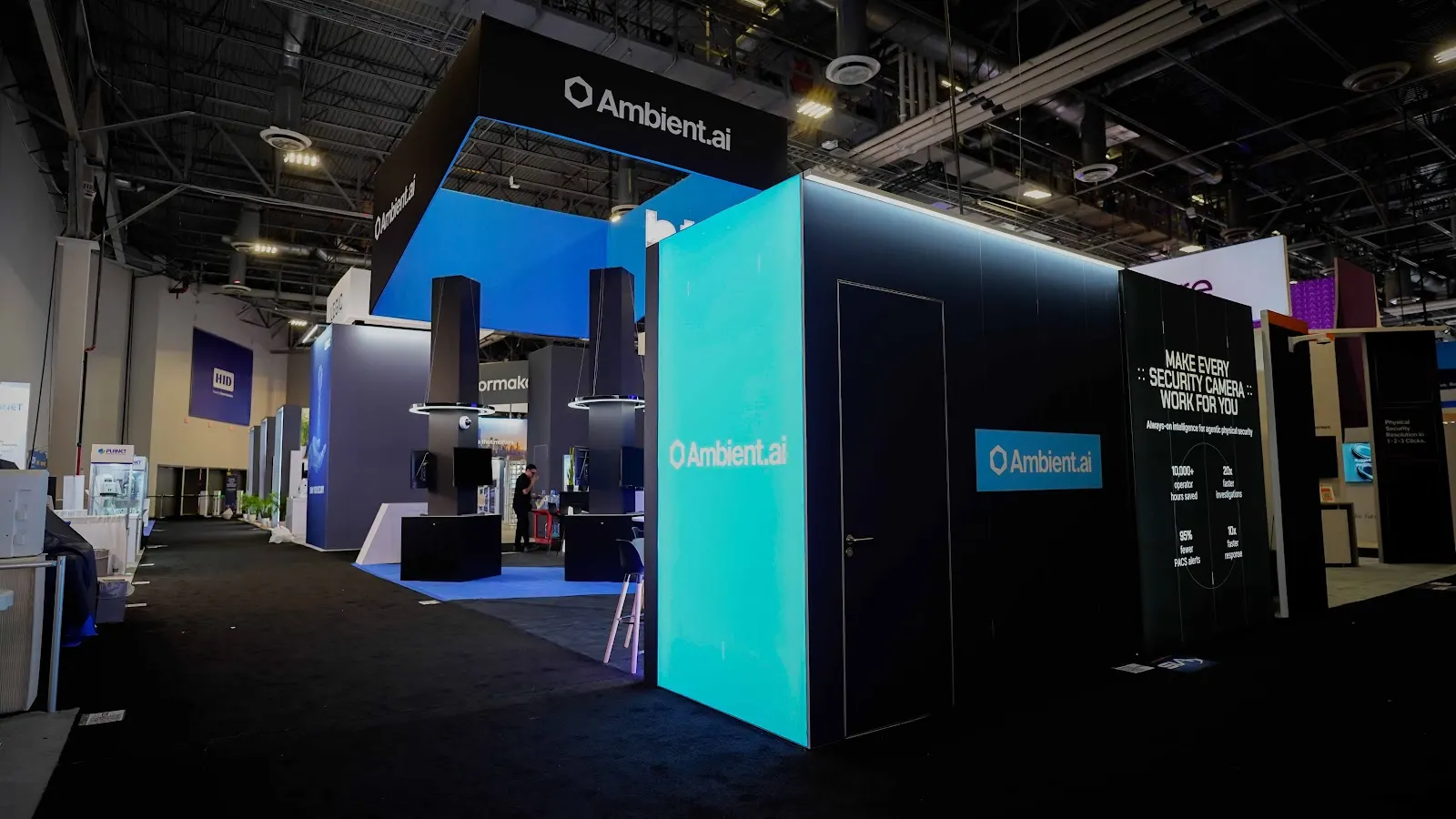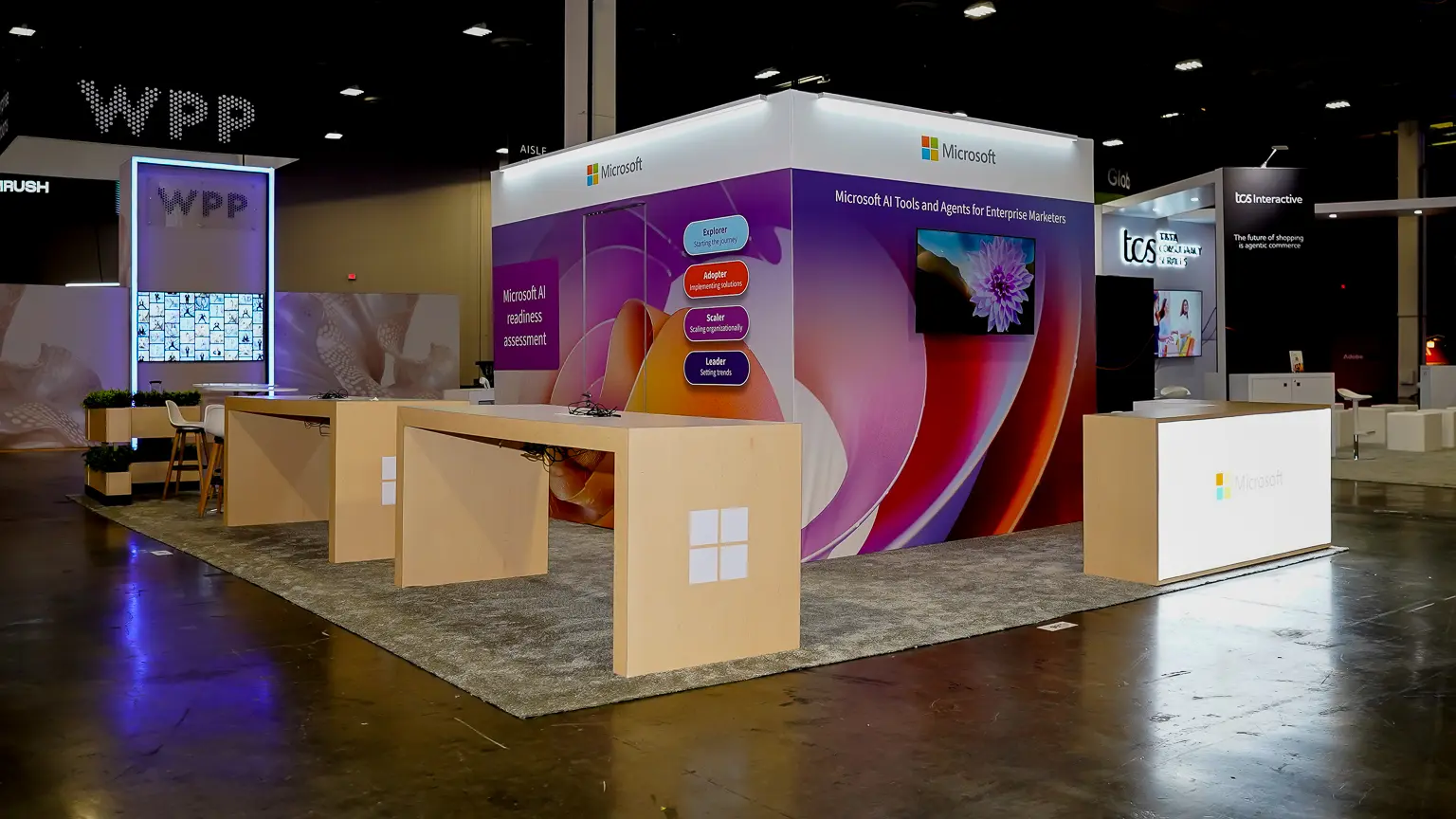
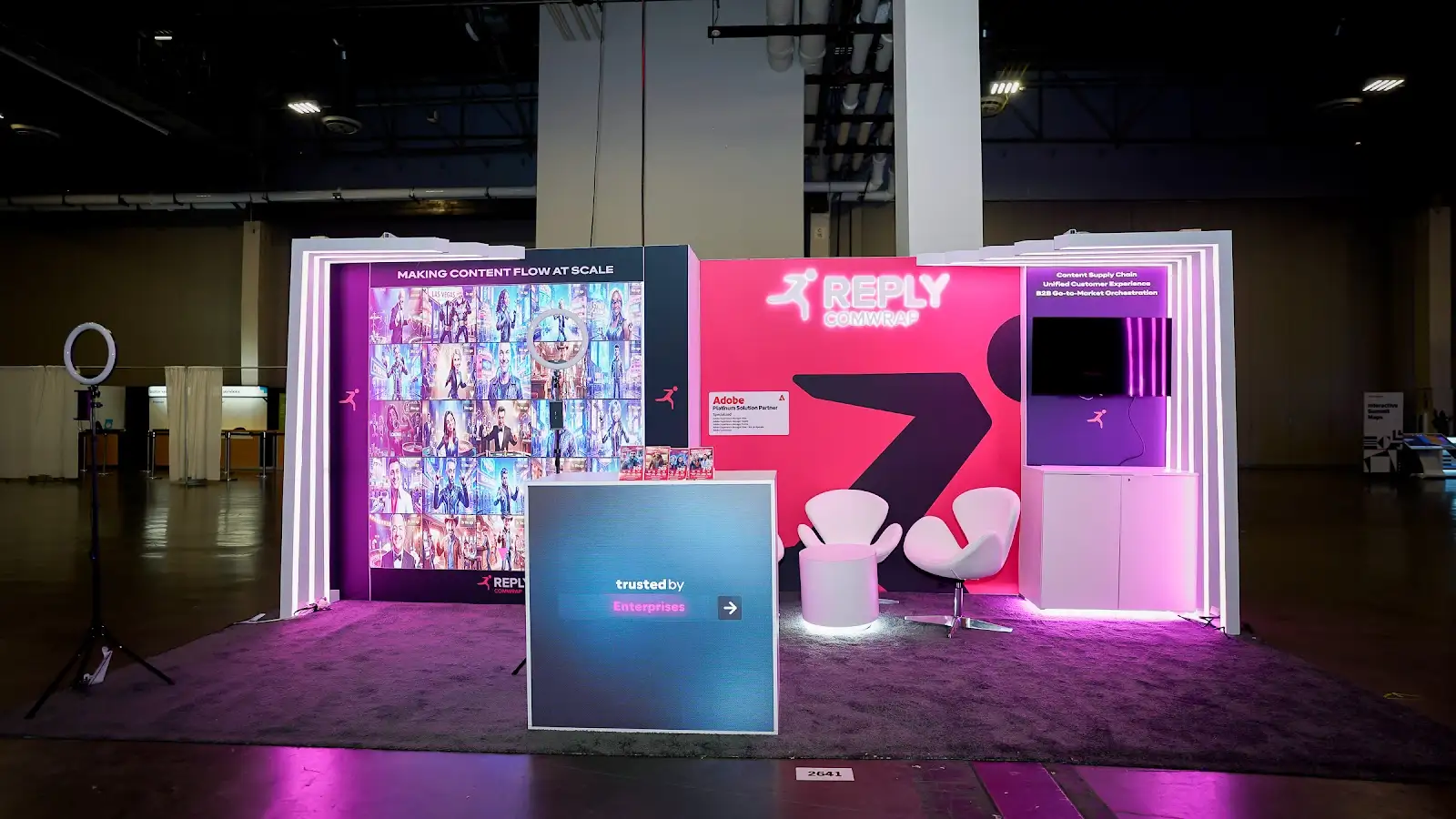
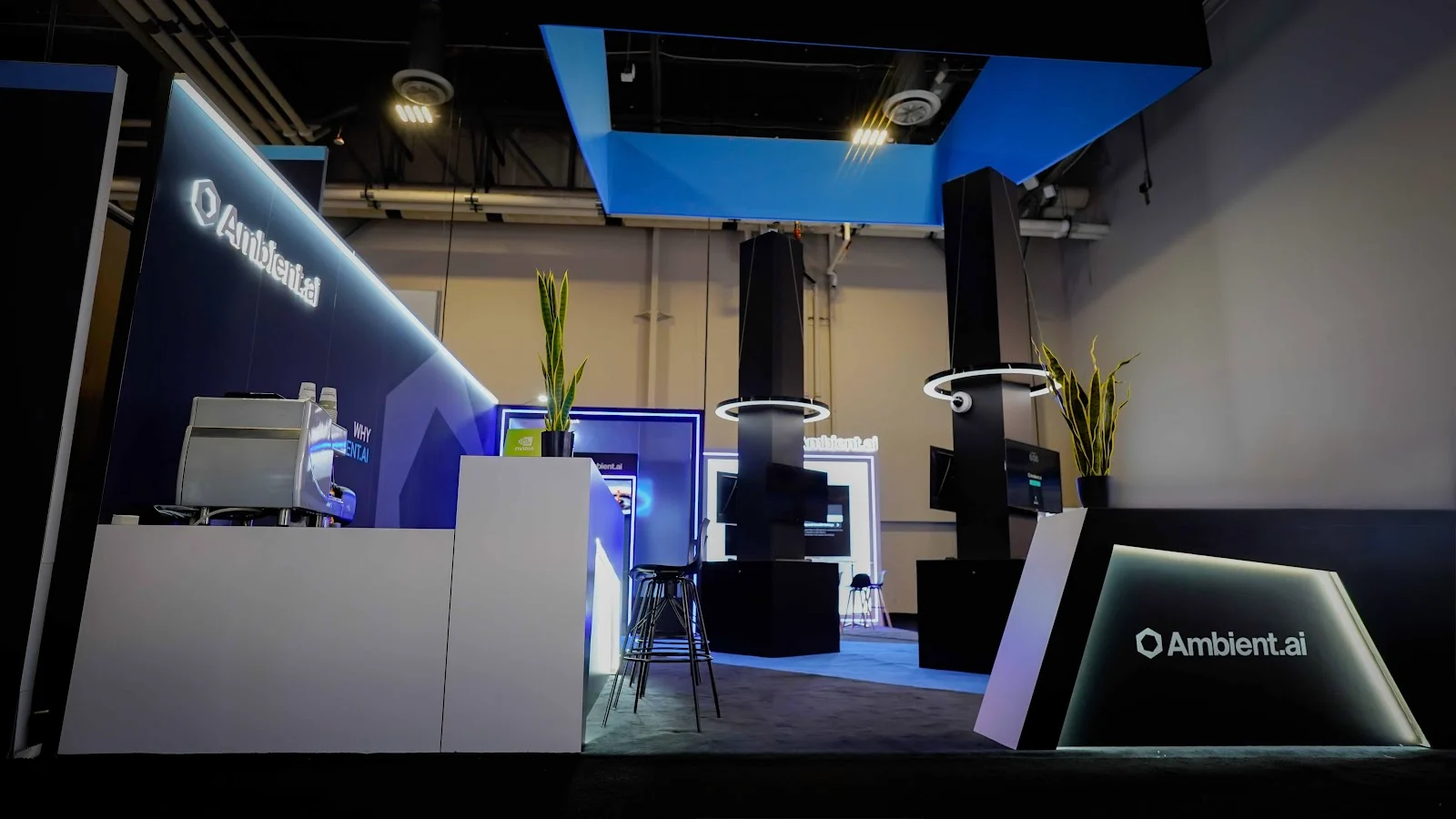
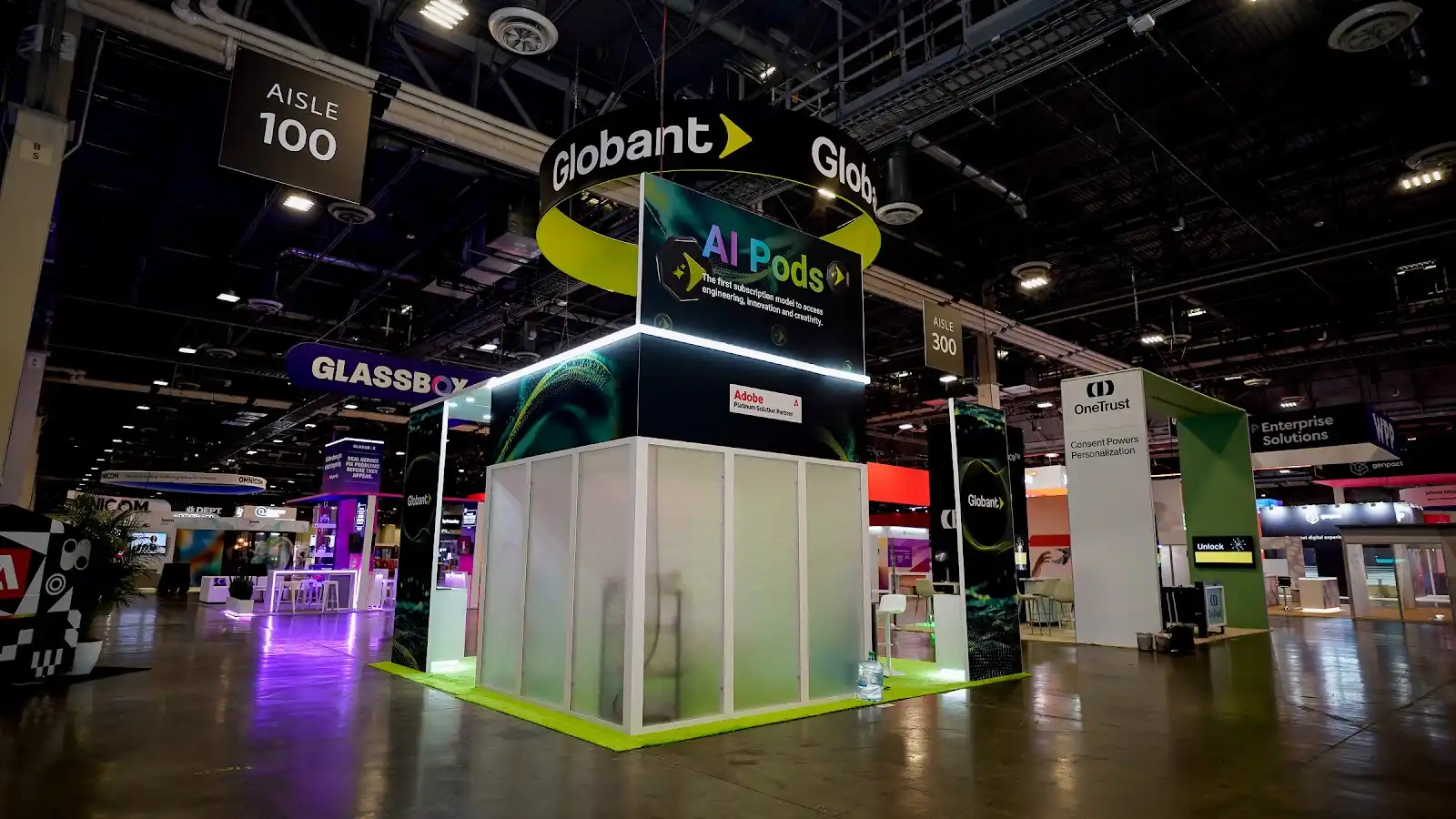
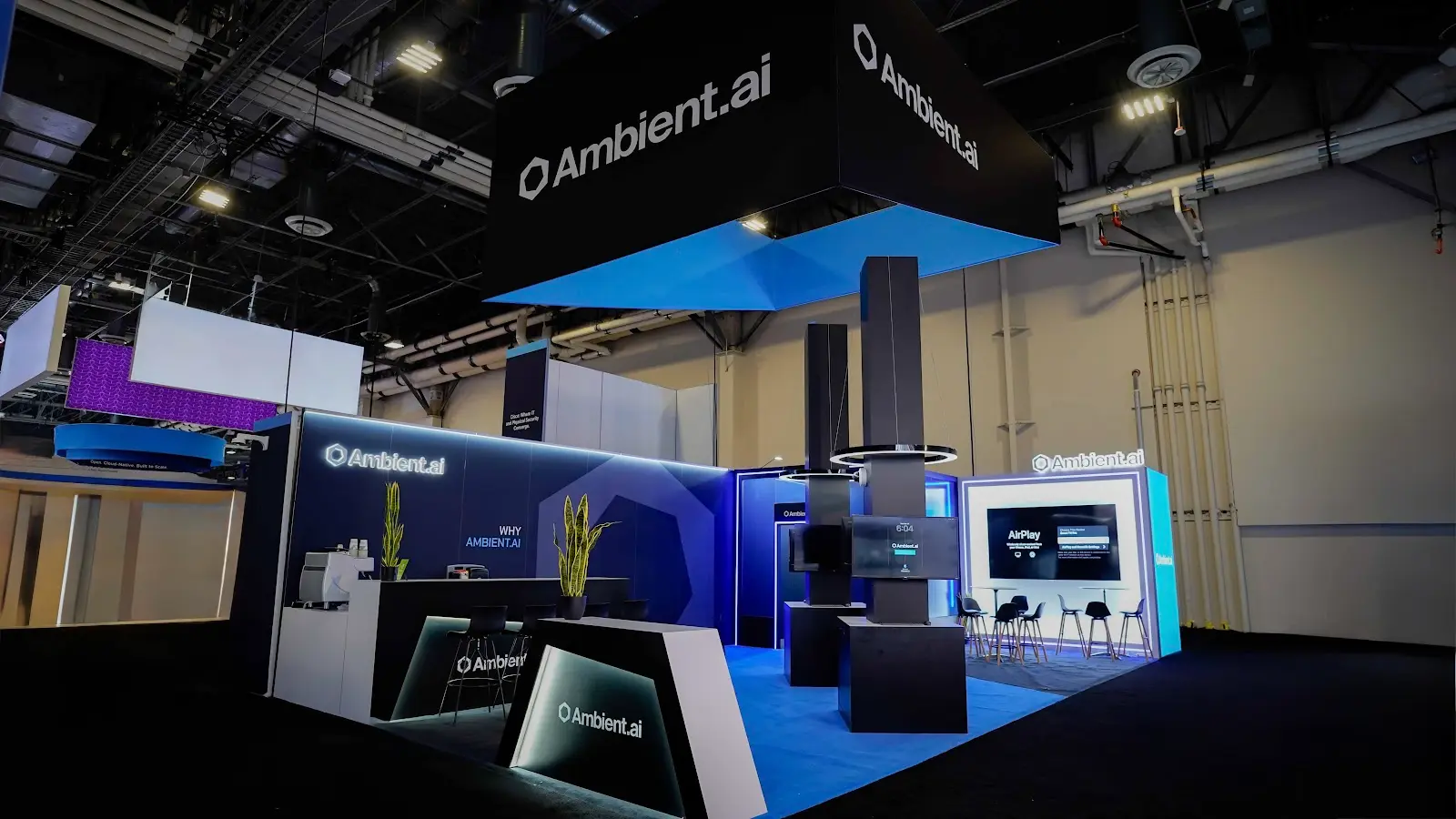
San Diego · Turnkey Video Wall Exhibits

Video Wall Rental for San Diego Trade Shows

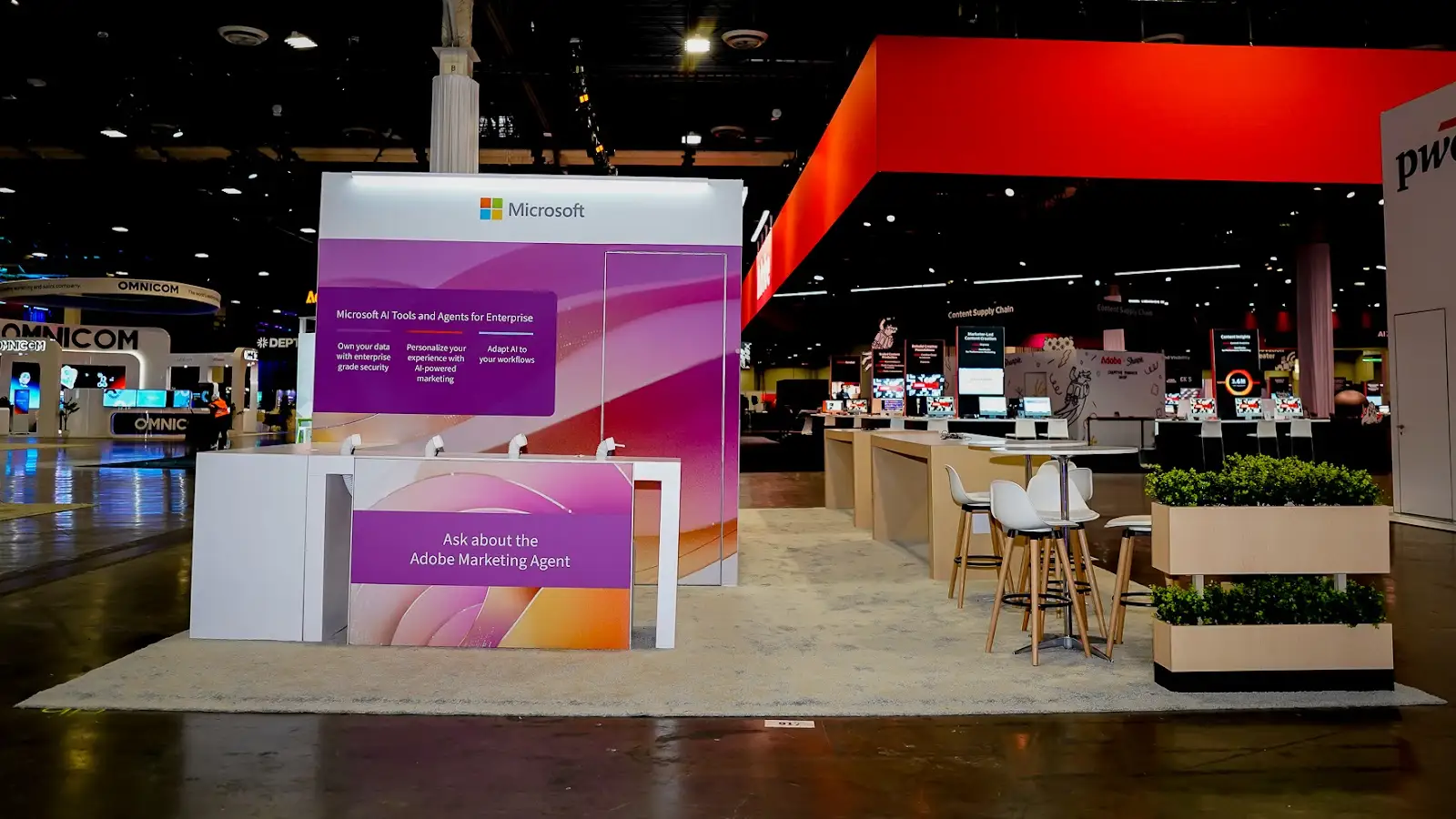
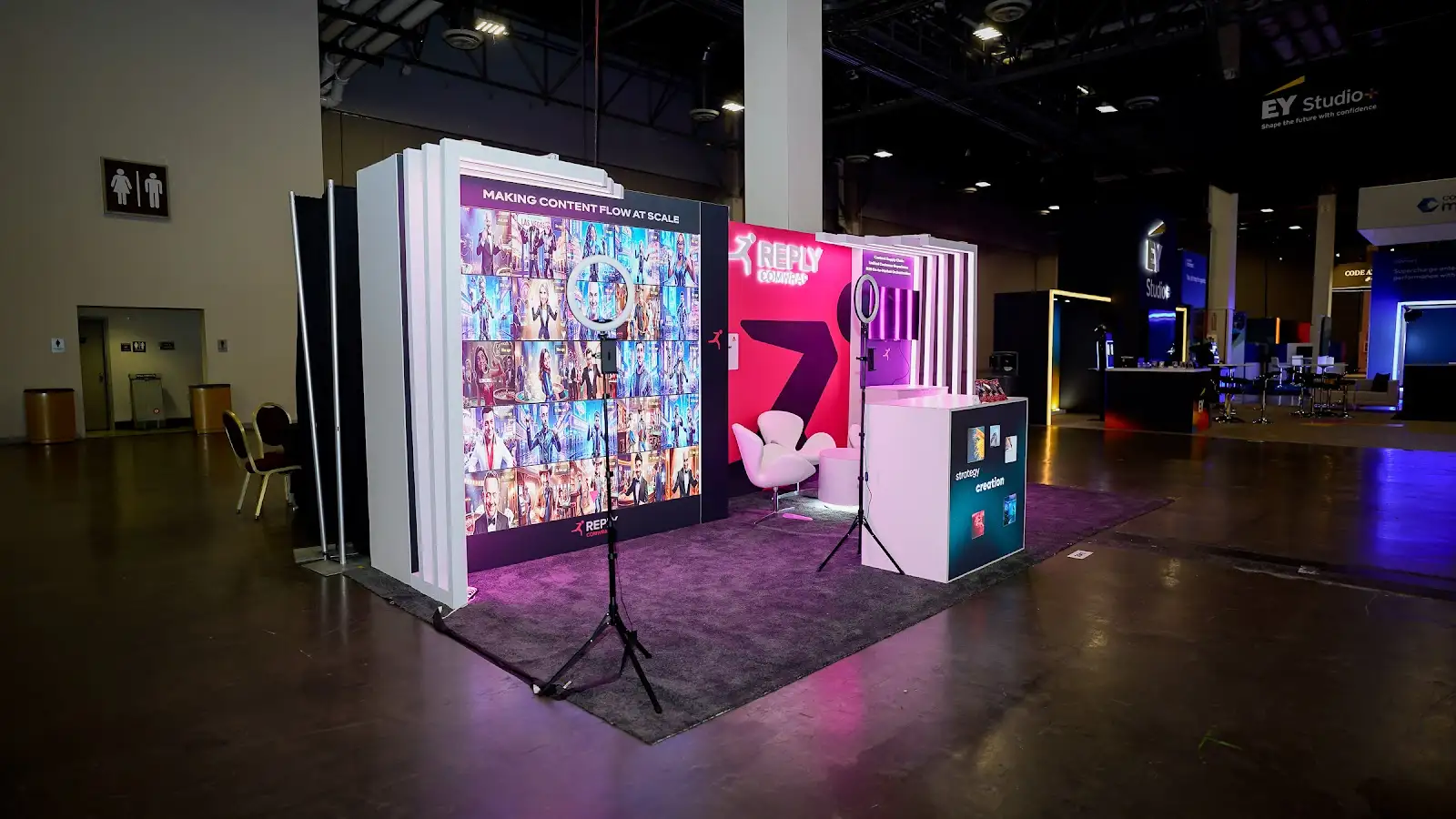
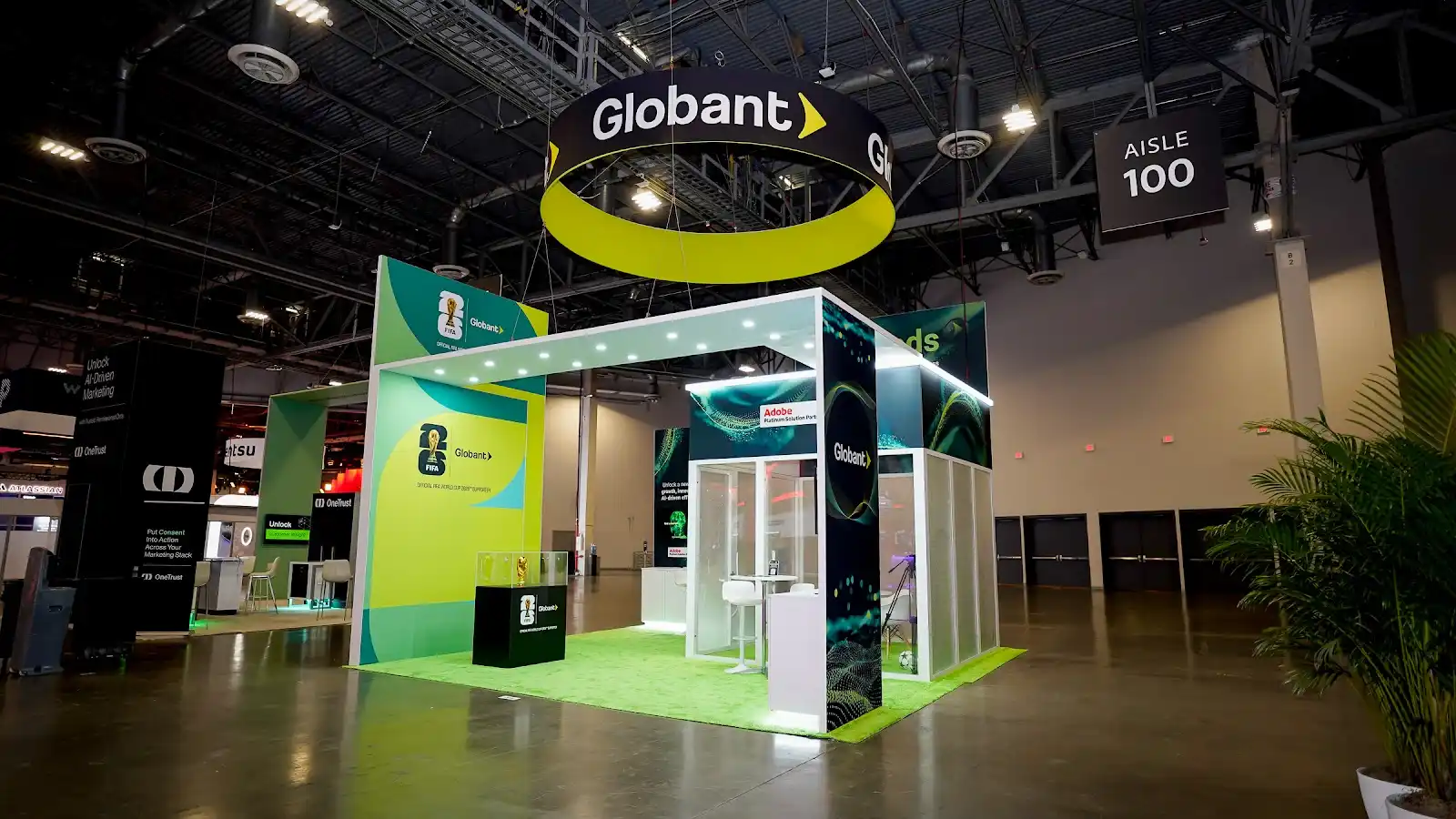
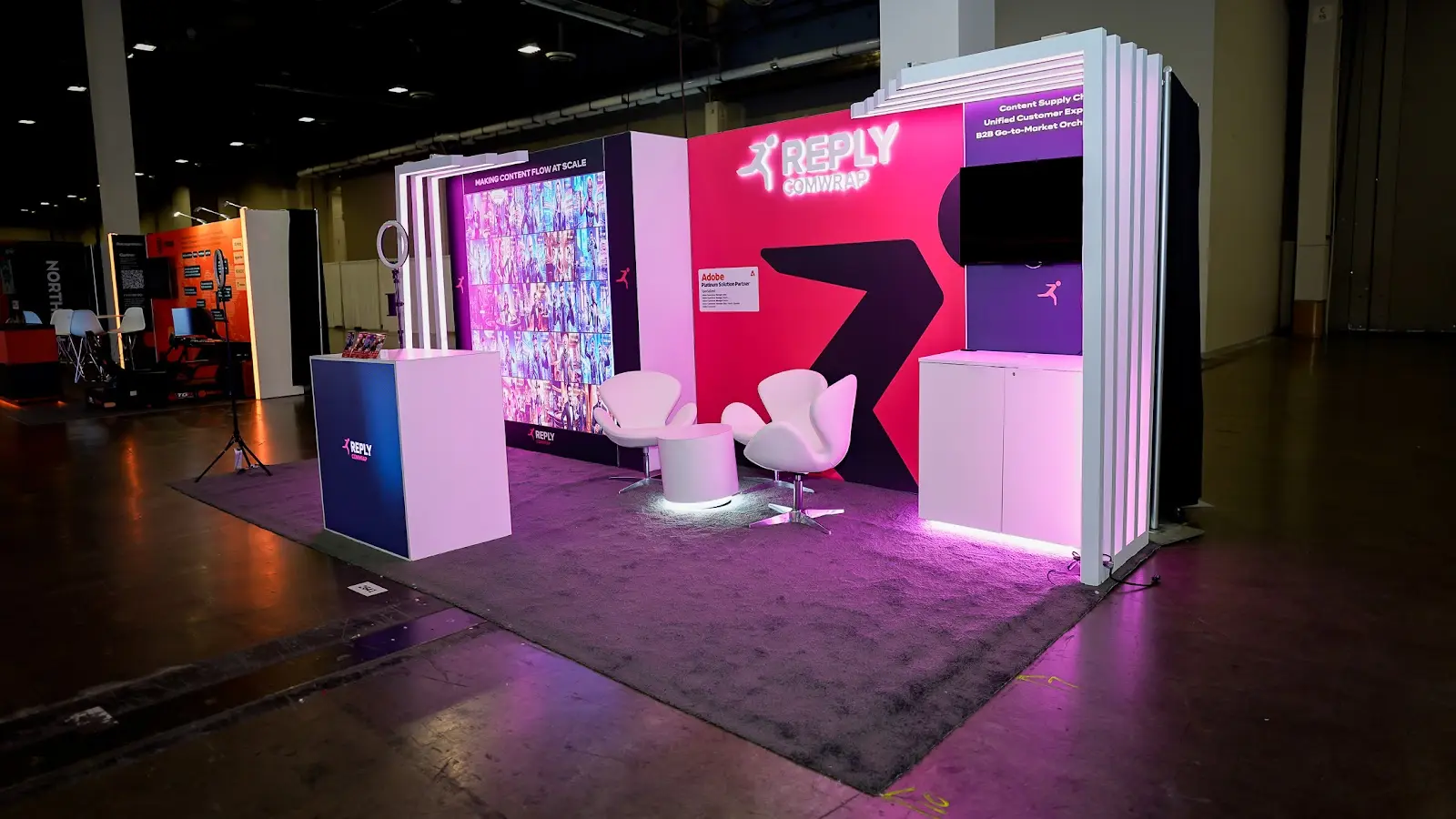
Half the SDCC hangs at 27 feet to truss; the other half at 36 — so we design the wall knowing which hall you’re in. One team designs, builds, installs and supports the exhibit and its LED wall together, for Comic-Con, the Esri User Conference and every show on the waterfront. One drawing set, one fixed number, one crew on the floor.

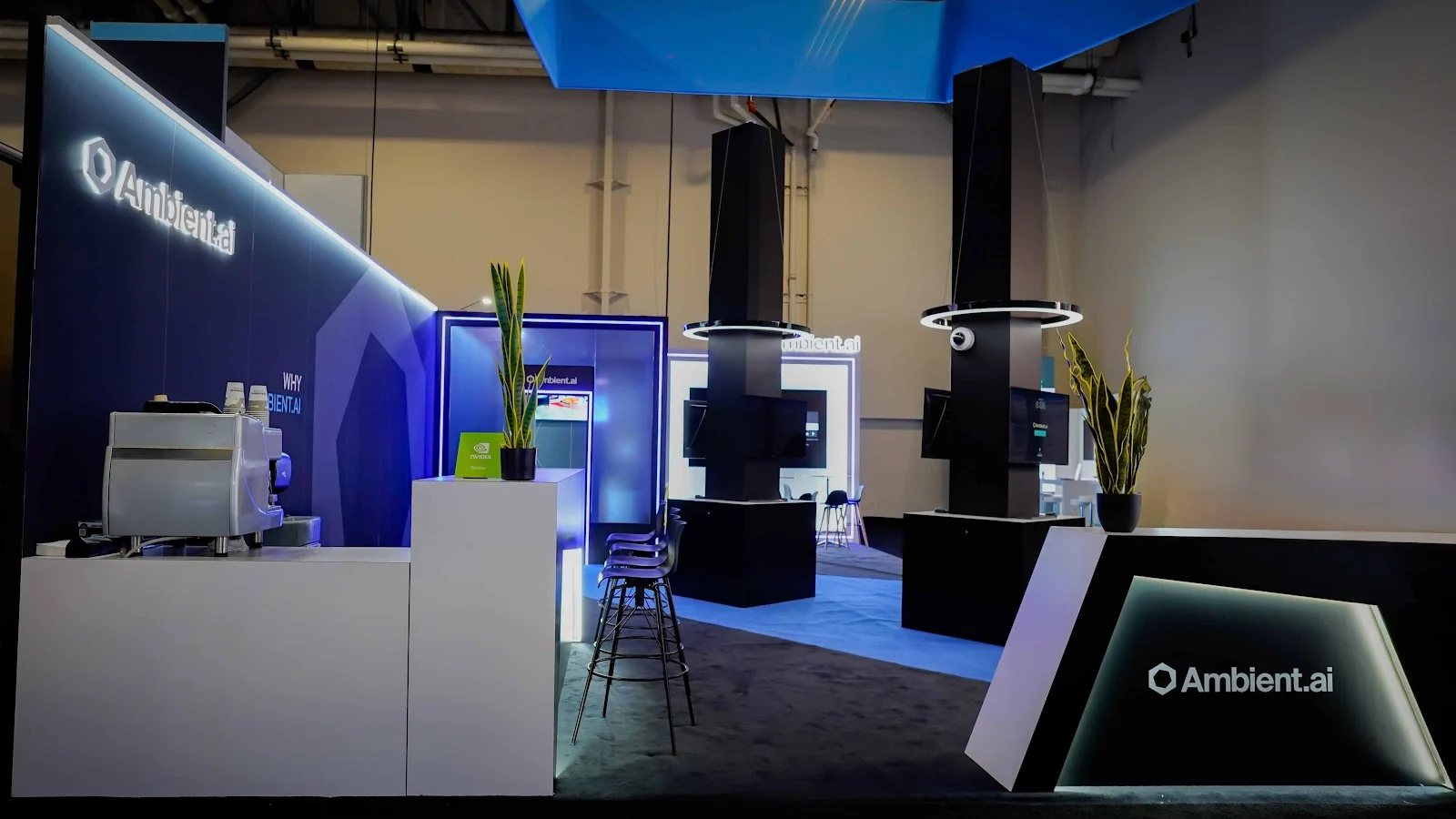
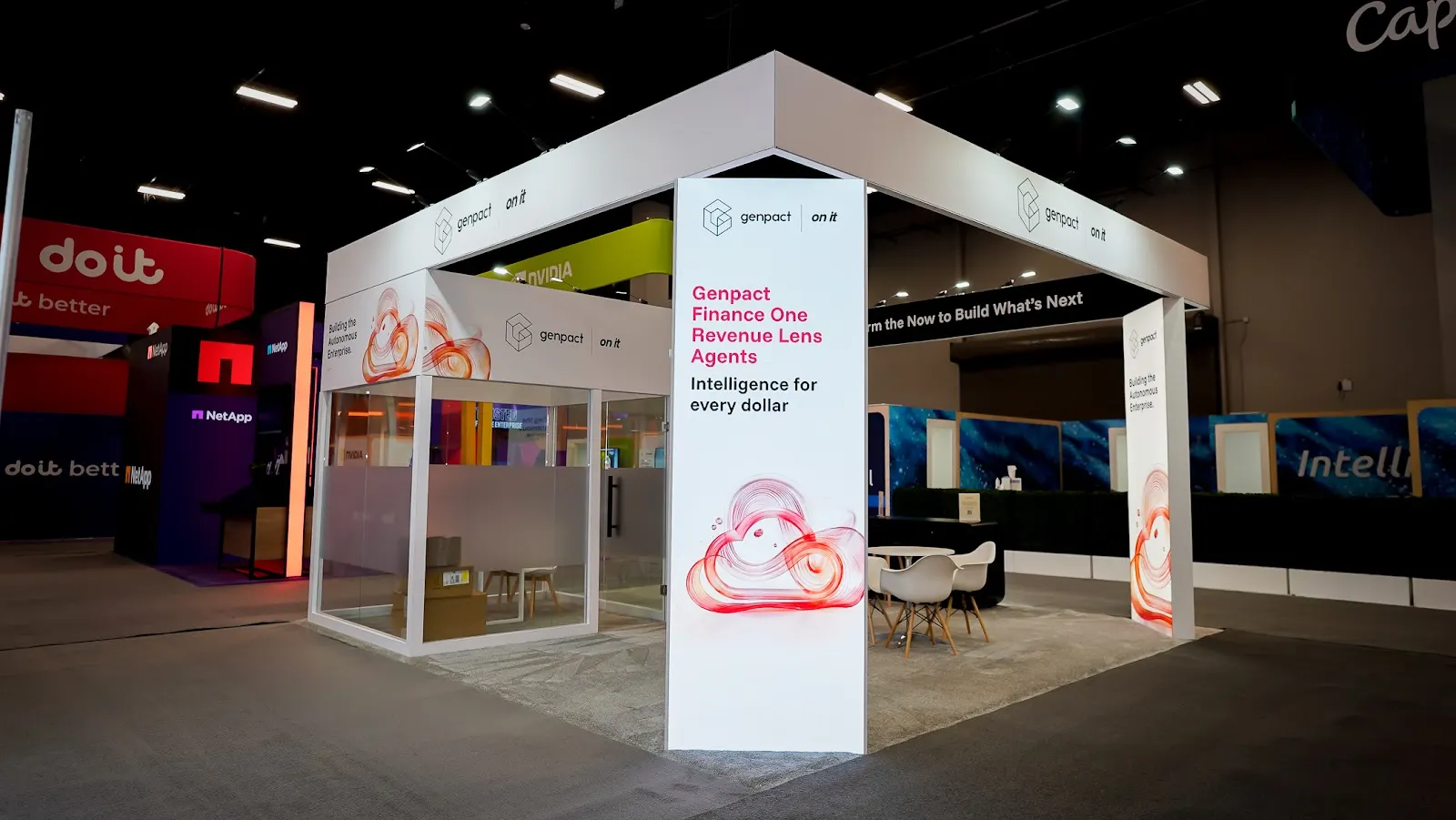
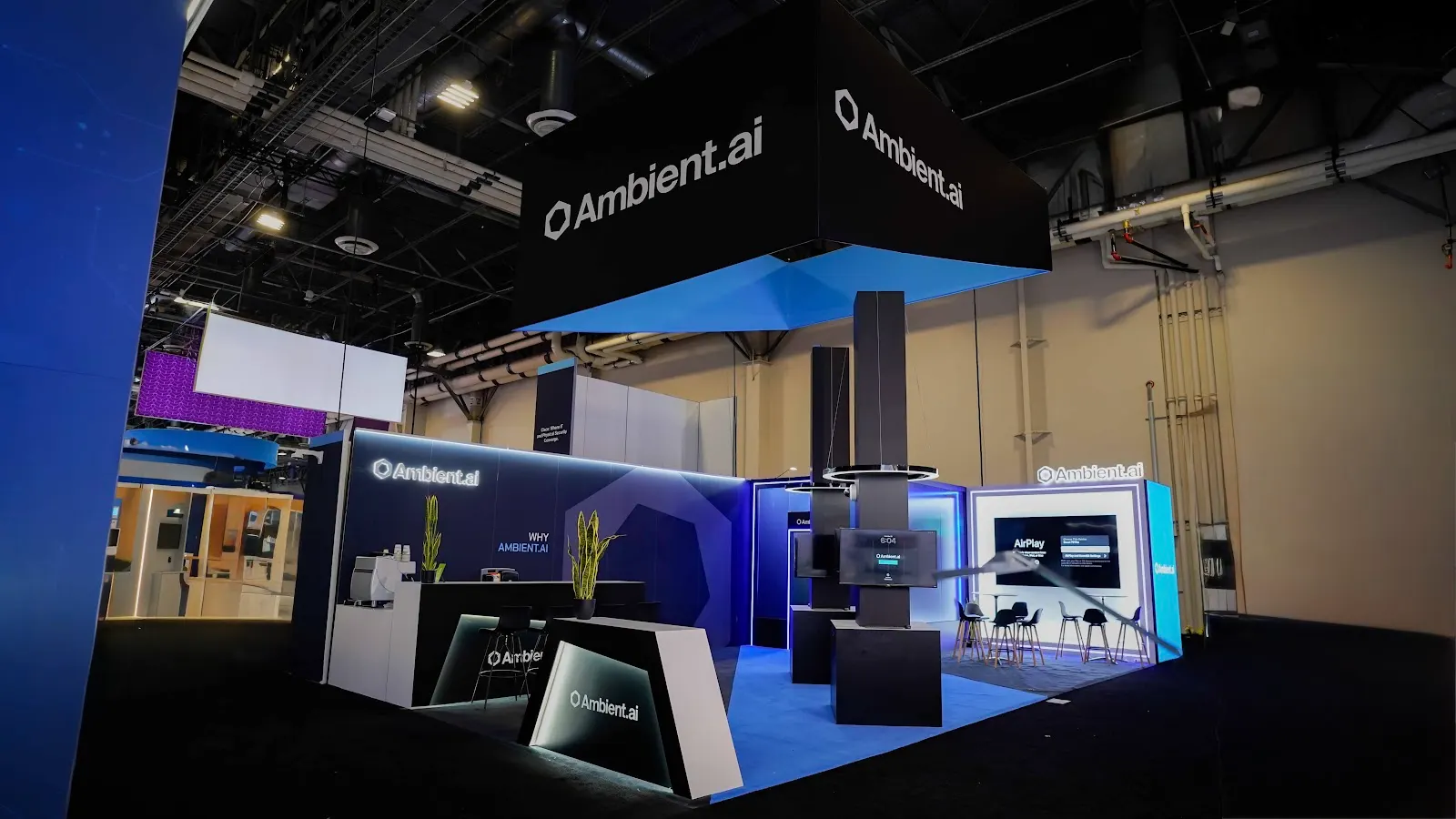
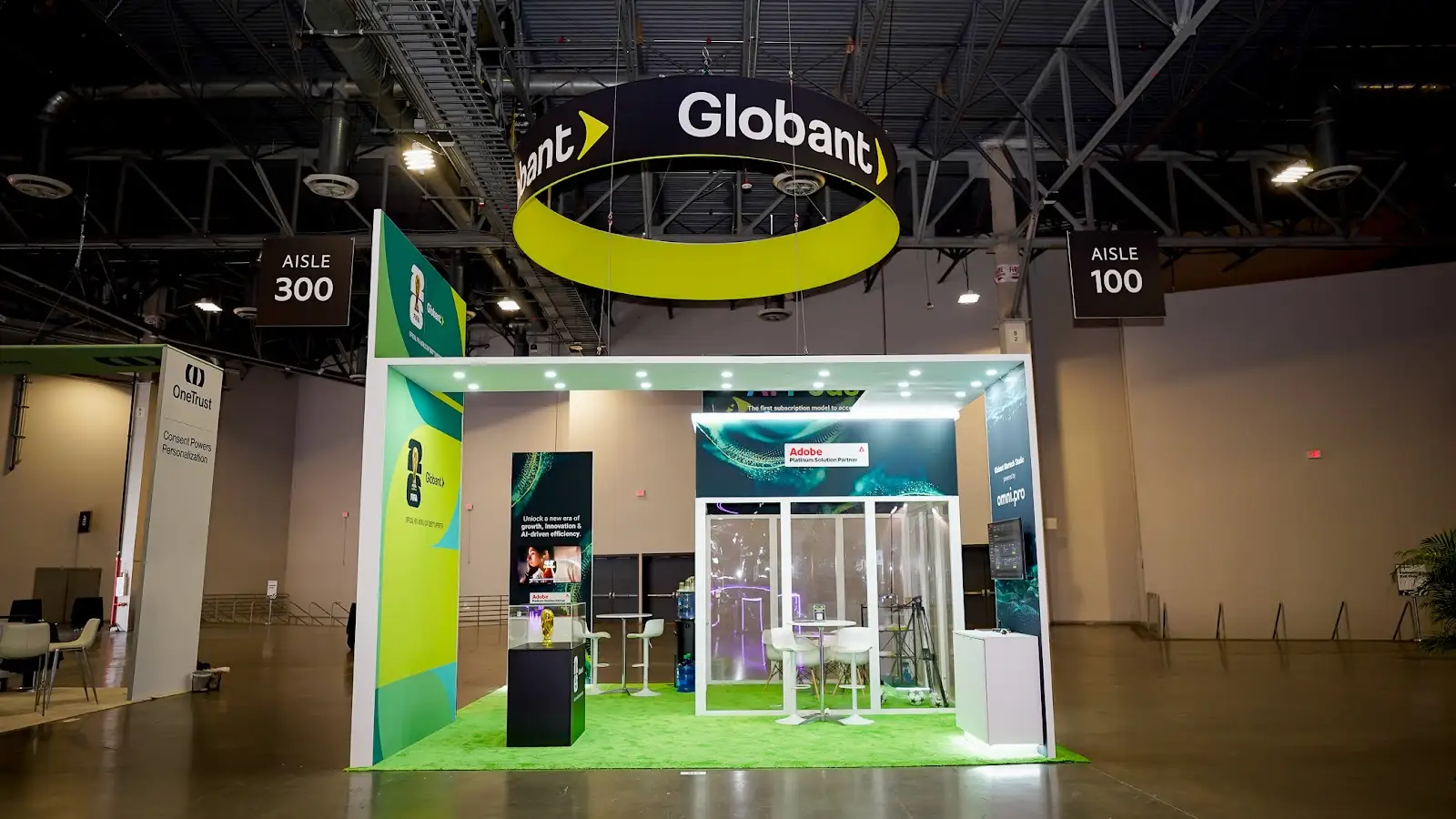
LED video wall rental integrated into a custom trade show exhibit built by Pure Exhibits for a San Diego show
One teamStructure & screen
One drawing setWall is in the design
One numberNo separate AV invoice
One dedicated crewInstall, show, strike
The Problem

The screen came from one vendor. The booth came from another. Everyone on the aisle can tell.

Not because anything is broken. Because of a hundred small things nobody owned: a cabinet seam through the logo, a processor visible under the counter, content letterboxed inside a wall that isn’t 16:9, booth lighting washing out the screen it’s aimed at. Walk any aisle at Comic-Con or the Esri User Conference and you can pick these booths out in seconds. Attendees can’t name what’s wrong. They just register that something is slightly off — and move on to the stand next door.

Screen rented separately

  • The booth is designed first and a screen is found to fit it, so the architecture ends up serving a rectangle chosen last
  • Your agency gets the wall’s true pixel map after the content is finished, and everything is squeezed into 16:9
  • Seam lines and mounting hardware fall wherever the cabinets happen to land — sometimes straight through the mark
  • Lighting is aimed at the booth as though the wall weren’t a light source itself, and the screen goes grey under it
  • Two crews on the SDCC’s one shared dock, two schedules, and a gap between them where the problems live
  • A dead cabinet on day two becomes a debate about whose contract covers it

Designed into the exhibit

  • The sightline study comes first; the wall’s size, height and position are conclusions, not purchases
  • Exact pixel dimensions and safe areas reach your creative team at concept stage, while there’s still time to use them
  • The cabinet grid is laid against the artwork, so joins land in quiet zones instead of across the logo
  • Booth lighting is specified against the screen’s output, so faces, product and wall all read at once
  • One crew, one dock slot, one person answerable for the entire footprint
  • Our technician works the show with spare cabinets on hand — it’s our build, so it’s our problem
The Fix

When the wall and the structure share one drawing set, the seams stop showing.

If you’re searching for video wall rental in San Diego, you have two routes. An AV house will rent you panels and a technician, and if you already own a booth that’s a perfectly sensible thing to do. Or an exhibit house designs the wall into the structure from the first sketch, so the screen and the space it lives in are one object rather than two things standing near each other.

Pure Exhibits does the second, as a genuinely turnkey programme: design, engineering, fabrication, graphics, the wall and its processing, show services paperwork, install, on-floor support and strike — one vendor, one contract. We build for the shows that fill the San Diego Convention Center — Comic-Con, the Esri User Conference and the medical and biotech meetings that anchor the waterfront calendar — and where large-format LED belongs in an exhibit, it’s drawn, engineered and quoted as part of the build rather than bolted on at the end.

On the Floor

The walls, running — filmed at the shows

A still photo can’t show you what an LED wall does to a booth. These clips were shot on live show floors — content running, aisles moving, the walls doing their job.

SocureIntegrated LED build
RadwareIntegrated LED build
Sardine — MRC 2026Integrated LED build
EVEIntegrated LED build
What It’s Actually For

Six jobs a video wall can do inside an exhibit. It can’t do all six at once.

Ask one wall to be the beacon, the explainer, the theatre backdrop and the photo op, and it does all four badly. Pick the job first; the right wall follows from it.

Large LED video wall drawing attention from the aisle at a San Diego trade show

Pull people from three aisles away

On a Comic-Con floor where every aisle is shoulder to shoulder, motion at height is the most reliable way to be noticed. Large simple frames, slow movement, almost no text — read at forty feet by someone walking, not standing.
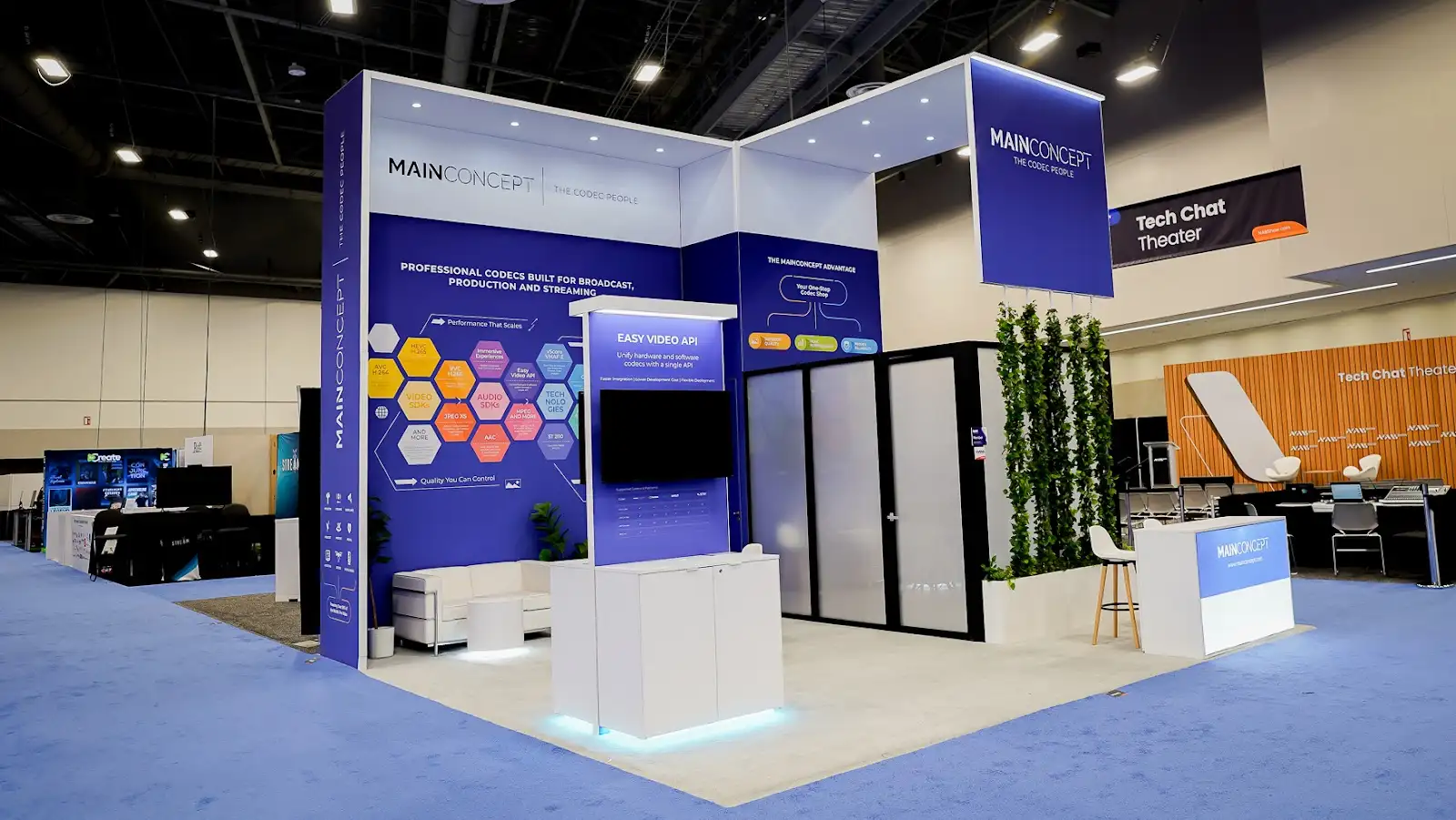
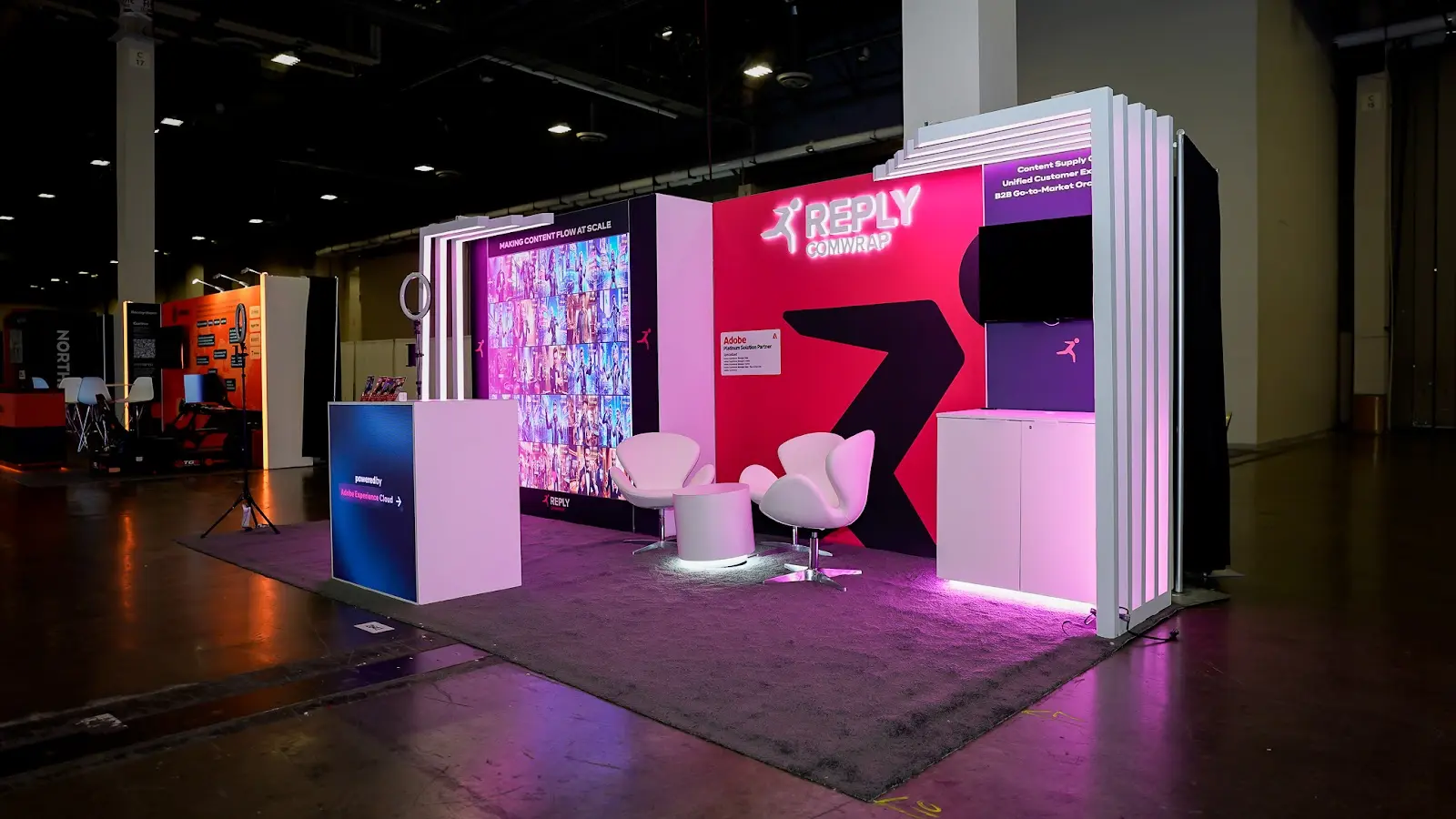
Presentation area anchored by a screen inside a custom trade show exhibit

Anchor a presentation

A talk schedule changes the geometry: the audience stands, so the wall sits higher; the bay is deep enough that listeners aren’t blocking a busy aisle; and audio is aimed down at them, not out at your neighbours.

Staff and visitors in conversation beside screens in a custom island trade show booth

Give staff an opening line

Approaching a stranger cold is the job everyone on the stand dreads. Give the team a wall showing something worth pointing at and the opening line writes itself — they’re hosting, not intercepting.

LED panels wrapping the structure of a trade show booth to create an immersive environment

Make a room feel like somewhere

Run LED around a corner or floor to ceiling and visitors stop looking at a screen and start standing inside one. No printed surface can do that, at any budget — it’s the use that genuinely justifies the cost.

Screen-led messaging in a trade show exhibit that can be updated between shows

Carry messaging that changes

Between Comic-Con in July and your next booking, the roadmap will have moved. A wall takes tonight’s file; print takes a reorder, a truck and another invoice every time the message shifts.

Visitors photographing a video wall inside a custom trade show exhibit

Be the photograph

The stand will be photographed whether you plan for it or not — at a show like Comic-Con, relentlessly. Compose one face of the wall for the camera and every post extends the booth past the hall.

Bringing It To Life

From an empty floor plan to a lit wall on show morning

Six stages, one accountable team. In San Diego the schedule is written backwards from the venue’s deadlines — rigging review, seismic sign-off, advance power — long before anything is built.

01

The brief and the floor plan

Your show, your hall — and at the San Diego Convention Center, which end of the building you’re in — your footprint and what you need to happen inside it. We look at which aisles feed your space and where the crush comes from between sessions, because that, not your budget, decides how big the wall should be.

Week 1
Island exhibit layout planning for a San Diego trade show booth
02

Concept and 3D render

The render shows structure, screen, lighting and circulation as one resolved object — not a booth drawing with a screen quote stapled to it. What you approve is what gets fabricated.

Weeks 2–4
Concept design for a custom trade show exhibit with an integrated LED video wall
03

Engineering and the content spec

The frame is engineered to carry the wall — and in California, to satisfy seismic tie-off review — while your agency receives the written content spec: true pixel map, safe areas, seam positions, formats.

Weeks 4–6
Brand content composed to the native resolution of a trade show LED video wall
04

Fabrication and a full build

The exhibit is stood up complete in our shop with the wall powered and content running. Any surprise surfaces on our floor, where it costs an afternoon — not on the SDCC’s, where it costs the show.

Weeks 6–10
Custom exhibit structure with integrated LED wall assembled and tested before shipping
05

Show services and freight

Power ordered before the advance deadline, rigging filed for the venue’s supervised programme, freight consolidated and booked into a slot on the shared waterfront dock. Quiet paperwork; it decides show week.

Weeks 8–12
Exhibit freight and show services coordination for a San Diego convention centre install
06

Install, show days, strike

San Diego’s waterfront shows run tight move-in windows off a shared dock, so one crew builds it in your targeted slot. A technician stays through show hours with spare cabinets. The same team strikes it and ships it out. You manage one relationship from first sketch to empty floor.

Show week
Completed custom trade show exhibit with LED video wall running on the show floor in San Diego

Swap steps 02 and 04 for a real render and a shop photo when you have them. A render beside the finished booth is the most persuasive image an exhibit house can show.

Sizing

What size wall does your booth actually need?

Footprint matters less than how far back someone can stand — and San Diego’s halls, generous as they are, still hand most booths a ten-foot aisle. The most common mistake in trade show LED screen rental is buying more wall than that aisle allows. Starting points, not rules — we size properly once we’ve seen your floor plan.

10×10 InlineSingle large screen

In a hundred square feet the wall costs more than the rest of the booth and crowds out the people. One large display in the back wall earns the same glance for a fraction of the spend.

10×20 Inline10–12 ft wide

The first footprint where a true feature wall makes sense. Viewers stand close — three metres at most — so this is the one size where paying for a finer pixel pitch is visibly worth it.

20×20 Island12–16 ft wide

Now the wall works two audiences at once: legible from the aisle, immersive from inside. This is where it stops being a big graphic and becomes load-bearing architecture that has to be engineered.

20×30 and up16–24 ft, or wrapped

Past 600 square feet, geometry beats acreage. A curve, a wrapped corner or a double-sided run out-performs one giant flat rectangle aimed at a single aisle — for the same cabinet count.

How We Design It In

The decisions that happen before anyone talks about screen size

01

Start from where people will stand

Before any structure is sketched we plot the approach: which aisles feed the space, where attendees pause, what registers at forty feet versus four. The wall’s size and height are read off that map. Choose the screen first and you get the SDCC classic — a wall too big for the distance anyone can stand from it.

Open island exhibit planned around visitor sightlines to the video wall
02

Detail the structure and screen as one object

Cabinet depth is absorbed into the wall build-up, cabling runs inside the structure, the processor lives in millwork instead of on the floor, and the screen edge meets its surround flush. None of it photographs well in a brochure; all of it is why an integrated wall looks inevitable and a rented one looks parked.

Detail of an LED video wall meeting the surrounding booth structure cleanly
03

Light the booth around the screen, not at it

The wall is the brightest object in your space, and the SDCC’s cool 5000K house lighting is already competing with it. We balance accent and ambient levels against the screen’s output so people and product stay lit while the wall stays vivid instead of washing to grey.

Trade show booth lit so the LED video wall stays bright under convention centre lighting
San Diego Specifics

The logistics that decide whether your video wall makes it onto the floor

Building a video wall is straightforward. Getting one into the San Diego Convention Center on schedule is the part that catches people out, because most of what it depends on is controlled by someone other than you. We handle all of it inside the exhibit programme.

  • Rigging is restricted, and supervised. Only the venue’s in-house AV provider and approved general contractors may rig from the overhead grid, and every installation runs under an ETCP-certified rigging supervisor. Where a ground-supported structure achieves the same result, the saving stays with you.
  • Seismic rules reach into booth design. This is California: anything over 14 ft high or 10 ft of continuous drape line must be tied off to code, and tall booth elements can trigger the same review. We engineer for it at design stage, not at inspection.
  • Power is ordered months out. Advance-order deadlines pass long before show week, after which rates rise. Utility boxes sit on 30-foot centres, so wall position and power position get planned together.
  • The dock is the critical path. Halls A–H share one loading dock along the waterfront, and move-in runs on targeted slots. Freight that misses its window queues behind everyone else’s.
27 ft to truss · 39–40 ft ceiling

SDCC Halls A–E

The older end of the building hangs low: roughly 27 feet to the bottom of truss. A suspended wall or hanging sign designed for the taller halls simply won’t fit here, so we confirm the hall before a single line is drawn.

36 ft to truss · 64 ft ceiling

SDCC Halls F–H

The newer end carries the height: about 36 feet to truss under a 64-foot ceiling, with a 30-foot-high drive-in “elephant door” at Hall H. Large suspended walls and tall structures live comfortably here — same building, twice the headroom.

350 psf · Concrete

Floors & services

Concrete throughout at a 350 lbs/sq ft rating, so heavy LED structures sit without special provision. House LED lighting runs cool at 5000K — worth knowing when you balance booth lighting against screen output.

Fire marshal · Multi-level review

Approvals

The Fire Marshal holds final jurisdiction over ceilings, canopies and enclosed or multi-level structures, and fire-retardant certificates must be available in the booth. Double decks and covered exhibits can trigger paid fire-watch coverage after hours.

Investment

What actually moves the number

There’s no per-panel rate card here, because we price the exhibit the wall lives in, not the wall by the square foot. What you get instead is the cost of each choice surfaced early — so you trade size against pitch against shape deliberately, not at invoice time.

The number we give is fixed and covers design, fabrication, graphics, the wall with its processing, install, a show-floor technician and dismantle. Venue services you buy from the show — space, power, drayage — stay on the show’s invoice, itemised, where they belong.

  • Size moves the number most and is over-bought most. The test is the aisle: if nobody can stand far enough back, the extra feet were wasted.
  • Pitch is a viewing-distance decision. Fine pixels cost real money and become invisible past a few metres — spend there only on close-quarters walls.
  • Geometry costs more than area: curves, corners and columns mean custom cabinets and slower installs than the same footage laid flat.
  • Hung or grounded swings the total hard in San Diego, where overhead work runs through the venue’s supervised rigging programme at its rates.
  • Content is a genuine budget line whoever produces it. An empty or lazy loop turns the priciest surface at the show into wallpaper.
Questions

Video wall rental in San Diego, answered

Do you offer video wall rental in San Diego?

Yes — inside a custom exhibit programme. For San Diego shows we design the LED wall into the booth, then supply, install, operate and strike it as one contract. If you already own a stand and just need panels, an AV rental house is the cheaper, better-fitted answer, and we’ll say so.

How much does a trade show video wall rental cost in San Diego?

As part of the exhibit, not by the panel — the structure carrying the wall is the same build. The big movers are size, then pitch, then geometry, then whether it hangs or stands: at the SDCC, overhead work runs through the venue’s rigging programme and shifts the total meaningfully. Name the show and footprint and you get one fixed number.

LED or LCD — which is right for a trade show booth?

LED almost always, for exhibits. An LED wall is built from cabinets that butt together with no visible join, so it reads as one surface at any size. An LCD video wall is a grid of panels, each with a bezel, which means thin dark lines run through your image wherever panels meet — and they land across your logo as often as not. For anything carrying brand, the seams are the whole problem.

How do I know whether my booth even needs a video wall?

Name the single job first. Pulling attention across a Comic-Con floor? A wall is the most reliable tool there is. Holding long technical conversations at Esri UC? Seating and acoustic quiet will out-perform any amount of LED. When video isn’t the answer we’ll say so — a wall with nothing to say is worse than none.

Can you work with the content our agency produces?

Yes, and we’d rather you kept your agency. What we supply is the technical brief they need: exact pixel dimensions, aspect ratio, safe areas, seam positions and file formats, delivered at concept stage rather than the week before the show. Most content problems on a show floor are specification problems, not creative ones.

What happens if the video wall fails during the show?

Our technician is on site through show hours with spare cabinets. LED walls rarely fail dramatically; they fail as one dark cabinet in the corner of your brand mark, which is a short fix for someone present and a ruined stand for three days for someone who has to be called in. Because the wall is part of our build, there’s no question whose problem it is.

Which San Diego venues do you install video walls in?

Primarily the San Diego Convention Center, across Halls A through H. The building’s two ends are not equivalent: Halls A–E hang at roughly 27 feet to truss while Halls F–H offer about 36 feet under a 64-foot ceiling, so we confirm the specific hall before signing off a design. We also build for hotel and campus venues around the city.

How early do we need to start?

Three to four months is comfortable for a custom build with integrated video. The hard constraints in San Diego aren’t fabrication — they’re the venue’s advance electrical deadline, the rigging and seismic review, and getting the content spec to your agency early enough to matter.

Tell us the show and the hall. Both matter here.

Comic-Con, Esri UC, a medical congress on the bayfront — send us the show, the footprint and which end of the building you’re in. We’ll come back with a straight view on whether large-format video earns its place, what it should be doing if it does, and one fixed number for the whole build.