Set-grade builds for the entertainment capital.
Custom exhibition stands for Anime Expo, Adobe MAX and every Los Angeles Convention Center show — fabricated in the US and delivered on one fixed USD price signed before work starts. No ocean freight, no carnets, no US entity required. In this town your stand shares a floor with people who build worlds for a living — it should be built by people who can keep up.
Filters the stands below — each shows its Los Angeles price.
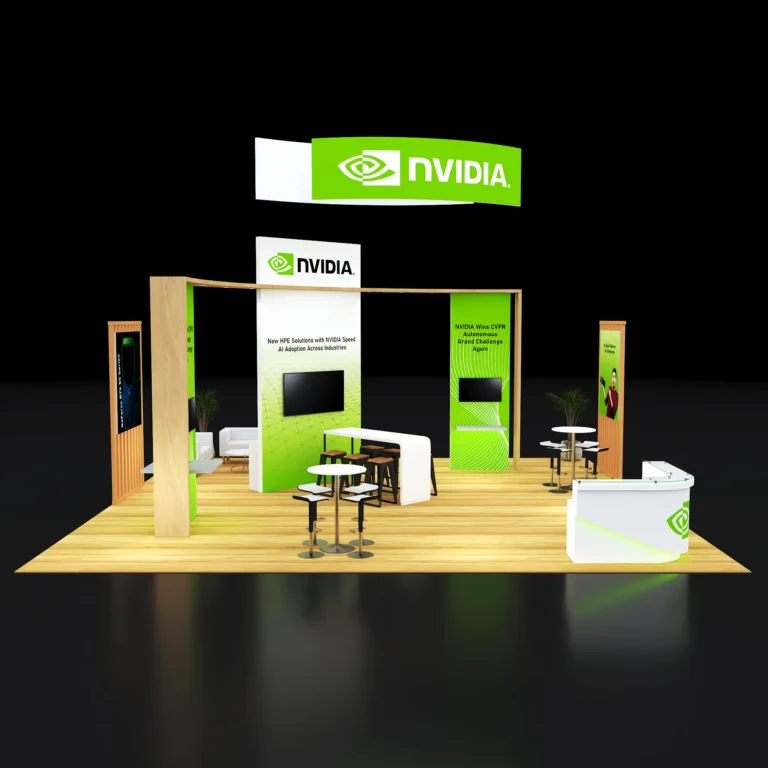
Los Angeles audiences are professionally fluent in production value — creators, studios, licensors and fans who can spot a compromised finish from across a hall. Everything below came out of our own shop: designed, fabricated, printed and wired by one team, then stood up complete and photographed before shipping. What you approve from abroad is what lands on the floor.
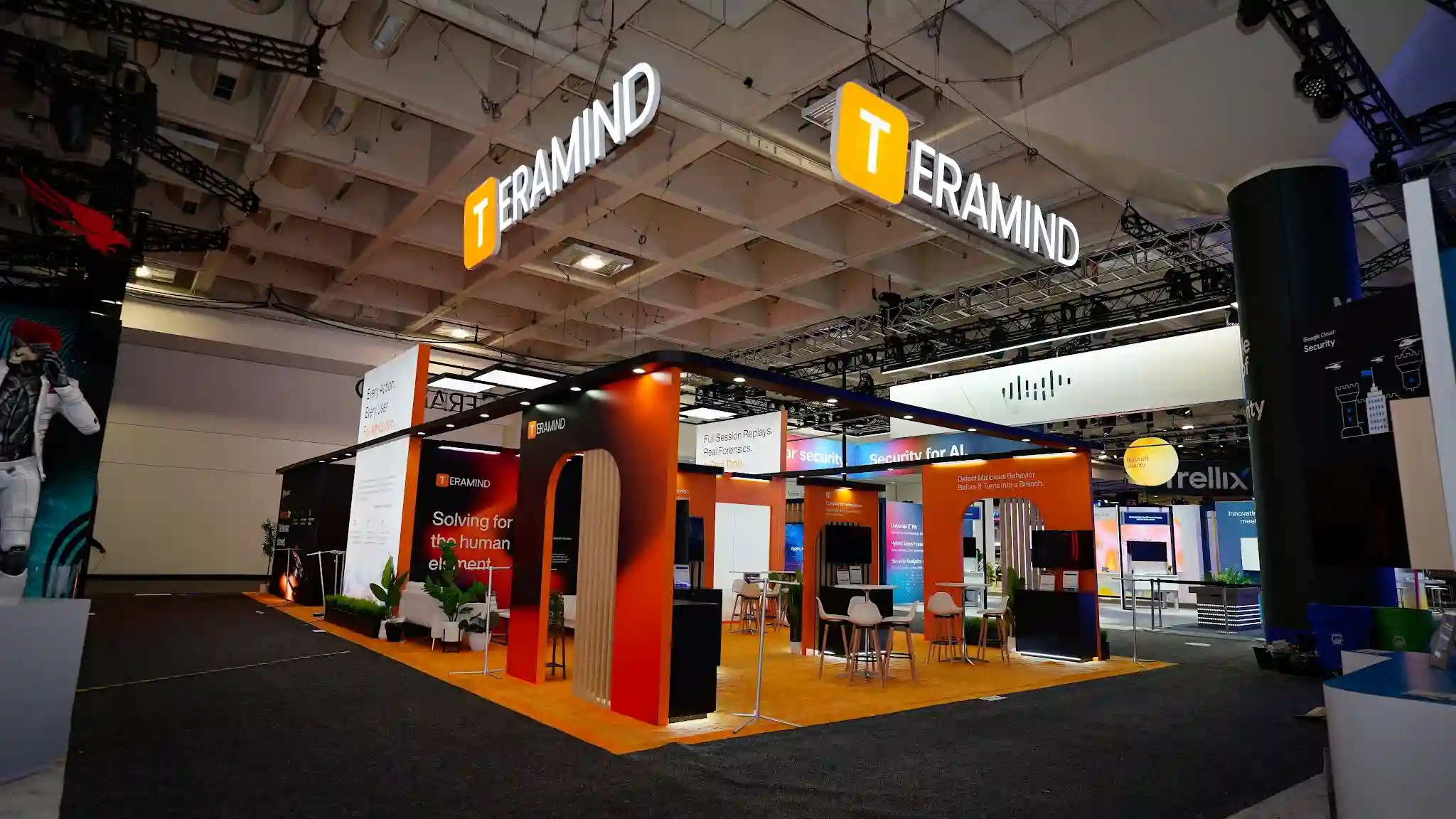 Teramind
1,800 sq ft island with interactive demo zones.
Teramind
1,800 sq ft island with interactive demo zones.
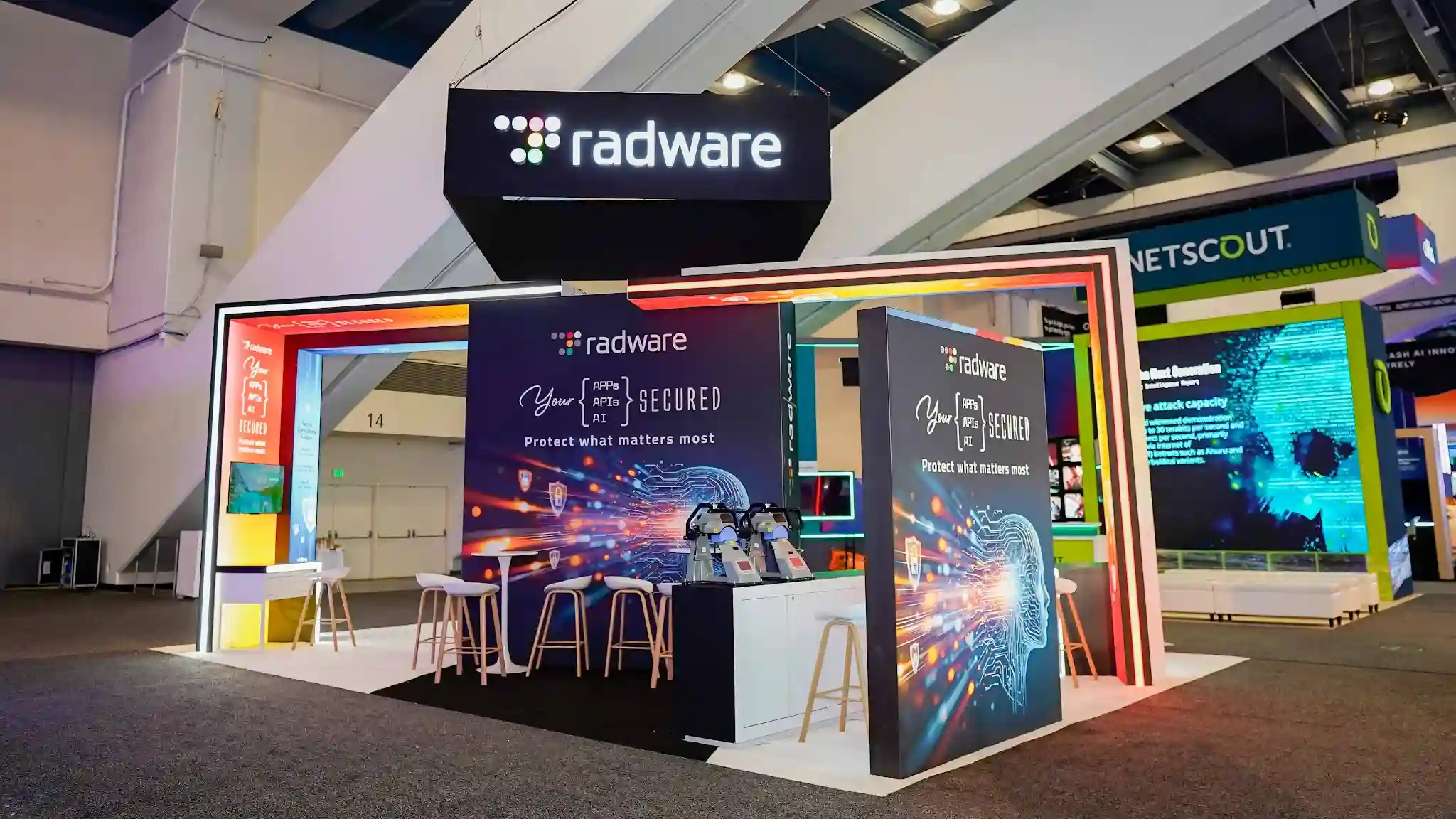 Radware
Hands-on learning stations inside a four-sided island.
Radware
Hands-on learning stations inside a four-sided island.
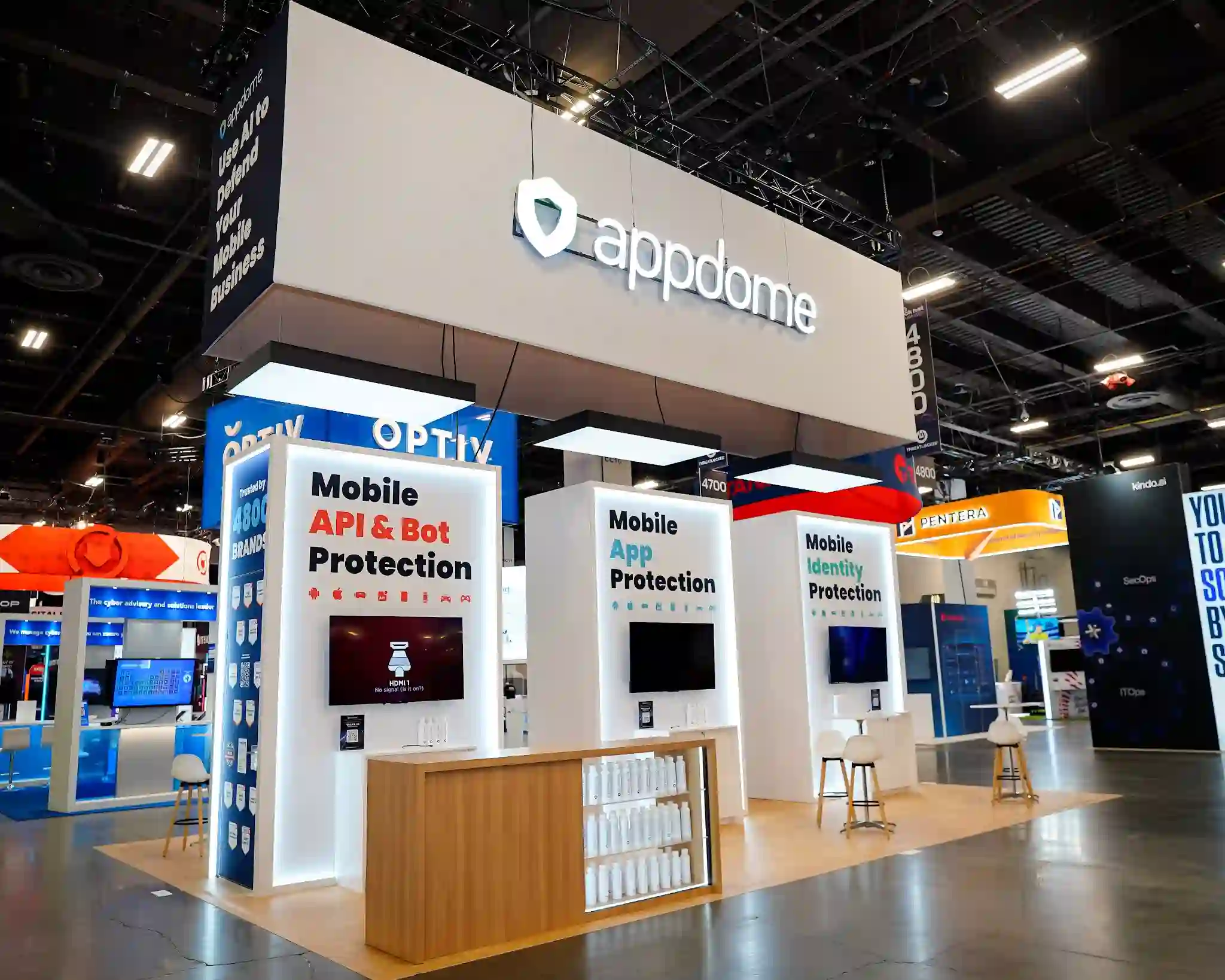 Appdome
Security demo theatre built for high-volume technical traffic.
Appdome
Security demo theatre built for high-volume technical traffic.
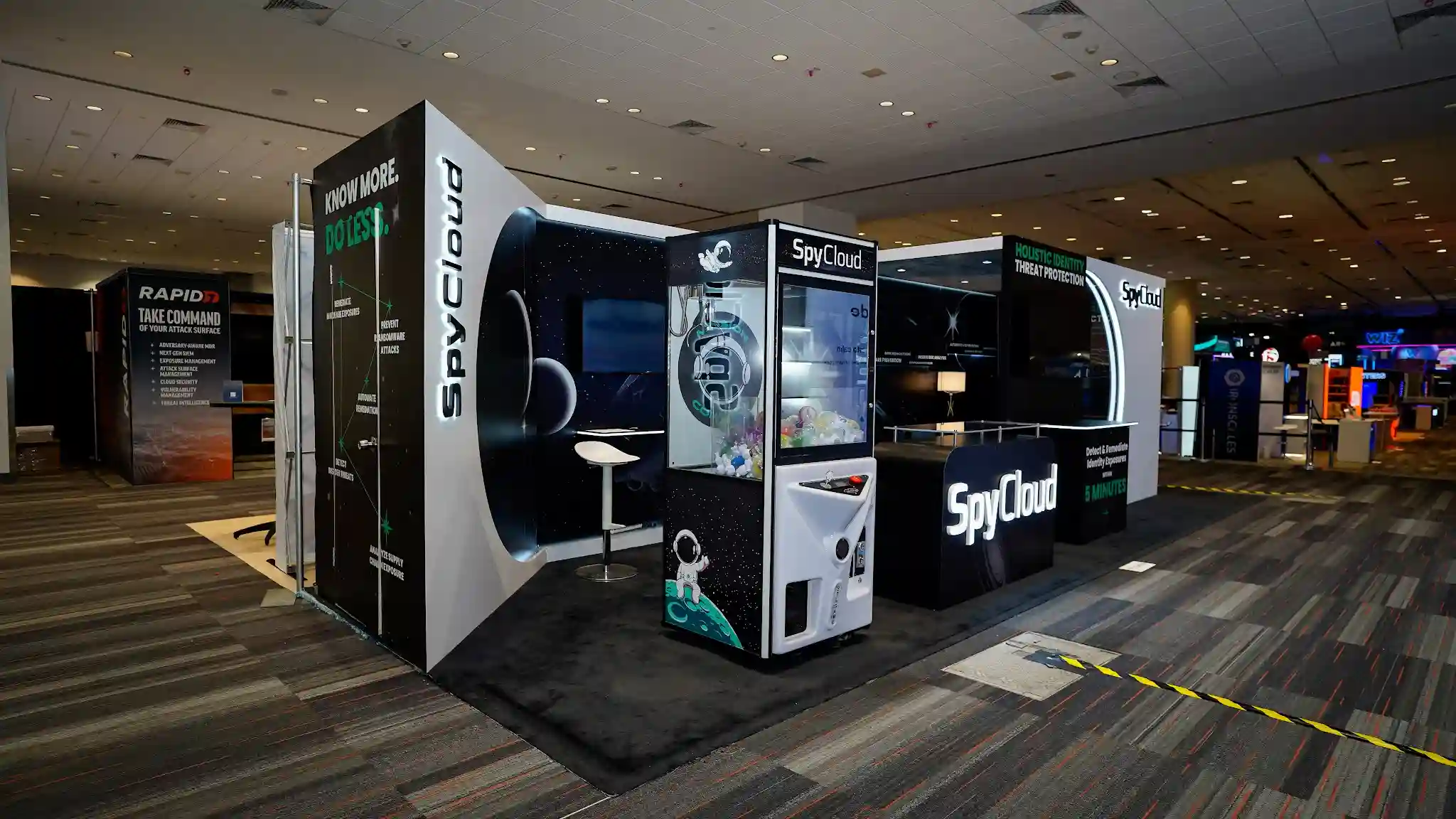 SpyCloud
Interactive stations arranged for one-to-one conversation.
SpyCloud
Interactive stations arranged for one-to-one conversation.
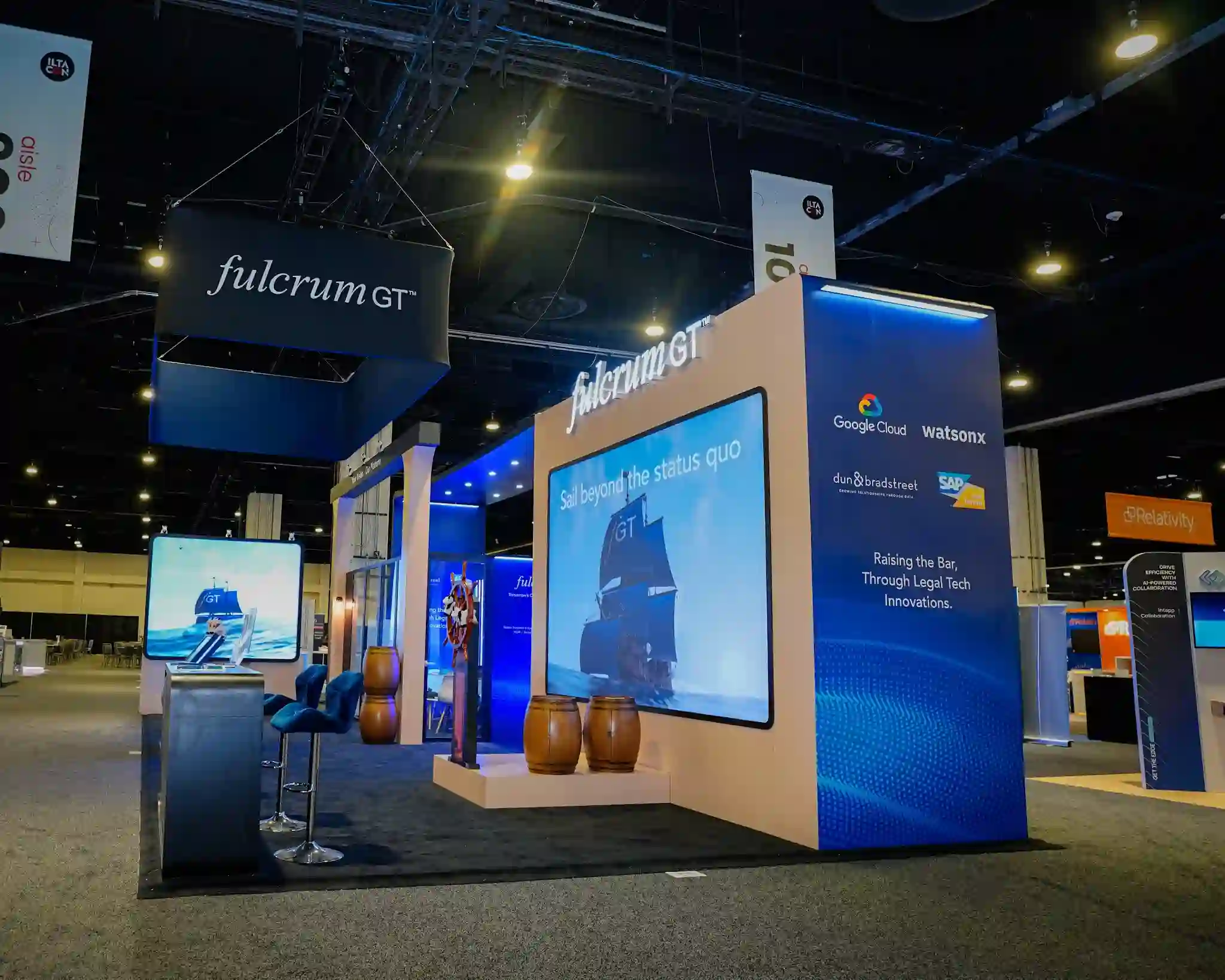 Fulcrum GT
Full-height LED as the structure, not an add-on to it.
Fulcrum GT
Full-height LED as the structure, not an add-on to it.
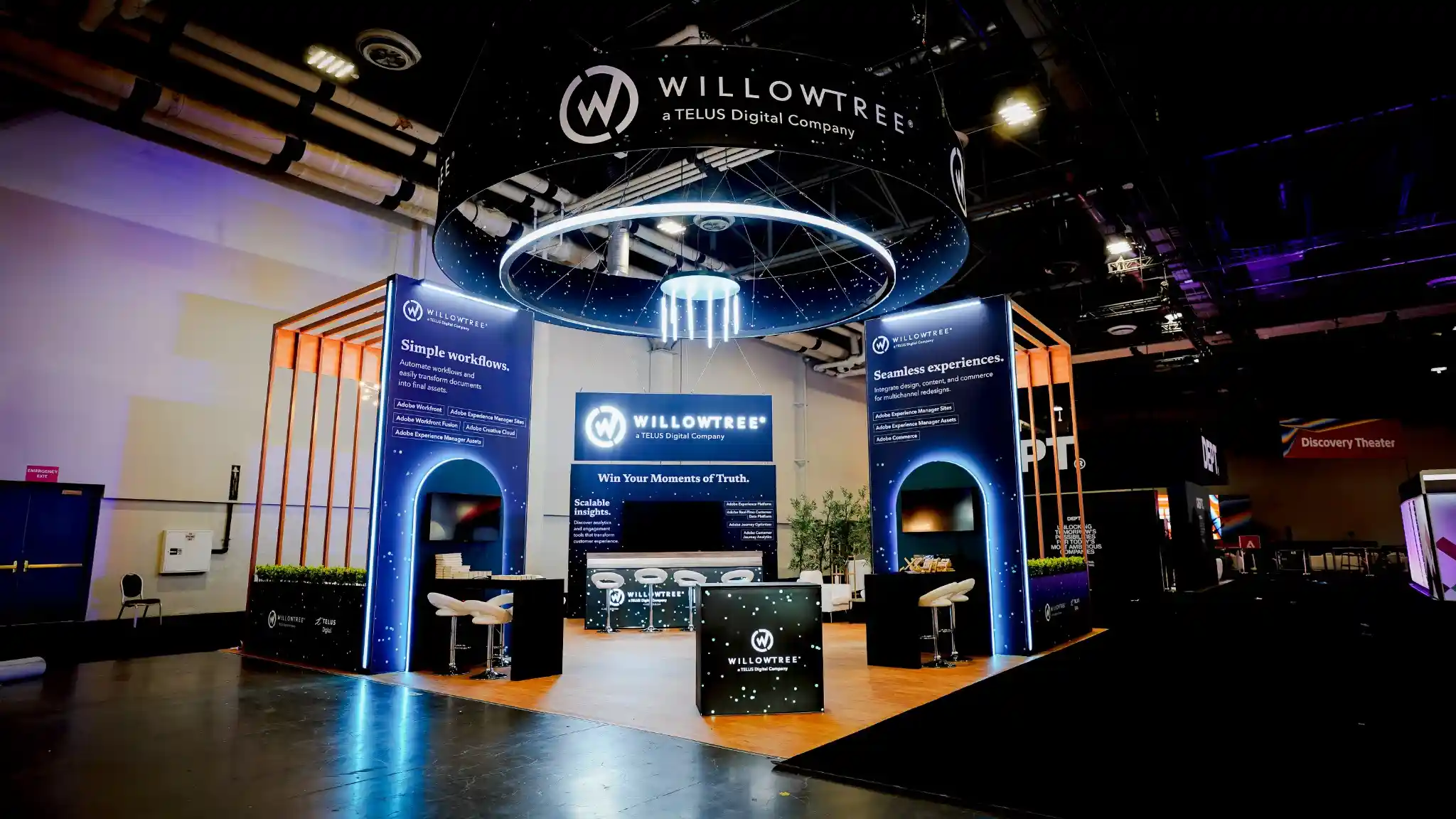 WillowTree
Meeting-led layout with enclosed rooms off an open front.
WillowTree
Meeting-led layout with enclosed rooms off an open front.
 IMAX
Large-format island built around a screening experience.
IMAX
Large-format island built around a screening experience.
 Microsoft
Modular island scaled across a multi-show programme.
Microsoft
Modular island scaled across a multi-show programme.
Also built for Genea, Dunnhumby, Chili Piper, LHH, Calm and Spekit.
The exhibitors who fly to Los Angeles — studios, publishers, brands, licensors — trade in the most portable products on earth: content, rights, characters, software. The irony of then shipping tonnes of walls and counters across an ocean to present them is expensive: crating, two freight legs, customs paperwork, and material handling billed on every kilogram of a stand that could have been built at the destination.
Send the design instead. Photos or CAD of the stand your brand runs at home become a Los Angeles build in US materials and US electrical code — same design language, set-grade finish, and not a single item of it ever sees a port.
No carnets, no brokerage, no duty questions, no crate in customs while your premiere week opens. Fabricated, trucked and installed inside one country, on one fixed number.
Scenic-quality surfaces, controlled lighting and clean cable discipline — the finish standard an entertainment-industry audience assumes, delivered from a fabrication shop, not improvised on the floor.
LED and projection planned into the architecture from the first render, not bolted on after — because in this market, the content is the hero and the stand is its staging.
Material handling bills by weight. A locally built rental reaches the dock at a fraction of an imported stand’s crated mass — a line we forecast before you sign.
Exhibitors arriving from Tokyo, Seoul, London or Paris meet a show-floor system here that has no equivalent at home. The full six-term glossary lives on our Las Vegas exhibition stand page; these are the three that bite hardest here.
The venue’s fee for moving freight from dock to stand space, billed by weight. Unavoidable for everyone, forecastable for anyone honest — we price the line against your actual stand before you commit and file at advance rates.
Los Angeles floors run on union crews for stand construction, electrical and rigging — exhibitor self-build is limited to small tool-free displays. Our fixed price carries the crews and supervision, so there’s nothing for you to source.
US floor plans sell in feet, and space contracts follow. The pricing table below carries both units — quote your space in whichever your contract uses.
Fixed and all-inclusive for custom exhibition stands in Los Angeles, invoiced in USD to your home-country entity — international wire or card, no US bank account or address required. Print these, convert them at today’s rate, and take them into your budget meeting.
| Footprint | Metric | Fixed price (USD) | Typical use |
|---|---|---|---|
| 10×10 | ≈ 3×3 m · 9 m² | $14,000 – $16,000 | Inline. First US market entry, lead capture. |
| 10×20 | ≈ 3×6 m · 18 m² | $20,500 – $25,500 | Inline. Demo plus seated conversation. |
| 20×20 | ≈ 6×6 m · 37 m² | $32,000 – $37,000 | Island. Two or three zones, four-sided. |
| 20×30 | ≈ 6×9 m · 56 m² | $34,500 – $40,000 | Island. Adds a semi-private meeting space. |
| 20×40 | ≈ 6×12 m · 74 m² | $40,000 – $51,500 | Island. Multiple engagement zones. |
| 20×50 | ≈ 6×15 m · 93 m² | $46,000 – $57,500 | Island. Long-run product wall. |
| 30×30 | ≈ 9×9 m · 84 m² | $46,000 – $57,500 | Island. Enclosed meeting room, theatre seating. |
| 30×40 | ≈ 9×12 m · 111 m² | $63,000 – $75,000 | Island. Flagship, double-deck capable. |
The venue invoices these directly to every exhibitor, whichever exhibit company builds the stand — no vendor anywhere can legitimately “include” them. We estimate each line against your actual stand before you commit, then file the orders inside the advance-rate window.
A brand-world stand is heavy by design — big surfaces, big screens, big presence. That weight is exactly what the crossing punishes: every kilogram pays ocean freight twice and drayage once. A 6×12 m island, both ways:
On the venue’s invoice in both scenarios: space, electrical service, drayage, rigging, cleaning, internet — the show’s own tariffed charges, billed to every exhibitor whoever builds. The difference is the weight the drayage gets billed on, and which side of the comparison forecast those lines before you signed.
Ninety percent of the crossing budget, spent on nothing the audience sees. Build here instead, and the same money stands on the floor — screens wired, finish checked, photographed for your sign-off before it ships.
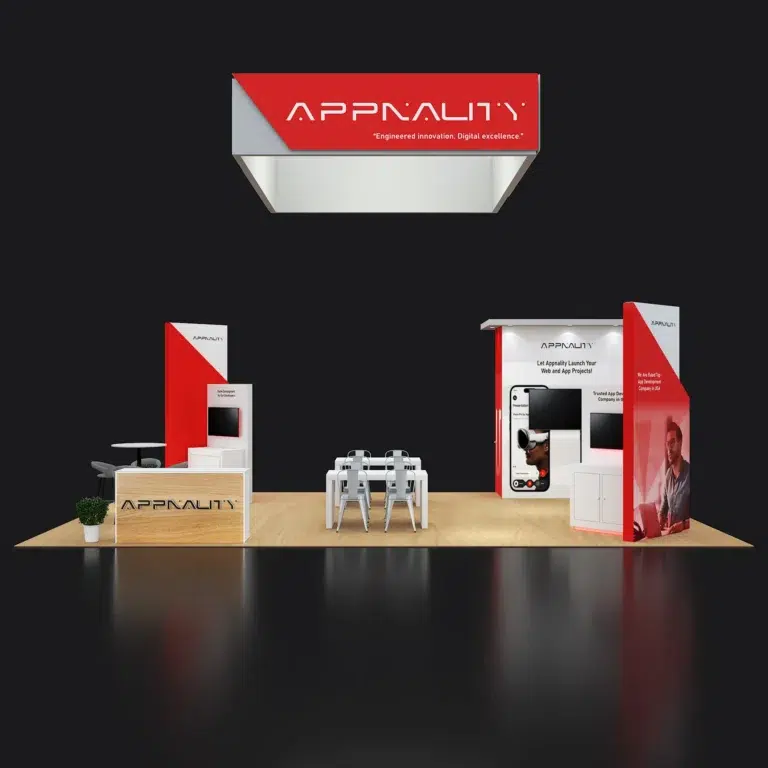
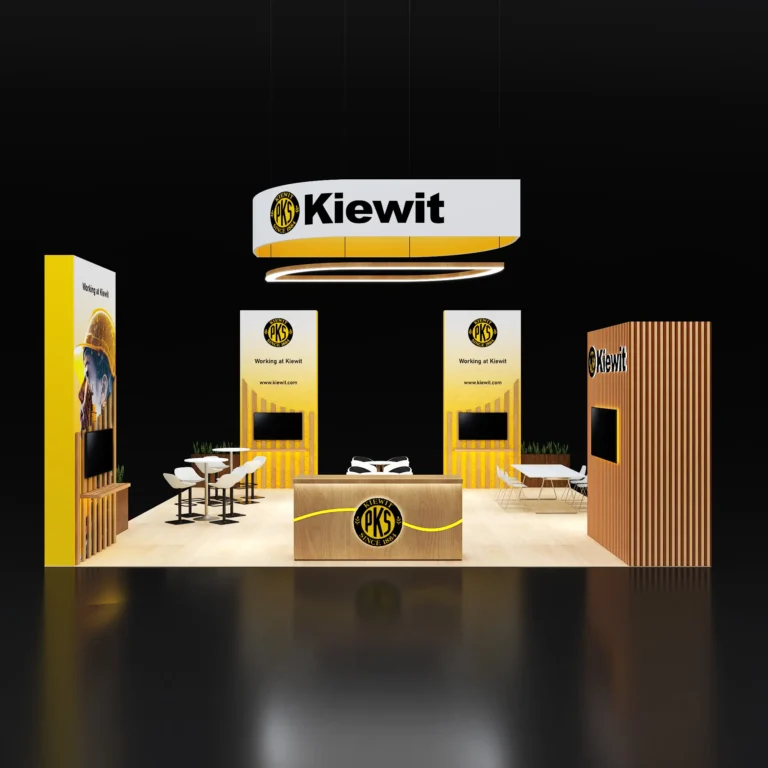
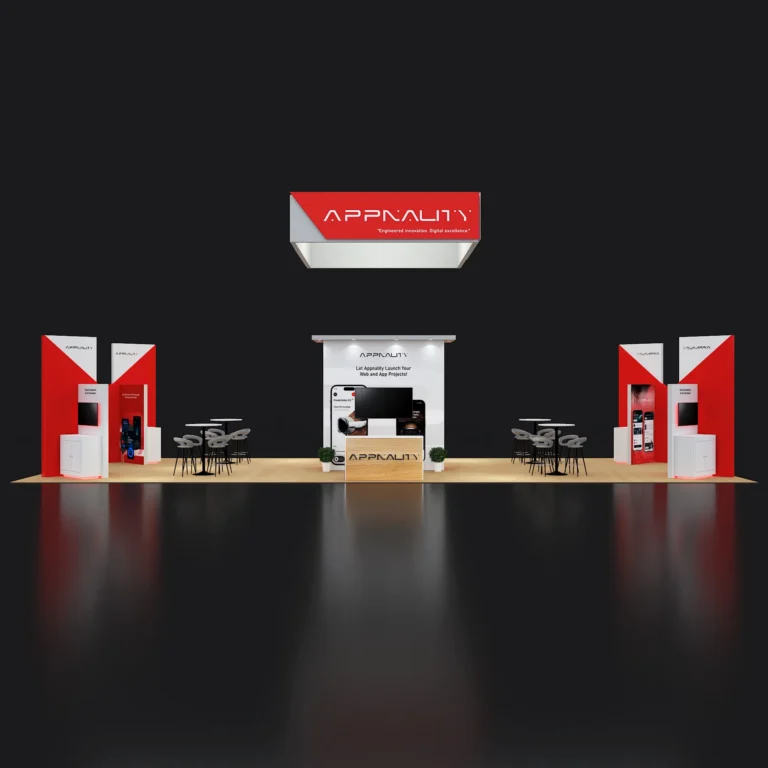
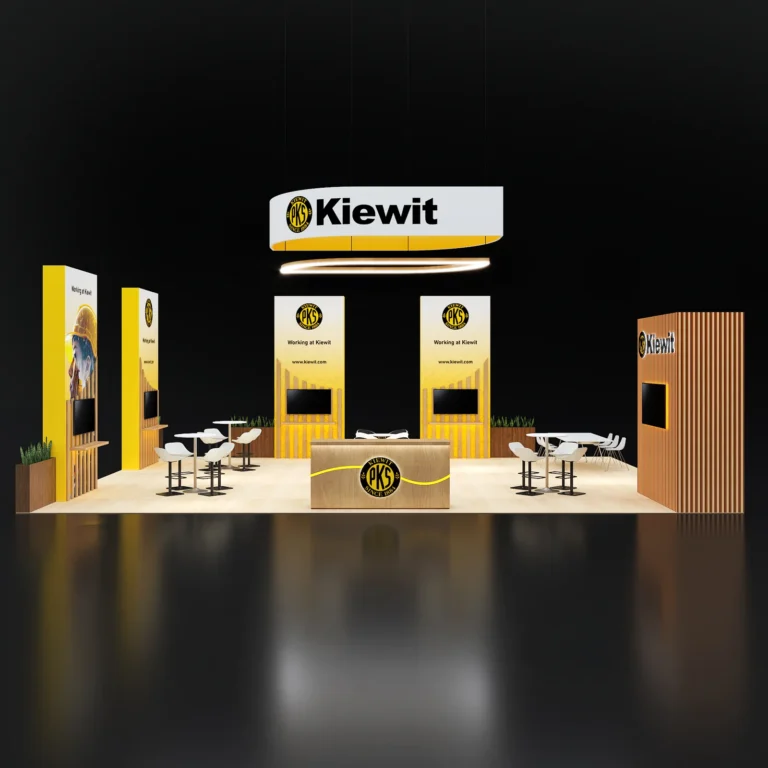
Live inventory below, each card carrying its Los Angeles price. Choose a footprint or budget in the finder above and the selection re-sorts right here — every structure finishable as a fully custom exhibition stand.
12 booths · Los Angeles, California pricing
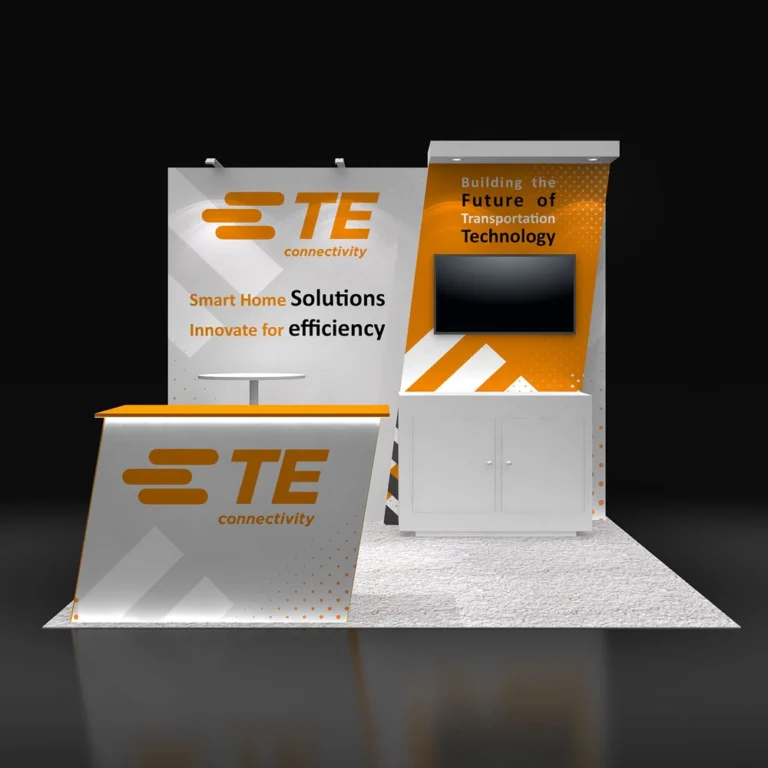
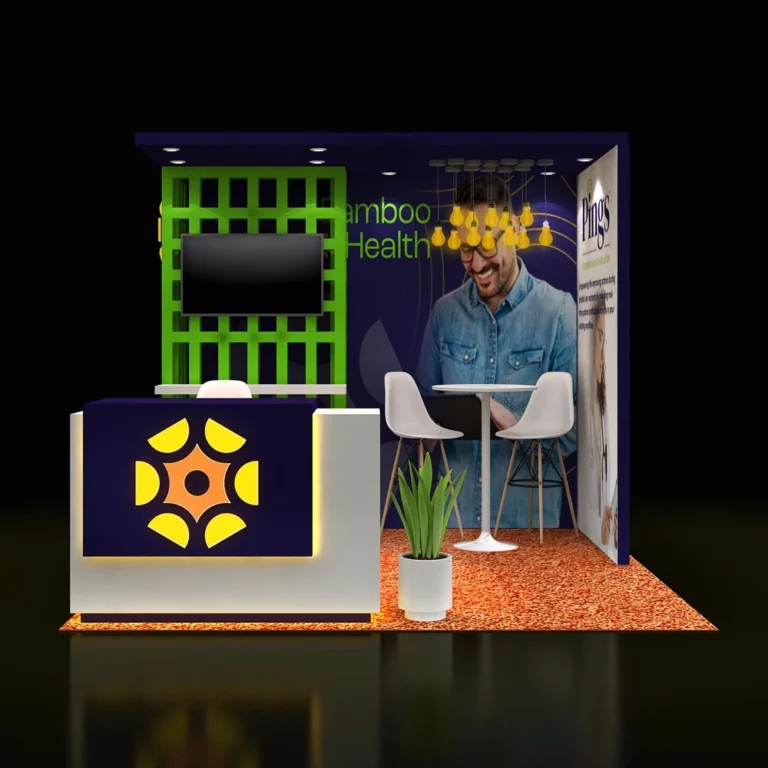
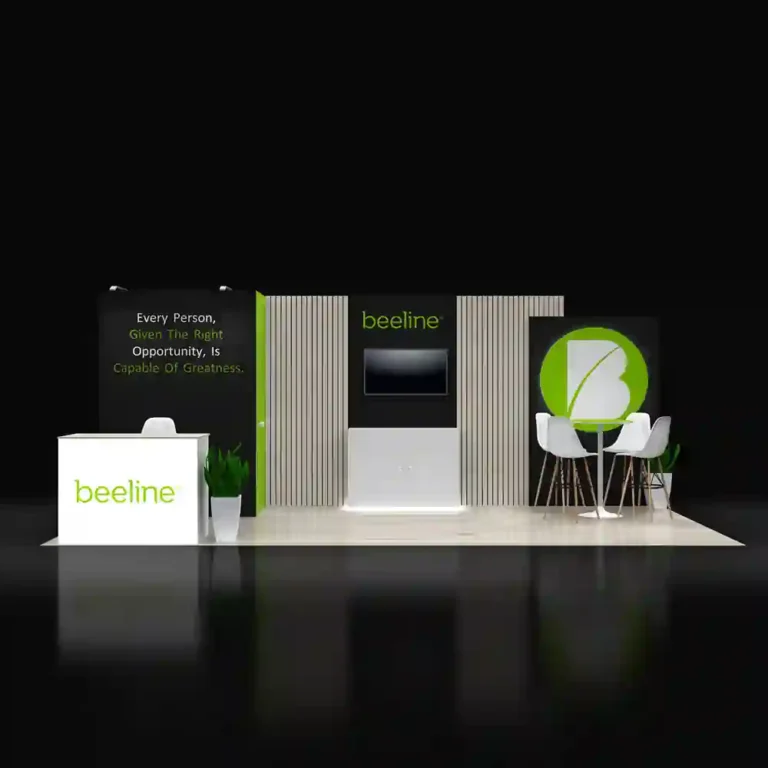
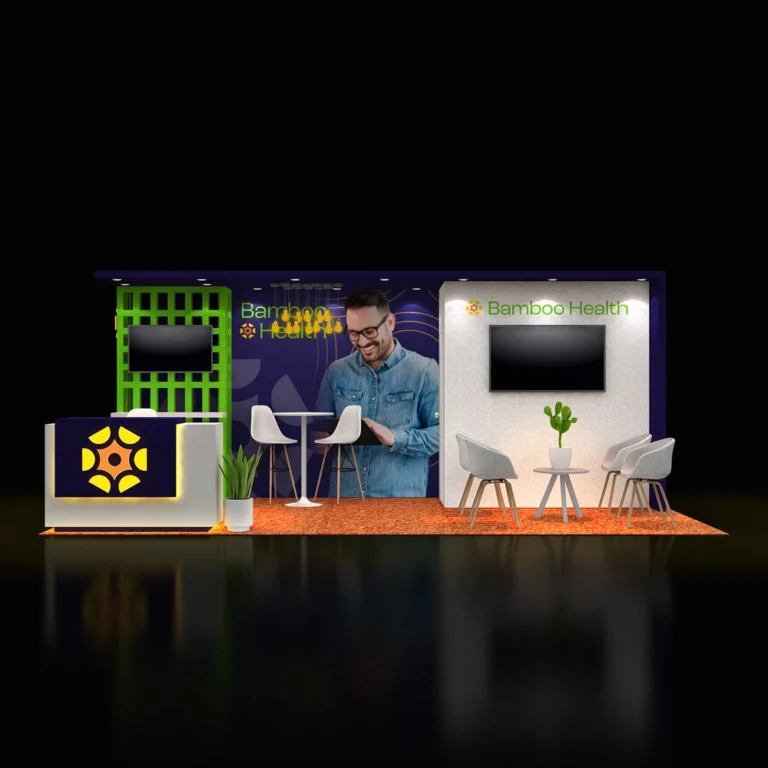
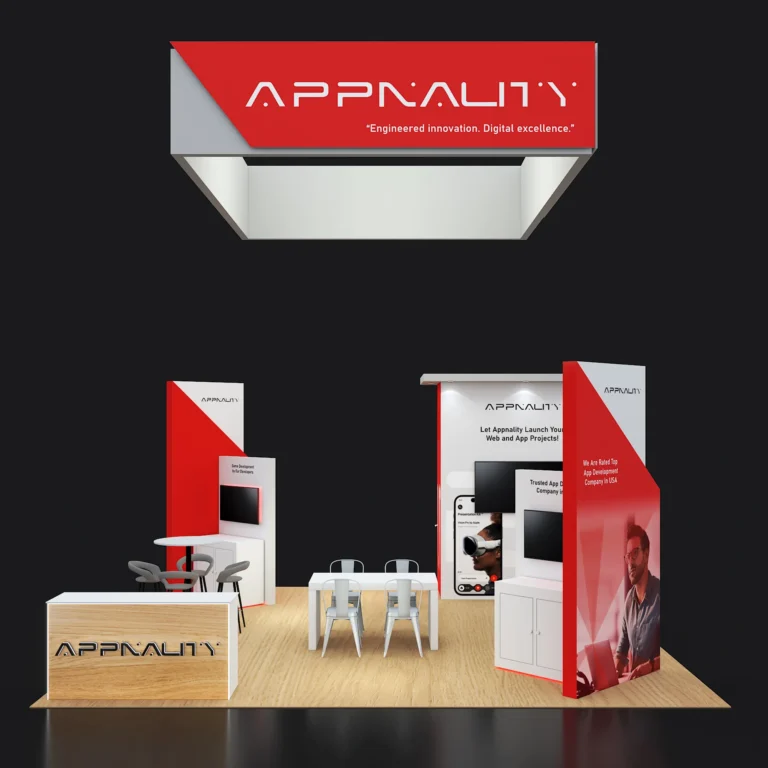
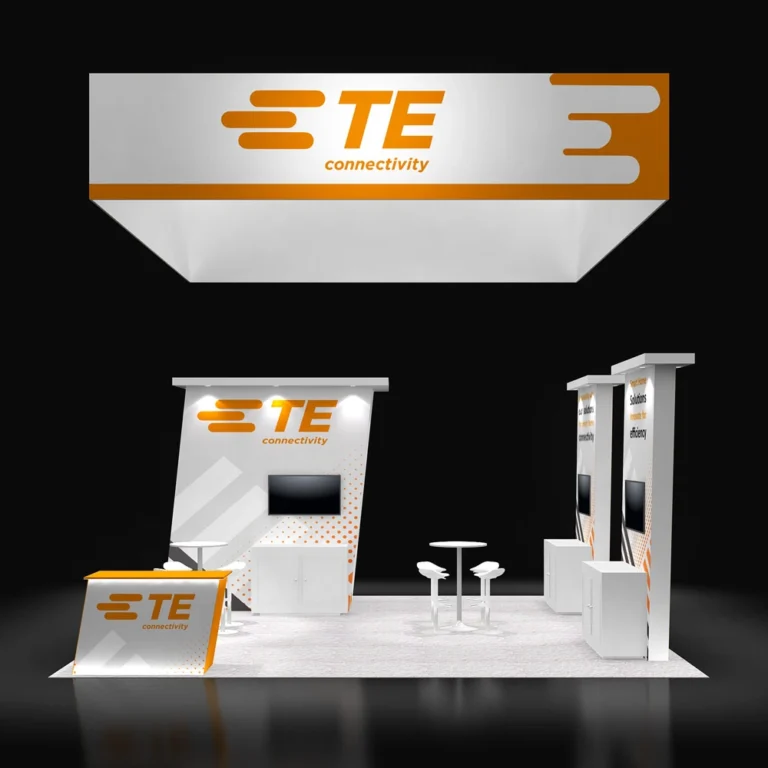

The Los Angeles Convention Center anchors downtown with its two main exhibit halls — South and West — connected by the concourse and worked by a dense city-block dock system. The hall assignment shapes freight routing and rigging plans, and LA’s event calendar layers convention weeks against everything else this city runs, which makes the assigned move-in window less a suggestion than a law of physics.
The larger hall, home to the giant consumer and industry floors. High-traffic shows mean strict crowd-flow and queue rules for exhibitors — constraints we design into the stand rather than negotiate on the floor.
The second hall, carrying conference expos and mid-size shows with their own docks and schedule. A West assignment changes the freight plan, so it’s the first thing we read off your space contract.
LA’s event world extends past the convention centre into studio lots, hotels and purpose-hired spaces. Brand activations in unconventional venues are their own discipline — one the same fixed-price model covers.
Several of LA’s biggest floors are consumer or fan events rather than pure trade shows — which changes the stand’s job. Queue design, crowd durability and photo-worthiness move up the brief, and the meeting space moves behind the scenes. We design for the audience your show actually admits.
At Anime Expo and LA’s licensing-driven floors, international exhibitors run two shows at once: a public-facing brand world that thrills a fan audience, and a private calendar of licensing and distribution meetings that justifies the airfare. The stands that work are engineered for both at the same time — spectacle out front, signed contracts in the back.
The brief that follows: photo-ready fronts that fans amplify for free, queue capacity that survives a viral moment without choking the aisle, and enclosed meeting rooms with real acoustic separation where a rights conversation can run for an hour at conference volume. Character walls and content loops out front; NDA territory behind.
Fronts composed for the camera — because at a fan show, every attendee is a distribution channel and the stand is the content.
Capacity, switchbacks and sight lines planned so a crowd reads as success to show management instead of a violation — and so the queue itself entertains.
Enclosed, acoustically real, properly lit and cooled for hour-long conversations — the square metres that actually pay for the trip.
Your US calendar runs past Los Angeles? Las Vegas, San Diego, San Francisco, Chicago, Orlando and fifty more cities run on the same published fixed model — one stand design, one project manager, every city’s price known before your show year starts.
“They never just build the booth and disappear — I always know I have someone on call and ready to jump in when the unexpected inevitably happens. That level of responsiveness makes a huge difference in high-pressure event environments.”
“I’ve worked with Pure Exhibits for almost a year now, and have had such a great experience! They are our go-to for trade shows, and create memorable booths that represent our brand well. The team is incredibly responsive and reliable.”
“It’s always a pleasure to work with Utsav. The process is simple, straightforward, and high quality. I have worked with them for 3 years now and will continue!”
“Their team is incredibly flexible throughout the design process and truly collaborative in bringing ideas to life. I highly recommend Pure Exhibits to anyone looking for a reliable, thoughtful, and experienced exhibit partner.”
Los Angeles’ fixed points, with the planning runway each realistically needs from your first email. Around these, the LACC and the city’s special venues carry conferences and activations year-round; name yours and we’ll pull its manual before we quote.
| Show | Typical month | Venue | Start planning |
|---|---|---|---|
| Anime Expo | July | Los Angeles Convention Center | 5 months |
| Adobe MAX | October | Los Angeles Convention Center | 4 months |
| LA Auto Show | November | Los Angeles Convention Center | 5 months |
Anime Expo gets five months — licensing-driven stands carry meeting rooms, queue engineering and often character-IP approval cycles on your side that take longer than the fabrication does. Start the renders before your legal team starts theirs.
Show dates don’t create cost pressure — order deadlines do, and the decisive one closes roughly eight weeks out, when advance rates on electrical, rigging and drayage expire. For a team planning across an ocean, the whole project exists to arrive at that gate comfortably, with your only travel being the flight to the show itself.
A title that got greenlit late, a licensing partner confirmed after the space release, a stand vendor who went quiet — entertainment calendars compress without asking permission. With design, fabrication and print in one building, approval-to-floor runs about four weeks. Same quality gate — built and photographed before shipping — same published price.
Tell us the show and your space size — metres or feet. Within 24 hours: design concepts, one fixed USD figure, and the venue’s own charges forecast beside it. Approve everything from your desk; the only things that fly are your team and your content.
Or call us directly — (800) 379-8451