Where the product is a demo, not a crate.
Custom exhibition stands for RSA Conference, Dreamforce, GDC and every Moscone Center show — fabricated in the US and delivered on one fixed USD price signed before work starts. No ocean freight, no carnets, no US entity required. For a software company entering the American market, the only thing that should cross the ocean is your team.
Filters the stands below — each shows its San Francisco price.
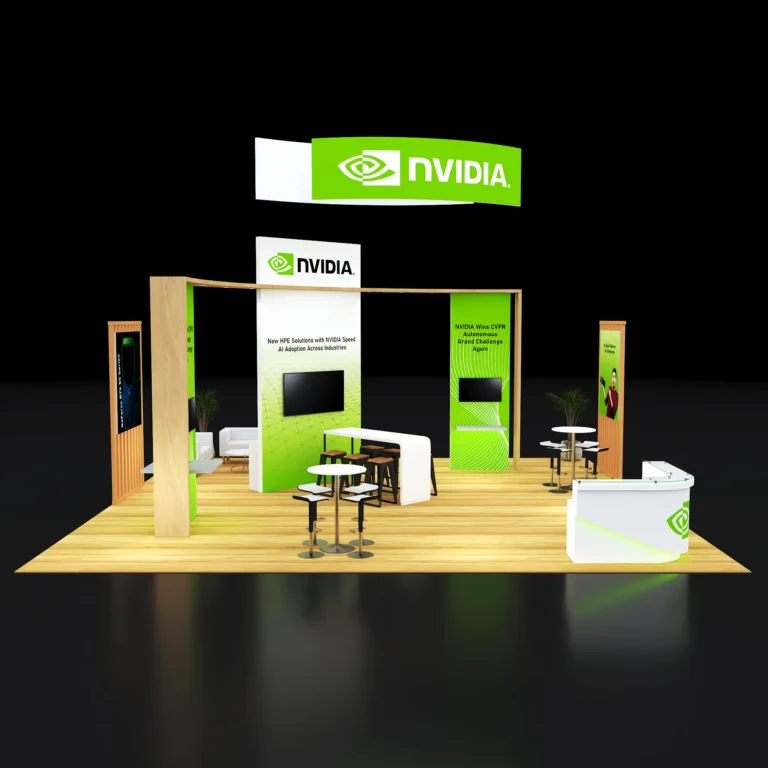
Moscone’s audiences are the hardest in the world to impress with a monitor on a plinth — they build software for a living and they’ve seen ten thousand demos. Everything below came out of our own shop: designed, fabricated, printed and wired by one team, then stood up complete and photographed before shipping. What you approve from abroad is what lands on the floor.
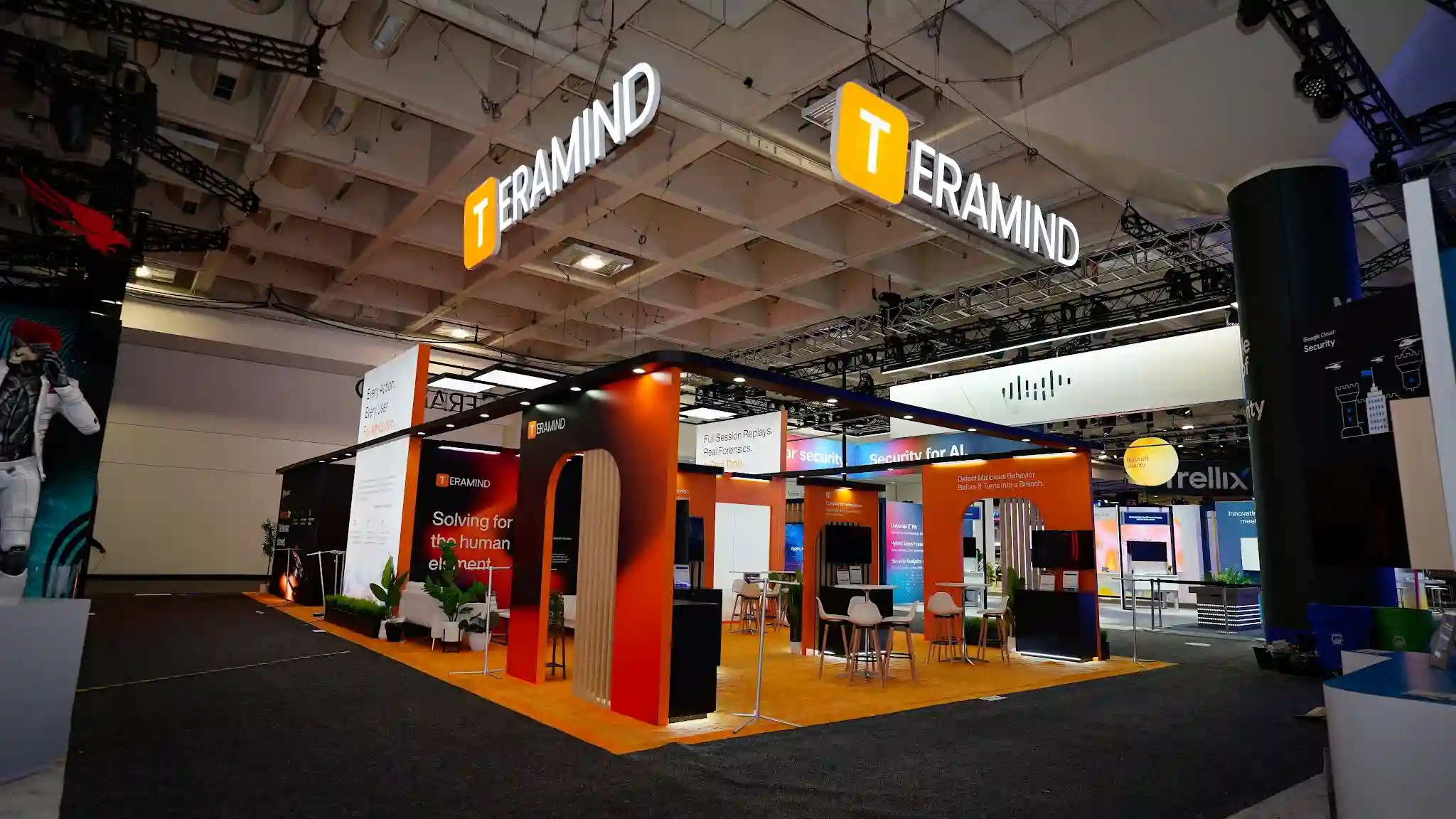 Teramind
1,800 sq ft island with interactive demo zones.
Teramind
1,800 sq ft island with interactive demo zones.
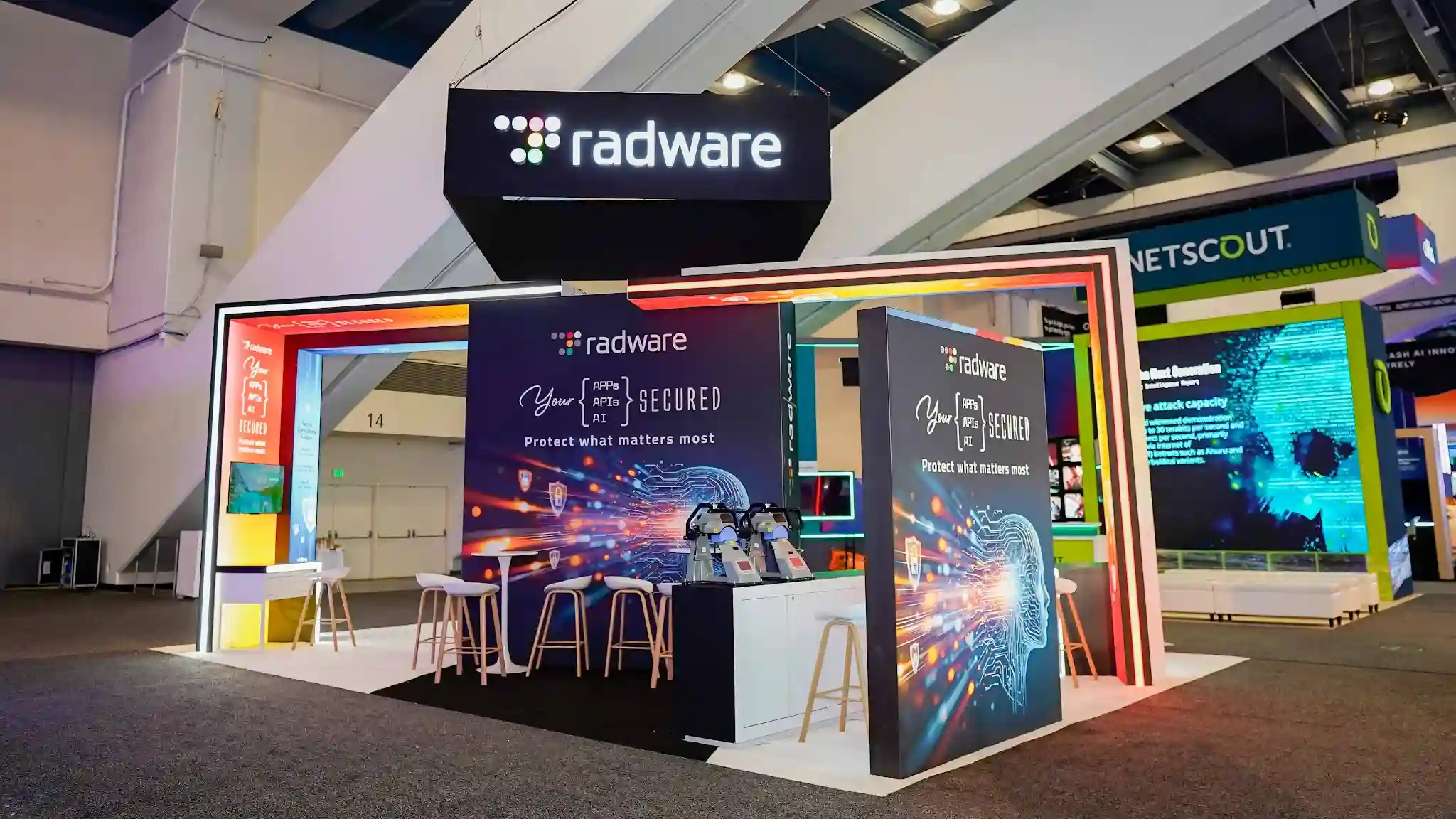 Radware
Hands-on learning stations inside a four-sided island.
Radware
Hands-on learning stations inside a four-sided island.
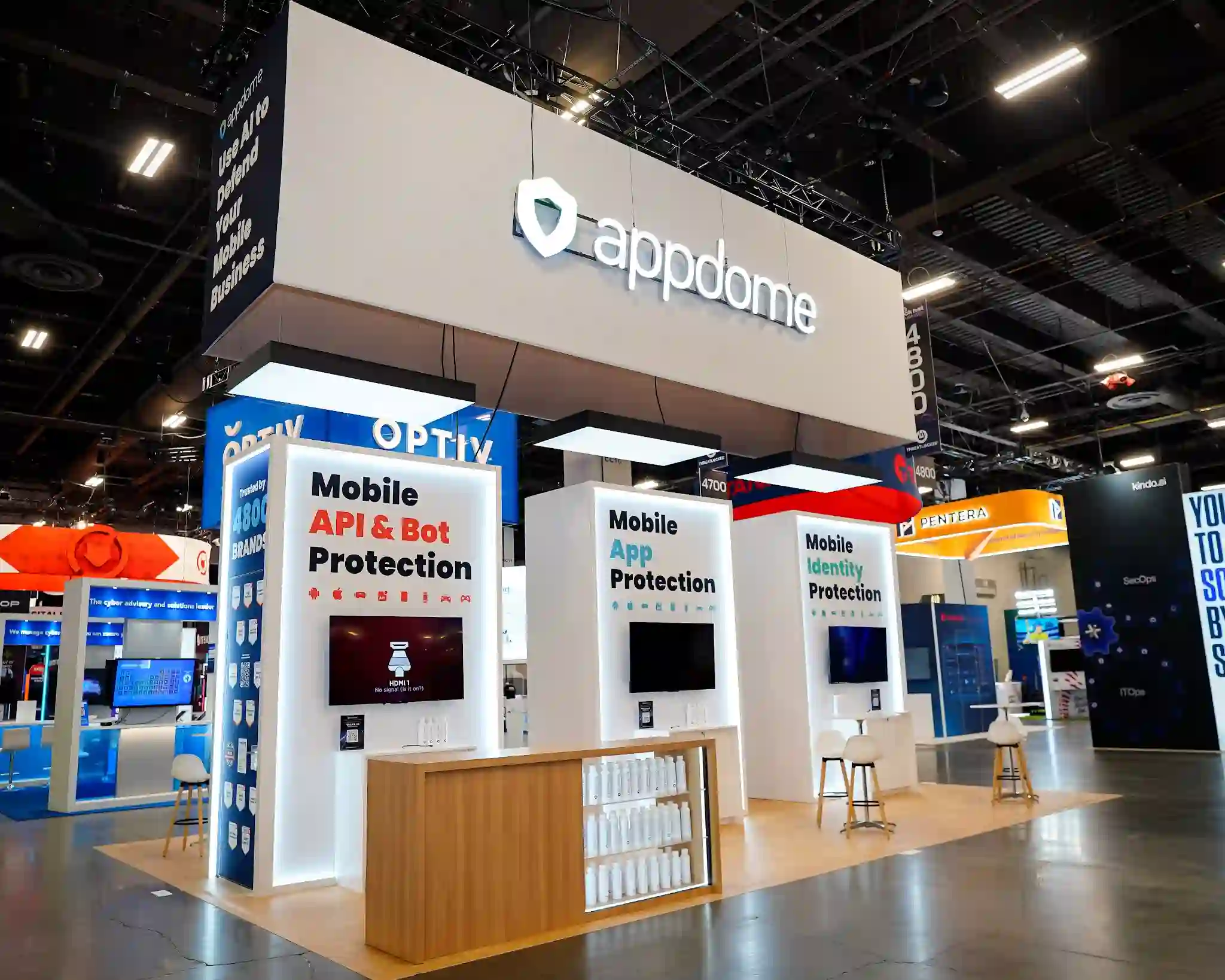 Appdome
Security demo theatre built for high-volume technical traffic.
Appdome
Security demo theatre built for high-volume technical traffic.
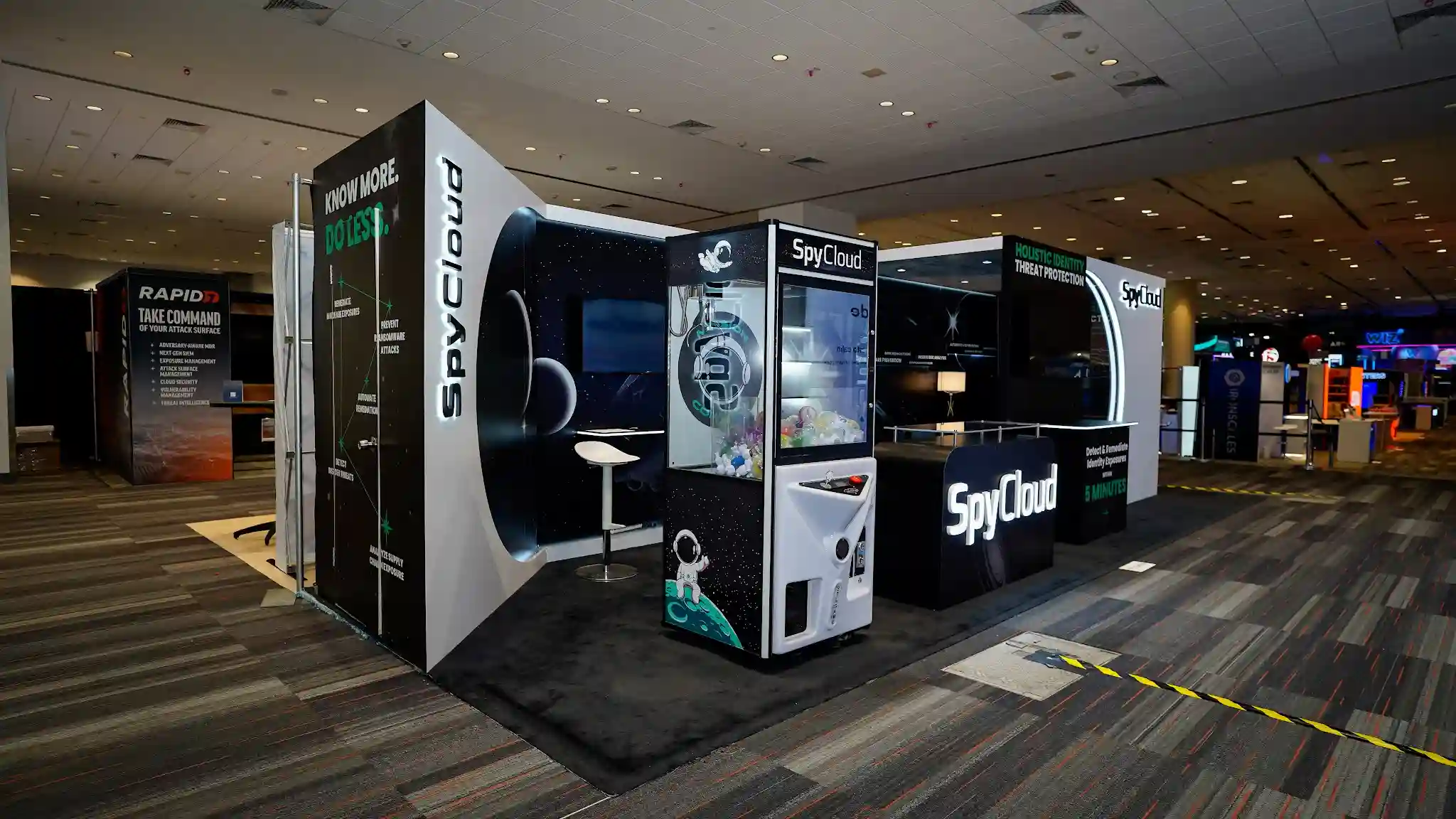 SpyCloud
Interactive stations arranged for one-to-one conversation.
SpyCloud
Interactive stations arranged for one-to-one conversation.
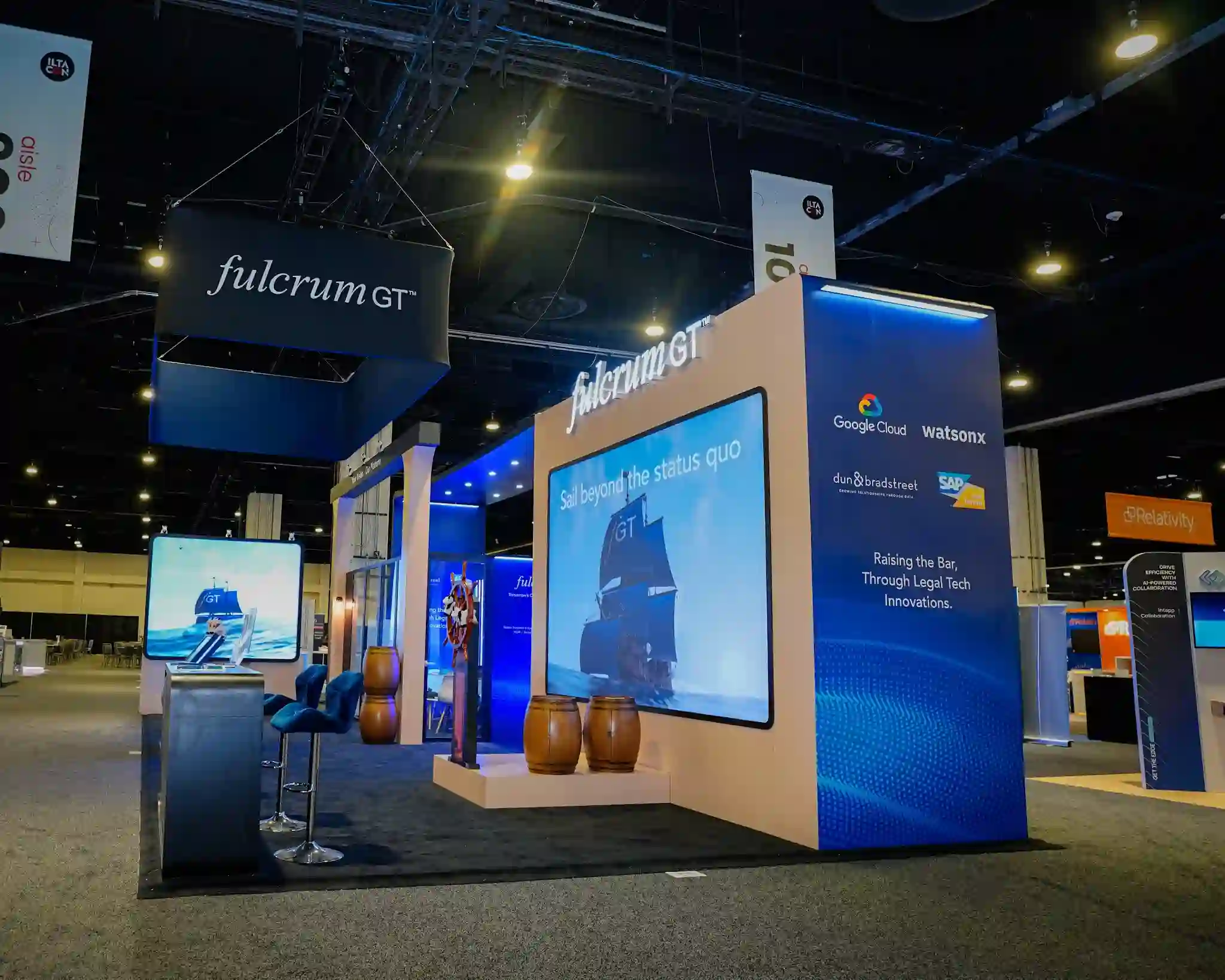 Fulcrum GT
Full-height LED as the structure, not an add-on to it.
Fulcrum GT
Full-height LED as the structure, not an add-on to it.
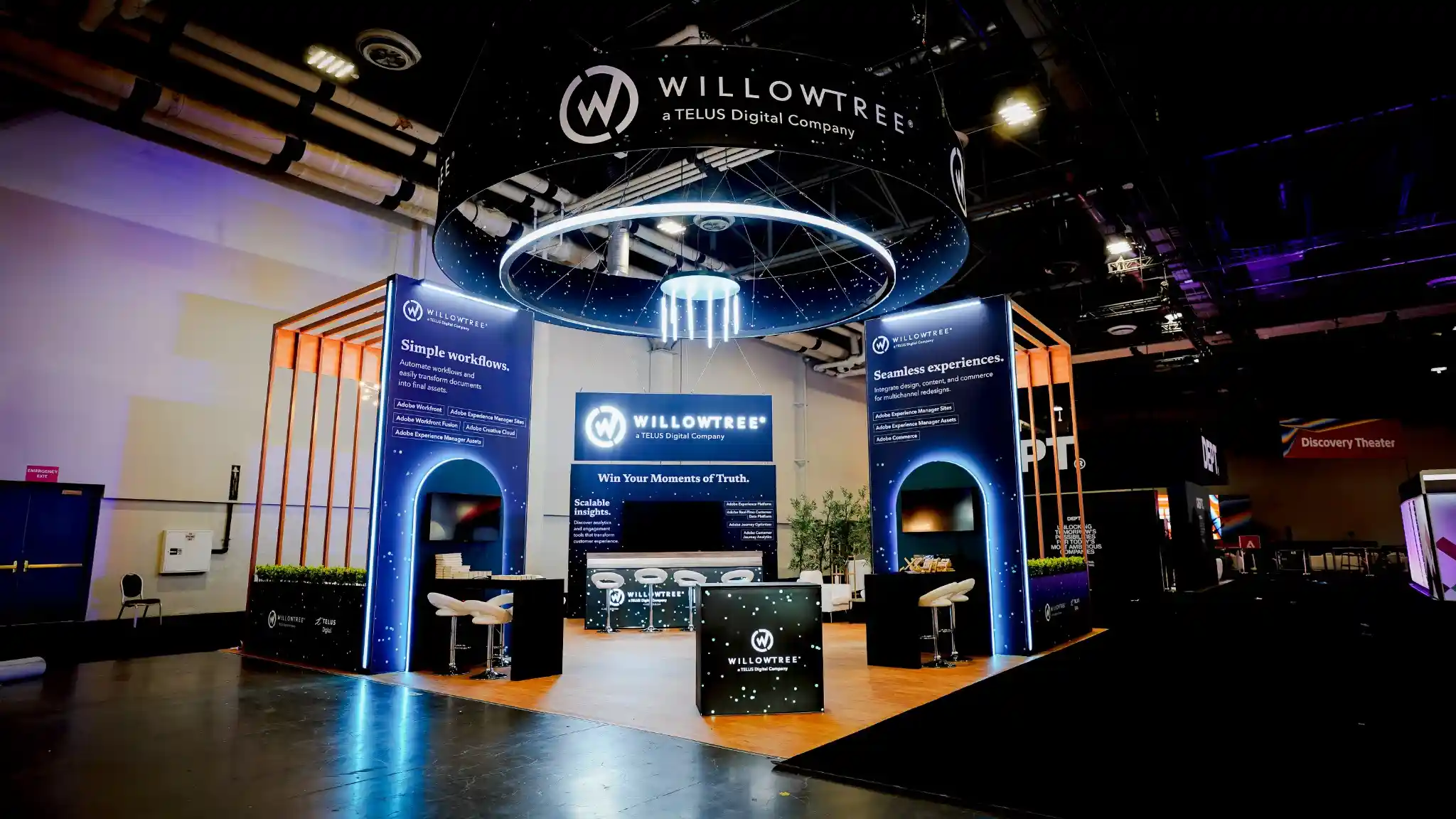 WillowTree
Meeting-led layout with enclosed rooms off an open front.
WillowTree
Meeting-led layout with enclosed rooms off an open front.
 IMAX
Large-format island built around a screening experience.
IMAX
Large-format island built around a screening experience.
 Microsoft
Modular island scaled across a multi-show programme.
Microsoft
Modular island scaled across a multi-show programme.
Also built for Genea, Dunnhumby, Chili Piper, LHH, Calm and Spekit.
A software or services company has the easiest logistics case in exhibiting: the product travels as code, the collateral as files, the team as passengers. Shipping a physical stand across an ocean to demonstrate an intangible product is the one place the maths breaks — you’d be paying freight, customs and weight-billed handling to move the only part of your presence that could have been built at the destination.
So build it at the destination. Your design language carries over — send photos or CAD of the stand your brand runs at home and we rebuild it to US materials and US electrical code — and the entire logistics chapter of the project simply never gets written.
No carnets, no brokers, no crate in customs while your conference opens. For most Moscone exhibitors, the stand is the only physical asset in the project — and it’s built here.
Screens, mounts, cabling and network-ready power planned from the first render — because on this floor, a demo station that stutters is a stand that failed.
Everything we wire is US code from the first cable, so the floor inspection is a formality — not a show-morning scramble for adapters and sign-offs.
Material handling bills by weight. A locally built rental reaches an urban dock light — a line we forecast against your build before you sign.
Scale-ups arriving from London, Berlin or Tel Aviv meet a show-floor system here that has no equivalent at home. The full six-term glossary lives on our Las Vegas exhibition stand page; these are the three that bite hardest here.
The venue’s fee for moving freight from dock to stand space, billed by weight. Unavoidable for everyone, forecastable for anyone honest — we price the line against your actual stand before you commit and file at advance rates.
San Francisco is a union show town: stand construction, electrical and rigging are crew work under venue and show rules, not something your engineers do in trainers the night before. Our fixed price carries the crews and supervision.
US floor plans sell in feet, and conference space contracts follow. The pricing table below carries both units — quote your space in whichever your contract uses.
Fixed and all-inclusive for custom exhibition stands in San Francisco, invoiced in USD to your home-country entity — international wire or card, no US bank account or address required. San Francisco is one of America’s most expensive show cities, and these figures have that priced in from the start: the number you approve is the number you pay.
| Footprint | Metric | Fixed price (USD) | Typical use |
|---|---|---|---|
| 10×10 | ≈ 3×3 m · 9 m² | $14,500 – $17,000 | Inline. First US market entry, lead capture. |
| 10×20 | ≈ 3×6 m · 18 m² | $21,500 – $26,500 | Inline. Demo plus seated conversation. |
| 20×20 | ≈ 6×6 m · 37 m² | $33,500 – $38,500 | Island. Two or three zones, four-sided. |
| 20×30 | ≈ 6×9 m · 56 m² | $36,000 – $42,000 | Island. Adds a semi-private meeting space. |
| 20×40 | ≈ 6×12 m · 74 m² | $42,000 – $54,000 | Island. Multiple engagement zones. |
| 20×50 | ≈ 6×15 m · 93 m² | $48,000 – $60,000 | Island. Long-run product wall. |
| 30×30 | ≈ 9×9 m · 84 m² | $48,000 – $60,000 | Island. Enclosed meeting room, theatre seating. |
| 30×40 | ≈ 9×12 m · 111 m² | $66,000 – $78,000 | Island. Flagship, double-deck capable. |
The venue invoices these directly to every exhibitor, whichever exhibit company builds the stand — no vendor anywhere can legitimately “include” them. We estimate each line against your actual stand before you commit, then file the orders inside the advance-rate window.
Market-entry exhibitors assume the shipping question only bites the big islands. It doesn’t. Price the crossing for a modest 3×6 m conference stand — the classic first RSA or Dreamforce footprint — and the logistics bill lands within sight of simply building the stand here:
On the venue’s invoice in both scenarios: space, electrical service, drayage, rigging, cleaning, internet — the show’s own tariffed charges, billed to every exhibitor whoever builds. The difference is the weight the drayage gets billed on, and which side of the comparison forecast those lines before you signed.
For a software company, the crossing is pure waste. The same budget builds the stand here — demo-wired, photo-verified and standing before your team’s flight leaves the ground.
Live inventory below, each card carrying its San Francisco price. Choose a footprint or budget in the finder above and the selection re-sorts right here — every structure finishable as a fully custom exhibition stand.
12 booths · San Francisco, California pricing
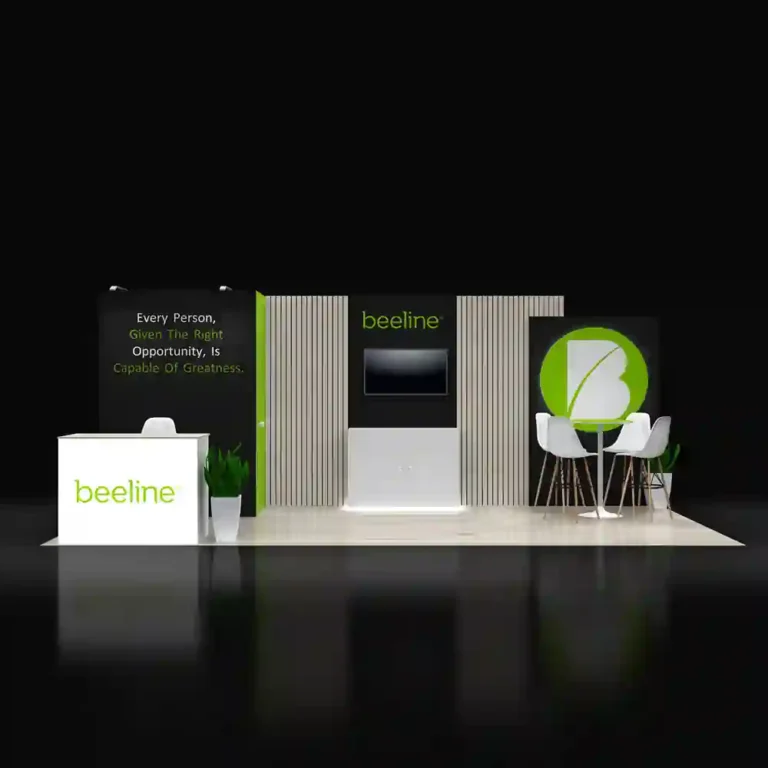
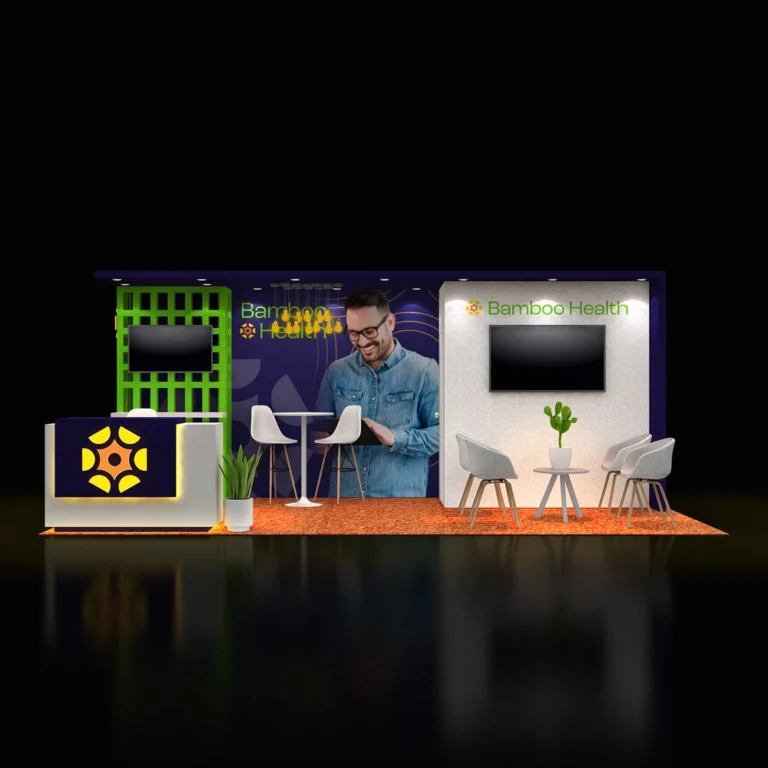
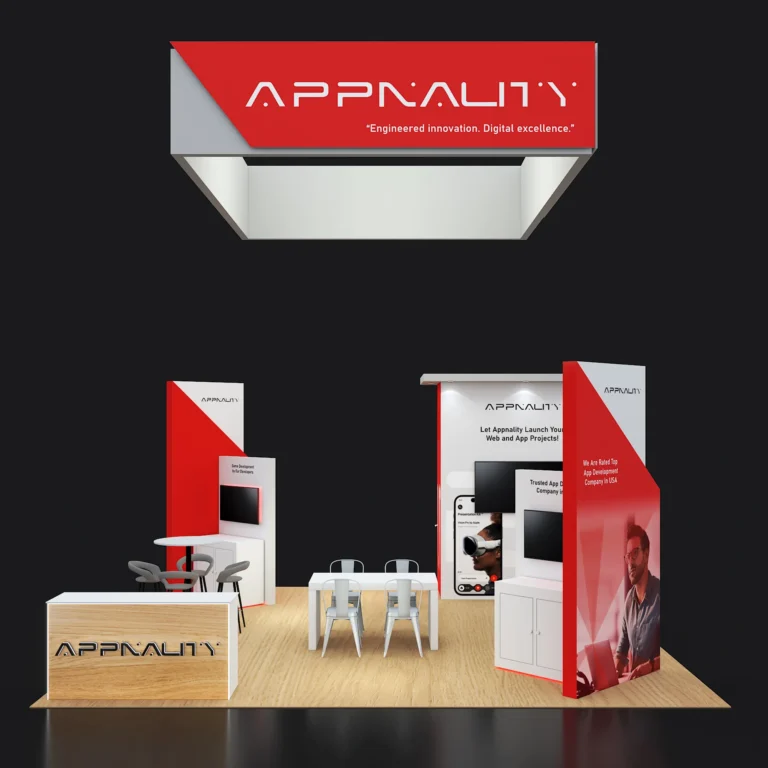
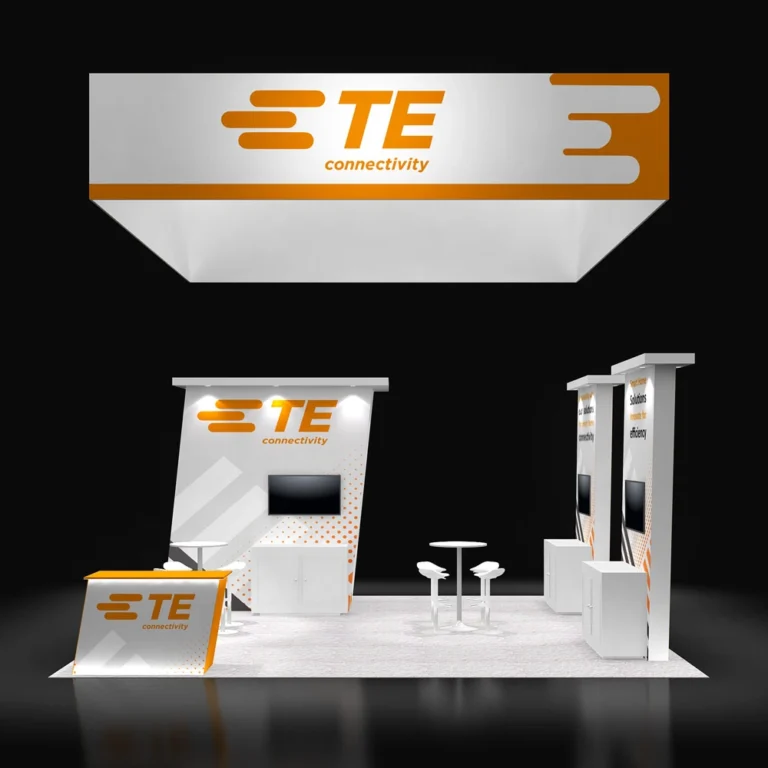
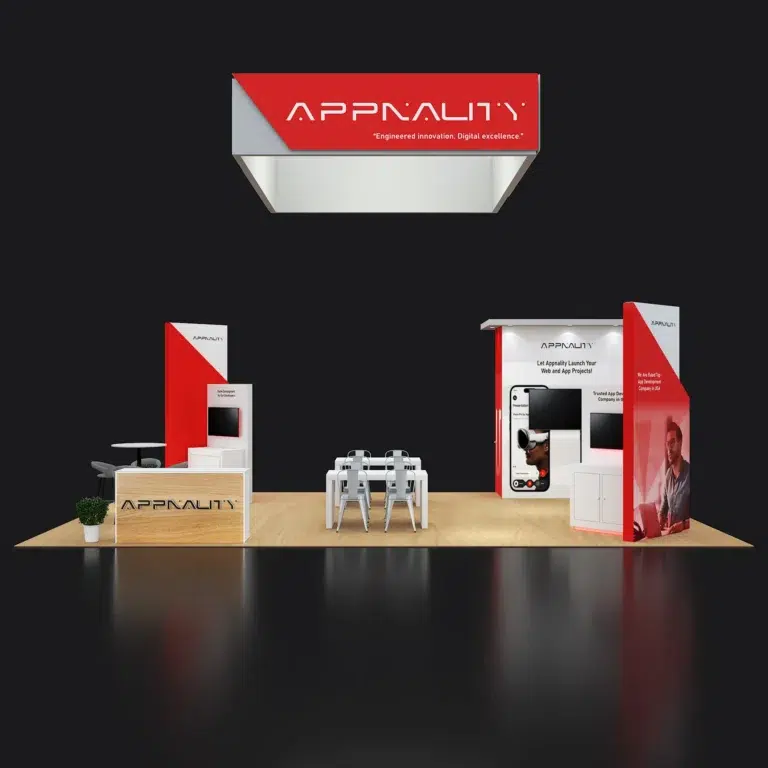

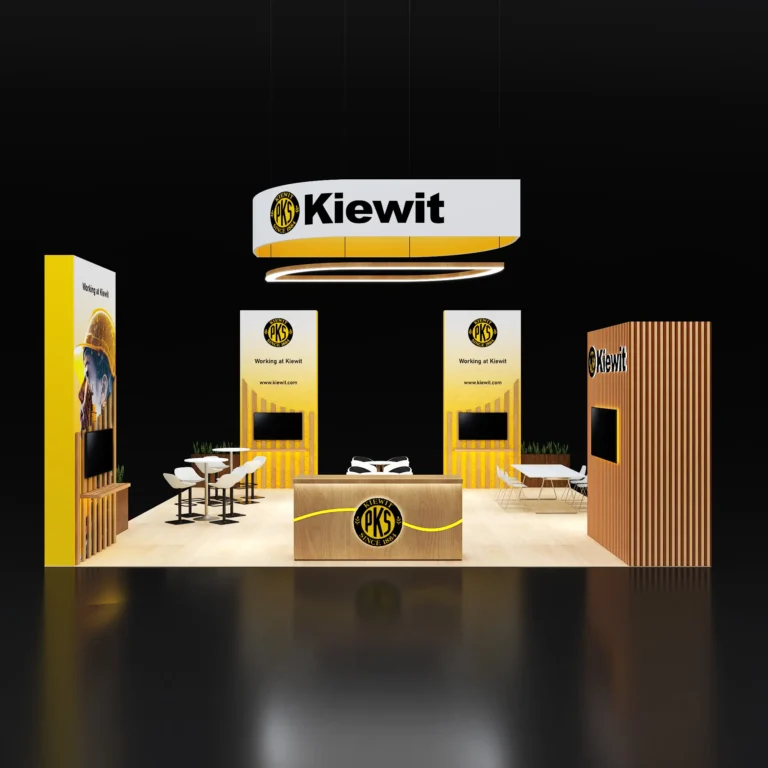
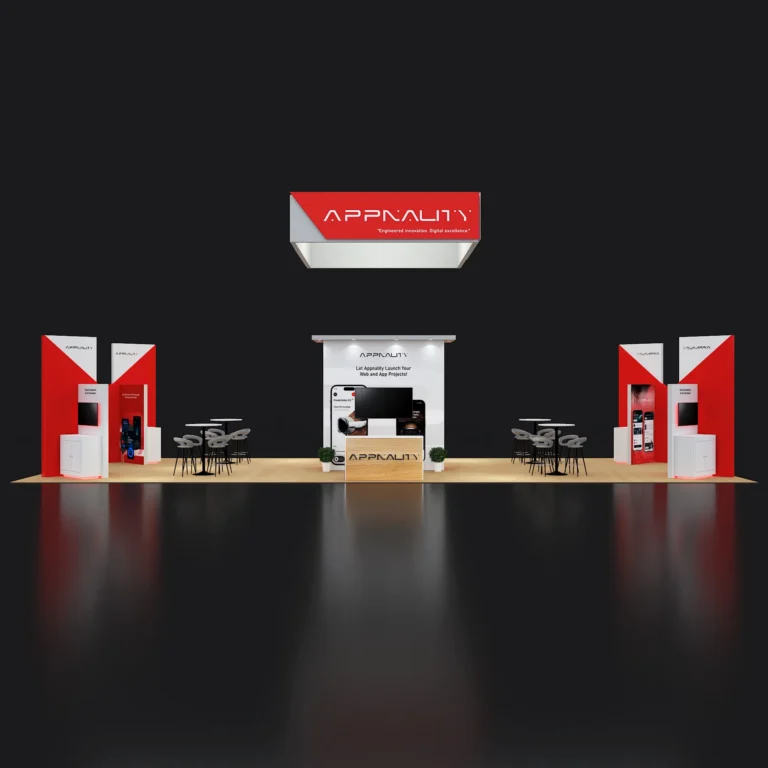
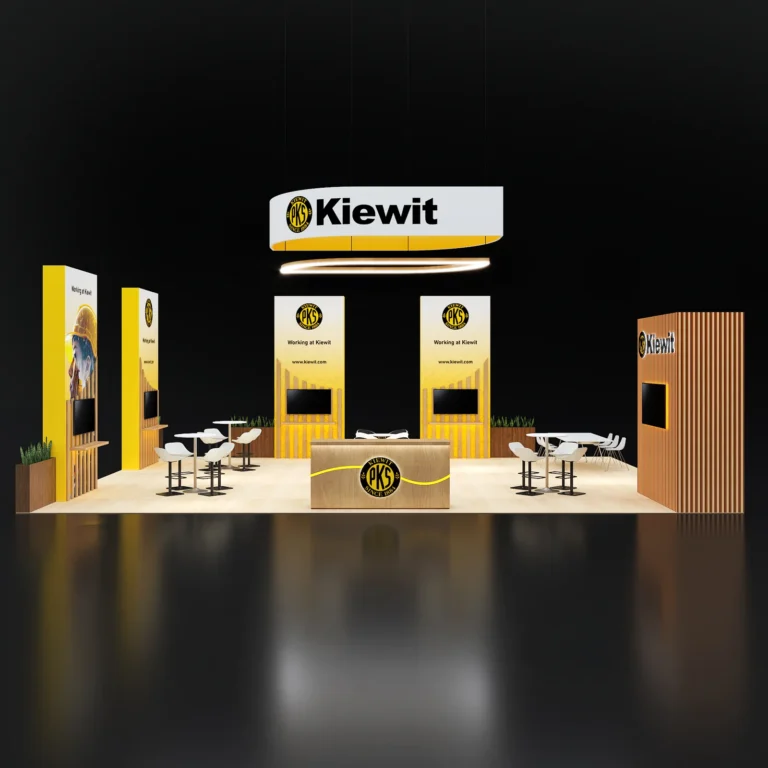
Moscone sits in the middle of downtown San Francisco — North and South connected below ground, West across the street — with docks that open onto working city streets rather than acres of marshalling yard. That geography compresses everything: delivery windows are tight, idling is not an option, and a load that misses its slot re-queues into city traffic. It rewards carriers and crews who work the building constantly, which is what our fixed price puts on your project.
The connected core below Howard Street, where the flagship conferences run their expo floors. Underground halls put a premium on planned freight routing and early rigging coordination — both filed weeks before your crates move.
The glass building across the street operates as its own venue: separate docks, separate schedule, vertical freight to upper-level floors. A West assignment changes the install plan, so it’s the first thing we read off your contract.
San Francisco’s conference calendar spills into hotel ballrooms and company campuses year-round. Ballroom logistics — freight lifts, padded corridors, overnight installs — are their own discipline, covered by the same fixed price.
Conference expos run shorter and later than trade fairs: expo halls often open mid-afternoon and close with the evening reception, and install windows compress accordingly. We plan the build for the schedule your show actually runs — not the one a trade-fair habit expects.
At RSA, Dreamforce and GDC, nobody is inspecting your joinery — they’re deciding within seconds whether your screen is worth stopping for. The stand’s whole job is to stage that decision: sight lines that pull a passing delegate’s eyes to a live product, demo stations positioned for a conversation rather than a queue, and structure that makes a software brand feel physical for the only week of the year it has to.
For international scale-ups this is usually the first American appearance, and the brief sharpens further: a footprint sized to your meeting capacity, a semi-private corner where a Series-B conversation can happen at conference volume, and every dollar saved on freight spent on the screens and the story instead.
Screen height, angle and content zones planned from the first render, so a delegate mid-aisle reads your product before your competitor’s — the only real estate that matters here.
Standing-height stations for the thirty-second version, seated corners for the twenty-minute one, and power and network runs planned so neither ever stutters.
Acoustic separation good enough for a pricing conversation ten metres from a keynote crowd. The demo earns the meeting; the corner closes it.
Your US calendar runs past San Francisco? Las Vegas, San Diego, Chicago, Orlando and fifty more cities run on the same published fixed model — one stand design, one project manager, every city’s price known before your show year starts.
“They never just build the booth and disappear — I always know I have someone on call and ready to jump in when the unexpected inevitably happens. That level of responsiveness makes a huge difference in high-pressure event environments.”
“I’ve worked with Pure Exhibits for almost a year now, and have had such a great experience! They are our go-to for trade shows, and create memorable booths that represent our brand well. The team is incredibly responsive and reliable.”
“It’s always a pleasure to work with Utsav. The process is simple, straightforward, and high quality. I have worked with them for 3 years now and will continue!”
“Their team is incredibly flexible throughout the design process and truly collaborative in bringing ideas to life. I highly recommend Pure Exhibits to anyone looking for a reliable, thoughtful, and experienced exhibit partner.”
San Francisco’s fixed points, with the planning runway each realistically needs from your first email. Around these, Moscone and the hotel venues carry rotating conferences all year; name yours and we’ll pull its manual before we quote.
| Show | Typical month | Venue | Start planning |
|---|---|---|---|
| GDC — Game Developers Conference | March | Moscone Center | 4 months |
| RSA Conference | April – May | Moscone Center | 5 months |
| Dreamforce | September | Moscone Center | 5 months |
RSA and Dreamforce get five months — the flagship weeks tighten hotels and services citywide, and international security and SaaS exhibitors book the same window. Compressed timelines remain workable; see the rush section below.
Show dates don’t create cost pressure — order deadlines do, and the decisive one closes roughly eight weeks out, when advance rates on electrical, rigging and drayage expire. For a team planning across an ocean, the whole project exists to arrive at that gate comfortably, with your only travel being the flight to the show itself.
A conference slot approved after the budget cleared, an expo space that opened in the final release, a partner who pulled out of a shared stand — scale-up emergencies rarely leave a quarter of runway. With design, fabrication and print in one building, approval-to-floor runs about four weeks. Same quality gate — built and photographed before shipping — same published price.
Tell us the show and your space size — metres or feet. Within 24 hours: design concepts, one fixed USD figure, and the venue’s own charges forecast beside it. Approve everything from your desk; the only thing that flies is your team.
Or call us directly — (800) 379-8451