
Trade show service providers include firms and professionals who provide assistance to exhibitors in planning, designing, constructing, shipping, installing, operating, and evaluating their booth space at trade shows and conventions. This industry sector includes many different specialties, such as exhibit houses specializing in booth design and construction, logistics firms dealing with cargo shipments, and General Service Contractors managing the facilities at the trade show venue.
Usually, most exhibitors require several categories of service providers at a trade show venue. To ensure that you choose the right one, it is necessary to know the functions of various service providers.
What Are Trade Show Service Providers?
Any organization participating in a trade show requires external assistance. The physical, logistical, and marketing demands of exhibiting are too complex and too specialized for most companies to handle entirely in-house.
Trade show service providers are needed to deal with such matters. These are specialized organizations that take care of every little detail of your event participation.
It encompasses a broad range of options. Some vendors offer just one service – constructing the booth frame, operating the AV equipment on the exhibition grounds, or capturing photos of your exhibit. Other vendors act as full-service providers, functioning as an extension of your marketing team.
Talk to a Trade Show Expert
Get answers to your service, labor, and booth support questions before the event.
Understanding the landscape matters because:
-
The right provider for one function is not automatically the right provider for another. A world-class exhibit fabricator may have no logistics infrastructure. A top-rated GSC provides standardized services but cannot customize your brand experience.
-
Gaps between providers are where problems happen. When freight arrives at the wrong loading dock, when the power connection is missing, or when the I&D crew expects rigging that was never ordered. These failures almost always trace back to an unclear scope between providers.
-
Costs are distributed across multiple vendors. Knowing who charges for what is the only way to build an accurate exhibit budget.
The Complete Map of Trade Show Service Categories
Before going deep on each type, here is a full map of every service category in the trade show ecosystem:
| Service Category | What They Handle | Who Hires Them |
|---|---|---|
| Exhibit Design & Fabrication | Booth design, build, and manufacturing | Exhibitor |
| General Service Contractor (GSC) | Show floor infrastructure, utilities, and furniture rental | Show organizer (assigned to exhibitors) |
| Installation & Dismantle (I&D) | Physical setup and teardown of booth structures | Exhibitor |
| Logistics & Freight | Shipping, drayage, customs, ground transport | Exhibitor |
| Exhibit Rental | Short-term booth structure and graphics rental | Exhibitor |
| Graphic Design & Printing | Visual design, large-format printing | Exhibitor |
| Audio-Visual & Technology | Screens, sound, lighting, interactive tech | Exhibitor |
| Marketing & Strategy Consulting | Exhibit strategy, lead generation, pre/post marketing | Exhibitor |
| Storage & Asset Management | Warehouse storage, inventory tracking, and refurbishment | Exhibitor |
| Staffing & Talent | Booth staff, brand ambassadors, hosts, interpreters | Exhibitor |

Exhibit Design & Fabrication Companies
What they do: Construct booth displays, which are comprised of exhibit hardware, graphic frames, counter components, structural components, and specialized architectural components for a trade show exhibit.
This is the most prominent of all trade show service providers, and often represents the single largest expense when designing exhibits.
Sub-types Within This Category
Trade show service providers perform everything needed to bring an exhibit from initial conception to final implementation. These firms take care of everything, from concept to delivery, setup, storage, and maintenance of exhibits.
-
Specialty fabricators focus purely on building. They take a design from another firm or your own creative team and manufacture it to spec. Often used by exhibit designers who work independently and outsource production.
-
Modular display vendors sell or rent pre-engineered display systems (tension fabric, pop-up, modular panel) that use standard components and ship with custom-printed graphics. These systems are designed for self-setup and are popular for 10×10 and 10×20 inline booths.
-
An independent exhibit designer refers to a freelance/boutique designer. They work strictly on the creative part of building the booth, including the booth concept and 3D rendering. They then hand over the job of booth fabrication to the manufacturer. It’s a good option for businesses looking for higher-quality design without the expense of a full-service agency.
What to Look For
-
Portfolio featuring work in booths similar to the size you’re seeking
-
Between in-house and outsourcing the booth fabrication process, in-house tends to provide better quality and efficiency
-
G7 certification for the printing process (industry standard for color accuracy in dye-sublimation and large format printing)
-
Structural engineer drawings for custom-built booths (may be required for certain venues)
-
Fabrication timeline ownership within your show timeframe
Questions to Ask Before Signing
-
What is your lead time for this project scope?
-
Who handles revisions if graphics arrive with color issues?
-
Do you use in-house fabrication or subcontract manufacturing?
-
What is your process if something is damaged in transit?
Get a Custom Booth Design
Fixed price. Prebuilt. Fully managed. We respond within 2 business hours.
General Service Contractors (GSCs)
What they do: GSCs are companies officially contracted by the show organizer to manage the physical infrastructure of the convention floor. They are not hired by exhibitors directly; they are assigned to the show. However, exhibitors order services from them through an official show services portal.
The GSC is responsible for:
-
Installing and dismantling the pipe and drape that defines individual booth spaces
-
Providing furniture rental (tables, chairs, counters, carpet)
-
Managing electrical service to each booth
-
Coordinating drayage (the handling of freight within the convention center)
-
Handling rigging for hanging signs and overhead structures
-
Running cleaning and maintenance for the show floor
Why Exhibitors Need to Understand GSCs
Working with the GSC isn’t optional; the GSC is how the event runs. Getting services through the GSC is mandatory for all exhibitors there. Here’s what happens when you get it wrong:
-
A failure to submit an advance order leaves you with “floor orders,” which cost much more than regular advance orders, usually 30-50% more.
-
Not ordering electrical services ahead of time forces you to run cables from another stand or face costs for emergency services.
-
Mistakes with your drayage orders, which involve fees charged based on weight, are one of the most frequent budgetary surprises for new exhibitors.
The Exhibitor Services Kit
Each show managed by the GSC also creates the Exhibitor Services Kit (alternatively known as the Exhibitor Manual). It outlines all the services provided, their cost, deadline dates, and venue restrictions. It is a must to study this manual carefully, well in advance, approximately several months before the show. Show order deadlines usually occur 3-4 weeks before move-in.
Installation & Dismantle (I&D) Crews
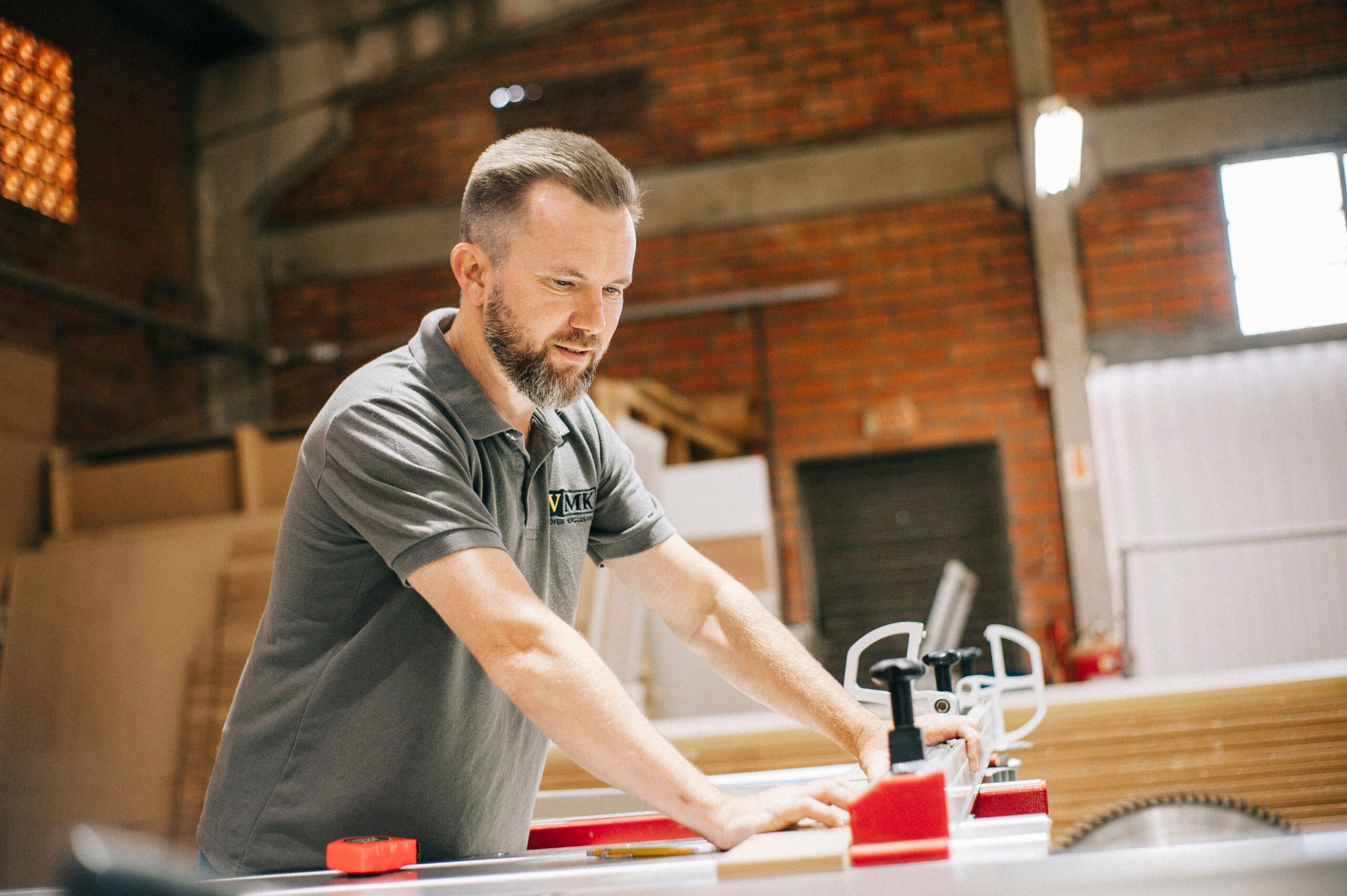
What they do: I&D crews are the workmen who actually build and take down booths on the show floor. They are separate from the GSC (which oversees the logistics of the show facilities) and the exhibit fabricator (who builds the booth). I&D crews are the ones who build your particular booth for your particular show.
For smaller portable display units (pop-up fabric backwalls and banner stands), exhibitors usually do it themselves. Beyond that, professional I&D is necessary.
Who Provides I&D Services?
Exhibit houses/fabricators — Many full-service trade show service providers offer I&D as a bundled service, sending their own crews to every show. This ensures the crew knows the specific exhibit system.
Independent I&D labor companies — Often more cost-effective than the GSC’s labor rates, and allowed at most shows (verify union rules by venue).
GSC labor — These crews are familiar with the venue’s union rules and procedures. Required at some union halls; optional at others.
Union Labor Rules
One of the critical elements that can often confuse in understanding I&D is union jurisdiction. There are many conventions in big cities of the United States where certain jobs require some unions due to their jurisdiction.
Common jurisdictional considerations:
-
Electricians’ jurisdiction: Only certified electricians are allowed to connect power to equipment, including lighting fixtures
-
Teamsters’ jurisdiction: Regulates the transportation of freight within the convention center (drayage)
-
Carpenters’ jurisdiction: May include assembling display structures of particular sizes
Rules vary by city and by venue. Always verify with the GSC or show management before bringing your own I&D crew or attempting self-setup at an unfamiliar venue.
How Pure Exhibits Supports Your Trade Show Program
Pure Exhibits is one of those trade show service providers designed to help exhibitors achieve high quality without the hassle of coordinating with different vendors. The range of services includes the entire exhibit process life cycle:
-
Custom Exhibit Design and Build – From a basic 10×10 booth to more complex island constructions, the Pure Exhibits team designs an exhibit based on your specifications and business objectives. Every custom-built exhibit comes ready to be installed without tools and is durable enough to last for several show seasons.
-
Graphics Design and Printing – G7 color-certified large-format in-house printing. The team designs and prints dye-sublimated fabric graphics, backlit graphics, replacement graphics, and additional print elements.
-
Exhibit Rentals – High-quality rental structures and custom graphics for companies that exhibit occasionally or want to test a new show format before committing to ownership.
-
Logistics & Show Services Coordination – Pure Exhibits manages the outbound and return shipping, helps you navigate the GSC’s exhibitor services kit, and coordinates advance warehouse timelines so your exhibit arrives on schedule.
-
Installation & Dismantling – The I&D crew can be found nationwide to install and dismantle your exhibits, leaving you to worry about nothing but arriving at your show with an erected booth and departing without the trouble of having to take down everything.
-
Exhibition Storage & Asset Management – Your exhibit will be safely stored and managed between shows until the next one. There, it will be thoroughly inspected, packed, and delivered, fully prepared for the exhibition.
-
Strategic Thinking & Pre-Show Consultations – The team will help you develop your marketing strategies and provide assistance with selecting the right shows and preparing your booth personnel.
Let’s Build Something Extraordinary
Share your event details and we’ll craft a custom booth solution designed to captivate your audience and maximize your ROI.
Frequently Asked Questions
What does a trade show service provider do?
Trade show service providers aid exhibitors by planning and managing their show presence. They offer booth design, building, and transport, plus setup and teardown. Services also cover storage, graphic making, and on-site help for a hassle-free event.
Why should I hire a trade show service provider?
Hiring a trade show service provider saves time, cuts logistical headaches, and helps make your exhibit look pro. They handle all the technical stuff, letting your team network, generate leads, and connect with attendees. So, you get to focus on what matters most.
How do I choose the right trade show service provider?
When picking a trade show service provider, look at their experience and industry work. Check their range of services too, along with customer reviews. Make sure they can fit your budget and event needs as well. Also, see how responsive they are and the support they offer before, during, and after the event.