Where the global chip industry now exhibits.
Custom exhibition stands for SEMICON West and every Phoenix Convention Center show — fabricated in the US and delivered on one fixed USD price signed before work starts. Your process equipment may have to cross the ocean. Your stand doesn’t — and neither does a single customs form for it. No US entity required.
Filters the stands below — each shows its Phoenix price.
Phoenix’s new marquee audience tolerates nothing loose — process engineers and supply-chain buyers who measure their working lives in nanometres and extend the habit to your seams. Everything below came out of our own shop: designed, fabricated, printed and wired by one team, then stood up complete and photographed before shipping. What you approve from abroad is what lands on the floor.
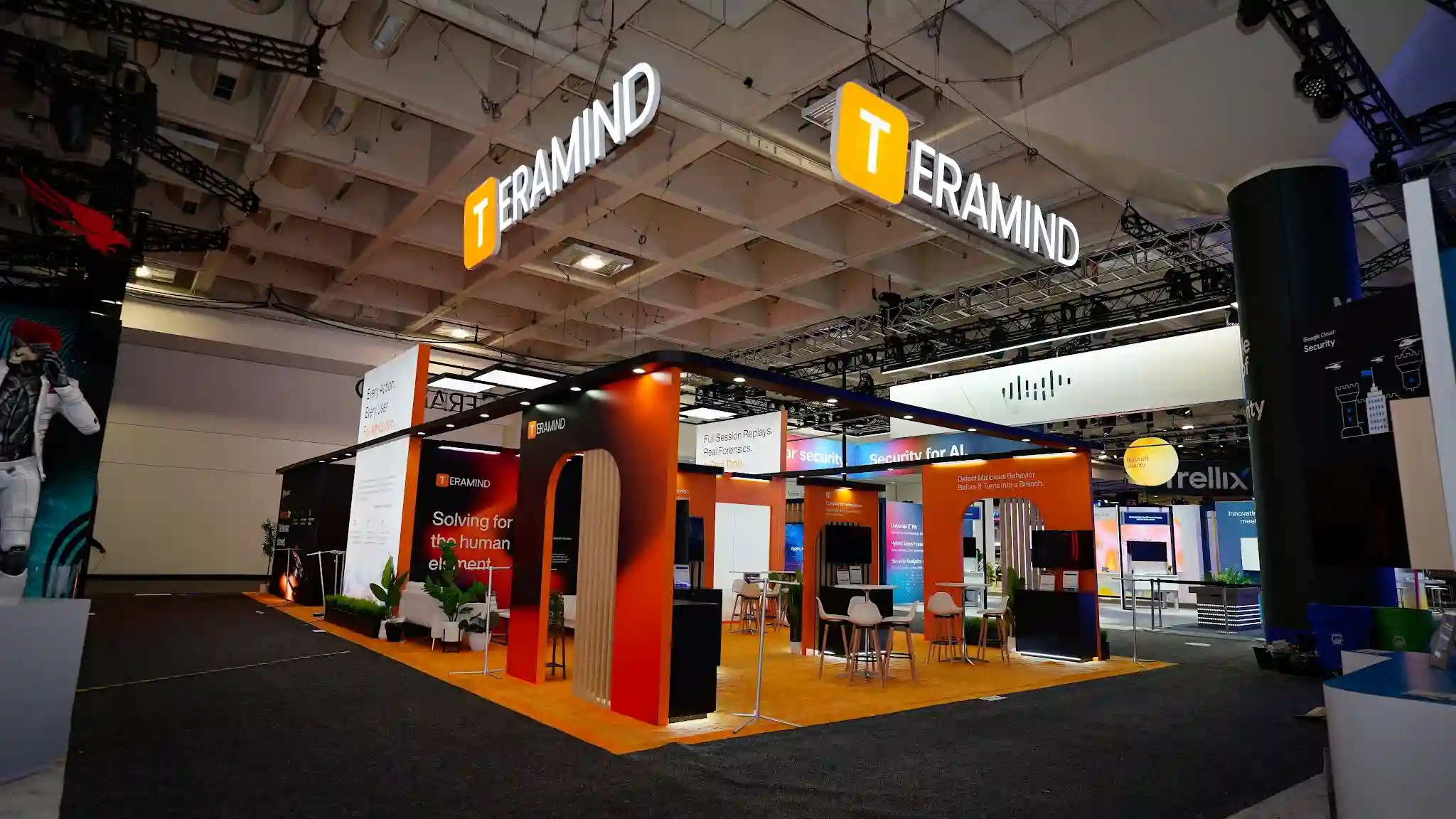 Teramind
1,800 sq ft island with interactive demo zones.
Teramind
1,800 sq ft island with interactive demo zones.
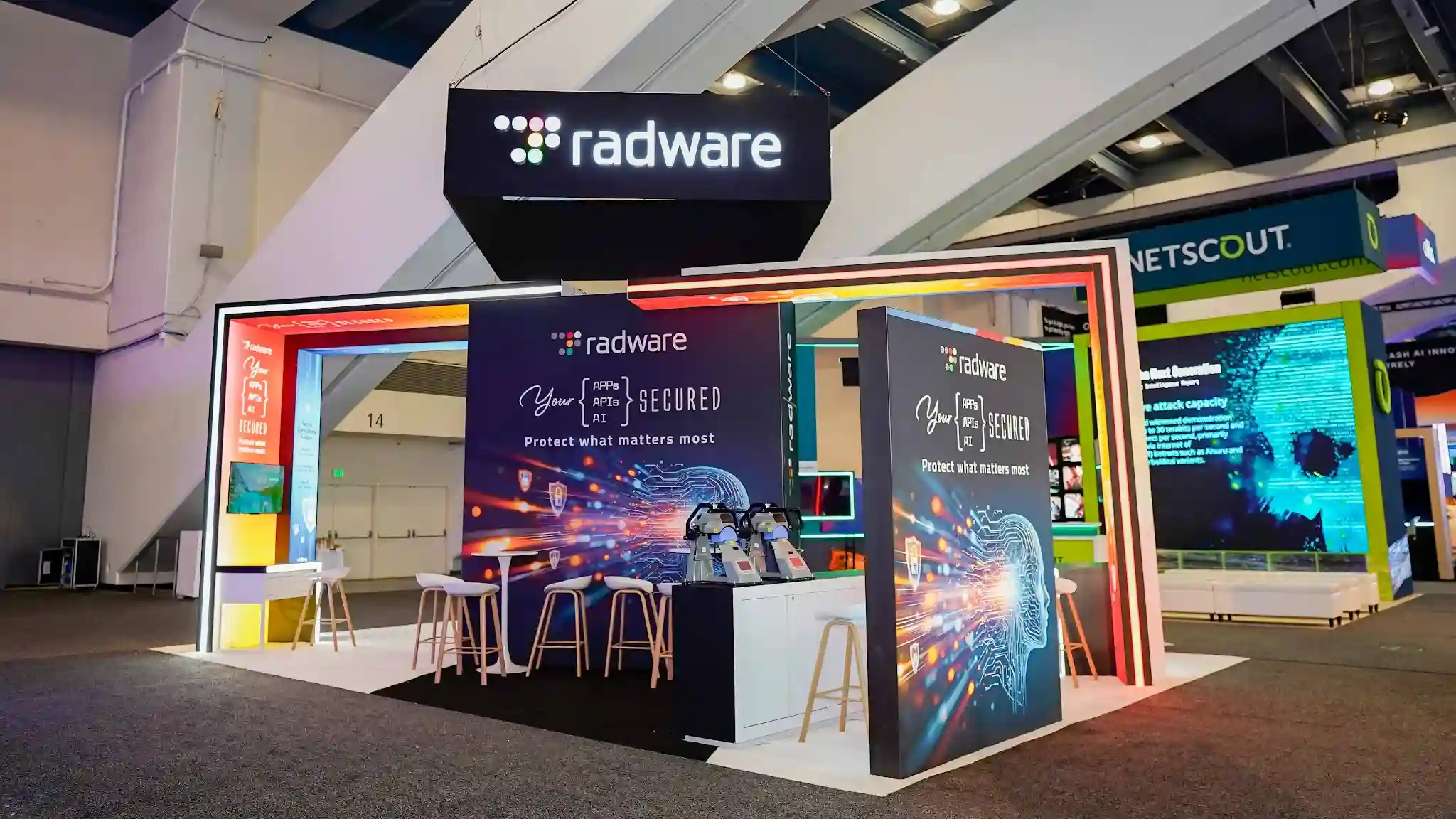 Radware
Hands-on learning stations inside a four-sided island.
Radware
Hands-on learning stations inside a four-sided island.
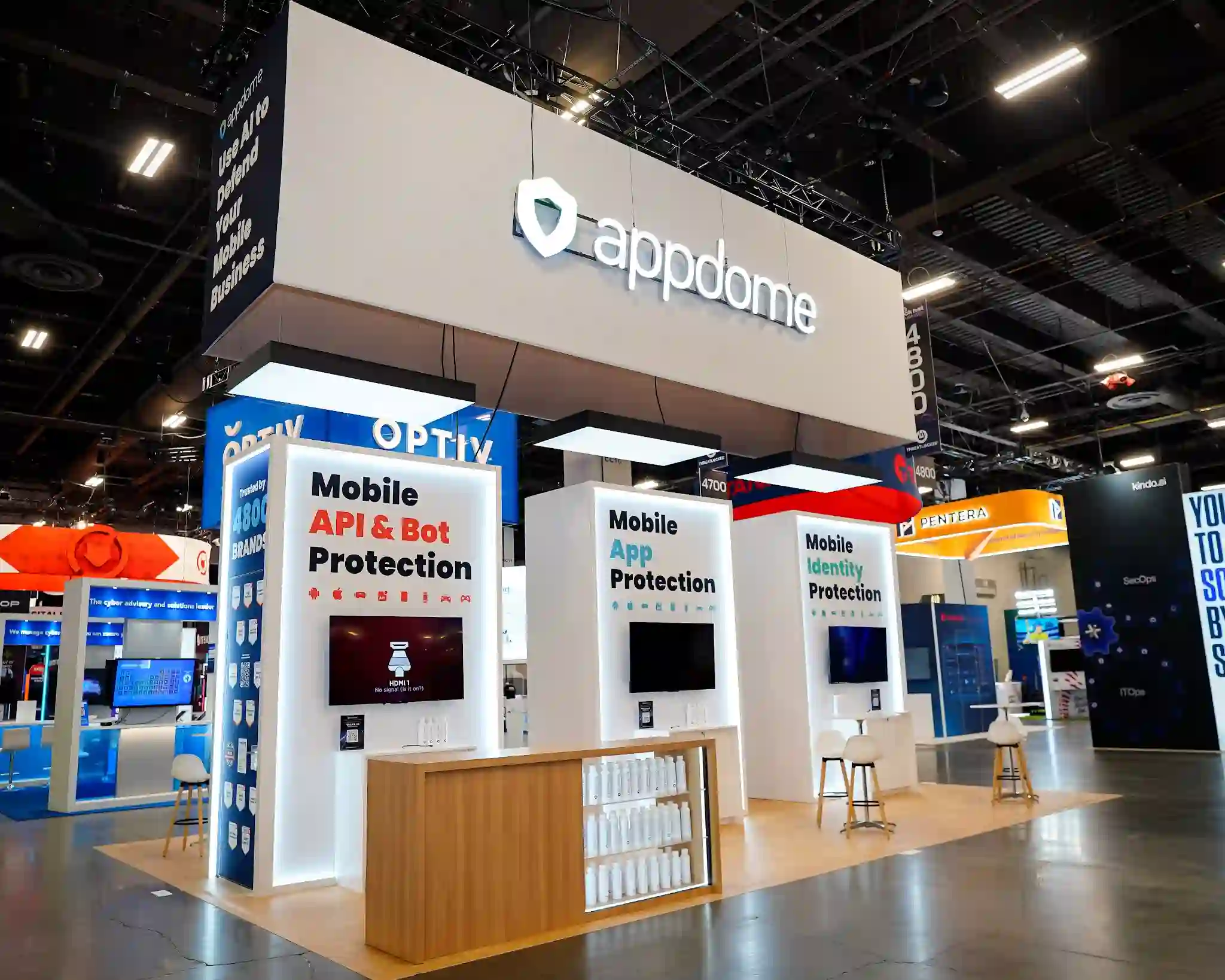 Appdome
Security demo theatre built for high-volume technical traffic.
Appdome
Security demo theatre built for high-volume technical traffic.
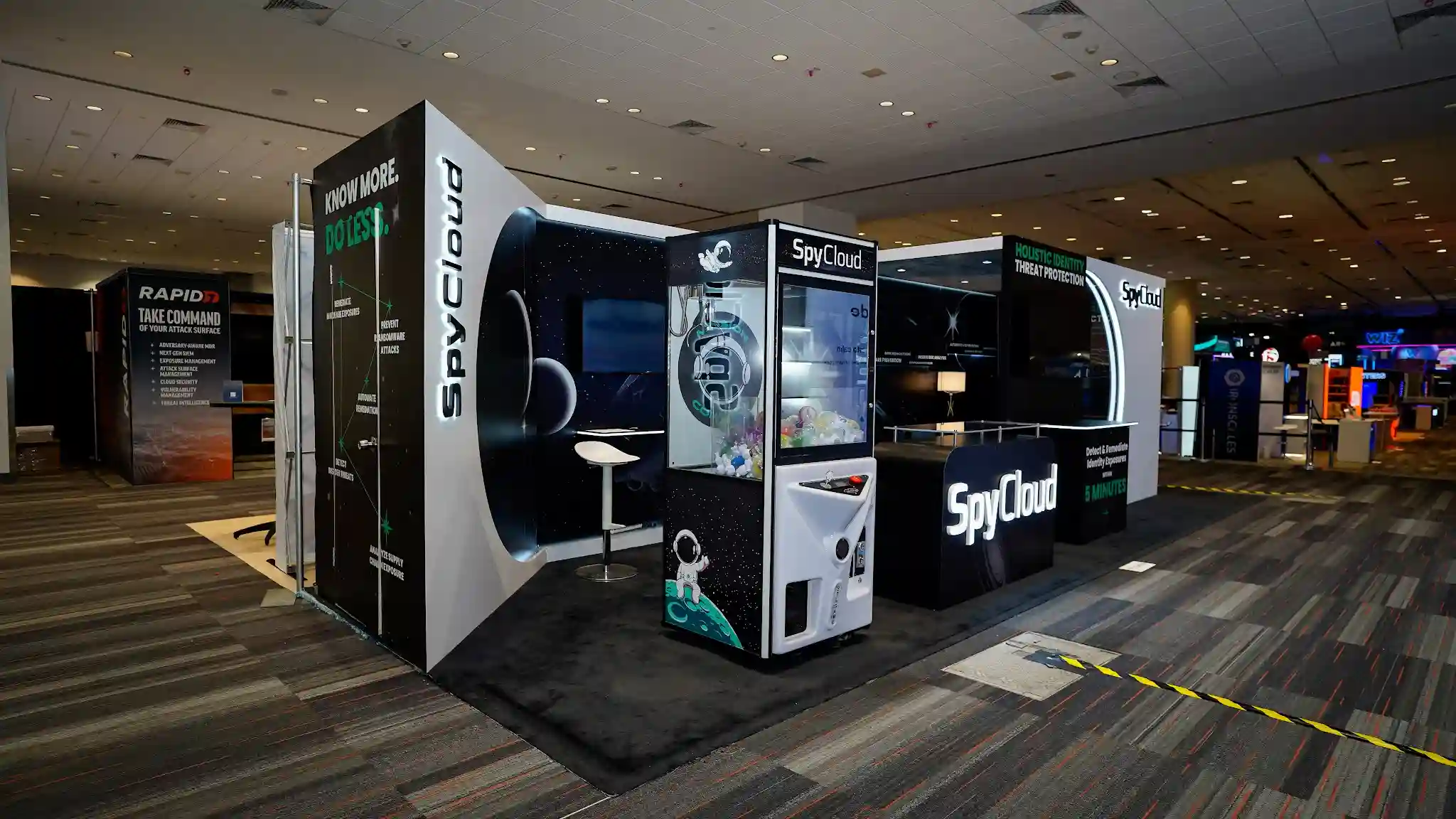 SpyCloud
Interactive stations arranged for one-to-one conversation.
SpyCloud
Interactive stations arranged for one-to-one conversation.
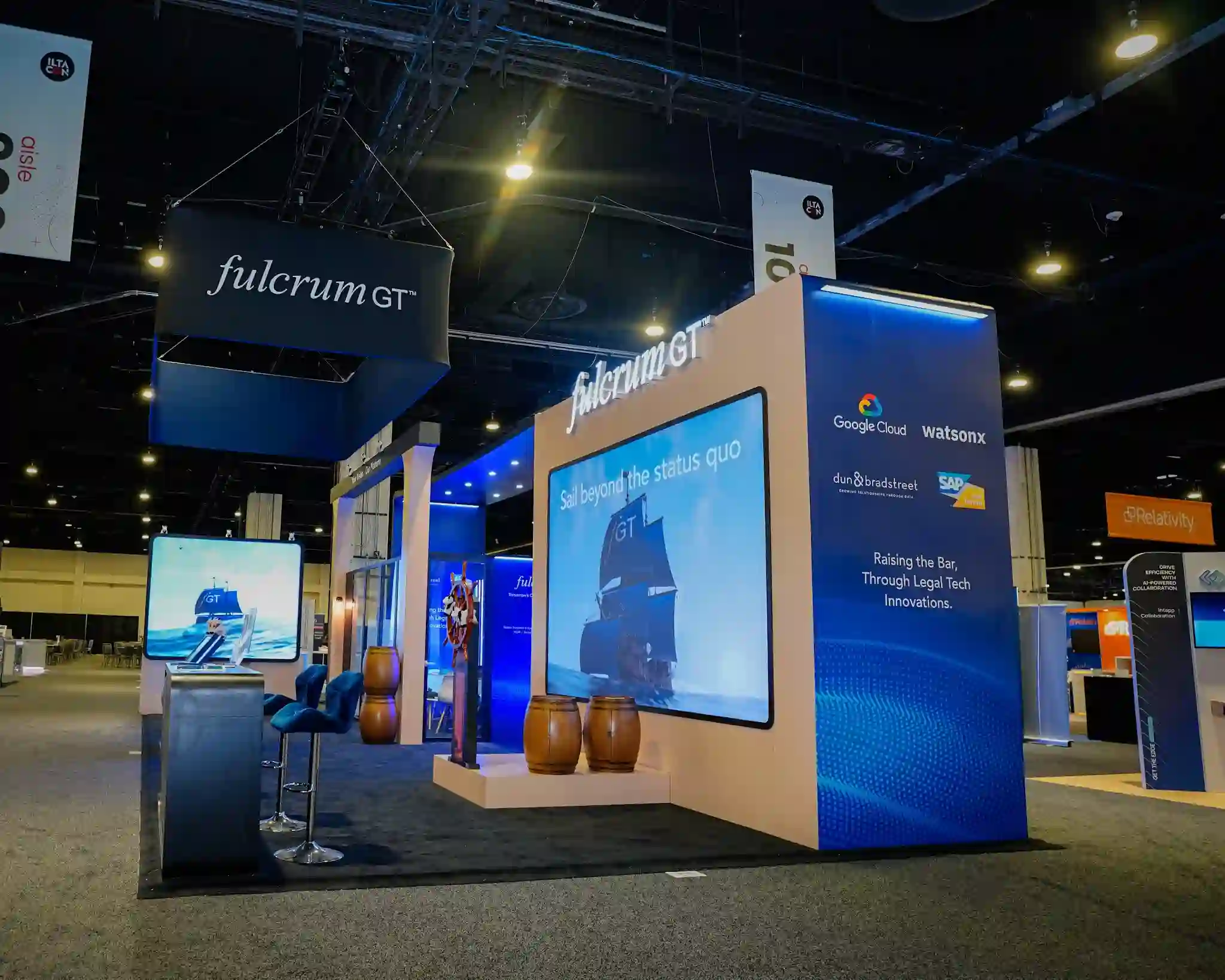 Fulcrum GT
Full-height LED as the structure, not an add-on to it.
Fulcrum GT
Full-height LED as the structure, not an add-on to it.
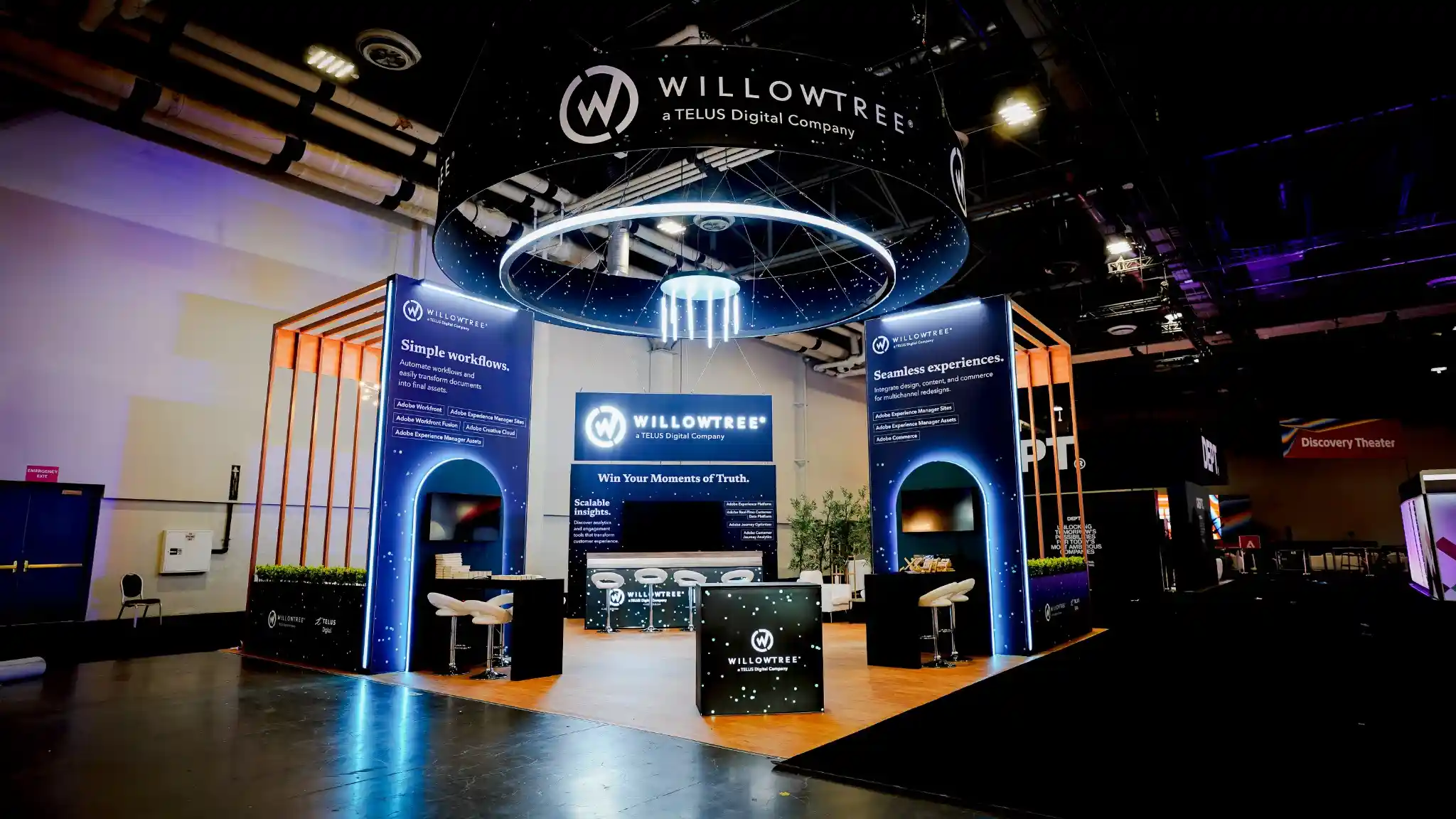 WillowTree
Meeting-led layout with enclosed rooms off an open front.
WillowTree
Meeting-led layout with enclosed rooms off an open front.
 IMAX
Large-format island built around a screening experience.
IMAX
Large-format island built around a screening experience.
 Microsoft
Modular island scaled across a multi-show programme.
Microsoft
Modular island scaled across a multi-show programme.
Also built for Genea, Dunnhumby, Chili Piper, LHH, Calm and Spekit.
With the American fab build-out pulling the global semiconductor supply chain into Arizona, international equipment and materials companies face a familiar freight question with an unusually clear answer. The tool, the metrology unit, the demo hardware — that freight is unavoidable, priced in, and handled by specialists. The stand around it is the optional cargo: walls and counters that double the crate count, the carnet schedule, and the weight the material handlers bill on.
Split the freight. The equipment travels on its own paperwork; the environment gets built on this side — engineered around the tool’s footprint, clearances and power draw from the first render, in US materials and US electrical code, on one fixed USD number.
The equipment clears on its own paperwork, sized to what genuinely must cross. The stand never appears on a carnet schedule, a duty calculation or a broker’s invoice.
Footprint, service clearances, power draw and floor loading go into the design brief on day one — so the stand frames the equipment instead of fighting it on the floor.
Stand electrics built to US specification pass inspection as a formality — no adapters, no rework order at show-site rates, no inspector between you and opening day.
Material handling bills by weight, and stand structure is heavy freight. Built locally, it ships domestic and light — a line we forecast against your build before you sign.
Supply-chain exhibitors arriving from Taiwan, Korea, Japan, the Netherlands or Germany meet a show-floor system here that has no equivalent at home. The full six-term glossary lives on our Las Vegas exhibition stand page; these are the three that bite hardest here.
The venue’s fee for moving freight from dock to stand space, billed by weight — and for equipment exhibitors, the biggest line on the show invoice. Unavoidable for everyone, forecastable for anyone honest: we price it against your actual freight before you commit.
Arizona floors leave exhibitors more latitude than the coastal union cities, but what you may build yourself is still set by each show’s regulations, and a custom island is crew-built work under any of them. Our fixed price carries the crews and supervision.
US floor plans sell in feet, and space contracts follow. The pricing table below carries both units — quote your space in whichever your contract uses.
Fixed and all-inclusive for custom exhibition stands in Phoenix, invoiced in USD to your home-country entity — international wire or card, no US bank account or address required. Phoenix is one of America’s friendlier show-cost markets, and the figures below reflect it — the number you approve is the number you pay.
| Footprint | Metric | Fixed price (USD) | Typical use |
|---|---|---|---|
| 10×10 | ≈ 3×3 m · 9 m² | $12,500 – $14,500 | Inline. First US market entry, lead capture. |
| 10×20 | ≈ 3×6 m · 18 m² | $19,000 – $23,000 | Inline. Demo plus seated conversation. |
| 20×20 | ≈ 6×6 m · 37 m² | $29,500 – $33,500 | Island. Two or three zones, four-sided. |
| 20×30 | ≈ 6×9 m · 56 m² | $31,500 – $36,500 | Island. Adds a semi-private meeting space. |
| 20×40 | ≈ 6×12 m · 74 m² | $36,500 – $47,500 | Island. Multiple engagement zones. |
| 20×50 | ≈ 6×15 m · 93 m² | $42,000 – $52,500 | Island. Long-run product wall. |
| 30×30 | ≈ 9×9 m · 84 m² | $42,000 – $52,500 | Island. Enclosed meeting room, theatre seating. |
| 30×40 | ≈ 9×12 m · 111 m² | $58,000 – $68,000 | Island. Flagship, double-deck capable. |
The venue invoices these directly to every exhibitor, whichever exhibit company builds the stand — no vendor anywhere can legitimately “include” them. We estimate each line against your actual stand before you commit, then file the orders inside the advance-rate window.
A SEMICON exhibitor shipping a demo tool from Asia or Europe pays that freight either way — it’s the cost of showing the product. The question is everything packed around it. A 6×6 m stand sent along for the ride adds its own crates, carnet lines, dock weight and risk. The same project, run both ways:
On the venue’s invoice in both scenarios: the tool’s freight, its customs entry, its drayage and its rigging into position — the unavoidable cost of exhibiting the product, and we coordinate its arrival alongside the stand build either way. The difference is whether the stand added a second set of every one of those lines.
The crossing for the stand costs more than the stand. Build here, and every logistics dollar you don’t spend on walls becomes the environment your equipment deserves to be evaluated in.
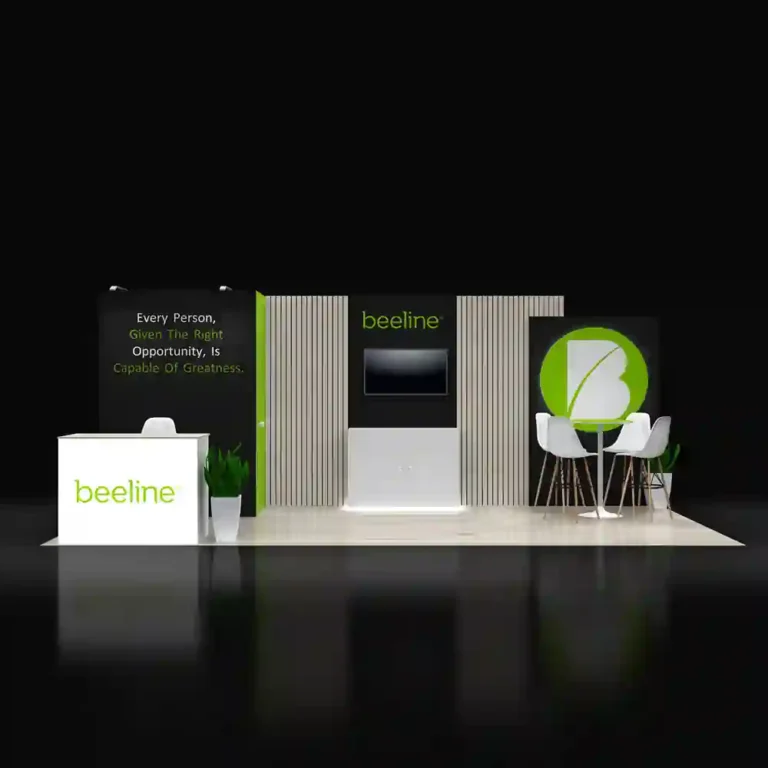
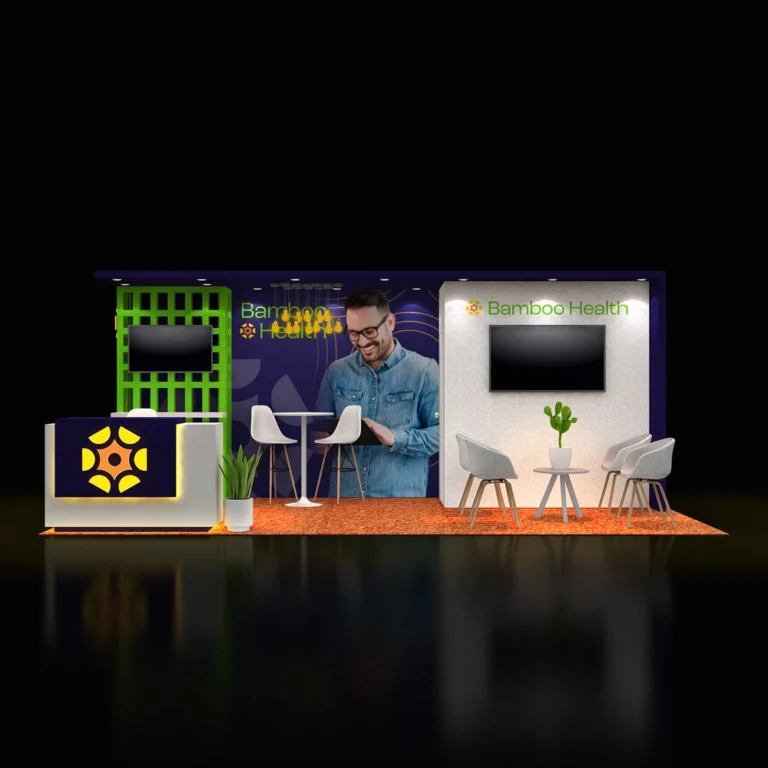
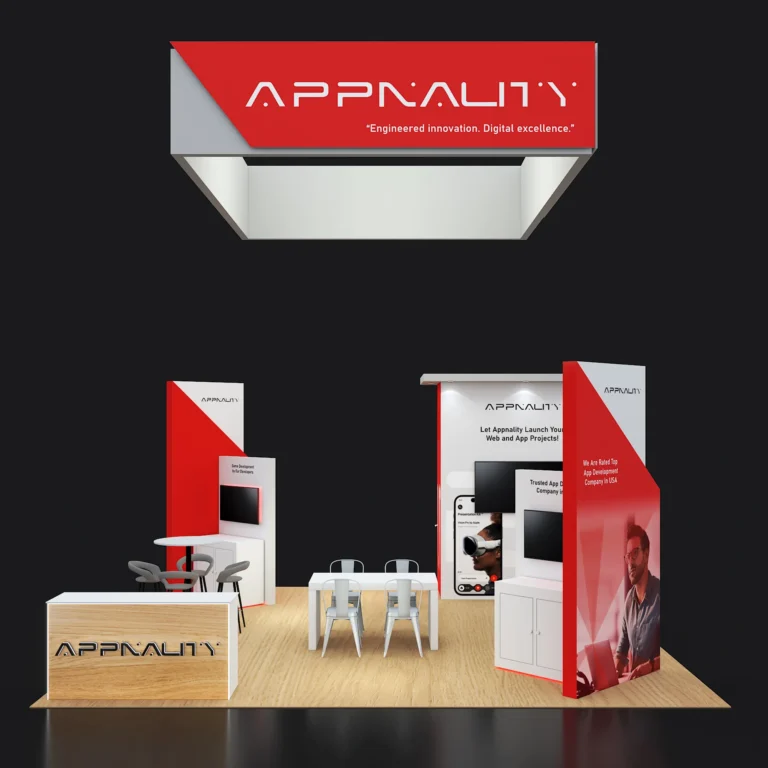
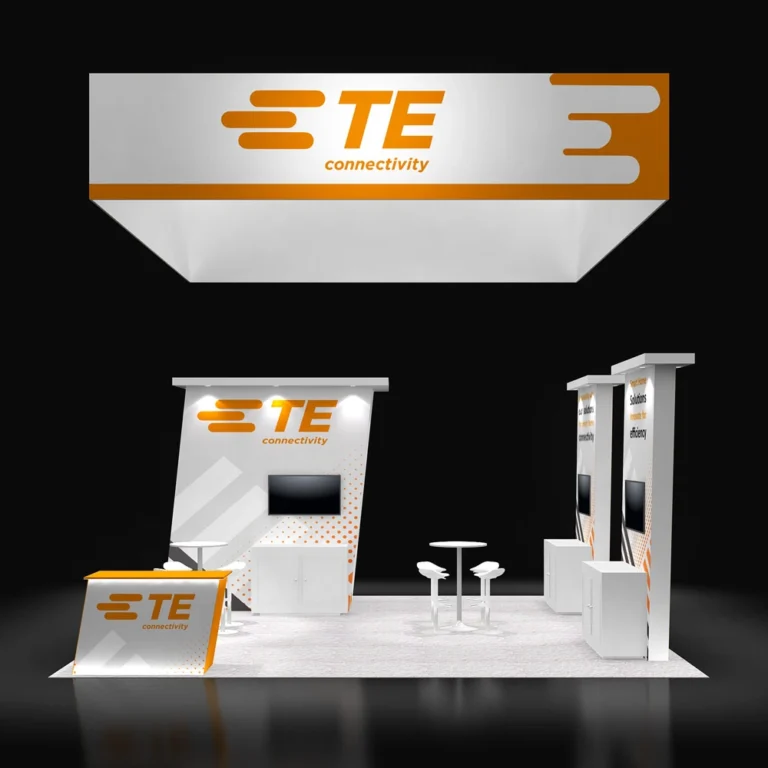
Live inventory below, each card carrying its Phoenix price. Choose a footprint or budget in the finder above and the selection re-sorts right here — every structure finishable as a fully custom exhibition stand.
12 booths · Phoenix, Arizona pricing
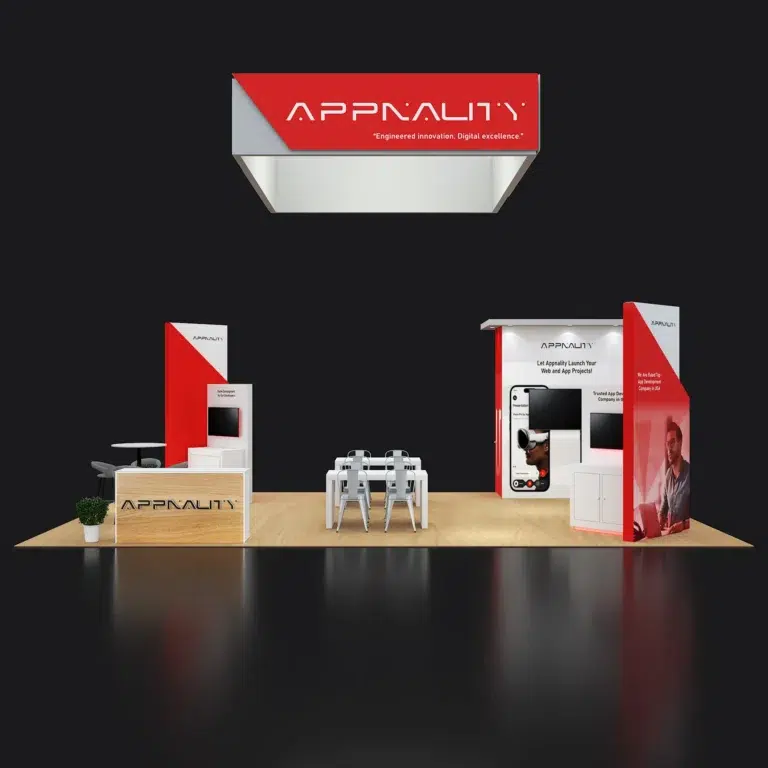

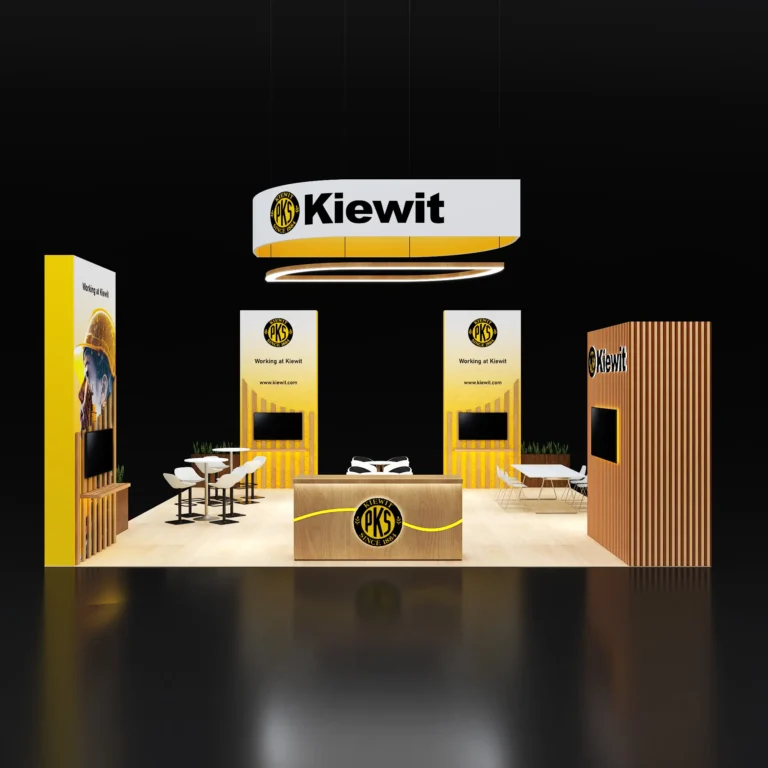
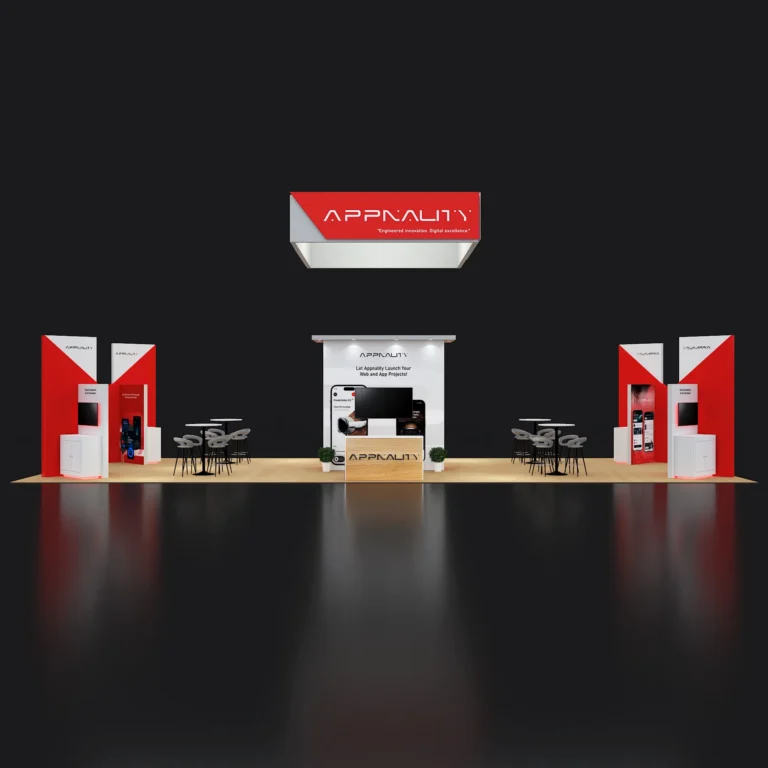
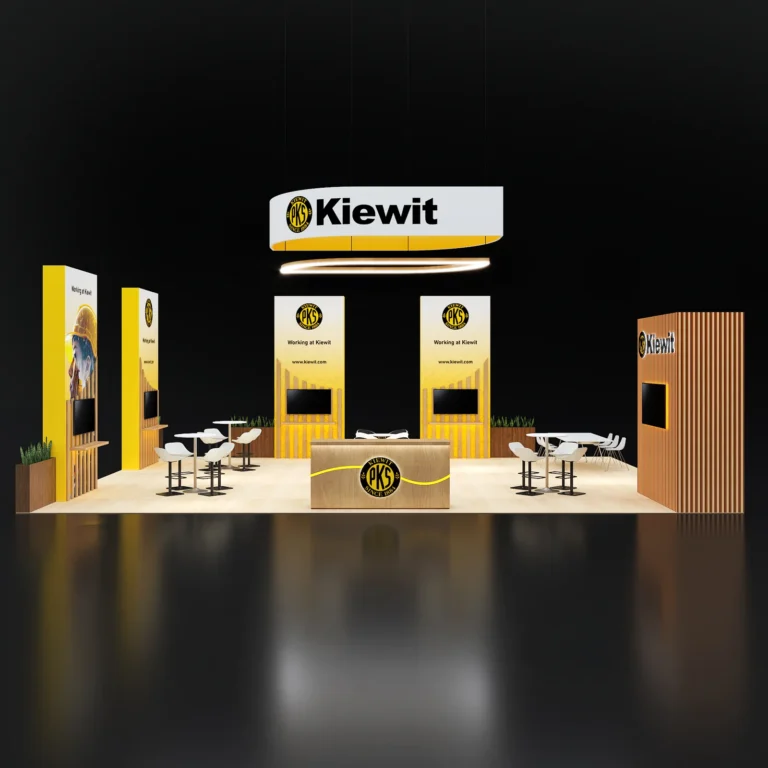
The Phoenix Convention Center spreads across three connected buildings — North, South and West — in the middle of downtown, each with its own halls and dock access. It’s a more compact puzzle than the coastal giants, but the building assignment on your space contract still sets the freight route, the rigging plan and the install sequence, so it’s the first fact we plan from.
The main exhibit floors, sized for the technical shows now anchoring the city’s calendar. Equipment-heavy exhibits add floor-loading checks and power coordination we start weeks early — routine for us, invisible to you.
The third building carries conference expos and association meetings with its own schedule and dock rhythm. A West assignment changes the plan; nothing gets copied from a North Building project, including by us.
The metro’s resort convention hotels run a heavy winter corporate calendar of their own. Ballroom logistics — freight lifts, padded corridors, overnight installs — are their own discipline, covered by the same fixed price.
Phoenix’s exhibiting season is inverted from Europe’s instincts: the calendar concentrates in the mild months, and summer events run in aggressively conditioned halls. The operational note that matters for freight is simpler — summer deliveries schedule around heat windows for anything temperature-sensitive, which we plan for you.
With SEMICON West anchoring in Phoenix alongside the Arizona fab expansion, the global chip supply chain — equipment, materials, metrology, services — now exhibits in a city many of its companies had never shipped to. The audience walking these aisles builds and runs cleanrooms; precision isn’t a brand value here, it’s the entry ticket.
That shapes the brief: an environment with the disciplined, engineered character of the industry itself — controlled lighting, immaculate cable management, sight lines that present a tool the way a fab tour would — plus the meeting layer these floors actually run on, because supply-chain deals are made in scheduled conversations, not aisle traffic.
Controlled light, clean lines, disciplined cabling — a stand whose build quality makes an implicit claim about your process quality, in front of the one audience that reads it that way.
Floor loading, service access, power draw and safety clearances resolved at render stage and filed with the floor plan — so the tool runs all day instead of fighting its enclosure.
Semi-private rooms with real acoustic separation for the conversations that fill these calendars — qualification timelines, capacity commitments, multi-year supply terms.
Your US calendar runs past Phoenix? Las Vegas, San Francisco, Chicago, Orlando and fifty more cities run on the same published fixed model — one stand design, one project manager, every city’s price known before your show year starts.
“They never just build the booth and disappear — I always know I have someone on call and ready to jump in when the unexpected inevitably happens. That level of responsiveness makes a huge difference in high-pressure event environments.”
“I’ve worked with Pure Exhibits for almost a year now, and have had such a great experience! They are our go-to for trade shows, and create memorable booths that represent our brand well. The team is incredibly responsive and reliable.”
“It’s always a pleasure to work with Utsav. The process is simple, straightforward, and high quality. I have worked with them for 3 years now and will continue!”
“Their team is incredibly flexible throughout the design process and truly collaborative in bringing ideas to life. I highly recommend Pure Exhibits to anyone looking for a reliable, thoughtful, and experienced exhibit partner.”
Phoenix’s marquee calendar is young and still settling around the semiconductor build-out, which makes this table deliberately short — name your show and we’ll confirm its Phoenix dates and pull the manual before we quote.
| Show | Typical month | Venue | Start planning |
|---|---|---|---|
| SEMICON West | October | Phoenix Convention Center | 6 months |
| Rotating national shows & congresses | Varies by year | Phoenix Convention Center | 5 months |
SEMICON gets six months — equipment stands carry engineering, floor-loading checks and power coordination on top of the normal approvals, and for overseas teams the same window covers the tool’s own shipping, visas and flights.
Show dates don’t create cost pressure — order deadlines do, and the decisive one closes roughly eight weeks out, when advance rates on electrical, rigging and drayage expire. For a team planning across an ocean, the whole project exists to arrive at that gate comfortably, with your only travel being the flight to the show itself.
A stand contractor who collapsed mid-project, a space upgrade approved late, a crate held at a foreign port while the tool sailed on — supply-chain calendars don’t flex, so the stand has to. With design, fabrication and print in one building, approval-to-floor runs about four weeks. Same quality gate — built and photographed before shipping — same published price.
Tell us the show, your space size — metres or feet — and what you’re exhibiting. Within 24 hours: design concepts, one fixed USD figure, and the venue’s own charges forecast beside it. The tool crosses; everything else gets built here.
Or call us directly — (800) 379-8451