
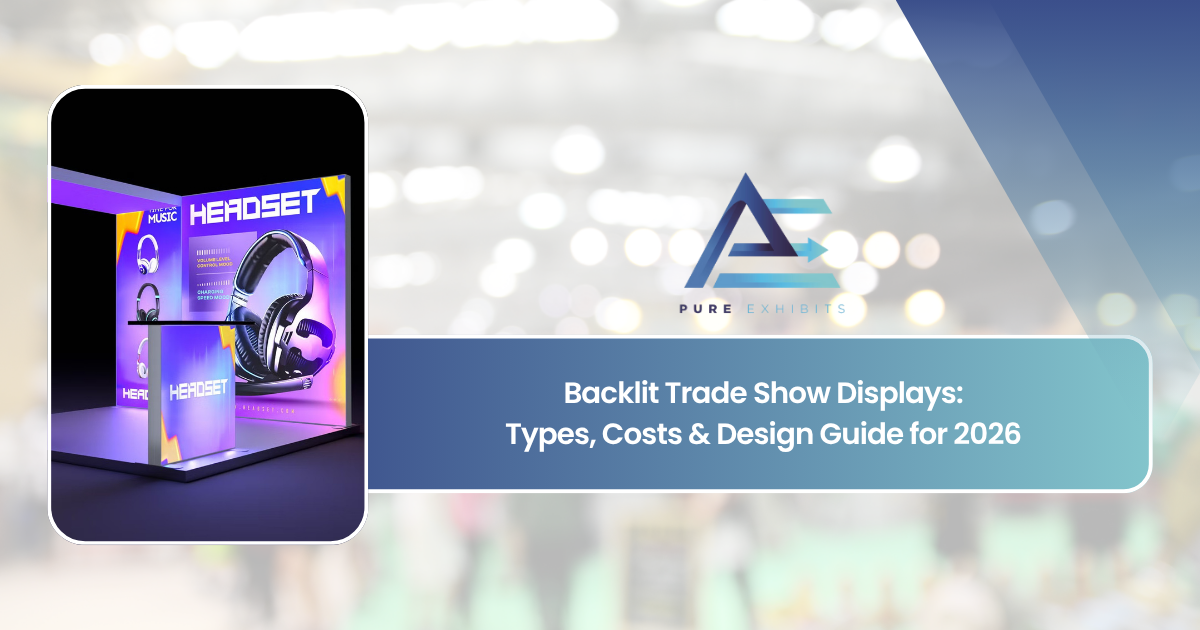
Lighting at convention centers is not uniform, sometimes dim, and hardly ever flatters typical print graphics. A booth with non-backlit designs looks dull from thirty feet away. But backlit trade show displays overcome the problem by being self-lit, always looking good despite lighting in the hall and getting attention in crowded exhibition halls in ways that no other typical fabric or rigid display could ever achieve.
This article will discuss everything you need to know about backlit trade show displays – from their technology to the types, SEG fabric vs. acrylic and direct print, LED counter and hanging sign options, graphic designs for backlit printing, costs of rentals and purchases, and placements.
Backlit displays are one component of a complete booth lighting strategy. For how backlit elements integrate with your backdrop design, see the Pure Exhibits trade show backdrop ideas guide.
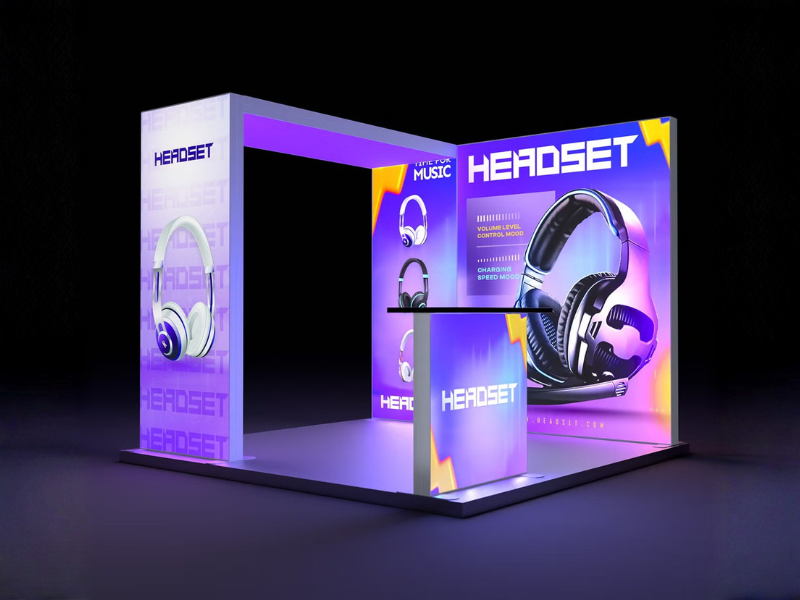
Why Exhibitors Choose Backlit Exhibit Over Standard Graphics
-
Visibility in low light: Convention halls are dimmer than most people expect. A backlit exhibit stays vivid; a standard printed graphic can look flat or washed out under overhead lighting.
-
Color saturation: Dye-sublimation fabric printed for backlit use holds richer, more accurate color when lit from behind than the same graphic printed for a non-lit wall.
-
Perceived brand investment: A glowing wall reads as a bigger production value than a flat backdrop, even at the same booth footprint.
-
Consistency across venues: Because the light source travels with the display, your booth looks the same in a cavernous space like Mandalay Bay as it does in a smaller regional hall.
Suggested: trade show booth rentals Los Angeles
Pure Exhibits designs and produces backlit trade show displays for all booth sizes nationwide.
How Backlit Trade Show Displays Work
All backlit trade show displays share the same fundamental principle: a light source positioned behind a translucent graphic panel illuminates the graphic from behind, creating an even, luminous glow across the entire display surface. This makes for an image that is exactly alike at 7 AM, while the lights in the hall are still down, and at 5 PM, when the hall is as bright as ever.
The LED Light Source
-
Modern backlit displays use LED strips or LED panels as their light source, replacing the older fluorescent tube technology that produced uneven hot spots and higher energy consumption
-
LED strips run along the perimeter of the frame interior, bouncing light off a white diffuser panel toward the graphic surface
-
LED panel backlights use a thin flat LED array directly behind a diffuser, producing more even illumination than strip systems, especially for tall or wide displays
-
Color temperature: most backlit displays use 5000K–6500K LEDs (cool daylight white), which most accurately render graphic colors; warmer tones (3000K–4000K) can shift color balance and are less common in exhibit applications
-
Power draw: a typical 10×8 ft backlit SEG display consumes 150–300 watts; plan for one dedicated 20-amp circuit for each display
Why Backlit Outperforms Standard Displays
-
Visible from greater distances: a backlit display is identifiable from 40–60 feet away; a non-backlit graphic typically requires 15–20 feet for legibility
-
Immune to hall lighting variability: dim venues, spotty overhead lighting, and neighboring exhibitors’ bright setups don’t affect a backlit display’s visual impact
-
Higher perceived production quality: visitors consistently rate backlit booths as more professional and established than non-backlit equivalents at the same graphic design quality
-
Photography advantage: backlit displays photograph evenly without hotspots, shadows, or color shift, critical for booth photography used in post-show marketing content
Types of Backlit Trade Show Displays
Backlit Display Types at a Glance
| Display Type | Best Application | Size Range | Graphic Material | Power Required |
|---|---|---|---|---|
| SEG fabric light box (flat) | Back wall; full booth backdrop | 3×3 ft to 20×10 ft+ | Dye-sub fabric (SEG bead) | 1 circuit per panel |
| SEG light box (curved) | Curved back wall; reception backdrop | Custom to any radius | Dye-sub fabric (SEG bead) | 1 circuit per panel |
| Acrylic-face light box | Product showcase; reception desk top | 12×12 in to 4×8 ft | Direct UV print on acrylic | 1 circuit |
| Backlit LED counter | Reception; product demo; hospitality | Standard counter footprint | Translucent wrap or panel | 1 circuit |
| Hanging backlit sign (island only) | Overhead ID; cross-hall visibility | 3×3 ft to 8×8 ft+ | Dye-sub fabric | 1 circuit + rigging |
| LED video wall (dynamic) | Large island; flagship shows | Any modular size | Digital content (no print) | 2–4+ circuits |
| Backlit poster/header | Counter accent; aisle-facing panel | 22×28 in to 24×72 in | Direct print translucent | Built-in or 1 circuit |
SEG Fabric Backlit Displays: The Industry Standard
The SEG (Silicone Edge Graphics) backlit displays represent the most popular backlighting technology in the exhibit industry. These displays feature an aluminum extrusion channel frame, a backlighting source inside the display, and a dye-sublimation-printed graphic with a silicone bead edge, resulting in a smooth, perfectly lit display that takes only a few minutes to set up.
Why SEG Dominates Backlit Applications
-
Seamless graphic surface: the silicone bead tucks into the channel frame, creating a perfectly taut, wrinkle-free graphic with no visible frame, seams, or fasteners
-
Dye-sublimation fabric graphics: ink bonds into the polyester fabric fiber; colors are vivid, accurate, and fade-resistant; the fabric is machine-washable and reusable
-
Rapid graphic replacement: the frame is reused indefinitely; a new graphic is simply popped in; replacement turnaround is 3–5 business days once artwork is approved
-
Modular and stackable: SEG frames can be combined horizontally and vertically to create seamless multi-panel displays of any width or height
-
Lightweight and portable: a 10×8 ft SEG backlit frame ships in a road case weighing 40–80 lbs; manageable for freight or air shipping
SEG Graphic Specifications for Backlit Printing
-
File format: high-resolution PDF or TIFF at 100 DPI minimum at final output size; RGB color mode (not CMYK) for backlit dye-sublimation printing
-
Color design for backlit: colors read approximately 15–25% more saturated when backlit; adjust design brightness and saturation downward slightly vs. standard print
-
Dark backgrounds: dark navy, black, and deep color backgrounds look exceptionally rich when backlit; they create high contrast and a premium appearance
-
White areas: pure white areas in a backlit graphic appear as a bright, glowing white: intentional use of white space creates a dramatic effect; accidental white areas (from logo backgrounds) can look unintentional
-
Text legibility: minimum 24pt for body copy visible from 8–10 ft; minimum 48pt for headlines intended for aisle legibility from 15–20 ft
For the complete lead generation framework, including graphic strategy for all booth types, see the Trade Show Booth Theming and Storytelling Guide by Pure Exhibits.
Pure Exhibits produces SEG backlit displays with in-house graphic production and nationwide delivery.
Backlit Counters, Hanging Signs, and Accent Panels
Backlit LED Counters
A backlit LED counter is one of the most effective ways to enhance the look of a trade show booth. The lighted panel produces a glowing branded surface, and it serves as an indication of premium quality for visitors even before entering the booth. It is very effective in darkly lit areas and where there are many counters without illumination.
-
Construction: standard counter cabinet with a translucent front panel backed by an LED strip array; powered via the booth’s electrical service
-
Graphic options: translucent printed vinyl wrap applied to the front panel, or a tensioned fabric insert with brand graphics; vinyl wraps are easier to produce; fabric inserts are more premium
-
Colors: any brand color can be produced in translucent print; solid color LED gels are available for simple single-color counter faces
-
Size: standard counters run 36″–48″ wide by 36″–42″ tall; custom sizes available from most exhibit suppliers
-
Cost: backlit counters from an exhibit supplier run $400–$900 per unit; GSC counters are not backlit as a standard offering
Hanging Backlit Signs (Island Booths Only)
-
Purpose: a hanging backlit sign above an island booth creates overhead brand identification visible from across the convention center hall; it’s the single highest-visibility element possible in an exhibit
-
Construction: aluminum frame structure suspended from the venue rigging points; face panels are dye-sub backlit SEG fabric; frame profiles include square, rectangular, circular, and custom shapes
-
Size range: 3×3 ft minimum (logo-only ID sign) to 8×8 ft+ (full brand message sign with multiple graphic panels)
-
Approval required: all hanging signs require advance structural drawing submission and rigging approval from the show’s GSC; typically 4–6 weeks before the show
-
Rigging cost: in addition to the sign fabrication or rental cost, plan for rigging labor at $800–$2,500+ per show, depending on sign weight and venue rigging rates
-
Not permitted in inline or peninsula booths: hanging signs are an island-configuration exclusive element at virtually all shows
Backlit Accent Panels and Headers
-
Counter-top accent light boxes: small backlit panels (12×16 in to 18×24 in) placed on counter surfaces to spotlight a product, QR code, or key message
-
Aisle-facing backlit headers: a backlit header panel (24×72 in to 24×96 in) mounted at the top of a booth structure creates an illuminated brand name visible above the crowd line
-
Product showcase light boxes: acrylic-face light boxes (ranging from 12×12 in to 24×36 in) with a UV-printed face panel spotlight individual products or services within the booth
For furniture integration with backlit counters in your booth layout, see the Pure Exhibits trade show booth furniture rental guide.
Rental vs. Purchase: Which Makes Sense?
Rent vs. buy choices for backlit displays operate according to the same principle as most other exhibit components, which are determined by how frequently an item will be used and how customized it needs to be. For one annual flagship show, it’s much cheaper to rent out a backlit SEG system from your exhibit vendor than to buy one.
Rent When
-
You show 1–2 times per year and don’t have storage for the display between shows
-
Your brand or messaging changes significantly between shows: renting allows graphic updates without frame inventory
-
You’re testing a backlit configuration before committing to purchase: rent first to validate the impact at your specific show
-
The show is a one-time major event (industry launch, product debut) where the investment doesn’t need to span multiple years
Purchase When
-
You show 3+ times per year at consistent shows: ownership cost per show drops below rental cost by show 3–4
-
Your brand identity is stable, and graphics require only minor updates between shows
-
You have an exhibit warehouse or storage solution for the frame between shows
-
You want full control over graphic production timelines: owned frames allow graphics to be replaced on your schedule without exhibit supplier lead time coordination
Typical Cost Ranges
-
Rental: 10×8 ft backlit SEG display: $600–$1,500 per show including graphic production; 20×8 ft: $1,200–$3,000 per show
-
Purchase: 10×8 ft backlit SEG frame: $1,500–$3,500; graphic production: $300–$800 per set; frame pays back in 2–4 shows
-
Hanging backlit sign: rental: $1,500–$4,000 per show; purchase: $4,000–$12,000+ depending on size and shape
For booth sizing decisions that determine which backlit display sizes are appropriate for your configuration, see the Pure Exhibits trade show booth sizes guide.
Pure Exhibits offers backlit display rental and purchase options with in-house graphic production.
Placement Strategy: Where to Use Backlit Displays
Backlit displays have maximum ROI when installed where there is the maximum interception of eyes; that is, at the main aisle facing areas in the booth where a visitor makes up his mind whether to stop or pass by.
Highest-Impact Placement Locations
-
Full back wall (inline booths): a backlit SEG wall spanning the full 8-foot height and full booth width is the single highest-impact backlit investment for any inline configuration; it’s the first thing the aisle sees
-
Primary aisle face (island booths): for island configurations, at least the two highest-traffic aisle faces should carry backlit SEG panels; all four faces backlit is ideal
-
Reception counter: a backlit counter face at the primary entry point draws visitors toward the staff position from a distance
-
Overhead hanging sign: the only display element visible from outside the immediate booth area; intercepts visitors approaching from any direction across the hall
-
Product showcase accent boxes: small backlit accent panels focused on a hero product or key message create a spotlight effect within the larger booth design
-
Side-aisle panels on peninsula booths: backlit panels on the side faces of peninsula configurations intercept side-aisle traffic that would otherwise pass without noticing a non-illuminated panel
Placement Mistakes to Avoid
-
Backlit on the back wall only: if side aisles are accessible (peninsula or island), non-backlit side panels create a visible inconsistency in display quality
-
Mismatched color temperatures: combining different LED color temperatures across multiple backlit elements creates visible color inconsistency in the booth; specify the same Kelvin rating across all units
-
Backlit behind product displays: positioning product shelving or displays directly against the backlit panel wastes the backlit surface; create at least 12–18 inches of open space in front of backlit walls
-
Over-bright in small booths: in a 10×10 booth, a single 10×8 ft backlit wall is powerful; adding a backlit counter on top can make the space feel washed out; calibrate total luminance to booth size
Backlit Display Cost Reference by Booth Size
| Booth Size | Recommended Backlit Setup | Rental Cost Est. | Purchase Cost Est. |
|---|---|---|---|
| 10×10 inline | 1× backlit SEG back wall (10×8 ft) | $600–$1,500/show | $1,500–$3,500 frame + graphics |
| 10×20 inline | 1× backlit SEG back wall (20×8 ft) | $1,200–$3,000/show | $3,000–$6,500 frame + graphics |
| 20×20 island | 4× backlit SEG perimeter panels + hanging sign | $4,000–$9,000/show | $10,000–$22,000 purchase |
| 30×30+ island | Full perimeter backlit + hanging sign + backlit counters | $8,000–$18,000/show | $20,000–$45,000+ purchase |
Backlit Display Planning Checklist
Backlit Trade Show Display Planning Checklist
| Task | Timing | Notes |
|---|---|---|
| Select the backlit display type and placement positions | 10+ weeks out | Match type to booth size and budget; confirm hanging sign eligibility for an island |
| Decide rental vs. purchase | 10+ weeks out | Compare per-show cost across your full show calendar |
| Design graphics for backlit output (RGB mode) | 8+ weeks out | Backlit graphics need RGB color mode, not CMYK; adjust saturation for backlit |
| Submit graphic files to production | 5–6 weeks out | 100 DPI minimum at final size; allow revision cycles before final approval |
| Order electrical circuits for each backlit unit | 6+ weeks out | One 20-amp circuit per display; two for large panels; plan total wattage carefully |
| Submit hanging sign rigging approval documents | 6–8 weeks out | Structural drawings required; late submissions are typically denied |
| Test the full display at the exhibit house before freight | 2–3 weeks out | Verify even illumination; check for hotspots, dead LEDs, or uneven panel tension |
| Pack frames in road cases; graphics in separate bags | 1–2 weeks out | Never fold backlit graphics with sharp creases: use roll tubes for larger panels. |
For exhibition stands in San Francisco or backlit display options, click here. See all exhibit solutions at the Pure Exhibits homepage.
How We at Pure Exhibits Build a Backlit Exhibit
-
Design: Our in-house team builds your backlit wall or feature into a full 3D booth mockup, with unlimited revisions before production starts.
-
Fabrication: Frames, LED panels, and dye-sublimation graphics are produced under one roof at our 65,000-sq-ft facility, so the mockup you approve is what ships.
-
Venue coordination: We handle the electrical order, union labor rules, and drayage paperwork specific to your show’s convention center, so your LED trade show display has power waiting for it on the floor.
-
Teardown & storage: We break it down, and the design stays on file to relaunch at your next show.
-
Backlit backwalls: full-height SEG light box walls, either as a standalone backdrop or the anchor of a larger island design
Ready to Light Up Your Next Booth?
Get a fixed-price quote and a free 3D mockup of your backlit trade show display: no vague estimates, no surprise install fees.
Let’s Build Something Extraordinary
Share your event details and we’ll craft a custom booth solution designed to captivate your audience and maximize your ROI.
15 Questions About Backlit Trade Show Displays: Answered
What is a backlit trade show display?
A backlit trade show display uses an internal LED light source positioned behind a translucent graphic panel to create an evenly illuminated, glowing display surface, independent of ambient hall lighting conditions.
What does SEG stand for in backlit displays?
SEG stands for Silicone Edge Graphics, a system where a fabric graphic has a silicone bead sewn into its edges that pushes into a channel on an aluminum frame, creating a seamless, taut, professional display surface. In backlit applications, an LED array is added inside the frame.
How much does a backlit trade show display cost?
A 10×8 ft backlit SEG display costs $600–$1,500 per show to rent (including graphic production) or $1,500–$3,500 to purchase the frame (plus $300–$800 per graphic set). Larger displays and hanging signs cost proportionally more.
Do backlit trade show displays need electricity?
Yes, every backlit display requires a power connection from your booth’s electrical service. A standard 10×8 ft backlit panel consumes 150–300 watts and requires one 20-amp circuit. Order electrical through the show’s GSC service portal.
What is the difference between a backlit and non-backlit trade show display?
A backlit display generates its own light, producing consistent, vivid visibility in any hall lighting condition. A non-backlit display relies on ambient hall lighting and external spotlights; its appearance varies significantly depending on how well-lit the venue is.
What graphic file format is needed for backlit printing?
Backlit dye-sublimation graphics require RGB color mode (not CMYK), a minimum of 100 DPI at final output size, submitted as a high-resolution PDF or TIFF. Ask your print vendor for their exact file specifications before preparing artwork.
Can a 10×10 trade show booth have a backlit display?
Yes, a 10×8 ft backlit SEG back wall is one of the most impactful upgrades a 10×10 booth can make. It elevates brand presence dramatically for a $600–$1,500 per-show rental.
What is a backlit LED counter?
A backlit LED counter is a reception or display counter with an internal LED light source illuminating a translucent front panel, creating a glowing branded counter surface that draws attention from the aisle.
What is a hanging backlit sign?
A hanging backlit sign is a suspended illuminated display above an island trade show booth, creating overhead brand identification visible from across the convention center hall. It requires rigging approval and is only permitted in island configurations.
How long does it take to set up a backlit trade show display?
A standard 10×8 ft backlit SEG display sets up in 15–30 minutes (frame assembly + graphic installation + power connection). Larger multi-panel configurations take 1–3 hours. Hanging signs requires rigging labor and takes 1–4 hours depending on the venue and sign size.
Are backlit displays reusable?
Yes, the aluminum frame is reused indefinitely. Only the fabric graphic is replaced between shows. Replacement graphic production takes 3–5 business days. Quality frames withstand 20–50+ show cycles with proper handling.
What is the LED color temperature for backlit displays?
Most backlit trade show displays use 5000K–6500K LEDs (cool daylight white), which most accurately render graphic colors and read as clean, professional white. Warmer temperatures (3000K–4000K) shift colors toward yellow and are less common in exhibit applications.
Can I use a backlit display on a peninsula booth?
Yes, backlit SEG panels work well on all three open aisle faces of a peninsula booth. Hanging signs are show-specific for peninsula configurations; confirm eligibility with the show’s exhibitor manual.
How do I ship a backlit trade show display?
Backlit SEG frames pack into aluminum road cases or padded soft bags. The graphic fabric packs into a separate bag or is rolled in a tube for larger sizes; never folded sharply. A 10×8 ft backlit system typically weighs 50–90 lbs packed.
Does Pure Exhibits design and produce backlit trade show displays?
Yes, Pure Exhibits designs and produces backlit SEG displays, LED counters, and hanging backlit signs for exhibitors nationwide, with in-house graphic production and complete booth integration.