
The most effective trade show performances can’t occur by chance – they are carefully planned and executed, from months before the show starts until many weeks after its conclusion. What exhibitors tend to overlook is not putting in enough effort, but not following a comprehensive checklist of items that must be done. A trade show checklist for exhibitors is only useful if it covers the right things in the right order.
This guide provides a comprehensive, phase-by-phase trade show checklist for exhibitors at every level of experience, from first-timers planning their debut to seasoned marketing teams optimizing an annual multi-show program. Print this, assign owners, set deadlines, and walk into your next show knowing every box is checked.
Related: The Ultimate Trade Show Exhibitor Checklist for Your Next Event
Why Most Exhibitor Checklists Fall Short
The gap in most exhibitor checklists isn’t missing items; it’s missing structure. A flat list of 40 tasks tells you what to do but not when, why, or in what order. The tasks that matter most (reading the exhibitor manual, booking I&D labor, submitting your COI) have specific windows. Miss those windows, and no amount of packing preparation fixes the problem.
This guide organizes every task by phase, before the show by week, during the show by day type, and after the show by follow-up timeline, so you always know what needs to happen now versus what can wait.
Suggested: New York City Trade Shows 2026: The Exhibitor’s Guide
Phase 1: Strategic Planning (12+ Weeks Before Show)
Show Selection & Contracting
-
Research and identify target shows based on attendee profile match to your ideal buyer
-
Review exhibitor list from prior years to confirm competitor and customer presence
-
Request attendee demographics and traffic data from the show organizer
-
Compare total investment (space + exhibit + travel + staff) against expected pipeline value
-
Sign the exhibitor contract and pay the booth space deposit before preferred locations sell out
-
Review the exhibitor manual: rules vary significantly between shows and venues
-
Register for keynotes, speaking opportunities, or sponsored sessions while slots are available
Exhibit Strategy
-
Define your primary goal for this show: lead generation, product launch, partnership development, or brand awareness
-
Set specific, measurable targets: number of leads, demos given, meetings scheduled
-
Identify which products or services will be featured: prioritize; don’t try to feature everything
-
Determine booth size and configuration based on goals and budget
Reference: Trade Show Booth Sizes Guide
Budget Planning
-
Create line-item budget covering: booth space, exhibit rental/purchase, graphics, I&D, freight/drayage, show services, travel, hotel, staff, and post-show follow-up
-
Add 15–20% contingency for unexpected costs
-
Confirm available budget with finance and get approval before committing to vendors
Reference: Trade Show Budget Guide
Pure Exhibits handles exhibit rental, graphics, delivery, and I&D for Las Vegas shows, eliminating entire categories from your checklist. Connect with us for exceptional Las Vegas trade show booth rental services.
Phase 2: Exhibit Design & Production (8–10 Weeks Before Show)
Exhibit Design
-
Contact the exhibit company and brief them on goals, budget, booth size, and brand standards
-
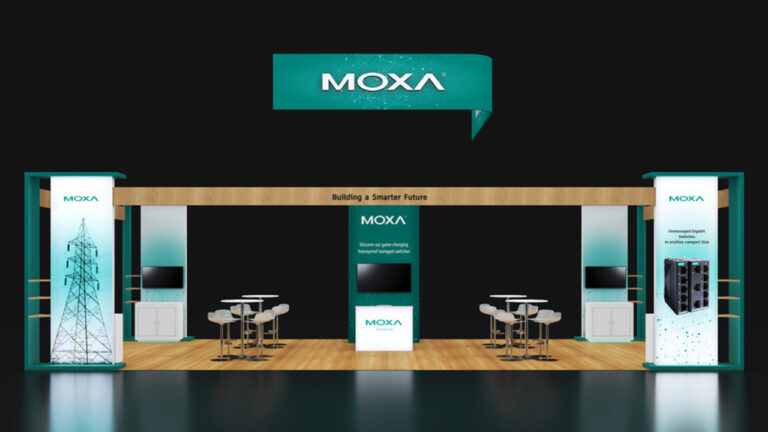
Review initial 3D rendering: confirm structure layout, graphic placement, and furniture positioning
-
Request revisions as needed: do not approve until you’re genuinely satisfied with the design
-
Confirm all graphic dimensions and file specifications with your exhibit vendor
-
Approve final design in writing: document all agreed specifications
Reference: Trade Show Booth Design Guide
Graphics Production
-
Provide final logo files in vector format (AI or EPS): no JPEGs for primary brand elements
-
Submit all imagery at minimum 150 DPI at final print size (300 DPI preferred)
-
Proofread all panel text: check spelling, URLs, phone numbers, and CTAs
-
Approve color proof before full print run: on-screen colors rarely match printed output exactly
-
Confirm graphic delivery schedule aligns with exhibit installation date
Technology Planning
-
Identify all trade show technology needed: screens, tablets, demo hardware, charging stations, AV equipment
-
Confirm software is installed, tested, and updated on all demo devices
-
Identify power requirements for every electrical item and confirm against what you’re ordering
-
Arrange backup devices for all critical technology
Phase 3: Show Services & Logistics (6–8 Weeks Before Show)
Show Services (Order Through General Contractor)
| Service | When to Order | Notes |
|---|---|---|
| Electrical power | 6–8 weeks out | Order before the advance rate deadline; late orders cost 20–50% more |
| Wired internet | 6–8 weeks out | More reliable than show floor Wi-Fi for demos |
| Lead retrieval system | 6–8 weeks out | Badge scanner or app-based, available from the show organizer |
| Booth carpet (if not included) | 6–8 weeks out | Standard show carpet or custom color/pattern |
| Furniture upgrades | 4–6 weeks out | If not included in the exhibit rental |
| Cleaning service | 4–6 weeks out | Daily booth cleaning during multi-day shows |
| Hanging sign rigging | 8–10 weeks out | Requires structural review at most venues |
| Drayage pre-authorization | 4 weeks out | Required for freight shipments to show the site |
Freight & Shipping
-
Confirm freight carrier and booking for advance warehouse or direct-to-show delivery
-
Pack exhibit in numbered, labeled cases: document contents of each case
-
Photograph all cases before shipping: documentation is critical for damage claims
-
Send tracking numbers to the exhibit company and the venue contact
-
Confirm advance warehouse acceptance window: freight arriving outside the window incurs penalties
Las Vegas local rental: skip this entire section: no freight needed when renting locally
Travel & Hotel
-
Book hotel within the show’s hotel block (better rates, often discounted through the show)
-
Book flights: shows at peak venues like Las Vegas sell out hotel inventory fast
-
Register for press credentials, exhibitor badges, and any additional attendee passes
-
Arrange ground transportation or rideshare for setup and show days
Phase 4: Pre-Show Marketing (4–8 Weeks Before Show)
Digital Pre-Show Outreach
-
Email existing customers and prospects: announce your exhibit presence and booth number
-
Update your email signature with show details, booth number, and a meeting scheduling link
-
Post about the upcoming show on LinkedIn, Instagram, and other brand channels, weekly
-
Schedule meetings in advance with top prospects: your calendar fills faster than you expect
-
List your company in the show’s official online exhibitor directory with a full profile and keywords
Advertising & Promotion
-
Consider show-specific digital ads targeting attendees (many shows offer sponsored emails and banner ads)
-
Activate LinkedIn targeting for the show’s audience segment in the 4–6 weeks before the event
-
Send a direct mail piece to top prospects attending the show: physical mail stands out
Internal Preparation
-
Create a one-page show brief: goals, target accounts, key messages, and competitive intel
-
Hold a staff briefing session covering: pitch, qualification questions, lead capture process, booth behavior
-
Finalize all collateral: digital brochures, product one-pagers, business cards, giveaways
Phase 5: On-Site Setup (Setup Day)
-
Arrive at setup early: do not schedule flights that arrive on the morning of setup day for large exhibits
-
Bring your exhibitor manual and all show service order confirmations
-
Carry essential tools in a personal bag: tape measure, zip ties, black markers, gaffer tape, scissors, power strip
-
Photograph the empty booth space before installing: document pre-existing floor damage
-
Follow union rules at the venue: do not attempt to install yourself in a union-restricted environment
-
Test all technology during setup: confirm power is live before the exhibit company leaves
-
Photograph completed booth from multiple angles: aisle view, inside view, detail shots
-
Brief your staff one final time before the show opens: walk them through the physical setup
Let Pure Exhibits simplify your next Las Vegas show: exhibit design, delivery, I&D, and teardown all handled by Las Vegas’s trade show specialists.
Phase 6: During the Show
Daily Operational Checklist
-
Arrive 30 minutes before the show floor opens: booths should be live before attendees enter
-
Ensure booth is fully clean and organized: no personal items visible, literature stacked, technology on
-
All staff in position and ready: no phones, no eating, no sitting unless unavoidable
-
Review previous day’s leads each morning: flag urgent follow-ups for your sales team
-
Monitor technology throughout the day: restart sticky touchscreens, recharge tablets
-
Restock literature and giveaways mid-day if needed
Lead Capture Best Practices
-
Use the official show lead retrieval system for badge scans: collect contact data automatically
-
Add qualification notes immediately after every conversation: memory fades quickly on a busy show floor
-
Rate each lead A (hot), B (warm), or C (cool) at the point of capture
-
Sync leads to CRM daily: don’t let data pile up until after the show
Competitive Intelligence
-
Visit 5–10 competitor booths during off-peak hours: observe messaging, technology, and visitor volume
-
Photograph competitor setups that contain interesting design ideas for your future reference
-
Note the 2–3 questions attendees ask competitors: these are unmet needs you may address
Phase 7: Post-Show (Days and Weeks After)
Immediately After (Days 1–3)
-
Send a personal ‘great to meet you’ email to all A and B leads within 48 hours
-
Include a clear, relevant next step in every follow-up, not just ‘it was great meeting you’
-
Sync final lead list to CRM and assign to the appropriate sales rep
-
Upload all booth photos to the shared drive for future reference
Week 1–2
-
Schedule discovery calls or demos with all A-leads
-
Send a broader nurture sequence to C-leads: share a relevant content piece, no hard sell
-
Debrief with your team: what worked, what didn’t, what you’d do differently
-
Calculate preliminary ROI: total cost vs. pipeline generated from show leads
Week 3–6
-
Continue follow-up cadence on B-leads: 3–5 touches over 30 days
-
Log all meeting and proposal outcomes back to the original show lead records
-
Complete your final show ROI calculation: you need 30–60 days of pipeline data for accuracy
-
Begin planning for next year: re-book booth space at the same show if ROI was positive
Reference: Las Vegas Trade Show Services
The Trade Show Prep Checklist Most Exhibitors Skip
These items aren’t on most before during after trade show checklists, and their absence explains a lot of avoidable show-floor problems.
Read the union labor rules for your venue. At the LVCC, Mandalay Bay, McCormick Place, Javits Center, and most major US convention centers, specific installation tasks must be performed by union crews. Discovering this on move-in morning is expensive. It’s documented in your exhibitor services manual.
Submit your EAC paperwork. If your exhibit company is not the show’s official GC, they are an Exhibitor-Appointed Contractor and must be registered by a specific deadline. Most exhibitors don’t know this requirement exists until they’re blocked at the freight door.
Confirm food and beverage rules. Most major convention centers have exclusive catering contracts; the Anaheim Convention Center uses Aramark, the GRB uses Levy, and others have similar arrangements. Self-service food and beverage not sourced through the official caterer is not permitted, even for in-booth sampling. Check before you pack coffee pods.
Plan for the 90-day follow-up, not just the 48-hour follow-up. In B2B, a conversation at a booth in March often produces a signed contract in September. Tag every lead correctly at the source so you can pull an accurate revenue report six months later.
How Pure Exhibits Helps Exhibitors Execute This Trade Show Checklist for Exhibitors
Pure Exhibits manages the exhibit-specific items on this trade show planning checklist for clients across the United States: design approval, graphic production, pre-build staging, advance warehouse shipping, on-site installation, and teardown, through one dedicated project manager who tracks every deadline alongside you.
We build regularly at the LVCC, Mandalay Bay Convention Center, and Caesars Forum in Las Vegas, and at major venues nationwide. We know the union jurisdiction rules, the freight deadlines, and the EAC registration requirements at every major show we service, so those items don’t come as surprises to our clients on move-in day.
Let’s Build Something Extraordinary
Share your event details and we’ll craft a custom booth solution designed to captivate your audience and maximize your ROI.
Frequently Asked Questions: Trade Show Checklist for Exhibitors
How far in advance should I start planning for a trade show?
Start 12–16 weeks out for most shows; 20+ weeks for major events like CES, SEMA, or MAGIC in Las Vegas. Key early deadlines include booth space booking, exhibit design approval, and show services ordering, all of which have advance rate deadlines you’ll want to beat.
What is the most important item on a trade show checklist?
Define your goal before anything else. Every other decision, booth size, exhibit design, staff selection, budget allocation, flows from what you’re trying to achieve. Exhibitors without a clear goal consistently underperform those with specific, measurable targets.
What show services do I need to order in advance?
At a minimum: electrical power, internet (if your demo requires it), and lead retrieval. Optional but recommended: drayage pre-authorization, cleaning service, furniture upgrades, and hanging sign rigging. All have advance ordering deadlines; missing them typically adds 20–50% to the cost.
What should I pack in my personal carry-on for trade show setup?
The most useful items are: tape measure, gaffer tape, black markers (multiple), zip ties, a multi-tool or scissors, a short power strip, backup business cards, a USB-charged portable power bank, and printed copies of all vendor confirmations and show service orders.
How do I capture leads effectively at a trade show?
Use the show’s official lead retrieval system (badge scanner or app) for automatic contact capture, then add qualifier notes immediately after each conversation. Rate leads A/B/C at the point of capture. Sync to your CRM daily, not at the end of the show.
When should I follow up with trade show leads?
Within 48 hours of the show closing for A-leads, this is the window with the highest conversion rates. B and C leads should receive a follow-up within one week, followed by a 30-day nurture sequence. Personal emails significantly outperform bulk automated emails in the first follow-up.
Do I need union labor to set up my booth?
At most major trade show venues, including all Las Vegas convention centers, union labor is required for exhibit installation and dismantling. The specific rules vary by venue and show. Working with a Las Vegas-based exhibit company like Pure Exhibits means all union coordination is handled for you.
How do I handle freight and drayage?
Ship to the advance warehouse within the show’s accepted window (usually 2–4 weeks before the event). Label every case with your company name, booth number, and case number. Drayage is charged per hundredweight by the show’s official general contractor. Renting locally in Las Vegas eliminates both freight and drayage.
How many staff members should I bring to my booth?
For a 10×10 booth: 1–2 people. For a 10×20: 2–3. For a 20×20 island: 3–5, depending on the number of engagement zones. Overstaffing a small booth creates a crowd that deters visitors from approaching. Select staff based on their ability to engage strangers and qualify opportunities quickly.
What’s included in a trade show exhibit rental?
Typical rental packages include the structural framework, custom-printed graphics, lighting hardware, and a counter or reception desk. Installation and dismantling are sometimes included or priced separately. Furniture, technology, show services (power, internet, drayage), and travel are almost always additional.
How do I measure trade show ROI?
Track total show cost (all-in), number of qualified leads generated, conversion rate of leads to pipeline opportunities, and revenue closed from show leads over 60–90 days. Divide pipeline value by total show cost to calculate your ROI multiple. Compare across shows to optimize your annual program.
How do I stand out at a trade show?
The highest-impact factors are: (1) a clear, benefit-led headline visible from 20+ feet; (2) backlighting on your primary graphic panels; (3) at least one interactive element; (4) engaged, standing staff who proactively initiate conversations; and (5) a reason to stop: a demo, a giveaway, or a charging station.
What’s the best way to do pre-show marketing?
Email your existing customer and prospect list to announce your presence and invite meetings. Update your LinkedIn profile and company page with show details. Post weekly in the 4–6 weeks before the event. Schedule meetings in advance; your on-site time is limited, and pre-booked meetings have dramatically higher conversion rates than cold aisle encounters.
What should I do if my exhibit doesn’t arrive on time?
Contact your exhibit vendor immediately; most have contingency plans for delayed freight. Have a backup plan: even a pop-up banner and a table create a minimal presence while your main exhibit is being recovered. Confirm your vendor has adequate insurance for lost or damaged exhibits in transit.
How do I evaluate whether to return to the same show next year?
Calculate your all-in ROI at 60–90 days post-show (enough time for deals to develop). Compare the cost per qualified lead against your other marketing channels. Survey your team on qualitative experience. If ROI is positive and the pipeline quality is strong, re-book; experienced exhibitors who return to the same show year over year consistently outperform first-timers in lead volume and quality.