
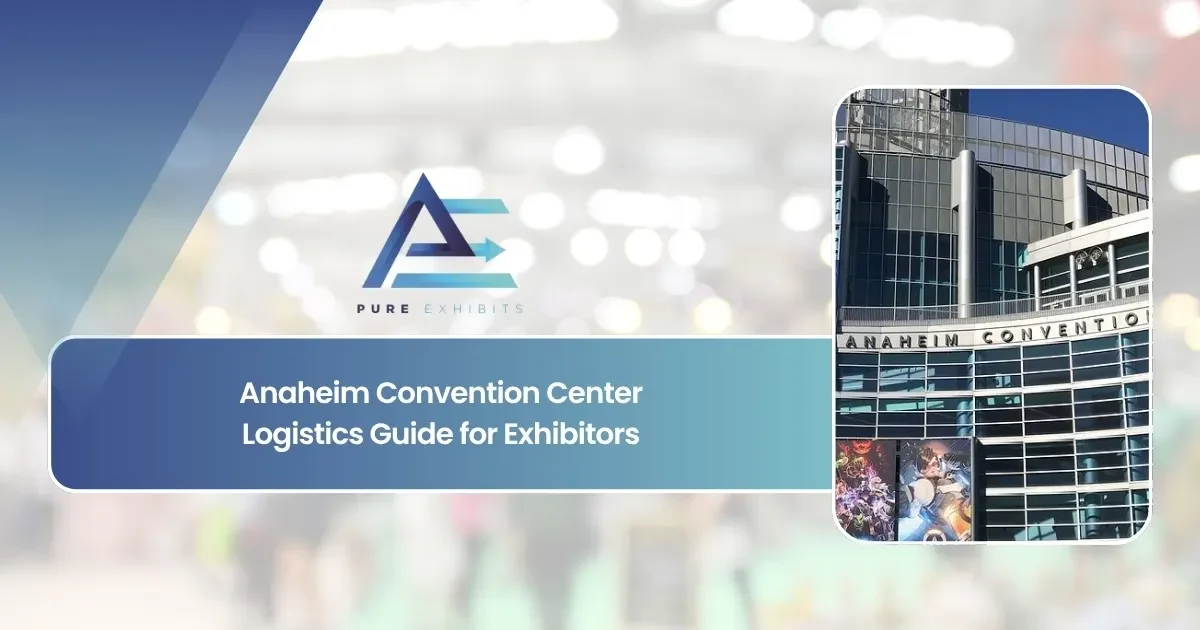
Logistics is the key to every trade show, and it’s no different at the Anaheim Convention Center. The ACC runs a large number of shows throughout the year in its Convention Center, located near Disneyland Resort. This makes for strict deadlines for the delivery of freight and its movement into the ACC.
This Anaheim Convention Center trade show guide covers everything an exhibitor needs to know about the logistics side of exhibiting at the ACC: freight routing, drayage, advance warehouse, move-in coordination, carrier selection, and the most common logistics mistakes that cost exhibitors time and money.
The full exhibitor overview for this convention center is in the Anaheim trade show booth rental section. This page focuses specifically on the rental exhibits.
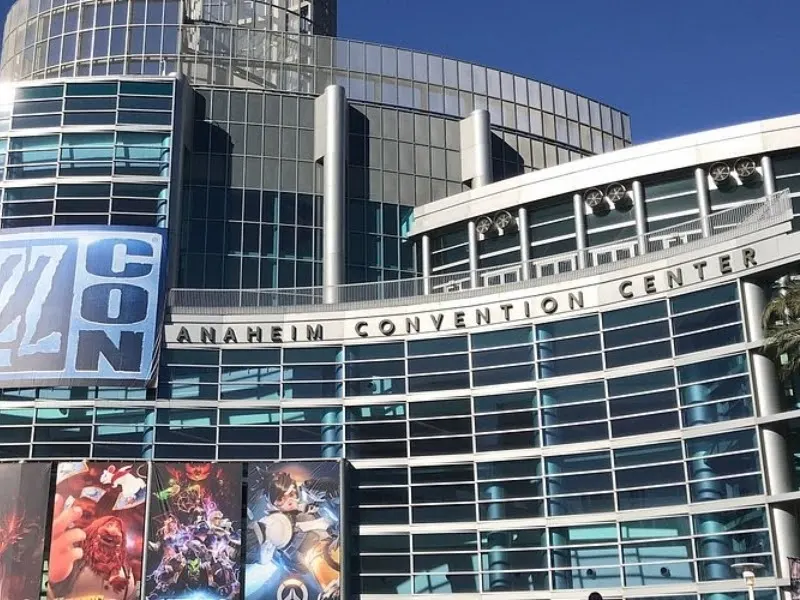
Understanding the Anaheim Convention Center Layout for Freight
The Anaheim Convention Center is made up of three structures, namely the main ACC structure, the Arena, and the ACC North Expansion. When planning for logistics, it is important to consider what hall your event is taking place in because freight movement, docks, and GSC staging areas vary by hall. For the majority of events that take place at the ACC, more than one hall is utilized, which uses the drayage system of the ACC for all freight. The general layout and hall reference are in the Pure Exhibits trade show logistics guide.
Anaheim Convention Center Hall Reference for Exhibitors
| Hall / Area | Approx Sq Ft | Freight Access Note |
|---|---|---|
| ACC Main Hall A–C | ~815,000 | Primary freight dock, large show default |
| ACC North | ~200,000 | Separate freight entrance, confirm GSC staging area |
| Arena | ~45,000 floor | Events-specific; limited freight access |
| Outdoor areas | Varies | Check show-specific access; no standard dock |
Pure Exhibits manages exhibit logistics for the Anaheim Convention Center with nationwide operations.
Drayage at the Anaheim Convention Center
All ACC freight above the hand-carry limit will be required to have drayage. The general service contractor (GSC), who is usually Freeman or GES for large shows, will charge by hundredweight (CWT). The usual cost for drayage at ACC is $100–$175 per CWT, and warehouse costs are slightly less. The minimum charge is per shipment piece. Miscalculation of drayage cost for ACC is the #1 budget mistake made by new ACC exhibitors. For comparison across major venues, see the Pure Exhibits trade show budget guide.
ACC Drayage Rate Estimates
| Freight Type / Weight | Advance Warehouse Rate | Direct-to-Show-Site Rate |
|---|---|---|
| Under 200 lbs (minimum applies) | Minimum charge | Minimum + premium |
| 200–500 lbs | $130–$160/CWT | $150–$175/CWT |
| 500–2,000 lbs | $120–$155/CWT | $140–$170/CWT |
| 2,000+ lbs | $110–$145/CWT | $130–$165/CWT |
Anaheim Convention Center Freight: How It Actually Works
Anaheim Convention Center freight logistics follow the same general pattern as most major US venues, but with ACC-specific addresses, marshaling yard procedures, and timing requirements that vary by show. Here is the framework that applies across most major ACC shows.
Advance Warehouse vs. Direct-to-Show-Site Shipments
ACC exhibitors may transport their freight via two possible routes: to the advance warehouse, which is run by the GSC and located either in Anaheim or near there, or to the show site directly. The first option allows exhibitors to receive their shipment via an ACC drayage fee and earlier and more reliable deliveries. An open and must-arrive date are set for the advance warehouse (21–30 days before the show), whereas all direct shipments should be delivered according to the designated move-in window. The Pure Exhibits pre-show planning checklist includes freight deadline milestones.
Advance Warehouse vs. Direct Shipment Comparison
| Factor | Advance Warehouse | Direct to Show Site |
|---|---|---|
| Timing flexibility | Higher — ships 2–4 weeks early | Lower — exact move-in window only |
| Drayage cost | Lower (advance rate) | Standard or higher |
| Risk of delay | Lower (buffer built in) | Higher (carrier must hit exact window) |
| Best for | Most exhibitors | Local exhibitors with short freight |
Pure Exhibits provides pre-built exhibit systems that reduce the drayage weight at the Anaheim Convention Center.
Carrier Selection for the Anaheim Convention Center
Not all carriers are equal for conventional shipping. Standard LTL carriers frequently miss delivery windows, misroute freight, or deliver to the wrong dock. Convention-experienced carriers (specialty freight brokers and trade show carriers) understand advanced warehouse requirements, can track shipments against show-specific deadlines, and can route through approved exhibit carrier networks. The Anaheim market is served by multiple convention-experienced carriers given its high show volume. For booth design considerations that affect freight weight and carrier choice, see the Pure Exhibits trade show booth design guide.
Carrier Selection Criteria for ACC Exhibitors
| Criterion | Convention Carrier | Standard LTL Carrier |
|---|---|---|
| Show-deadline awareness | Yes, tracks to show the date | No, standard delivery window only |
| Advance warehouse routing | Standard capability | Must be explicitly arranged |
| Damage and handling | Exhibit-aware handling | Standard freight handling |
| Tracking visibility | Show-specific tracking available | Standard carrier tracking only |
| Cost | Moderate premium over LTL | Lower base rate, higher risk cost |
Move-In Timelines and Scheduling at the ACC
Assignment of the move-in process will be based on booth size and hall space at the Anaheim Convention Center. Booths that have large island spaces are usually given top priority during the move-in process. Inline booths can be moved in much later than other booths. Crate emptying will add more time to the move-in process and will take about 30 – 60 minutes, depending on how big your booth is. The exhibitor manual for each show specifies exact dates and times. Staff scheduling guidance is in the Pure Exhibits trade show staff training guide.
Typical ACC Move-In Timeline Framework
| Day | Task | Notes |
|---|---|---|
| Move-In Day 1 | Island booths (20×20+) setup begins | Priority in most shows |
| Move-In Day 1–2 | GSC services install (electrical, rigging) | Order early to ensure priority scheduling |
| Move-In Day 2 | Inline booths begin setup | Confirm assignment with show GSC |
| Move-In Day 2–3 | Graphics, AV, finishing touches | Final walkthrough before the show opens |
| Day Before Show | Show management walk-through | Correct any aisle violations early |
Top Logistics Mistakes at the Anaheim Convention Center, and How to Avoid Them
Common logistics failures at the ACC include: shipping direct-to-show when the advance warehouse was the right option; using a non-conventional carrier that misses the delivery window; forgetting to order material handling from the GSC in advance; underestimating freight weight when budgeting drayage; and missing the move-in time slot due to underestimating setup complexity. The Pure Exhibits Las Vegas page describes how Pure Exhibits approaches logistics management across venues; the same discipline applies at the ACC. For the Pure Exhibits homepage, exhibitors can start a quote request and get logistics-integrated exhibit planning.
ACC Logistics Mistakes and Preventive Actions
| Mistake | Consequence | Prevention |
|---|---|---|
| Using a non-conventional carrier | Missed delivery window, freight held at dock | Book a convention-experienced carrier |
| Missing the advanced warehouse deadline | Direct-to-show with tight window, higher ACC drayage | Ship 3+ weeks early to the advance warehouse |
| Underestimating drayage weight | Budget overrun on arrival | Get the freight weight accurate before showing |
| Skipping early-bird service orders | 40–60% premium on all GSC services | Order all services by the early-bird deadline |
| No packing list/labeling errors | Freight lost, delayed crate return | Label every piece with show, booth, and company |
Pure Exhibits coordinates exhibit freight to the Anaheim Convention Center through our national logistics network.
Booth Construction and Compliance at ACC
Trade show logistics Anaheim include specific requirements for how booths are designed and built within the facility.
Flooring
Floor covering is required for all exhibitors at virtually every major ACC show; the venue’s exhibit hall floors are not considered a finished floor for exhibiting purposes. Most shows allow exhibitors to bring their own carpet or flooring or rent from the official GC. Non-compliance typically results in the GC ordering and installing carpet on your behalf and billing you accordingly. Budget for flooring as a fixed exhibit cost, not an optional one.
Booth Height and Sightline Rules
Height restrictions vary by booth type and show. General guidelines that apply across most ACC shows:
Linear booths: The back wall is usually restricted to 8 feet tall. Objects located in the front half of the booth cannot be greater than 4 feet tall – this sightline restriction is there to protect the other exhibitors, and it is strictly followed in all major ACC events.
Corner and peninsula booths: Usually can do away with the rail facing the aisle and are slightly more flexible regarding their height in the front – check the exhibitor services manual for your event.
Island booths: Much greater restrictions for height up to 20 feet or more, depending on rigging approval. Signs hanging above island booths need prior approval and professional rigging by the GC.
It is best to avoid building solid walls in most ACC events since they block the view from other booths. If you need any solid wall components in your booth design, they should be minimized.
Fire Marshal Compliance
The Anaheim Fire Department enforces the fire code at ACC. Key requirements across most shows:
-
All booth construction materials must be non-combustible or limited-combustible
-
Wood components must be ¼ inch thick or greater
-
Helium balloons are permitted; metallic and Mylar balloons are prohibited at all times
-
An exhibitor permit from the Fire Marshal is required for the use of propane, butane, commercial/free-standing deep fryers, carbon dioxide, and nitrogen used for food or beverage dispensing.
-
Permit exceptions (no permit required): microwave ovens, coffee pots, electric kettles, rice cookers, slow cookers, instant pots, electric air fryers, popcorn wagons, and Sternos used with chafing dishes.
-
Gas appliances must be isolated from the public by at least 4 feet or a barrier.
-
A portable fire extinguisher must be present in any booth using gas appliances.
Insurance Requirements
A Certificate of Insurance (COI) is essential for participating in almost all ACC shows, and your COI will have to name the venue, show organizer, and official GC as additional insureds as well. Minimum insurance requirements at most shows: $1 million per occurrence, $2 million aggregate general liability. Verify your particular show’s insurance requirements in the exhibitor services manual, which may require higher levels of insurance.
Sales Limitations
For some ACC shows, especially professional association and industry trade shows, there are limitations regarding sales activity on the show floor. The basic requirement is that orders can be accepted in writing only, but no cash sales and no credit card sales are allowed, nor can any merchandise or items be delivered at the booth during the show.
How Pure Exhibits Supports Exhibitors at the Anaheim Convention Center
Pure Exhibits designs and builds custom exhibits and rental displays for companies exhibiting at trade shows across the United States, including at the Anaheim Convention Center for shows including Natural Products Expo West, NAMM, MD&M West, CDA Presents, and IFPA.
Our Anaheim Convention Center exhibit rental logistics and booth construction rules from the first concept, sightline restrictions, flooring requirements, fire code materials, and union labor thresholds are built into the brief before fabrication begins. We manage freight coordination, advanced warehouse scheduling, and on-site installation management through a dedicated project manager who handles your project from design approval through teardown.
If you found this Anaheim Convention Center Trade Show guide informative and want to discuss further, you can click on the link below.
Let’s Build Something Extraordinary
Share your event details and we’ll craft a custom booth solution designed to captivate your audience and maximize your ROI.
15 Questions About Anaheim Convention Center Logistics: Answered
What is drayage, and is it mandatory at the Anaheim Convention Center?
Drayage is the charge for moving freight from the loading dock to your booth space. It is mandatory for all freight above the hand-carry threshold at the ACC, regardless of how close your booth is to the dock.
How much does drayage cost at the Anaheim Convention Center?
Rates typically run $110–$175 per hundredweight (per 100 lbs) depending on whether freight goes through the advance warehouse or arrives directly. Minimums apply per shipment piece.
Should I use the advanced warehouse for the Anaheim Convention Center?
For most exhibitors, yes. The advanced warehouse offers slightly lower drayage rates and eliminates the timing risk of needing freight to arrive within a tight move-in window.
How far in advance can I ship to the ACC advance warehouse?
The advance warehouse typically opens 21–30 days before the show. The must-arrive-by date is typically 3–5 days before move-in starts. Check the specific show\’s exhibitor manual for exact dates.
What carriers are best for shipping exhibits to Anaheim?
Convention-experienced carriers and specialty exhibit freight brokers are the best choice. They track shipments against show-specific deadlines and route through approved advanced warehouse networks.
What happens if my freight arrives late at the Anaheim Convention Center?
Late freight typically incurs premium off-target drayage charges (50–100% above standard rates) and may arrive after your setup window, requiring rushed installation or incomplete booth setup at show open.
How are move-in times assigned at the ACC?
Move-in is typically assigned by booth size; large islands receive the first slots. The show organizer and GSC publish the move-in schedule in the exhibitor manual 4–6 weeks before the show.
What is the difference between ACC Main and ACC North for logistics?
The two sections have separate freight dock access points and GSC staging areas. Confirming which hall your booth is in and its corresponding dock is essential before planning freight routing.
How do I handle empty crate storage at the Anaheim Convention Center?
After unloading your freight, GSC staff will pick up empty crates, label them, and store them for the duration of the show. Allow 30–60 extra minutes on move-in day for this process.
Can I hand-carry items to my booth at the ACC without paying drayage?
Yes, items you can carry by hand in one trip (no dollies, carts, or multiple trips) are typically exempt from drayage. The exact hand-carry definition is in the show\’s GSC exhibitor manual.
How much does it cost to ship exhibit freight from Las Vegas to Anaheim?
Las Vegas to Anaheim is approximately 270 miles. LTL rates for a typical 10×10 booth (200–500 lbs) often run $150–$400 depending on the carrier. Convention carriers may charge a moderate premium.
What labeling is required for freight shipped to the ACC?
All freight must include: company name, booth number, show name, and advance warehouse or show site address. Missing or incorrect labeling can result in freight being held at the dock.
Does Pure Exhibits help with Anaheim Convention Center logistics?
Yes, Pure Exhibits provides logistics-integrated exhibit planning for the ACC, including pre-staged delivery through our national operations network.
When should I order GSC services for the Anaheim Convention Center?
Order all GSC services (electrical, material handling, carpet, furniture) at the early-bird deadline, typically 4–6 weeks before the show. Floor-order pricing runs 40–60% higher.
Is the Anaheim Convention Center\’s logistics experience typical of major venues?
Yes, the ACC follows the same general convention logistics model as other major venues (advance warehouse, drayage, GSC services). Its location near major California freight hubs makes it relatively accessible for West Coast exhibitors.