
Most exhibitors do not fail on the show floor. They fail in the months before it, when goals stay vague, the booth says six things at once, and nobody knows who owns the leads. These tips for a successful trade show come from the planning side of exhibiting, where budgets are won or lost, so you can walk in with a plan instead of a hope.
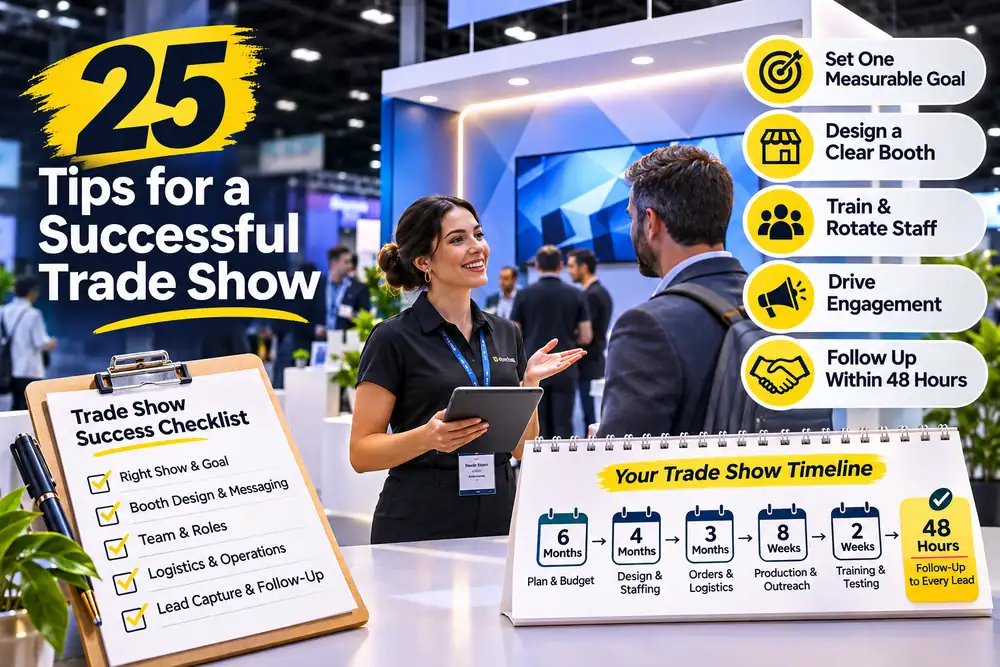
Trade Show Tips: A Quick Summary
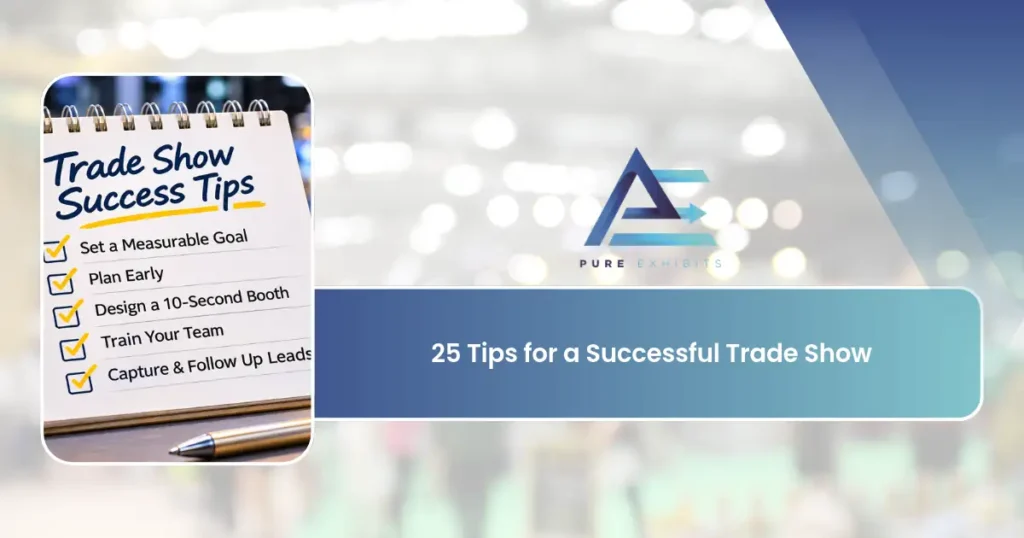
What are the best tips for a successful trade show? Choose one measurable goal, pick a show where your buyers actually gather, design the booth so a stranger understands it in about ten seconds, train staff to qualify visitors, plan freight and labor against the exhibitor manual, and follow up on every lead within 48 hours. The rest of this guide shows how to do each step.
Tips for a Successful Trade Show Start Six Months Out
Strong shows are built backward from the opening bell. Here is a timeline that works for most mid-size programs.
| When | What to lock down |
|---|---|
| 6 months out | Show choice, goal, budget, booth size, booth builder |
| 4 months out | Design approved, graphics copy written, staff roster named |
| 3 months out | Exhibitor manual reviewed, electrical and internet orders placed |
| 8 weeks out | Graphics in production, freight booked, pre-show outreach begins |
| 2 weeks out | Staff trained, lead capture tested, meetings confirmed |
| Show week | Daily huddles, lead review each evening |
| 48 hours after | First follow-up sent to every lead |
Rush work costs more, so the best trade show best practices are really scheduling habits.
Choose One Goal That Decides Everything
Among all the tips for a successful trade show, this one comes first: a goal is not “get more leads.” An effective goal states a figure and a deadline. For instance, meet 25 qualified people during the exhibition period, or gather 80 leads that fit your customer profile and turn 10 of those into proposals within 90 days.
A single goal will help you to decline certain options. In case of the goal being demo meetings with engineers, the prize wheel option is declined. In case of the goal being brand recognition at a new exhibition, a bigger booth and a stronger visual identity are chosen. The goal is written on the first page of the project plan.
Before you commit, check what is typical for similar events. Our trade show statistics page gives context for budgeting and benchmarks. If you are still comparing events, our list of US trade shows in 2027 shows what is coming and when.
Trade Show Best Practices for Booth Design
Run the Ten-Second Aisle Test
Stand about fifteen feet away from your concept drawing and ask an unfamiliar co-worker: What does this company do and who is it for? If you cannot get an answer quickly, make it simpler. You are better off with a single line, image, and call to action than with bullet points.
Light and Graphics Do the Heavy Lifting
A lit back wall can lift a modest booth above larger, flatter ones. Choose a few bold colors, large type, and uncluttered photos. Then add layered light: soft general light, a spot on your hero product, and an edge glow on signage. Our guides to booth lighting ideas and booth graphics cover the details.
Plan Flow Before You Plan Furniture
Walk the visitor path on paper. Where do people enter, where do they pause, and where do they talk? Leave an open entry, put demos where a small crowd can gather without blocking the aisle, and keep one quiet corner for private conversations. See our notes on exhibition booth design for layout ideas that fit common footprints.
Pick a Size You Can Staff
A bigger booth with too few people looks empty. As a simple rule, count how many conversations your team can handle at once, then size the booth to match. For many growing teams, a 10×20 rental offers room for a demo zone and a meeting spot without the cost of an island.
Several of these tips start with the booth, and our Custom Trade Show Booths give you a strong, worry-free foundation.
Exhibiting Tips for Your Booth Team
Your staff decides whether the design pays off, and the best tips for a successful trade show always include people, not just pretty walls. Good exhibiting tips focus on roles, not slogans.
-
The greeter works at the periphery of the booth and not behind any counter and begins the interaction with a question like “Why did you come to this show?”
-
The qualifying step asks three questions: what problem are they addressing, who else will be part of the decision-making, and when do they plan to take action?
-
The expert gets in when there is a need for a solution on some technical or pricing issues.
Rotate staff every 2-3 hours: They get tired and check their cellphones, thus losing out on good leads. Have a ten-minute meeting every morning to discuss the questions that the customers have raised the previous day and sort out confusing signage immediately.
Have an easy rule that there should be no food, texting, or sitting at the front of the booth. It does make a difference!
Engagement That Earns Real Conversations
Giveaways attract collectors. Demos attract buyers. Choose activities that filter for the people you want.
-
Short, live demos that show one problem solved in under five minutes.
-
A question board where visitors vote on a challenge in their work. It starts conversations and gives you data.
-
Scheduled mini-sessions announced on a screen, so people can plan to return.
-
A useful handout, such as a one-page checklist, sent by scan rather than printed in bulk.
QR codes work well when they lead to something specific. Send visitors to a landing page that matches your show message, not your home page. Our tips on booth QR codes explain how.
Logistics Tips Most Teams Learn Too Late
This is where many first-time exhibitors lose money, so treat these tips for a successful trade show as a checklist. A few habits prevent most surprises.
-
Read the exhibitor manual early: It lists booth height limits, hanging sign rules, and deadlines. Missing an advance deadline can mean higher rates or no service.
-
Order electrical and internet ahead: Prices often rise on show days, and supply can run short.
-
Know your venue’s labor rules: Many large venues use union labor for rigging and electrical work. Your builder should schedule this for you.
-
Study the floor plan: Corner and end-cap spots draw more eyes than a mid-row space, and some areas near restrooms or storage see less traffic.
-
Ship smart: Use advance warehouse delivery when it makes sense, and pack a small tool kit and spare power strips.
Rental builders can reduce risk here because installation, dismantling, and storage are handled by one team. See how that works in our guide to trade show booth rental benefits.
Trade Show Success Tips for Lead Follow-Up
Grade the lead at the booth
Grade them A, B, or C before they leave the booth. An A has a clear need, budget, and timeline. A B has interest but is early. A C is merely curious.
Include one personal note
Include something like “wants demo for two plants” on each contact. General notes yield general follow-ups.
Send your follow-up within 48 hours
A leads get a call or meeting request. B leads receive some valuable information based on their comments. C leads go to a longer nurture list.
Putting the Tips to Work
Pick the tips that fit your program and apply them consistently. For shows in our market, our trade show rentals Las Vegas team handles the booth so you can focus on the rest.
| Phase | Top Tip |
|---|---|
| Planning | One measurable goal |
| Booth | One bold message |
| Staffing | Engage, don’t pitch |
| Capture | Digital lead capture |
| Follow-up | Reply within 72 hours |
These trade show success tips sound simple, yet they decide whether the show shows up in your pipeline. Agree with sales on who contacts whom before the show starts.
Measure What the Show Actually Did
The final one of our tips for a successful trade show is to keep score.
Monitor three pieces of data after every event: the cost per qualified lead, the number of meetings scheduled, and pipeline created within 90 days. Include observations regarding what questions the visitors have been asking the most and what booths attracted them. Make a comparison with the previous event, and record at least one thing to try out next time around.
Do this, and your plan improves every year instead of repeating itself.
Common Mistakes to Avoid
-
Choosing a show because competitors attend, not because buyers do.
-
Writing copy for the whole company instead of the specific audience.
-
Treating the booth as a display, not a conversation space.
-
Skipping staff training because the team “knows the product.”
-
Collecting hundreds of scans with no grading system.
-
Waiting a week to follow up.
Final Thoughts on Tips For A Successful Trade Show
The best tips for a successful trade show work only when the booth, the team, and the timeline all line up. Pure Exhibits designs, builds, installs, and dismantles custom exhibit rentals from our Las Vegas headquarters and 65,000-square-foot facility, with fixed pricing and one team from first sketch to final dismantle. If you want help turning these tips for a successful trade show into a booth that fits your goals, request a fixed-price quote and tell us which show you are planning. We will map the timeline with you and keep your budget clear.
Want a Successful Show? Get a Booth Quote at purexhibits.com
Frequently Asked Questions
What are the top tips for a successful trade show?
Set a clear goal, choose shows by fit, build a strong booth, train staff, capture leads digitally, and follow up fast.
What is the single most important tip?
Set one measurable goal and let it drive every decision.
How far ahead should I plan?
8–12 weeks for a standard show, and several months for a flagship event.
How do I choose the right show?
By audience fit; exhibit where your ideal customers attend, not just the biggest shows.
What makes a booth successful?
A clear message, strong lighting, an open layout, a focal point, and engaged staff.
How should staff behave?
Stand, engage the aisle, open with questions, stay off phones, and qualify politely.
How do I capture leads well?
Use a digital lead-capture tool with qualifying questions, not business cards. Rush booth rental options take the booth worry off your list.
How soon should I follow up?
Within 24–72 hours while conversations are fresh.
How much should I budget?
Build a full budget with a 15–20% contingency across every cost category.
Should I book hotels early?
Yes, reserve within the show block as soon as it opens to avoid spikes.
How do I keep my booth from looking cluttered?
Limit messaging, hide storage, and keep the floor open.
How do I measure trade show success?
Track leads, meetings, and pipeline against your stated goal.
Should I debrief after a show?
Yes, review what worked and refine your approach for next time.
Do these tips work for small exhibitors?
Yes, they scale to any budget and booth size.
Who can help make my show a success?
Pure Exhibits handles booth design, logistics, and installation so you can focus on results. Our 10×20 trade show booths suit first-time exhibitors applying these tips.