
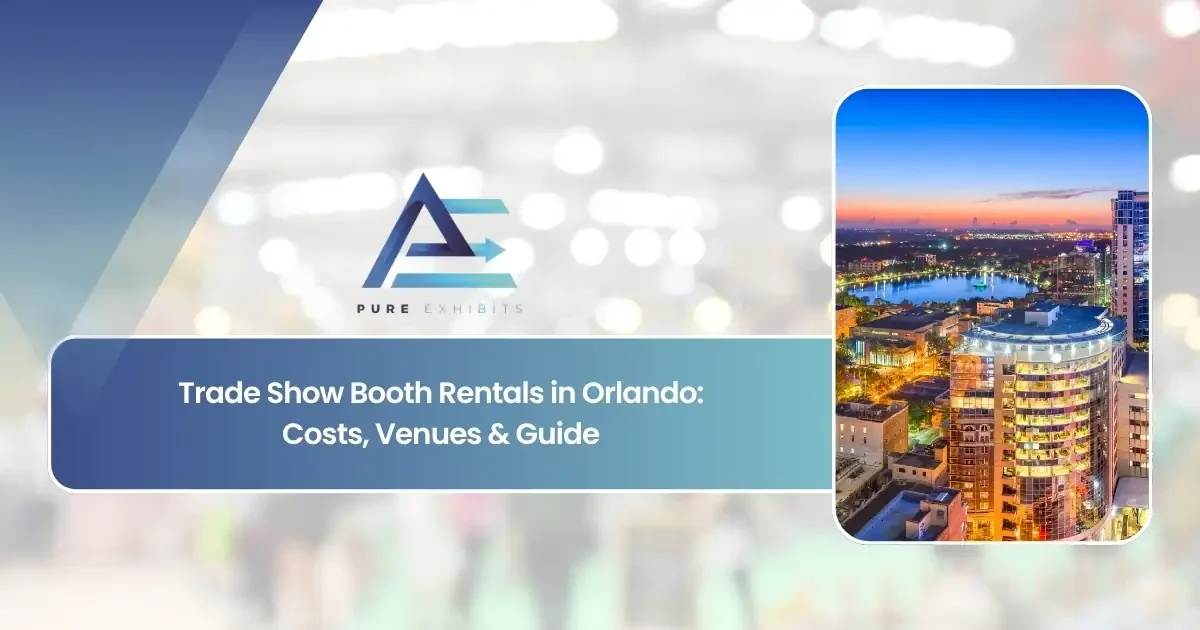
Trade Show Booth Rentals in Orlando: costs, venues and how it works.
Everything an exhibitor needs to plan an Orlando show — what booths cost in 2026, how the Orange County Convention Center actually operates, which shows demand what, and the deadlines that decide whether move-in is calm. Written by the team that designs, builds and installs these exhibits.
How much does a trade show booth rental cost in Orlando?
In 2026, a turnkey trade show booth rental in Orlando runs from roughly $7,000–$18,000 for a 10×10 inline to $20,000–$55,000 for a custom 20×20 island, with larger islands scaling from there. A true turnkey quote covers design, fabrication, graphics, round-trip freight, installation, dismantle and show-services paperwork in one fixed price — the show separately bills exhibit space, electrical and material handling. The rest of this guide breaks down every number, venue and deadline.
The second-largest show floor in America changes the brief.
Orlando is one of the three busiest trade show cities in the country, and its anchor venue — the Orange County Convention Center — is the second-largest convention facility in the United States, spread across two separate campuses on International Drive. The scale isn’t trivia; it’s a design constraint. Concourses run so long the venue operates shuttles. At IAAPA Expo, your aisle neighbours are attractions manufacturers exhibiting full-size ride vehicles.
A booth that photographed beautifully at a regional show reads as a kiosk here — not because it’s badly designed, but because it was designed for a different scale of room. Exhibiting well in Orlando means designing for distance: sightlines that hold from the far side of a wide aisle, overhead presence where the show permits it, and lighting that survives ceilings several storeys high. That’s the thread running through every section below.
What booth rentals cost in Orlando in 2026.
Planning ranges by footprint. Every Pure Exhibits design carries fixed pricing on its size page — the number you see is the number you pay, and it includes design, build, graphics, freight, install, dismantle and paperwork.
| Footprint | Typical turnkey range | What it buys |
|---|---|---|
| 10×10 inline | $7,000–$18,000 | A focused brand environment — backwall, counter, lighting, graphics |
| 10×20 inline | $12,000–$28,000 | Demo zone plus meeting corner under a 20-foot graphic |
| 20×20 island | $20,000–$55,000 | Four-sided presence; where booths become architecture |
| 20×30 island | $30,000–$70,000 | Multi-zone layouts — theater, demos, semi-private meetings |
| 30×30 island | $45,000–$90,000 | Full square-island presence for Orlando’s biggest floors |
2026 planning ranges · 10×10 and 20×20 reflect our published pricing · every design has an exact fixed price on its size page
Two budget lines sit outside any booth quote, because the show bills them directly: exhibit space (rented per square foot from the organiser) and show services — electrical, material handling, rigging, internet. Orlando’s services bill is typically gentler than Las Vegas or Chicago for the same booth, largely because of Florida’s labour rules, covered below. For the full anatomy of a show budget, our 20×20 cost breakdown shows the method — the buckets are identical in Orlando, with different rates.
Orlando’s venues, and what each one lets you build.
Florida is a right-to-work state, so exhibitors have more latitude here than in Las Vegas or Chicago — but the constraints don’t disappear, they move. Rigging runs through the OCCC itself, freight runs through the general contractor, and the deadlines are hard.
Orange County Convention Center
- Scale
- Second-largest exhibit space in the U.S., across two campuses
- Rigging
- OCCC’s own department — plots due 3+ weeks before first move-in
- Hanging
- Signs above islands of 6+ booth spaces; height caps set per show
Your building assignment matters. West and North/South are separate campuses with separate docks and separate foot-traffic patterns. We confirm which one before planning freight — and before assuming attendees will pass your aisle at all.
Gaylord Palms Resort
- Format
- Hotel convention centre in Kissimmee, near the attractions corridor
- Character
- Lower halls and tighter docks than OCCC
Association and corporate shows here reward warmer, meeting-led design. The audience sleeps in the building — the booth that wins is the one people come back to on day two.
Rosen Shingle Creek & Rosen Plaza
- Format
- Hotel ballroom-style halls on and near International Drive
- Character
- Mid-size shows, lower clearances than purpose-built halls
Ballroom ceilings rewrite the design brief: overhead presence gives way to strong perimeter walls and lighting that doesn’t depend on height. We confirm the specific room before sign-off.
The Orlando rules that decide whether move-in is calm.
OCCC hangs everything overhead itself. The building runs its own rigging department; rigging points vary considerably across the halls, plots with dimensions, weights and heights are due a minimum of three weeks before first move-in, and a guaranteed time slot means booking a dedicated team at a four-hour minimum each way. Where a ground-supported structure achieves the same presence, we design for that and the saving stays with you.
Right-to-work changes the maths. Your own full-time employees can legally perform work in Orlando that would be union-only in Las Vegas or Chicago — one reason the same booth often costs less to stand up here. The practical limits are the docks (controlled by the general contractor) and anything overhead (OCCC riggers). Our union labour guide covers how jurisdictions differ city by city.
Power is ordered, not plugged in. Electrical carries advance-order deadlines with cheaper advance rates; miss them and the same circuits cost more at floor rates. We calculate the load at design stage and file the order early.
Material handling is metered by weight. Drayage runs per hundredweight through the general contractor. An exhibit that ships as one consolidated consignment pays one handling charge instead of several — and a booth engineered light pays less every single show.
The show’s rules override the building’s. Height caps, hanging-sign eligibility and move-in windows are set per show in the exhibitor manual, and they’re frequently stricter than the venue’s physical limits. We design to the manual, not the venue brochure.
Orlando’s major shows, and what each one demands.
The attractions industry’s global show and Orlando’s giant — a November floor where exhibitors include ride manufacturers with full-size vehicles. The sightline arms race is real: this is the show where overhead presence and scale earn their cost fastest.
January’s golf industry gathering at OCCC. Brand-dense aisles and buyers moving fast — booths win on instant category recognition and a clear place to hold a conversation.
The healthcare IT flagship in its Orlando years. Long technical conversations and scheduled demos — semi-private meeting space and demo stations do more here than spectacle.
One of the largest fan conventions in North America. Consumer crowds, photography everywhere — booths designed as backdrops extend their reach well beyond the hall.
Orlando’s year-round base load at OCCC, Gaylord Palms and the Rosen properties — from Training Conference to the TCA Convention. Right-sized, conversation-led exhibits outperform spectacle at nearly all of them.
The Orlando countdown, worked backwards.
Fabrication is rarely the binding constraint — deadlines are. Orlando budgets don’t blow up at the quote stage; they blow up when rigging plots, electrical orders and freight windows are filed late. This is the calendar we run for every client programme.
Brief and design. Show, hall, footprint, goals. Concepts and 3D renderings turned around in 24–48 hours; design locked with the exhibitor manual’s rules in hand.
Engineering and orders. Structure detailed, graphics into production, electrical load calculated and ordered at advance rates.
OCCC rigging deadline. Plots with dimensions, weights and heights filed with the building’s rigging department — the hard gate for anything overhead.
Full staging. The exhibit stands complete at our facility — built, lit, photographed — before it ships. Problems get found on our floor, not yours.
Install, support, strike. One crew through your move-in window, on-site support through show days, dismantle and out-freight handled by the same team.
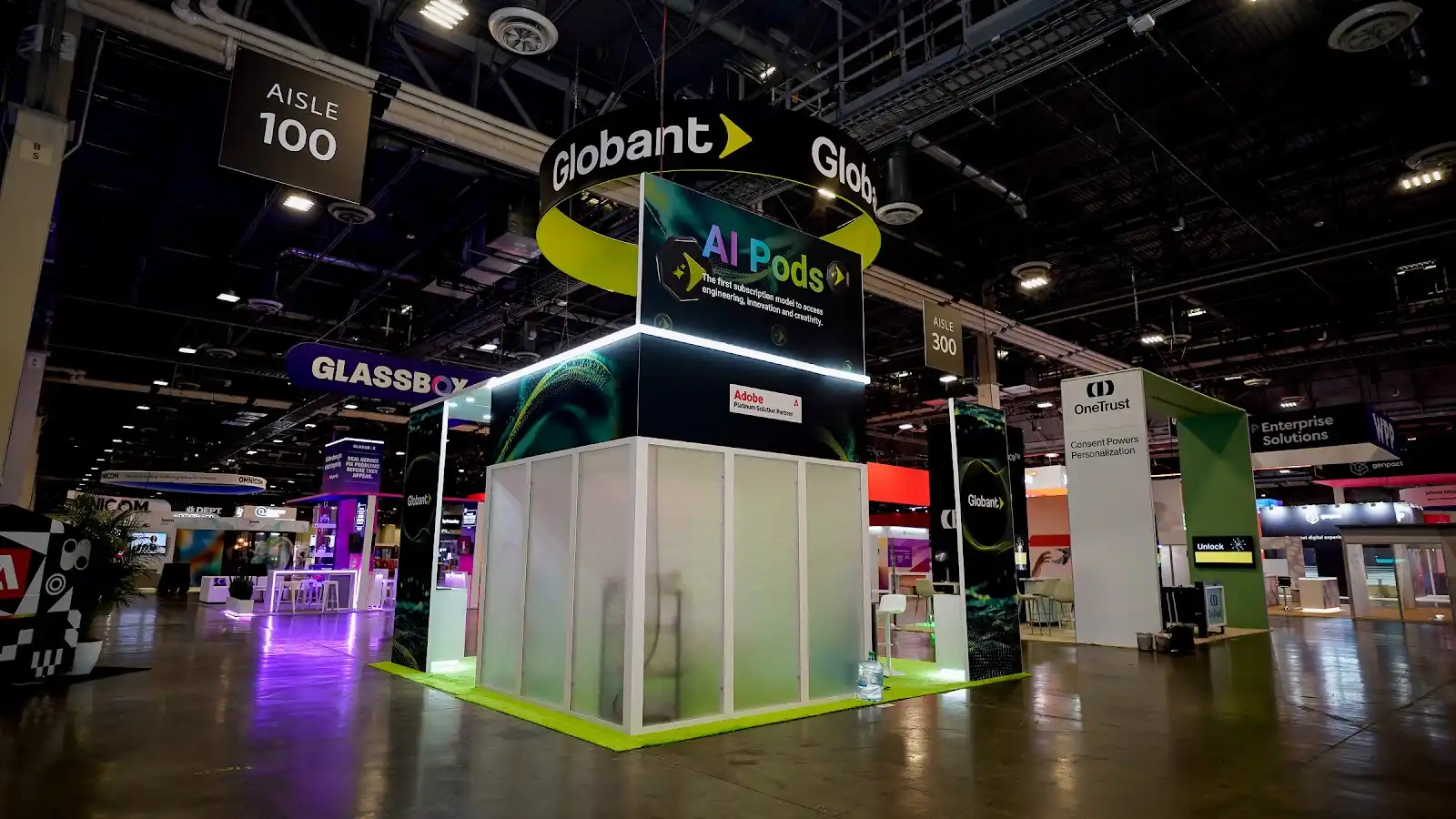
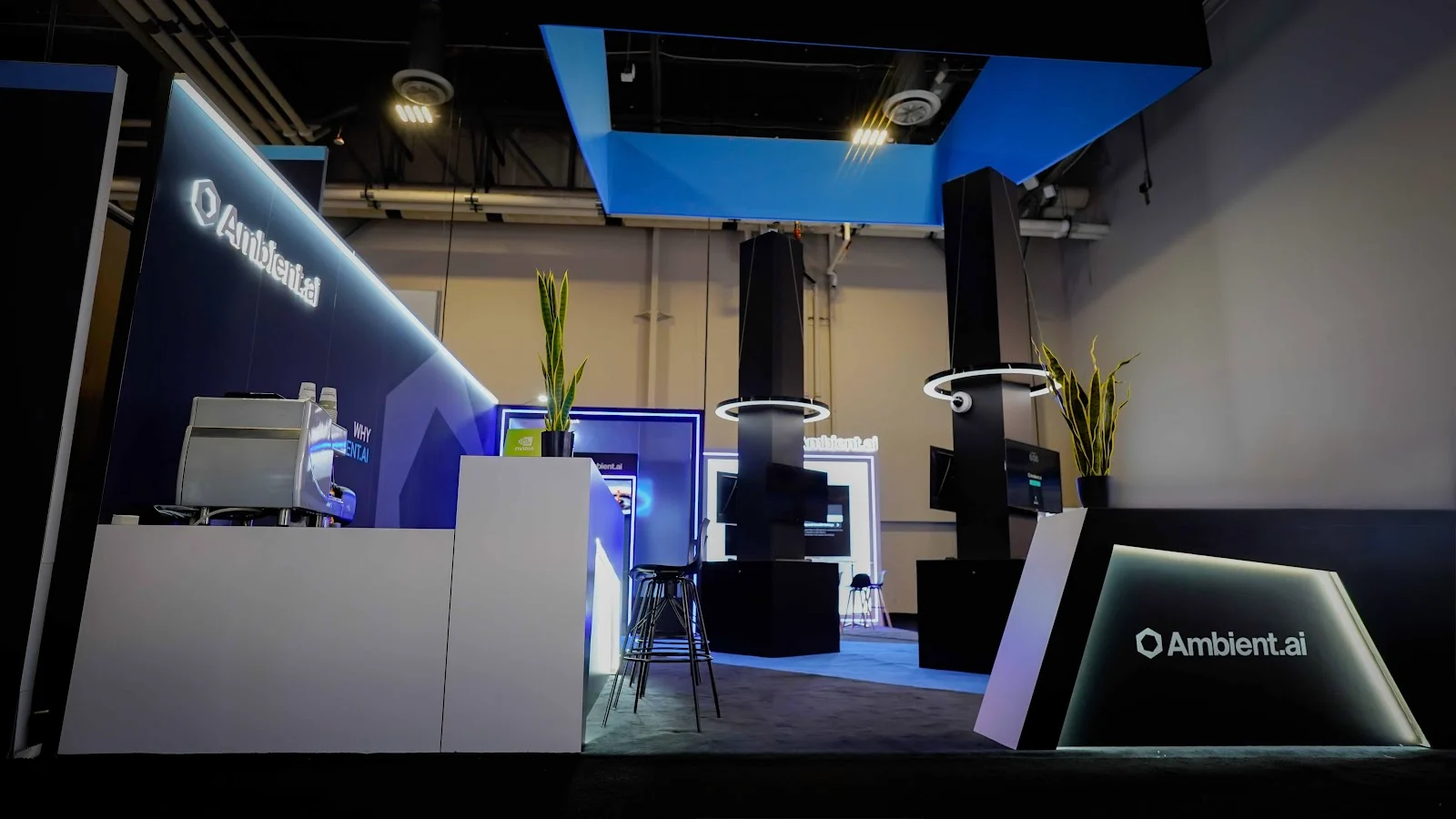
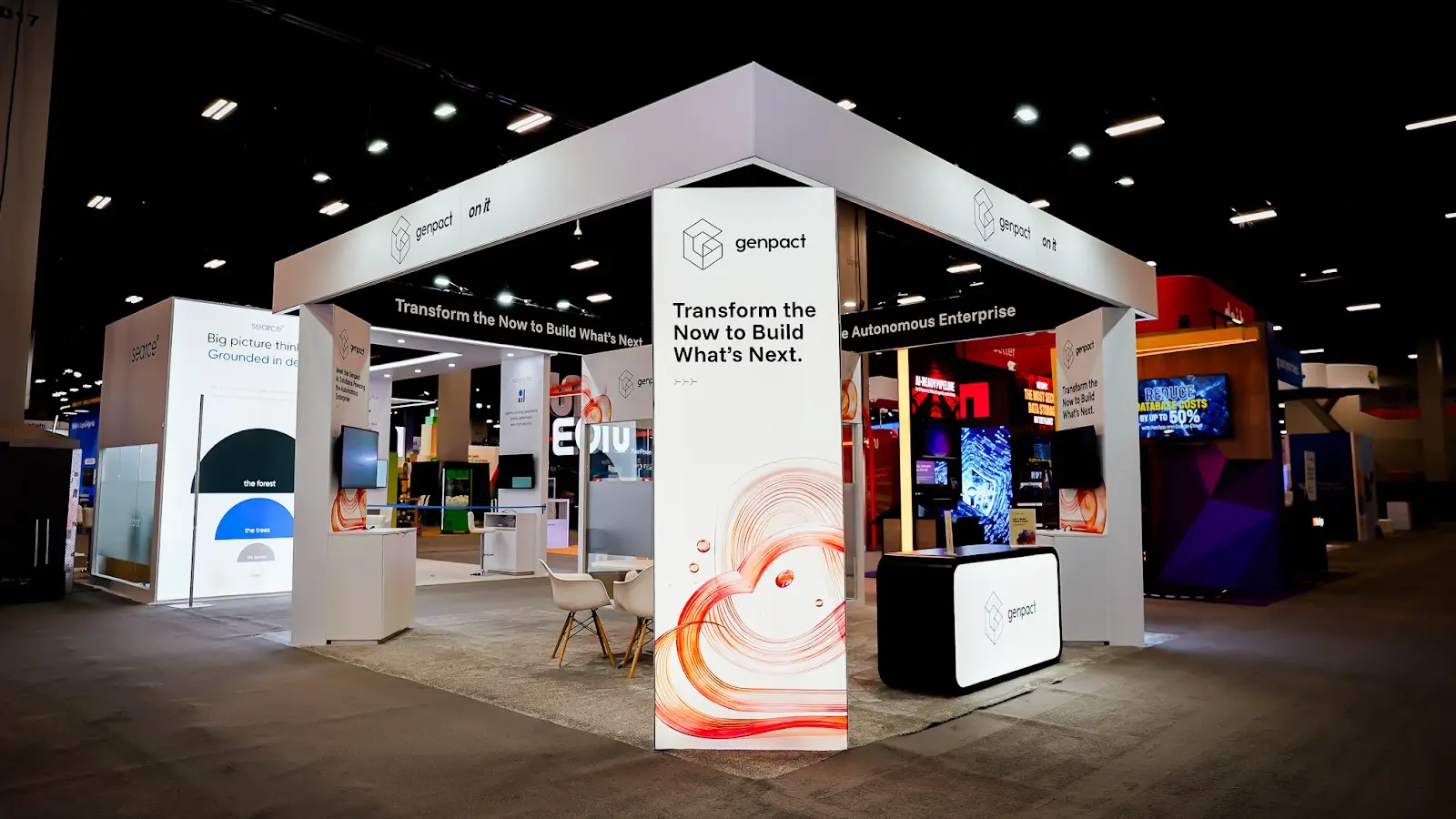
Recent builds, designed for big rooms.
Start from your footprint.
Every size page shows real Orlando designs with fixed pricing — what you see is what it costs, before you talk to anyone.
Orlando booth rentals, answered.
How much does a trade show booth rental cost in Orlando?
In 2026, turnkey rentals run from roughly $7,000–$18,000 for a 10×10 inline to $20,000–$55,000 for a custom 20×20 island, with 20×30 and 30×30 islands scaling from $30,000 to $90,000 depending on structure, finish and technology. A true turnkey quote is one fixed price covering design, fabrication, graphics, freight, install, dismantle and paperwork; the show separately bills space, electrical and material handling.
What is included in a turnkey booth rental?
Design and 3D rendering, fabrication, full graphics production, round-trip freight, professional installation and dismantle, and coordination of show-services paperwork filed to the advance deadlines. What it can’t include is what the organiser bills you directly: exhibit space, electrical consumption, drayage and rigging. We calculate those and place the orders so the numbers are known before the show, not after it.
Can we set up our own booth at the Orange County Convention Center?
More than in most convention cities. Florida is a right-to-work state, so your own full-time employees can legally handle work that would be union-only in Las Vegas or Chicago. The practical limits are freight — docks run through the general contractor — and anything overhead, which is installed by OCCC’s own riggers. If you want to self-perform parts of the install, we design the exhibit so those parts are genuinely handleable.
How far in advance should we book an Orlando booth rental?
Twelve weeks out is comfortable for a custom build; more for large islands with overhead elements. The binding constraints are deadlines rather than fabrication: OCCC rigging plots are due a minimum of three weeks before first move-in, and advance electrical rates close well before show week. Compressed timelines are workable — the trade-off is design freedom, not feasibility.
Is it better to rent or buy a booth for Orlando shows?
For one to four shows a year, renting usually wins: no storage, no refurbishment, no depreciating asset, and a different configuration whenever strategy changes. Ownership starts to pencil out around five or more shows a year with a stable design. If your calendar is Orlando-heavy, rental also means the booth is rebuilt fresh for each show rather than accumulating wear.
Do you handle OCCC rigging and show services paperwork?
Yes — as part of the programme, not an add-on. OCCC runs its own rigging department with a three-week minimum submission window, electrical carries advance-order deadlines, and freight runs on the general contractor’s dock schedule. Your project manager files all of it against the calendar, because missed deadlines are where Orlando budgets quietly blow up.
Which Orlando venues do you work in?
All the major ones: the Orange County Convention Center across both campuses, Gaylord Palms Resort & Convention Center, Rosen Shingle Creek and Rosen Plaza. The venues differ more than exhibitors expect — ceiling heights, rigging rules, even attendee behaviour — so we confirm the specific building and hall before design sign-off.
Is the booth really built before it ships?
Yes — fully assembled, lit and photographed at our facility before it goes on a truck. A missing bracket discovered in our shop costs an afternoon; the same bracket discovered at OCCC during a timed move-in window costs your show. You see photos of your actual booth standing complete before it ships.
Related guides.
Tell us your Orlando show. We’ll bring the plan.
Send us the show, the space and what the booth needs to do. You’ll get design concepts and one fixed price — booth, freight, install, paperwork — within 24 hours.